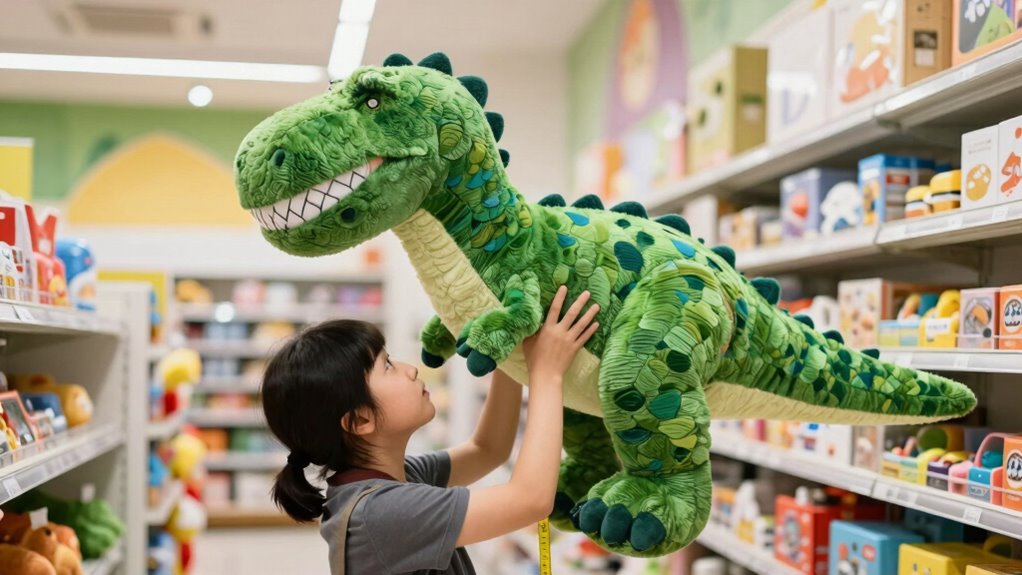

Before buying oversized toys, you should measure your available play space to guarantee the toy fits comfortably without blocking exits or creating tripping hazards. Check the toy’s height, width, and footprint to match it to your child’s size and age, ensuring it’s proportionate and safe for their developmental stage. Consider how the toy complements other furniture and equipment. Keep in mind these measurements and tips to make a safe, fun choice—more insights await!

Get baby and family essentials delivered free — and shop member deals
- Fast, free delivery on millions of items
- Access to Prime Big Deal Days deals on October 6–7
- Prime Video, Amazon Music and more included
Key Takeaways
- Measure available play space to ensure the oversized toy fits comfortably without blocking exits or creating hazards.
- Check the toy’s overall height, width, and footprint for proper proportion to the child’s size.
- Verify the toy’s stability and component strength to prevent tipping or breakage during active play.
- Confirm the toy’s materials are durable, weather-resistant, and suitable for outdoor or indoor environments.
- Ensure the toy is appropriate for the child’s age and developmental stage to provide safe, engaging play.

When considering oversized toys for your child, it’s essential to measure several factors to guarantee safety and suitability. The first thing you should examine is whether the toy meets current safety standards. Safety standards are put in place to ensure that the toy is designed with your child’s well-being in mind, reducing risks like sharp edges, choking hazards, or small parts that could be swallowed. Always check for labels or certifications from recognized safety organizations, which indicate that the toy has undergone rigorous testing. These standards also extend to the toy’s stability and the strength of its components, ensuring that it can withstand active play without breaking or causing injuries. By verifying compliance with safety standards, you help create a safer environment for your child to enjoy their oversized toy.
Always verify that oversized toys meet safety standards for stability and durability to ensure your child’s safe play.
Next, you need to assess the material durability of the toy. Oversized toys are often subjected to rough handling, so the materials used should be resilient enough to withstand wear and tear. Look for toys made from high-quality, sturdy materials that won’t easily crack, splinter, or break. For instance, durable plastics, reinforced fabrics, or treated wood can provide longevity and safety. It’s also important to regard how the materials react to weather conditions if the toy will be used outdoors. Weather-resistant materials ensure the toy remains safe and intact over time, preventing deterioration that could pose hazards. Remember, a toy that’s built to last not only saves you money in the long run but also minimizes the risk of injury from broken parts. Additionally, understanding material durability can help you select toys that maintain their integrity through active play and various environments. Ensuring proper material testing can further confirm that the toy adheres to safety and durability standards. Moreover, familiarizing yourself with the testing procedures can give you added confidence in the safety claims made by manufacturers.
Additionally, take measurements of your space to think about the oversized toy fits comfortably without crowding the area. Oversized toys should be proportionate to your child’s size and the available play space, providing ample room for safe movement. Consider the height, width, and overall footprint of the toy, as well as how it integrates with other play equipment or furniture. Oversized toys that are too large for a space can become hazards, blocking exits or creating tripping risks.
Finally, think about your child’s age and physical capabilities when measuring the toy. An oversized toy should be appropriate for their developmental stage, offering the right level of challenge without overwhelming or under-stimulating. It’s helpful to also consider safety guidelines from child development experts to ensure the toy aligns with your child’s needs. By carefully measuring and taking into account these factors, you ensure that the oversized toy you choose is not just fun but also safe and suitable for your child’s needs.
oversized outdoor play toys for kids
As an affiliate, we earn on qualifying purchases.
As an affiliate, we earn on qualifying purchases.
Frequently Asked Questions
Are Oversized Toys Suitable for All Age Groups?
Oversized toys aren’t suitable for all age groups, as parent preferences and space considerations play vital roles. Younger children might find large toys fun and stimulating, but older kids could lose interest or find them impractical. You should assess your available space and your child’s needs before choosing an oversized toy. Ensuring it’s age-appropriate and fits comfortably in your home will help maximize fun and safety.
How Do Oversized Toys Impact a Child’s Motor Skills?
Oversized toys boost your child’s motor skills by encouraging active movement and coordination. As they climb, push, or balance, they experience rich sensory stimulation that sharpens their senses. These large toys also spark imaginative play, helping your little one develop spatial awareness and problem-solving skills. Watching them navigate these grand toys, you see their confidence grow, their muscles strengthen, and their creativity flourish, making play both fun and beneficial.
What Safety Standards Apply to Oversized Toys?
You should check that oversized toys meet safety standards by reviewing material safety and manufacturer certifications. Confirm the toy is made from non-toxic, durable materials that comply with safety regulations like ASTM or EN71. Look for clear labels or certificates from the manufacturer confirming these standards. This helps you guarantee the toy’s safety, minimizing risks of choking, poisoning, or injuries, and ensures your child’s safe play with oversized toys.
Can Oversized Toys Be Stored Easily at Home?
Oversized toys can be tricky to store at home, but with the right storage solutions, it’s doable. You’ll need to take into account space requirements carefully—measure your available area and choose storage options like large bins, shelves, or dedicated corners. Moving or folding parts can also help. Planning ahead ensures these toys don’t clutter your space, making it easier to keep your home organized while still giving your child fun, oversized playthings.
How Durable Are Oversized Toys Over Time?
Oversized toys are generally quite durable over time, especially if made from high-quality materials like heavy-duty plastic or sturdy foam. You should consider material durability to guarantee they withstand rough play, and check maintenance requirements to keep them in good shape. Regular cleaning and inspecting for damage can prolong their lifespan, making sure your investment stays safe and fun for your kids for years to come.
Conclusion
Before purchasing oversized toys, always measure your child’s available space and consider their safety and comfort. Imagine a parent buying a giant playhouse only to realize it barely fits through the doorway, causing frustration. By taking accurate measurements beforehand, you make sure your child has a fun, safe, and accessible play area. Thoughtful planning prevents disappointments and guarantees that your oversized toy becomes a cherished part of their playtime adventures.
Halloween Picks
halloween
As an affiliate, we earn on qualifying purchases.