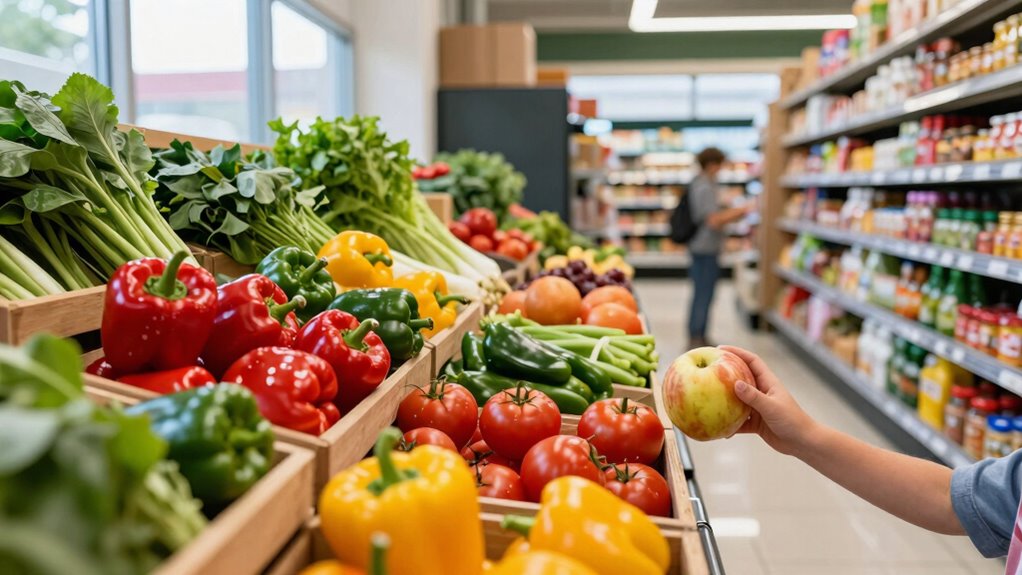

Grocery store and market play help you teach children essential everyday skills, like shopping, sorting, and calculating money. It introduces concepts such as nutrition, healthy eating, and sustainability, making learning fun and meaningful. Your child develops decision-making, social skills, and language as they role-play shopping, negotiating, and cooperating. This hands-on play builds confidence and understanding of real-life situations. Keep exploring how this play nurtures your child’s growth in many important areas.

Turn the school run and nap time into listening time
- Thousands of audiobooks, podcasts and originals
- Listen on your phone, tablet or Echo — also offline
- Cancel anytime
Key Takeaways
- Promotes understanding of everyday shopping processes, including item selection, price comparison, and budgeting skills.
- Introduces nutrition facts, healthy eating concepts, and food labels to foster nutritional awareness.
- Enhances decision-making and math skills through calculating costs, discounts, and making informed choices.
- Develops social and communication skills via role-playing, negotiation, sharing, and collaborative play.
- Teaches environmental sustainability concepts by highlighting biodiversity, eco-friendly practices, and sustainable food sources.
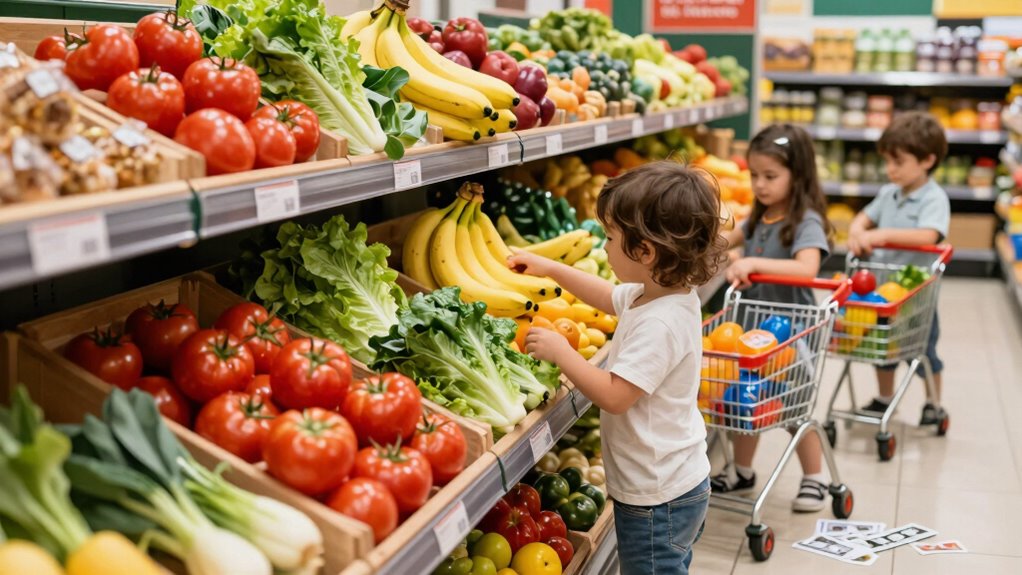
Grocery store and market play offers children a fun and educational way to explore everyday life. As you set up a pretend store or take your little one on a shopping adventure, you’re helping them learn essential skills for steering through the world around them. Kids quickly pick up on how shopping works, from picking out items to checking prices. They begin to understand shopping strategies, like comparing costs or choosing healthier options, which lays the groundwork for smart decision-making as they grow. During play, you can introduce concepts like nutrition facts, helping your child recognize the importance of eating well and making informed choices about what they consume. For example, you might point out labels on pretend food items, explaining what ingredients or nutrients are, so they start to grasp how nutrition impacts their health.
As they explore the toy aisles or real shopping carts, your child practices critical thinking, such as sorting items by categories or calculating how much money they need. This helps develop their math skills and understanding of value. When you involve them in shopping strategies, like looking for discounts or choosing fresh produce, you’re teaching them to be savvy shoppers. They learn to assess prices and quality, which are valuable skills that extend beyond play into real-life grocery trips. These activities also promote language development, as they learn new words related to food, shopping, and health, broadening their vocabulary and comprehension. Incorporating nutrition facts into play makes learning more meaningful. You might show them labels on packaged foods, explaining what calories, fats, or sugars mean, fostering awareness about healthy eating habits.
They become more conscious of making choices that support their well-being. Plus, playing store helps children develop social skills, like negotiating, sharing, and taking turns, as they pretend to be customers or cashiers. It encourages cooperation and communication, crucial skills for everyday interactions. Additionally, engaging in biodiversity concepts during play can help children understand the importance of diverse foods and sustainable living practices. This understanding can also promote an early appreciation for environmental sustainability and the role it plays in healthy food choices. Introducing these concepts early can inspire children to appreciate the value of sustainable farming practices, fostering respect for eco-friendly methods. Understanding these concepts early on can foster a lifelong respect for healthy, sustainable habits.
As an affiliate, we earn on qualifying purchases.
Frequently Asked Questions
How Does Grocery Store Play Support Language Development?
Grocery store play supports language development by encouraging you to use new vocabulary words related to shopping, like “cashier” or “produce.” As you interact with others during play, you practice social skills and communication, boosting your confidence. This active engagement helps you understand context and improves your ability to express ideas clearly. Ultimately, this playful scenario enhances both your vocabulary and social interaction skills in a fun, realistic way.
What Skills Do Children Develop Through Market Play?
Through market play, you help children develop essential skills like role-playing scenarios and social interaction. They practice taking on different roles, like shopkeeper or customer, which enhances their understanding of real-world situations. Engaging with peers during this play boosts communication, cooperation, and empathy. These experiences build confidence and teach children how to navigate social dynamics, laying a strong foundation for their everyday interactions and emotional development.
At What Age Is Grocery Store Play Most Effective?
You’ll find that grocery store play is most effective for children aged 3 to 6 years old. At this age, they’re enthusiastic for age-appropriate, playful interactions that boost their social, cognitive, and language skills. During this period, kids enjoy imitating real-life scenarios, learning about money, and practicing sharing and negotiating, which all contribute to their development. This playful engagement helps them grasp everyday concepts in a fun, meaningful way.
How Can Parents Encourage Educational Play During Shopping?
Imagine turning your shopping trip into a dance of discovery. You can encourage educational play by role modeling kind interactions and pointing out different items, sparking curiosity. Let your child explore with sensory exploration—touch, smell, and even taste—while you narrate your actions. This rhythm of guided discovery helps your little one learn naturally, making shopping a lively classroom where curiosity blossoms and everyday knowledge grows effortlessly.
Are There Specific Items to Include for Learning Benefits?
You should include items like fresh fruits, vegetables, and packaged goods on your shopping list for role playing. These items help your child learn about different food categories, colors, and sizes while encouraging counting and sorting skills. As you shop, involve them in choosing products, discussing prices, and pretending to buy and sell, making role playing more engaging and educational. This hands-on approach boosts their everyday knowledge effectively.
Conclusion
By blending browsing and bargaining, grocery store and market play builds your child’s basic knowledge beautifully. It boosts their understanding of buying, budgeting, and balancing, all while fostering fun and familiarity. As they navigate numbers and needs, they nurture new notions naturally. So, encourage exploration, empower their experience, and enjoy every engaging, educational encounter. With playful practice, your little learner’s love for learning blossoms beautifully, building a bright, brave, and knowledgeable future.
Halloween Picks
halloween
As an affiliate, we earn on qualifying purchases.