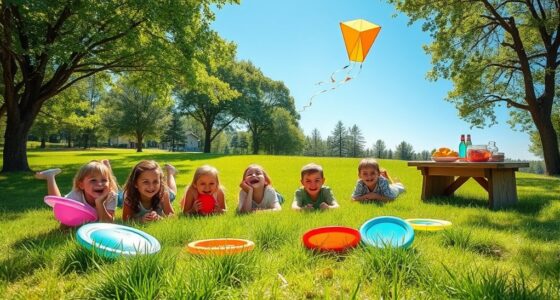
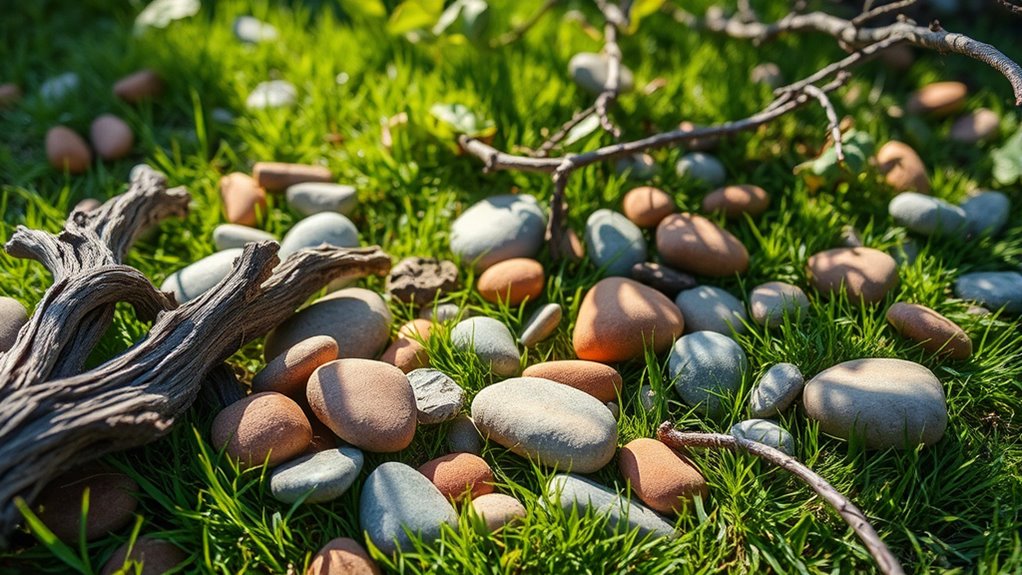

When using loose parts like sticks and stones outdoors, it’s important to choose age-appropriate and safe materials, checking them for sharp edges or debris. Encourage children to handle items gently, avoid climbing on unstable rocks, and prevent throwing sticks. Establish clear boundaries and supervise activities closely. Teaching respect for nature and safety helps children explore confidently while minimizing risks. If you want practical tips to keep play fun and safe, there’s more to take into account below.
Key Takeaways
- Ensure sticks and stones are large, smooth, and free of sharp edges to prevent injuries during outdoor play.
- Supervise children closely to avoid climbing on unstable rocks or throwing sticks that could cause harm.
- Regularly inspect natural loose parts for hazards like splinters, debris, or broken edges before allowing children to handle them.
- Teach children to handle natural materials gently, respecting nature and avoiding uprooting plants or removing excessive stones.
- Establish clear boundaries and safety rules to foster safe exploration while encouraging curiosity and creative outdoor play.

Outdoor environments offer endless opportunities for children to explore and create using loose parts. When you introduce natural elements like sticks, stones, leaves, and pinecones, you open the door for rich nature exploration. These simple materials encourage kids to observe their surroundings closely, notice textures, shapes, and colors, and develop a deeper understanding of the natural world. As children pick up, arrange, and manipulate these loose parts, they become active participants in their environment, fostering curiosity and critical thinking. You can guide their exploration by asking questions about the objects they find—how they feel, what they look like, or how they might be used—helping to deepen their engagement with nature.
Explore nature with children using simple loose parts to foster curiosity and deepen understanding of the natural world.
However, when incorporating loose parts outdoors, outdoor safety is essential. You want children to enjoy the benefits of nature exploration without risking injury. Make sure that the loose parts you provide are appropriate for their age; for example, small stones or sharp sticks should be handled with care or avoided altogether. Regularly inspect the materials for hazards like sharp edges, splinters, or any debris that could cause harm. Encourage children to be mindful of their surroundings, reminding them to avoid climbing on unstable rocks or throwing sticks that could accidentally hit someone. Establish clear boundaries and supervise their activities to ensure they play safely while exploring.
Another key aspect of outdoor safety involves setting rules around the use of natural loose parts. Teach children to respect the environment by not uprooting plants or removing too many stones from a natural area. Show them how to handle materials gently and responsibly, emphasizing the importance of leaving nature as they found it. When children understand the importance of outdoor safety, they become more aware of their actions and learn to navigate outdoor spaces thoughtfully. Wearing appropriate clothing, such as sturdy shoes and sun protection, adds another layer of safety during nature exploration.
Creating a safe and stimulating outdoor environment with loose parts also involves planning for emergencies. Keep a basic first aid kit nearby and know how to handle minor injuries. If you’re in a park or natural setting, familiarize yourself with the area and identify the nearest help or emergency services. By combining the thrill of nature exploration with mindful outdoor safety practices, you empower children to discover confidently and responsibly. This balance ensures that their outdoor adventures with loose parts are both enjoyable and safe, encouraging a lifelong love of nature and creative play.
Frequently Asked Questions
How Can I Encourage Creative Play With Loose Parts Outdoors?
You can encourage creative play with loose parts outdoors by providing a variety of natural items like sticks and stones and suggesting sensory exploration activities. Invite children to build sculptures or structures, fostering collaborative storytelling through shared ideas and imagination. Encourage them to feel textures, listen to sounds, and observe nature, which sparks curiosity and creative thinking. Your active involvement helps children see loose parts as versatile tools for endless creative expression.
What Are the Best Types of Natural Loose Parts for Different Ages?
You should choose natural textures like smooth stones for younger children, offering safe, age-appropriate materials that help them explore tactile sensations. For older kids, incorporate sticks, logs, or bark to inspire building and imaginative play. Always select materials that match their developmental stage, ensuring safety and engagement. By providing a variety of natural loose parts suited to their age, you encourage creativity, problem-solving, and a deeper connection with the outdoors.
How Do I Maintain Safety While Children Play With Loose Parts Outside?
You maintain safety by conducting regular risk assessments to identify potential hazards and adjusting play areas accordingly. Keep children under close supervision, actively observing their interactions with loose parts. Encourage safe play behaviors and set clear boundaries. Ensure loose parts are appropriate for their age, and remove any sharp or dangerous objects promptly. Combining vigilant supervision with ongoing risk assessments helps create a safe, engaging outdoor environment for children.
Are There Eco-Friendly Ways to Collect and Store Loose Parts?
You can use eco-friendly methods for collecting and storing loose parts by implementing sustainable collection practices. Opt for recycling initiatives, like repurposing old containers or baskets made from natural or recycled materials, to store sticks, stones, and other items. Encourage children to participate in collecting materials responsibly, emphasizing the importance of recycling and reducing waste. This approach promotes environmental awareness while keeping your outdoor play area organized and sustainable.
How Do Loose Parts Support Developmental Skills in Outdoor Play?
You’ll see that loose parts boost sensory development and problem-solving skills during outdoor play. As you provide sticks, stones, and other natural materials, you encourage children to explore textures, shapes, and sounds. This hands-on engagement challenges them to figure out how pieces fit together or balance, enhancing their critical thinking. By offering open-ended materials, you foster creativity and cognitive growth, making outdoor play both fun and educational.
Conclusion
As you explore the outdoors with loose parts like sticks and stones, remember that safety is always key. But what if that tiny stone hides a surprise? Or that seemingly harmless stick becomes a tricky obstacle? Keep your eyes open and stay alert—because in the world of loose parts, the tiniest detail can change everything. Are you ready to discover what’s lurking just beyond your view? The adventure—and the surprises—await.