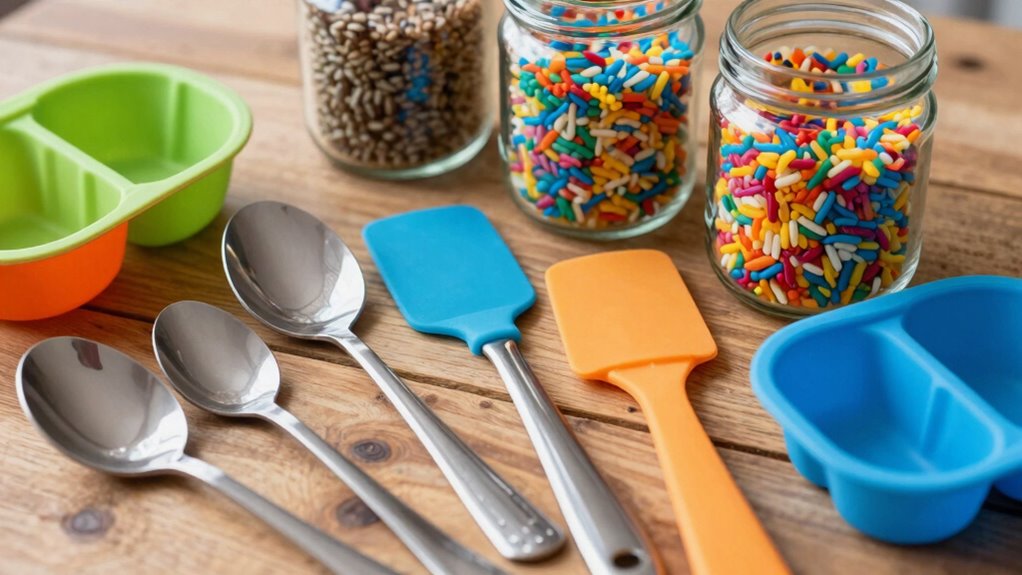

You can turn everyday kitchen items into safe, fun sensory play tools by letting your child explore textures with measuring cups, spoons, beans, and rice. Fill clear containers for scooping and pouring, and include textured items like sponges or fabric scraps for variety. Always supervise and set safe boundaries to prevent accidents. Keep everything organized and use natural dyes for visual interest. If you keep exploring, you’ll discover even more creative ways to make sensory play safe and engaging.
Key Takeaways
- Use measuring cups, spoons, and dried beans or pasta for tactile exploration and sound activities in clear containers.
- Incorporate textured items like sponges or fabric scraps to diversify sensory experiences safely.
- Organize items in labeled trays or bowls to encourage responsibility and prevent messes during play.
- Involve children in simple cooking tasks like pouring and stirring to develop motor skills and curiosity.
- Supervise closely, remove hazards, and teach hand washing to ensure safety during sensory activities.
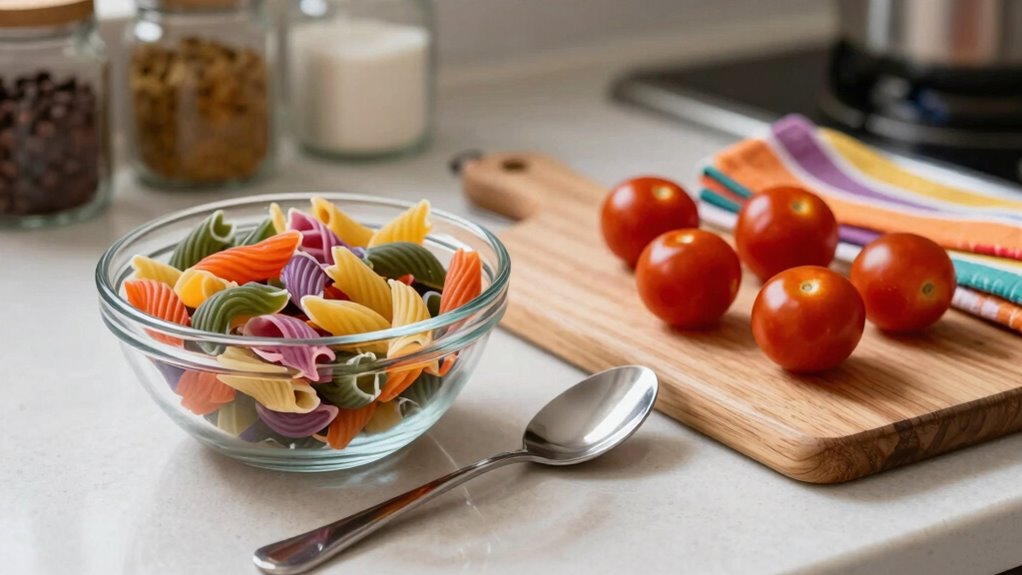
Sensory play is an excellent way to stimulate your child’s senses and encourage learning through hands-on experiences, and your kitchen is full of everyday items that can serve as perfect tools. When you create sensory activities, it’s vital to keep cooking safety in mind. Always supervise your child closely, especially when handling small objects, liquids, or items that could pose a choking hazard. Be mindful of hot surfaces, sharp edges, and any cleaning products that might be within reach. Setting clear boundaries and establishing rules about kitchen safety helps ensure that sensory play remains fun and accident-free. Additionally, keeping your kitchen organized is key to creating a safe environment. When the space is tidy, you can easily find the items you need and prevent clutter from becoming a hazard. Designate specific containers or shelves for sensory play items, and teach your child to return items after use. This not only keeps your kitchen safe but also teaches responsibility. Incorporating the importance of organization into your routine can make cleanup easier and reduce potential hazards during playtime. Furthermore, using labeled storage containers can help your child learn about categorization and responsibility while keeping your kitchen neat. Creating a designated sensory play area within your kitchen can also help contain messes and make cleanup more manageable.
Start by gathering everyday kitchen items like measuring cups, spoons, pasta, rice, or dried beans. These materials are great for exploring textures, shapes, and sounds. You might fill a clear container with rice or beans, allowing your child to scoop, pour, and feel the different textures. For added sensory stimulation, include items with varied textures, like sponges, fabric scraps, or textured mats. Use small bowls or trays to organize these items, making it easier for your child to access and explore freely without creating a mess. Incorporating safe, non-toxic food coloring or natural dyes to make the activities more visually stimulating can also promote creativity and curiosity. You could also involve your child in simple cooking tasks, like stirring or pouring, which enhances fine motor skills and understanding of cause and effect. Just ensure that all ingredients and utensils are safe for children and that your child understands the importance of washing hands before and after play. Additionally, consider removing hazards from the play area to further ensure safety during activities. Teaching your child about kitchen safety and proper ventilation can additionally help create a healthier environment for their sensory activities. Regularly teaching your child about indoor air quality can foster their awareness of environmental health and safety.

Cutting Play Food Toys For Kids, Pretend Play Kitchen Accessories, Fake Fruits/Vegetables Set With Shopping Storage Basket, Plastic Board And Knife, Birthday Gifts/Educational Toy For Toddler Children
- Complete 28-Piece Play Food Set: Includes fruits, vegetables, basket, chopping board, and knife
- Realistic and Safe Materials: Made of durable, eco-friendly ABS plastic with rounded edges
- Educational and Fun: Encourages imaginative play and learning about food
As an affiliate, we earn on qualifying purchases.
As an affiliate, we earn on qualifying purchases.
Frequently Asked Questions
Are Kitchen Items Safe for All Age Groups During Sensory Play?
Kitchen items can be safe for sensory play if you prioritize child safety and check material suitability. Always supervise young children and avoid items with sharp edges or small parts that could pose choking hazards. Use non-toxic, food-grade materials when possible, and clean items thoroughly. By choosing appropriate kitchen tools and monitoring play, you guarantee a safe, enriching experience for children of all ages.
How Do I Clean Kitchen Items After Sensory Play?
Think of cleaning your kitchen items after sensory play as giving them a revitalizing bath. You should use gentle cleaning methods like warm, soapy water for most items, then rinse thoroughly. For sanitizing techniques, consider using a diluted bleach solution or vinegar, ensuring you dry everything completely afterward. This process keeps your tools safe, clean, and ready for your next creative adventure, turning mess into a sparkling, safe playground.
Can I Use Non-Food Kitchen Items for Sensory Activities?
Yes, you can definitely use non-food kitchen items like cooking utensils and baking tools for sensory activities. These items provide different textures, shapes, and sounds that stimulate senses. Just make certain they’re clean and safe for play, avoiding sharp edges or small parts that could be a choking hazard. Using familiar kitchen tools makes sensory play engaging and helps children explore new sensations safely while encouraging creativity and learning.
What Are Some Sensory Play Ideas With Common Spices?
You can try spice scent exploration by having your child smell different spices like cinnamon, cumin, and paprika, helping them identify and compare scents. For colorful spice sorting, lay out various spices and encourage your kid to sort them by color or texture, which boosts fine motor skills. These activities make sensory play engaging, educational, and fun, while also introducing them to new aromas and colors in your kitchen.
How Do I Ensure Sensory Play Is Hygienic and Infection-Free?
To keep sensory play safe and infection-free, prioritize hygiene practices right from the start. Always wash your hands thoroughly before and after play. Clean all kitchen items with hot, soapy water, and disinfect surfaces regularly. Use food-grade, non-toxic ingredients, and supervise children to prevent ingestion of non-edible items. Sensory safety depends on your vigilance—stay attentive, and you’ll create a safe, enjoyable experience for everyone involved.
Conclusion
Now that you’ve uncovered the treasure trove of kitchen items for sensory play, you’re ready to turn your home into a wonderland of discovery. These everyday objects become your child’s passport to a world of textures, smells, and sounds—like a painter’s palette, bursting with endless possibilities. So, roll up your sleeves and let your imagination run wild; with a little creativity, your kitchen transforms into a magical playground where curiosity is the key to endless adventure.