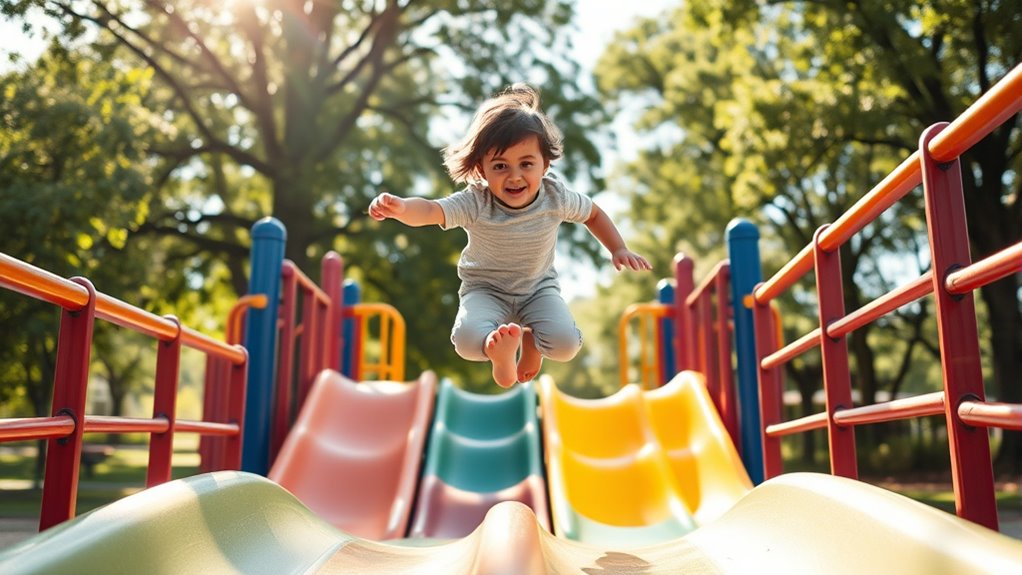

To guarantee your child’s safety when climbing and jumping in parkour, start with simple balance exercises like standing on one foot and walking lines. Use soft, padded obstacles that are stable and appropriately sized for their skill level. Teach them to move slowly and control their landings, supervise closely, and encourage proper technique. Creating a secure environment helps reduce injury risk and builds confidence. Keep exploring these tips to learn more about keeping kids safe while having fun.
Key Takeaways
- Teach children to evaluate obstacles for stability and safety before climbing or jumping.
- Encourage slow, controlled movements to reduce risk of falls and injuries.
- Use soft, padded surfaces and secure equipment to cushion impacts and prevent accidents.
- Supervise children actively, demonstrating proper techniques and guiding their actions.
- Incorporate balance exercises to build foundational skills that enhance safe climbing and jumping.

Kid parkour is an exciting and energetic activity that lets children navigate their environment with agility and confidence. As you introduce your child to parkour, one of the most important aspects to focus on is developing their balance. Balance training is essential because it helps kids maintain control while climbing, jumping, or vaulting over obstacles. You can start with simple exercises like standing on one foot, walking along a straight line, or balancing on a low beam. These activities improve their stability and coordination, making them more comfortable when tackling more complex moves. Remember, the key is to build a strong foundation in balance before progressing to more advanced techniques. This not only enhances safety but also boosts their confidence as they see themselves improve.
Focus on balance exercises like one-foot stands and walking lines to boost kids’ confidence and coordination in parkour.
Another critical element is obstacle design. When creating a safe environment for kids to practice parkour, you should guarantee obstacles are appropriately designed for their size and skill level. Use soft, padded materials for surfaces and edges to prevent injuries if they fall or slip. Obstacles should be stable and securely anchored to avoid unexpected shifts that could cause accidents. Incorporate a variety of shapes and heights to challenge your child’s agility and problem-solving skills. For example, low walls, sturdy rails, and foam blocks can serve as ideal training tools. By designing obstacles thoughtfully, you allow children to explore their limits safely, encouraging them to push themselves while minimizing risks. Additionally, understanding the different cookie categories can help you create a safe and well-informed environment for your child’s activities.
As your child practices, emphasize the importance of proper technique and safety. Teach them to assess each obstacle carefully before attempting to climb or jump. Encourage slow, deliberate movements initially, emphasizing control over speed. Use clear instructions and demonstrations to show correct body positioning and landing techniques, reducing the chance of injury. Additionally, always supervise their activities and ensure they wear appropriate gear like padded gloves or helmets if necessary. Creating a positive environment where mistakes are seen as part of learning helps your child stay motivated and safe.
Ultimately, balance training and obstacle design work hand-in-hand to make kid parkour a safe, fun experience. By focusing on these areas, you help your child develop not just physical skills but also confidence and resilience. With patience and proper guidance, they’ll master climbing and jumping techniques while enjoying the thrill of movement. Remember, safety always comes first—so tailor your setup to suit their abilities and progress gradually. This way, your child can enjoy the exciting world of parkour while staying protected and enthusiastic to learn more.
Frequently Asked Questions
What Equipment Is Essential for Beginner Kid Parkour?
For beginner kid parkour, you need essential equipment like protective gear and suitable footwear. Protective gear, such as helmets and knee pads, keeps kids safe during falls or slips. Suitable footwear provides grip and support, helping them land safely and move confidently. Make sure the gear fits well and is designed for activity. With the right equipment, kids can learn parkour safely while having fun and building skills.
How Can Parents Ensure Safety During Practice?
You can guarantee safety during practice by providing constant parental supervision and closely watching your child as they climb and jump. Equip them with appropriate safety gear like helmets and knee pads to prevent injuries. Teach them proper techniques, encourage cautious behavior, and set clear boundaries around safe areas. Regularly check the equipment and environment for hazards, and foster open communication so your child feels comfortable reporting any concerns.
What Are the Signs of Overexertion in Kids?
You should watch for signs of fatigue, like heavy breathing, sore muscles, or loss of coordination, which indicate your kid might be overexerted. Keep an eye out for irritability or reluctance to continue, and make certain they stay hydrated, as hydration is essential for recovery and preventing exhaustion. If you notice these signs, encourage rest and rehydration, and avoid pushing them too hard to keep their parkour experience safe and fun.
How to Choose Age-Appropriate Parkour Training Areas?
Choosing age-appropriate parkour areas is like picking the right-sized shoes—comfort and safety matter. You should conduct a thorough risk assessment, ensuring equipment and surfaces suit your child’s age and skill level. Supervision strategies are essential; watch closely and set clear boundaries. For example, a beginner might start on soft mats, while more experienced kids can handle low beams. Always prioritize safety to keep their adventure fun and injury-free.
Are There Certified Instructors for Kid Parkour?
Yes, there are certified instructors for kid parkour. When choosing a program, look for instructors with proper safety certifications and experience working with children. Certified instructors prioritize safety, teach proper techniques, and create a supportive environment. They understand how to adapt lessons to your child’s age and skill level, reducing injury risks. Always verify their credentials and safety certification to guarantee your kid learns parkour in a safe, supervised setting.
Conclusion
As you guide your child through the world of parkour, remember that each safe climb and jump is like planting a seed of confidence and strength. When they learn to navigate obstacles with care, they’re building a garden of resilience that will bloom over time. Keep nurturing their curiosity and safety, and watch as they grow into fearless explorers, turning each challenge into a symbol of their endless potential.