


To set the stage for invitations to play, create inviting, accessible environments with natural, open-ended materials like stones, fabric, or blocks that spark curiosity. Carefully arrange these resources without over-directing so children feel free to explore. Then, step back and observe, supporting their interests with gentle questions or new elements when needed. This approach fosters independence and creativity; keep exploring to discover more ways to encourage authentic child-led exploration.
Key Takeaways
- Create inviting, accessible environments with natural and open-ended materials that stimulate curiosity and exploration.
- Arrange materials thoughtfully to encourage engagement without over-directing or controlling play.
- Transition from active organizer to observer, allowing children to lead their own exploration.
- Support exploration with open-ended questions and gentle prompts, stepping back to let children take ownership.
- Observe children’s interests to adapt the environment and introduce new elements that deepen engagement.
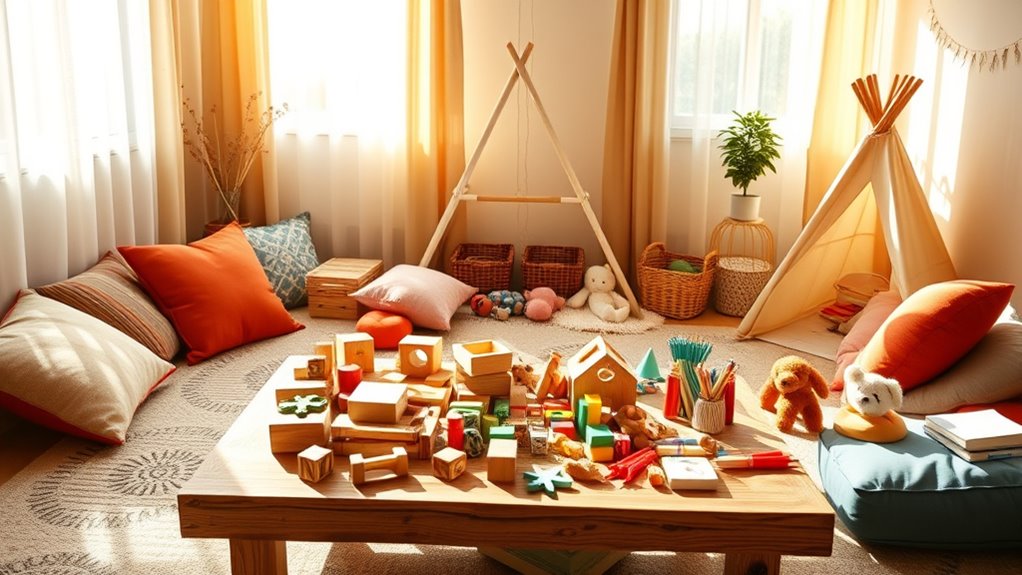
Have you ever wondered how to naturally encourage children to explore, learn, and develop their skills? One of the most effective ways is through invitations to play. These are thoughtfully prepared setups that invite children to engage in meaningful, child-led exploration. Instead of directing every step, you create a compelling environment that sparks curiosity and invites spontaneous discovery. When you set the stage with open-ended materials and inviting spaces, children take the lead in their learning journey. This approach aligns perfectly with play-based learning, which emphasizes hands-on, active engagement, and supports children’s natural desire to investigate the world around them.
To craft successful invitations to play, focus on creating diverse, accessible environments that stimulate various interests. Think about offering a variety of natural materials like stones, shells, fabric scraps, or wooden blocks. These open-ended resources allow children to use their imagination and problem-solving skills freely. When setting up these invitations, resist the urge to over-direct or control the activity. Instead, arrange the materials in a way that invites exploration, and then step back to let children take ownership of their play. This child-led exploration is essential because it fosters independence, confidence, and a genuine love for learning.
As children engage with the setup, observe their interactions. Their choices reveal their interests, strengths, and developmental needs. Your role shifts from organizer to observer and facilitator. You can offer support by asking open-ended questions or introducing new elements to deepen their engagement, but it’s important to allow children to steer the activity. This autonomy encourages them to think critically, experiment, and develop problem-solving skills all on their own. Creating environments that promote self-directed learning further enhances their ability to explore independently and build foundational skills. The beauty of this method is that it respects each child’s unique pace and style of learning, making education a personalized experience.
Frequently Asked Questions
How Can I Personalize Invitations to Suit Different Children’s Interests?
To personalize invitations, consider each child’s preferences and incorporate activity themes they enjoy. You can tailor invitations by using their favorite colors, characters, or interests, making the activity inviting and exciting. Include options that reflect their unique tastes, encouraging engagement. When children see their interests represented, they’ll feel valued and motivated to participate. This personalized approach fosters a sense of ownership and enhances their overall play experience.
What Are Common Mistakes to Avoid When Setting up Invitations to Play?
You should avoid overcrowding the space, which can overwhelm children and limit play. Make sure instructions are clear; unclear guidance causes confusion and discourages engagement. Also, don’t set up invitations without considering children’s interests, or they might ignore the activity altogether. A common mistake is rushing the setup or not observing how children interact, missing opportunities to adapt and improve the invitation for better engagement.
How Long Should an Invitation to Play Typically Last?
You should aim for an invitation to play to last around 10 to 15 minutes, following duration guidelines that keep children engaged without overstimulating them. Use engagement strategies like changing activities or introducing new elements to maintain interest. Watch for signs of boredom or overstimulation—these cues tell you it’s time to step back and observe, ensuring play remains enjoyable and developmentally beneficial.
How Do I Encourage Shy or Hesitant Children to Join Play Invitations?
Like a gentle gardener, you build trust with shy children by observing cues and respecting their pace. Offer quiet, low-pressure invitations and avoid forcing participation. Use soft tones and encouraging gestures to create a safe space, much like a lighthouse guiding ships. Over time, your consistent presence helps hesitant kids feel secure, gradually inviting them to join play when they’re ready, fostering confidence and connection naturally.
What Safety Considerations Are Important When Designing Invitations to Play?
When designing invitations to play, you need to prioritize safety by conducting a risk assessment to identify potential hazards. Use only safe materials that are non-toxic, age-appropriate, and free from small parts that could pose choking risks. Regularly inspect the play environment for hazards, and ensure supervision is consistent. Creating a safe space encourages hesitant children to explore confidently without unnecessary dangers.
Conclusion
Remember, invitations to play are about inviting curiosity and creativity, not forcing participation. You might worry some kids won’t join or will need more encouragement. But by setting a welcoming stage and stepping back, you give them space to explore at their own pace. Trust the process—children naturally thrive when given gentle guidance. Your patience creates an environment where play unfolds effortlessly, fostering joy and independence. Keep inviting, and watch their confidence grow.