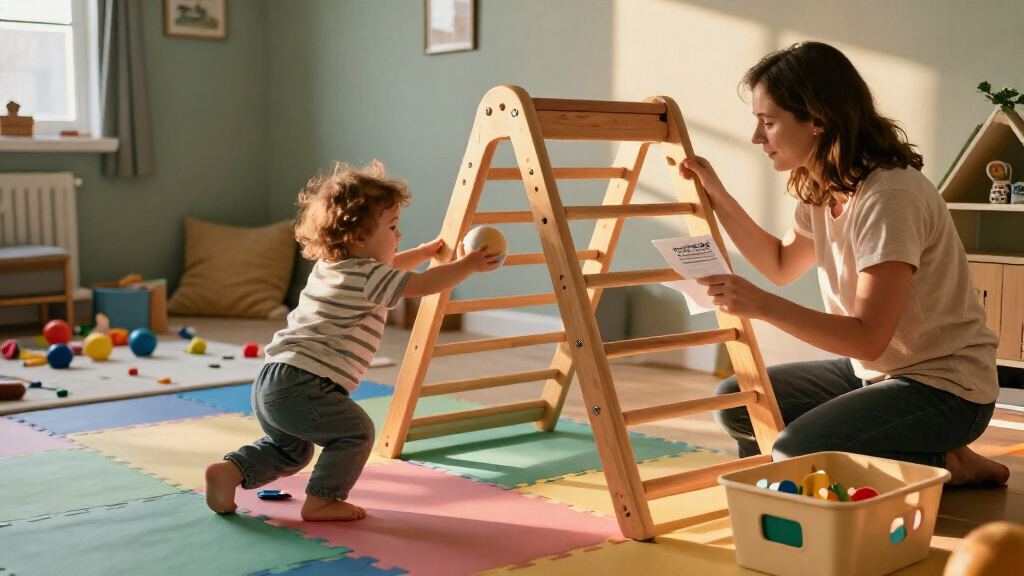

This checklist is for families setting up an indoor playroom for children who need room to move, explore, and settle into imaginative play. The picks span floor play, climbing, hiding, balance, and sensory movement, with practical advice for matching each item to your child and your space. Start with your room and the activities your child returns to most.

Turn the school run and nap time into listening time
- Thousands of audiobooks, podcasts and originals
- Listen on your phone, tablet or Echo — also offline
- Cancel anytime
Each section covers one playroom slot. Some picks match the slot directly, while a few product names describe a different item; those sections call out the mismatch so you can shop for the intended use. Check the product description for dimensions, materials, age guidance, and what comes in the box before deciding.
Use the checklist to compare options, then think through where each item will go and how your child will use it. Measure clear floor space, account for nearby furniture, and consider whether the item can be stored between play sessions. Fit and supervision matter as much as the item itself for an everyday playroom.
Foam Play Mats
A play mat gives children a defined surface for floor play and can help separate a play area from the rest of a room. The listed pick is the Lillefolk Baby Play Mat for Floor, identified as 6x8ft and Vintage Vanilla. Before buying, check that its footprint works with your room layout and leaves space to walk around it. Measure the full area, including door swings and nearby furniture.
Common shopping mistakes include assuming the listed size will fit every room, overlooking what the product description says about the mat’s construction, or choosing a color without considering how it looks alongside the rest of the space. The product name includes “PFAS-Free N,” but verify the full material and care details directly with the seller rather than inferring more from the title. Check how the mat is cleaned and whether it can be stored or moved as needed. Confirm care instructions before making it a daily play surface.
For fit, compare the listed 6x8ft dimensions with the usable floor area and the activities you expect to place on top. If the mat will sit under other play items, confirm that their footprints fit too. Leave clear walking space around the play zone.
What to look for:
- Confirm the mat’s listed 6x8ft dimensions against your usable floor space.
- Review the full material description and care instructions.
- Check whether the mat can be moved or stored in your intended setup.
- Consider the Vintage Vanilla color alongside the room’s existing furnishings.
Lillefolk Baby Play Mat for Floor – 6x8ft Vintage Vanilla, PFAS-Free Non-Toxic E

This Lillefolk baby play mat features a Scandinavian-inspired design with neutral tones, providing a safe and calming space for babies and toddlers. Made from premium, non-toxic EVA foam, it is waterproof, easy to clean, and designed with safety in mind, including no loose edges for added security.
Pros:
- Safe and non-toxic materials suitable for babies and toddlers
- Waterproof and easy to clean surface
- No loose edges for enhanced safety
- Stylish Scandinavian design that blends with home décor
Cons:
- May require assembly of multiple tiles
- Limited color options available
- Size may be too large for small spaces
Best for: Families with enough open floor area for a 6x8ft mat
Not ideal for: Rooms where that footprint would block walkways or furniture access
Bottom line: Measure first, then confirm the mat’s materials and care details in the product listing.
Indoor Climbing Triangle
An indoor climbing triangle is meant to support climbing play, so the product should clearly identify itself as a climbing structure and explain how it is used. The listed pick is a “Wooden Book Stand for Reading Rest” and “Acacia Triangle Book Holder,” which describes a book holder rather than a climbing triangle. This is a product mismatch: do not treat the title as evidence that it is intended to hold a child.
A common buying mistake is matching on one word, such as “triangle,” while overlooking the item’s actual purpose. For a climbing slot, look for a product listing that explicitly describes children’s climbing use, gives age guidance, states dimensions, and explains assembly and placement. Check the manufacturer’s instructions and warnings, and consider the available floor area and nearby hard surfaces. Verify intended use before buying any item for active play.
To shop this slot, compare the structure’s footprint and height with the room and the child’s play area, and confirm that the listing provides clear setup and supervision guidance. The current pick name does not provide those details for a climbing product. Choose a clearly specified climber whose instructions fit your space and child.
What to look for:
- Choose a listing explicitly intended for children’s climbing play.
- Review stated dimensions and compare them with the available floor area.
- Check age guidance, assembly details, and manufacturer instructions.
- Look for clear setup, placement, and supervision information.
Wooden Book Stand for Reading Rest, Acacia Triangle Book Holder with Cup, Glasse

This wooden triangle book stand is crafted from durable acacia wood, providing a stylish and functional space to hold books, cups, glasses, pens, and phones. It helps keep your reading area organized and prevents damage to book pages, making it a perfect gift for book enthusiasts.
Pros:
- Made from durable and natural acacia wood with a stylish design
- Provides dedicated space for books, cups, glasses, pens, and phones
- Helps prevent page damage and keeps your space organized
- Ideal gift for book lovers
Cons:
- Limited to a maximum weight of 10 pounds
- Size may not accommodate larger books
- Requires countertop or desk space
Best for: Readers who need a book holder for reading
Not ideal for: Families looking for an indoor climbing structure
Bottom line: The named product is a book holder, so find a clearly identified climbing triangle for this slot.
Kids Play Tunnel
No product is listed for the play tunnel slot, so use this section to define what you need before comparing options. A tunnel can add a simple route for crawling and pretend play, but the right choice depends on your room, child, and storage needs. Plan the play path around the furniture and other activities already in the room.
Common mistakes include buying a tunnel that is too long for the available floor area, overlooking how it folds or stores, or assuming the listing’s age guidance and materials without checking. Review the product dimensions, intended age range, setup instructions, and care information. Consider whether the tunnel will be used on a mat, carpet, or another surface, and make sure the placement leaves a clear route through the room. Check the listing details rather than relying on appearance alone.
For sizing, measure both the area where the tunnel will be used and the space where it will be kept when play is over. If more than one child may use it, consider how the opening and length suit their play, and follow the maker’s guidance. Keep the surrounding play area clear and supervise according to the product instructions. Choose for your room and your child’s actual play habits.
What to look for:
- Compare the tunnel’s length and opening dimensions with your play area.
- Check age guidance and intended use in the product description.
- Review setup, folding, storage, and care instructions.
- Plan placement so entrances and nearby walkways stay clear.
Pop-Up Play Tent
A play tent can create a small space for pretend play or a quiet retreat within a shared room. The listed pick is the GeeSound Kids Princess Play Tent with Mat and Star Lights, Pink. Its name indicates a tent, mat, and star lights, but check the listing for the exact contents and instructions. Confirm what is included before planning the setup.
Common mistakes include assuming the tent’s dimensions from a product photo, overlooking the space needed to open or position it, or treating included accessories as a substitute for checking their use instructions. Review the tent’s measurements, setup steps, materials, and age guidance. If using the lights, read their instructions and placement guidance, and make sure the arrangement works with the room. Read the complete listing to understand the tent and its accessories.
For fit, measure the footprint where the tent will stand and leave room for children to enter and exit. Check that the mat, if included as described, suits the intended position and that the tent can be stored when not in use. Consider whether the color and theme suit a playroom shared with other children. Make entry and exit easy by keeping the surrounding area open.
What to look for:
- Verify tent dimensions and compare them with the intended spot.
- Confirm whether the mat and star lights are included in the package.
- Review setup, storage, material, and age guidance.
- Check instructions for positioning and using the lights.
GeeSound Kids Princess Play Tent with Mat and Star Lights, Pink
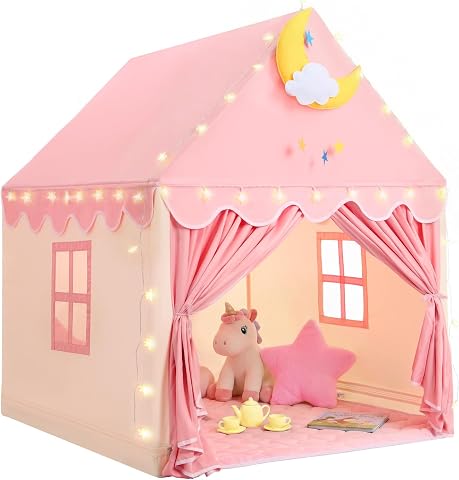
This pink indoor play tent includes a mat and star lights, creating a cozy space for reading, imaginative play, or relaxing. Its lightweight pole frame is designed for easy assembly and portability, and the tent can be used indoors or outdoors.
Pros:
- Includes a mat and star lights
- Suitable for reading and imaginative play
- Lightweight and portable
- Designed for easy assembly
Cons:
- Product information does not specify the tent’s frame material
- No price is provided
Best for: Children who enjoy a dedicated imaginative-play nook
Not ideal for: Families seeking a neutral tent or lacking room for its footprint
Bottom line: Confirm the dimensions and included accessories, then leave clear space around the entrance.
Balance Stepping Stones
Stepping stones invite children to practice moving between separate footholds, making the layout and available floor space central to this playroom slot. The listed pick is GONGE Hilltops, described as non-slip stepping stones for kids in a set of five. Plan the spacing for the room and the child who will use them.
A common mistake is assuming the stones will work on every floor or that their surface and placement need no checking. Review the product description for dimensions, materials, age guidance, and care instructions. Consider the floor surface where they will be placed and follow the manufacturer’s directions about use. Leave enough room around the arrangement for stepping on and off, and keep the route away from furniture edges and other obstacles. Check the floor and instructions before play.
For fit, compare each stone’s footprint and the set’s possible spread with the open area you have. A set of five allows for different arrangements, but use the product guidance to understand any limits and recommended setup. Store the stones where they will be easy to retrieve without creating clutter in walkways. Keep the play zone clear and supervise in line with the product guidance.
What to look for:
- Check the dimensions and footprint of each stone.
- Review age guidance, materials, care, and use instructions.
- Consider how the stones work on your intended floor surface.
- Leave clear space around the arrangement and stepping route.
GONGE Hilltops – Non-Slip Stepping Stones for Kids – Set of 5

GONGE Hilltops are colorful, durable stepping stones designed to develop children’s motor skills, balance, and coordination through fun jumping and balancing activities. Made from sturdy plastic with anti-slip rubber edges, they are safe for indoor use and promote physical and cognitive development.
Pros:
- Encourages physical activity and motor skill development
- Colorful and engaging design for children
- Safe with anti-slip rubber edges and stable structure
- Stackable for easy storage
Cons:
- Limited to indoor use due to size
- May require adult supervision for jumping activities
Best for: Families with open floor space for a stepping route
Not ideal for: Playrooms where furniture leaves no clear path between stones
Bottom line: Review the dimensions and guidance, then arrange the stones on a clear suitable surface.
Sensory Activity Table
The sensory activity table slot calls for a surface intended for hands-on play, with enough room and features to suit the child’s activities. The listed pick is a “Kids Rocking Chair” described as a sensory rocker for ages 3–8, indoor and outdoor. This pick is a rocker, not a table, so its name does not establish that it provides a tabletop for sensory materials.
A common buying mistake is selecting an item because its title includes “sensory” while overlooking the form and intended use. If you need a table, look for a listing that clearly identifies a table and provides its height, surface dimensions, materials, age guidance, and care instructions. Think through the activities you want to set out and whether the tabletop can accommodate them. Match the item to the activity before comparing options.
If the rocker itself is of interest, review its listing for dimensions, intended use, and setup guidance, and compare these with your indoor or outdoor space. For the activity-table slot, choose a product with a clearly described work surface and check that its size suits your child and the planned play area. Keep the surrounding area clear for access. Check dimensions and use guidance before placing either item in the room.
What to look for:
- For this slot, select a product explicitly described as a sensory activity table.
- Compare tabletop height and surface dimensions with your child and activities.
- Review materials, age guidance, and care instructions.
- If considering the listed rocker, verify its dimensions and intended use separately.
Kids Rocking Chair – Sensory Rocker for Ages 3-8, Indoor & Outdoor

The Calmplay Kids Rocking Chair provides a gentle rocking motion, ideal for reading, relaxing, or sensory activities at home, school, or therapy settings. Designed for children aged 3-8, it features a lightweight, durable fabric-and-metal frame suitable for indoor and outdoor use, with easy assembly and included sensory play guidance.
Pros:
- Provides a soothing rocking motion suitable for sensory needs.
- Lightweight and easy to move between spaces.
- Durable fabric and metal frame for indoor and outdoor use.
- Includes sensory play guidance for parents and caregivers.
Cons:
- Limited color options (only blue mentioned).
- Maximum weight capacity of 50 kg may not suit all children.
- Some assembly required, which may be challenging for some users.
Best for: Families looking specifically for a sensory rocker
Not ideal for: Shoppers who need a tabletop for sensory activities
Bottom line: Choose a clearly identified activity table for this slot; the named product is a rocker.
Build the room in a practical order: measure first, then choose a floor mat if it fits, and add one or two movement or imaginative-play items that match your child’s interests. Fill the tunnel slot only after checking its play and storage footprint. Treat the climbing-triangle and activity-table listings as mismatches and shop for products clearly described for those purposes. Prioritize fit and intended use as you make the checklist your own.
You do not need to fill every slot at once. Start with the play type your child uses most, check the product details, and expand when the room and routine make space for another activity. A thoughtful setup can make everyday play easier to begin and easier to put away. Choose one well-matched item at a time and enjoy seeing how your child uses the space.
Columbus Day / Indigenous Peoples' Day Picks
long weekend sales
As an affiliate, we earn on qualifying purchases.