To make play activities inclusive at home, adapt them with sensory-rich options like textured materials, bright toys, or calming tools to suit different needs. Use visual cues, auditory signals, and adjustable equipment to support various abilities. Create quiet zones for sensory breaks and use versatile, accessible equipment like wheelchair-friendly tables. Paying attention to your child’s responses helps you tweak activities for better engagement. Keep exploring ways to foster a supportive, fun environment—more ideas await to help you get started.
Key Takeaways
- Incorporate textured materials and sensory bins to provide tactile stimulation suitable for diverse sensory needs.
- Use adaptive equipment like weighted blankets, textured mats, and sensory-friendly seating to promote comfort and participation.
- Modify toys with visual cues, auditory signals, and bright colors to engage children with different sensory and communication abilities.
- Create quiet zones or sensory breaks to support emotional regulation for children overwhelmed by stimuli.
- Plan flexible activities that can be easily adjusted based on each child’s responses and evolving needs.
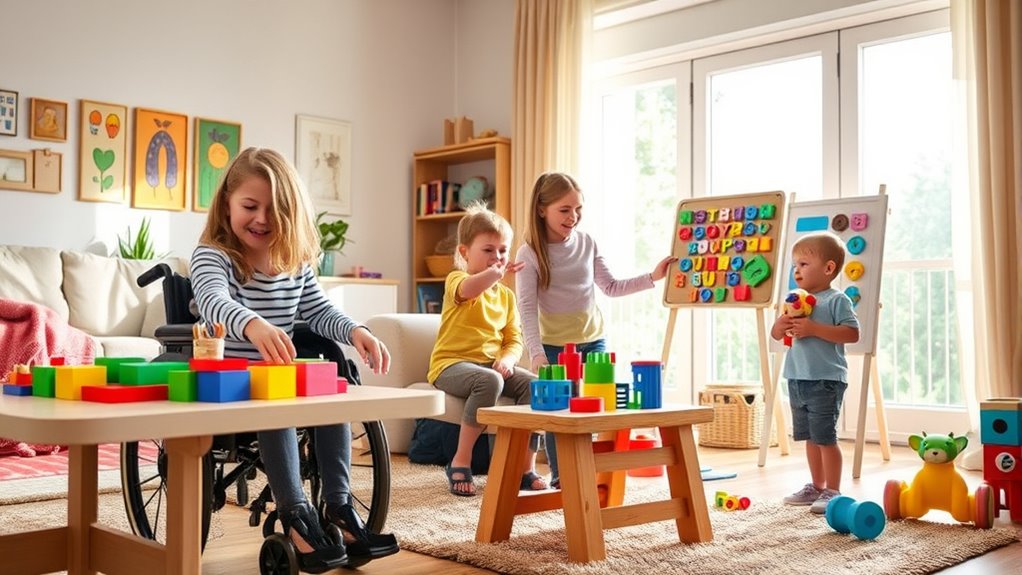
Creating an inclusive play environment at home guarantees that children of all abilities can enjoy and learn together. When designing your space, think about how sensory integration plays a crucial role in a child’s development. Sensory integration involves helping children process and respond to sensory stimuli effectively, which is essential for their overall growth and comfort. To support this, you can incorporate various sensory activities and equipment that cater to different needs. For example, sensory bins filled with textured materials like rice, beans, or water beads provide tactile stimulation, helping children to engage their senses in a fun, calming way. These activities allow children to explore their environment actively, promoting both sensory processing and fine motor skills.
Creating sensory-rich play spaces promotes engagement, growth, and inclusivity for children of all abilities.
Adaptive equipment is another critical element in creating an inclusive play area. This type of equipment is designed to meet diverse needs, ensuring all children can participate fully. Think of items like wheelchair-accessible play tables, swings with harnesses, or sensory-friendly seating options. Adaptive equipment doesn’t just remove physical barriers; it encourages independence and confidence as children interact with their surroundings. When selecting equipment, focus on versatility and safety, making sure each piece is appropriate for different abilities and age groups. For instance, a sturdy, textured mat can serve as a safe space for children to sit or crawl, regardless of mobility challenges. Incorporating such equipment invites children to engage actively without feeling excluded or overwhelmed.
You can also modify existing toys and activities to make them more inclusive. For example, adding visual cues or auditory signals to games helps children with sensory or communication differences participate fully. Using brightly colored objects or textured toys can attract attention and stimulate visual or tactile senses, making play more engaging for children with sensory processing differences. Additionally, consider creating quiet zones or sensory breaks within the play area. These zones give children a safe space to regroup if they become overwhelmed, supporting their emotional regulation and ensuring they remain engaged in play.
Ultimately, fostering an inclusive environment at home requires intentional planning and flexibility. Pay attention to each child’s responses and preferences, adjusting sensory activities and equipment to suit their evolving needs. By prioritizing sensory integration and utilizing adaptive equipment, you create a nurturing space where children of all abilities can explore, learn, and have fun together. The goal is to build a sense of belonging, where every child feels supported and empowered to participate fully in play. This approach not only enriches their development but also strengthens family bonds, fostering a truly inclusive atmosphere at home.
Frequently Asked Questions
How Can I Modify Outdoor Play Spaces for Different Abilities?
You can modify outdoor play spaces by adding sensory-friendly surfaces like rubber mulch or foam mats to provide a comfortable, safe area for everyone. Incorporate accessible climbing structures with wide ramps and supportive handrails to guarantee all abilities can enjoy. These adjustments make the space inclusive, allowing children with diverse needs to explore, play, and develop their skills comfortably and confidently.
What Are Some Budget-Friendly Adaptive Play Equipment Options?
You can create budget-friendly adaptive play equipment by making DIY projects like sensory toys from household items. For example, fill a plastic bin with rice or beans and hide small toys inside for tactile exploration. Use inexpensive materials like foam or textured fabrics to craft ramps or swings. These DIY sensory toys and simple modifications make outdoor play inclusive, engaging different abilities without breaking the bank.
How Do I Involve Children With Sensory Processing Differences?
You involve children with sensory processing differences by offering sensory-friendly tools like textured toys, soft lighting, and calming strategies such as gentle music or deep pressure. Create a welcoming environment that encourages their participation, allowing them to explore at their own pace. Use visual cues and simple choices to promote comfort and engagement, helping them feel safe and included while enjoying play and learning moments tailored to their unique needs.
Are There Specific Safety Considerations for Adaptive Play Activities?
When planning adaptive play activities, prioritize safety protocols like clear supervision and secure equipment. You should also conduct risk management by identifying potential hazards and adjusting activities accordingly. Use non-slip mats, soft padding, and age-appropriate tools to reduce injury risks. Always stay present and attentive, and communicate safety rules clearly. Regularly review and update safety measures to guarantee a safe, inclusive environment for all children during play.
How Can I Encourage Inclusive Play Among Children With Diverse Needs?
To encourage inclusive play among children with diverse needs, you should foster social inclusion by creating opportunities where everyone feels valued and involved. Promote peer engagement by guiding children to share toys, take turns, and collaborate on activities. Use adaptive tools and modify games to suit different abilities, ensuring all kids can participate comfortably. Your active encouragement helps build empathy, friendship, and a sense of belonging for every child.
Conclusion
By embracing adaptable activities, you turn your home into a vibrant playground where every ability blossoms. Imagine your space as a welcoming garden, each activity a colorful flower that everyone can enjoy. With a little creativity and patience, you create an environment where inclusion blooms like a radiant sunrise, shining warmth and joy on all. Your efforts build a haven where differences are treasures, and play becomes a symphony everyone can join in and cherish.