To create a home art studio for kids, organize supplies in clear bins, label everything, and use stackable storage to keep everything accessible and tidy. Set up dedicated zones for messy projects with protective mats and keep frequently used items within reach. Involve your kids in decorating and arranging the space to foster ownership and enthusiasm. A well-structured studio sparks creativity and responsibility—keep exploring for more ideas to make it inspiring and functional.
Key Takeaways
- Designate a specific, accessible area with organized storage bins labeled for different art supplies.
- Incorporate a dedicated messy zone with protective mats for painting and clay projects.
- Use clear containers and labels to keep supplies visible and promote easy cleanup.
- Involve children in setting up and decorating their workspace to boost ownership and creativity.
- Ensure safety by choosing sturdy storage and placing heavy items on lower shelves.
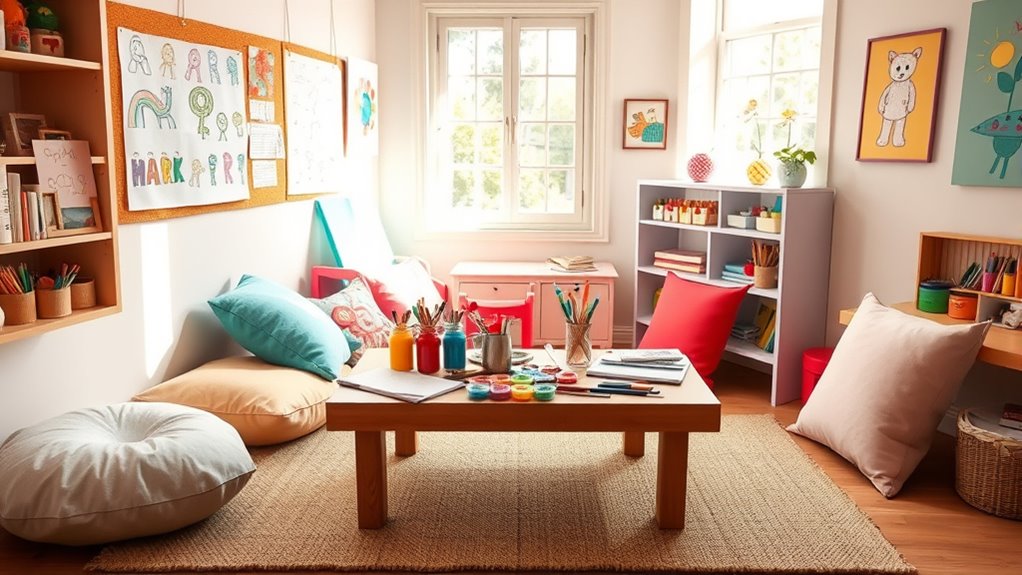
Setting up a home art studio for kids is a fantastic way to foster creativity and give your children a dedicated space to explore their artistic interests. To make this space functional and inspiring, start by organizing the art supplies. Kids need easy access to their paints, brushes, markers, crayons, paper, and other materials. Invest in storage solutions that are both practical and visually appealing. Clear plastic bins with lids are great because they allow your children to see what’s inside without rummaging through multiple containers. Label each bin with words or pictures to help your kids learn organization skills and find supplies quickly. You might also consider stackable drawers or small shelves to keep everything tidy and within reach. A dedicated art cart with wheels can be moved around easily and keeps frequently used supplies close at hand.
When choosing storage solutions, look for options that are durable and safe. Avoid sharp edges or fragile materials that could pose a hazard for young children. Keep heavy items on lower shelves to prevent accidents and make sure everything is stable. You can also repurpose household items—like mason jars for brushes or a divided tray for small items—to add a personal touch and save money. Having designated spots for each type of art supply not only makes cleanup easier but also encourages your kids to take responsibility for their workspace. When everything has a place, your children will be more inclined to keep their studio organized and ready for their next creative burst.
In addition to storage, think about creating zones within the studio. Set aside a specific table or surface for messy projects like painting or clay modeling. Cover this area with a washable mat or old newspaper to protect your floors and furniture. Keep your art supplies close to this zone but stored in a way that minimizes clutter. You might also include a small shelf or caddy nearby to hold frequently used items, so your kids don’t have to search for their favorite markers or brushes each time they start a new project. Good organization makes the studio inviting and helps your children develop good habits early on.
Finally, involve your kids in setting up their art storage and workspace. Let them choose some of their containers or decorate bins to personalize the studio. This ownership makes them more excited to use the space and keeps their creative energy flowing. Creating an environment inspired by anime movies or animated films can also motivate children to express themselves creatively and explore different artistic styles. With thoughtful storage solutions and an organized environment, your home art studio becomes a place where your kids can freely experiment, learn, and enjoy their artistic journey.
Frequently Asked Questions
How Do I Ensure Safety With Art Supplies for Young Children?
You need to prioritize safety by choosing non-toxic paints and child-proof scissors for your kids’ art activities. Always supervise their use to prevent accidents, and keep sharp or small items out of reach when not in use. Label supplies clearly, and teach your kids how to handle tools properly. Regularly check supplies for damage, and create a safe, organized space where they can explore their creativity without risks.
What Are Affordable Storage Options for Art Materials?
You’re wondering about affordable storage options for art materials. To keep everything organized, consider repurposing household items like plastic bins, mason jars, or cardboard boxes. Use clear containers so you can see supplies easily, and label each one for quick access. These storage solutions are budget-friendly and effective. Organization tips like stacking bins or using a rolling cart help maximize space, making your art area neat and accessible for your kids.
How Can I Encourage Creativity Without Making a Mess?
To encourage creativity without making a mess, try using mess-free techniques like washable paints, pre-cut paper, and reusable stencils. Implement creative organization by setting up designated stations for different art activities, using clear containers for supplies, and keeping materials within easy reach. This way, your kids can freely explore their imagination while maintaining a tidy space, making art time fun and stress-free for everyone.
What Lighting Is Best for a Kids’ Art Space?
You should prioritize natural sunlight for your kid’s art space, as it provides bright, even lighting that sparks creativity. Complement this with adjustable lighting options, like soft desk lamps or overhead lights, so you can easily modify brightness levels based on the task. This combination guarantees the space is well-lit, reduces eye strain, and creates a welcoming environment that encourages your child’s artistic expression while maintaining flexibility.
How Do I Set Boundaries for Screen Time During Art Activities?
You want to set boundaries for screen time during art activities by establishing clear digital boundaries and screen time limits. Talk with your kids about when screens are appropriate and when they should focus on hands-on art. Use timers or visual cues to enforce these limits consistently. Encouraging a balance helps your kids enjoy creative activities without over-relying on screens, fostering their imagination and fine motor skills.
Conclusion
Creating a home art studio for your kids is like opening a door to endless imagination and self-expression. With a dedicated space, you give them the freedom to explore their creativity anytime they want. Think of it as planting a seed that will grow into confidence and joy. So, set up that perfect spot and watch your child’s artistic spirit flourish—because a little creativity can turn a simple space into a world of magic.