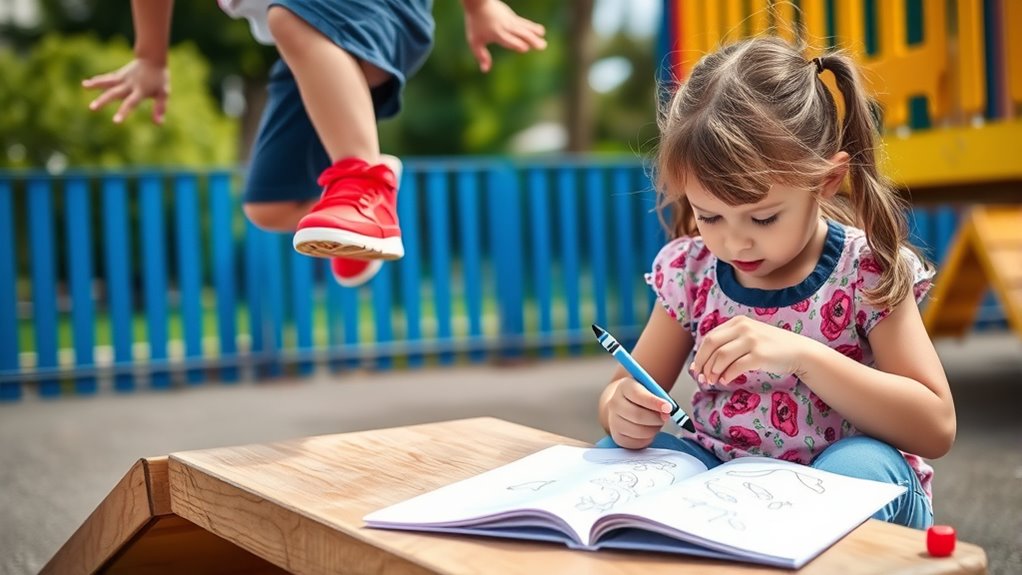

Both gross and fine motor play are essential for your child’s development because they build different skills that work together. Gross motor activities like running and jumping improve strength, balance, and coordination, while fine motor tasks such as drawing or buttoning help develop dexterity and focus. By supporting both types of play, you give your child a well-rounded foundation for physical, cognitive, and emotional growth. Keep exploring to see how combining these skills benefits your child’s overall development.
Key Takeaways
- Both gross and fine motor play are essential for comprehensive physical and cognitive development in children.
- Gross motor activities build strength, balance, and coordination, while fine motor skills enhance dexterity and hand-eye coordination.
- Engaging in both types of play promotes sensory integration and environmental awareness.
- Combining gross and fine motor activities supports skills needed for daily tasks and academic success.
- A balanced approach fosters confidence, resilience, and overall healthy growth in children.
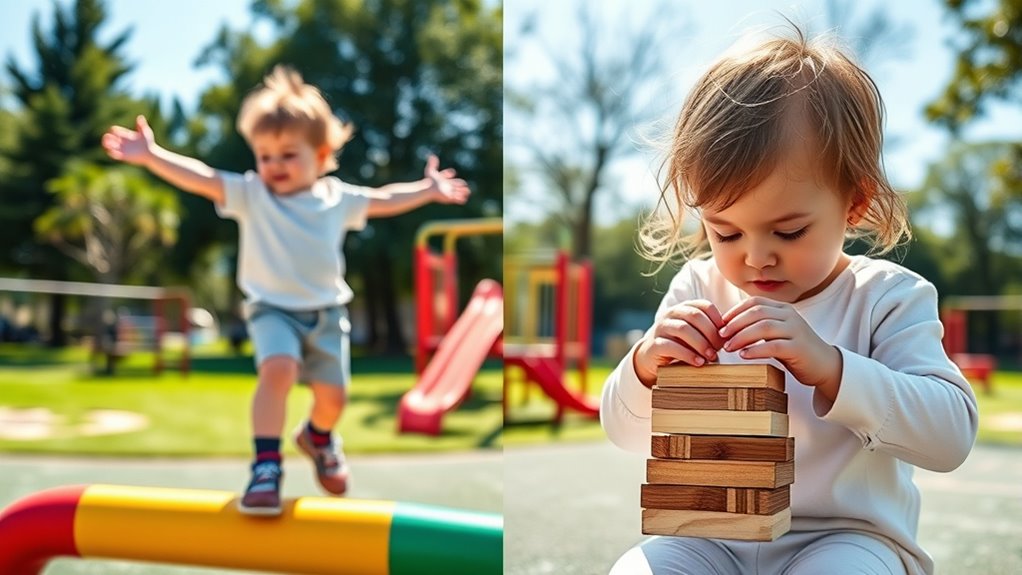
Understanding the differences between gross motor and fine motor play is essential for supporting a child’s development. When you encourage children to engage in various activities, you’re helping them build the skills they need for everyday life. Gross motor play involves large muscle movements, such as running, jumping, climbing, and throwing. These activities are often outdoors, where kids can freely move and explore their environment. Playing outside not only promotes physical strength and coordination but also enhances sensory integration, allowing children to process and respond to different sensory inputs from their surroundings. For example, riding a bike or playing tag requires balance, coordination, and spatial awareness, which are all vital for healthy development.
Gross motor play develops large muscles and coordination through outdoor activities like running, jumping, and climbing.
On the other hand, fine motor play focuses on smaller movements, primarily involving the hands and fingers. Activities like drawing, cutting with scissors, stringing beads, or assembling puzzles help children develop dexterity and hand-eye coordination. These skills are crucial for tasks such as writing, buttoning shirts, or using utensils. While fine motor activities may seem more sedentary, they are equally important for fostering concentration, patience, and problem-solving abilities. Engaging in these activities helps children refine their control over small muscles, which supports their overall cognitive and emotional growth.
Both types of play are interconnected, and a balanced approach ensures comprehensive development. For instance, outdoor activities can incorporate fine motor skills—think of kids picking flowers, digging in the dirt, or playing with sand. These experiences not only boost their physical abilities but also offer rich sensory integration, helping children interpret tactile sensations and develop a deeper understanding of their environment. When children move freely outdoors, they naturally engage in gross motor play, but they often also practice fine motor skills through activities like collecting leaves or building with sticks. This blend of play types provides a well-rounded foundation for future learning and physical health. Including a variety of activities that combine both gross and fine motor skills supports overall development effectively in early childhood.
Supporting your child’s development means recognizing the importance of both gross and fine motor activities. By encouraging outdoor play and providing opportunities for precise hand movements, you help them strengthen their muscles, improve coordination, and enhance sensory processing. Remember, a variety of activities fosters resilience, confidence, and independence. So, whether it’s climbing a tree or threading beads, both gross and fine motor play are essential pieces of the developmental puzzle. Your role in creating diverse, engaging experiences ensures your child grows into a capable, confident individual capable of tackling life’s challenges.
Frequently Asked Questions
How Do Gross and Fine Motor Skills Develop Over Time?
You’ll notice that motor skills develop through various milestones and developmental stages. Initially, your child gains gross motor skills like crawling and walking, which lay the foundation for strength and coordination. As they grow, fine motor skills such as grasping and drawing improve, enabling more precise movements. These skills evolve in tandem, supporting your child’s overall growth, independence, and ability to explore their environment effectively.
Can Activities Improve Both Motor Skill Types Simultaneously?
This question is as important as revealing a secret treasure! Yes, you can improve both motor skill types simultaneously through multi-sensory activities and integrated movement. These activities engage kids’ senses and muscles together, boosting gross and fine motor skills at once. For example, dancing while drawing or playing obstacle courses with puzzle-solving challenges helps develop coordination, strength, and precision. It’s a powerful way to maximize your child’s motor development efficiently!
What Are Signs of Delayed Motor Development in Children?
You might notice signs of delayed motor development if your child struggles with reaching motor milestones like crawling, walking, or grasping objects. Developmental delays can show up as poor coordination, weak muscle tone, or difficulty with balance and movement. If these signs persist, it’s important to consult a healthcare professional to assess your child’s progress and develop appropriate interventions to support their motor skills.
How Can Parents Support Motor Skill Development at Home?
To support your child’s motor skill development at home, you can encourage active play and set up safe environments, like playground safety measures. Incorporate movement into daily routines, such as during meal times, by involving your child in setting the table or cleaning up. These activities help develop both gross and fine motor skills, boosting confidence and coordination. Consistent practice and safe spaces are key to their growth.
Are There Specific Toys That Promote Both Gross and Fine Motor Skills?
You can find toys that promote both gross and fine motor skills, like multisensory toys and versatile playsets. These toys encourage your child to use larger muscles for activities like jumping or crawling, while also refining hand-eye coordination and dexterity with smaller movements. By offering these engaging options, you support your child’s overall motor development, making playtime both fun and beneficial for their growth.
Conclusion
You now see how both gross and fine motor play are essential for your child’s development. Did you know that children who engage in diverse motor activities tend to perform better academically and socially? By encouraging activities like running, jumping, drawing, and puzzles, you’re helping your child build strength, coordination, and confidence. So, make sure to include a variety of play in their daily routine—it’s the best way to support their growth and future success.