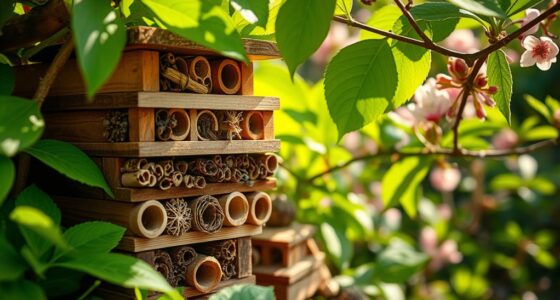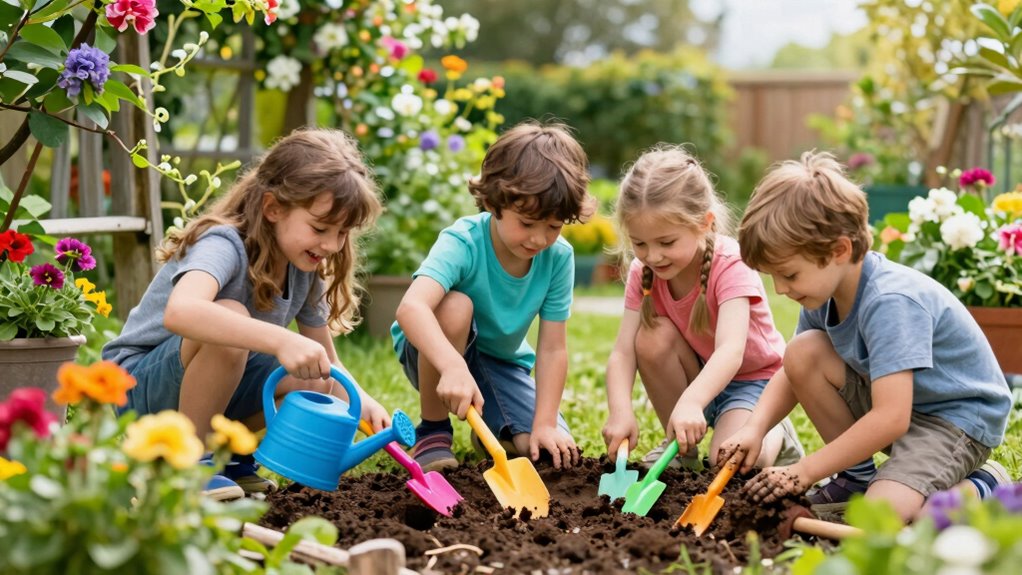

Turn gardening into daily outdoor play by providing the right tools like trowels, gloves, and watering cans to keep kids engaged and safe. Encourage plant identification and observation to deepen their understanding of nature. Let children nurture seeds, watch them grow, and experience the patience and pride that come with caring for plants. This promotes physical activity, sensory development, and environmental awareness. If you keep exploring, you’ll discover even more ways to make gardening fun and educational every day.

Get baby and family essentials delivered free — and shop member deals
- Fast, free delivery on millions of items
- Access to Prime Big Deal Days deals on October 6–7
- Prime Video, Amazon Music and more included
Key Takeaways
- Incorporate gardening activities like planting, watering, and harvesting into daily outdoor routines to make play educational and engaging.
- Use age-appropriate tools to encourage hands-on involvement and develop fine motor skills during outdoor gardening play.
- Integrate plant identification and observation to foster curiosity and deepen children’s connection with nature.
- Promote teamwork through shared gardening tasks, enhancing communication and social skills.
- Turn gardening into a sensory exploration by discovering bugs, worms, and different plant textures, enriching outdoor play experiences.
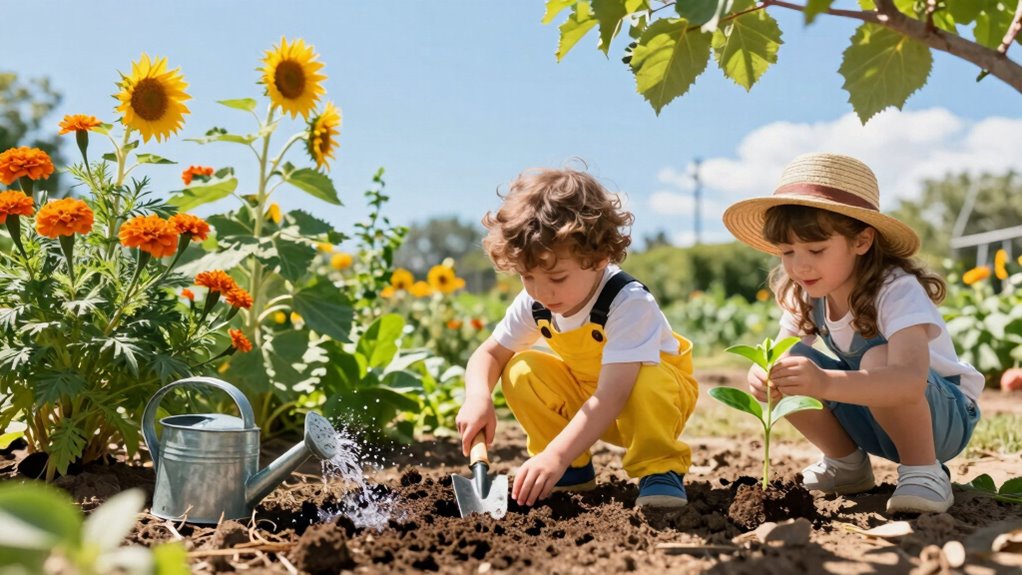
Have you ever thought about gardening as a fun and educational form of outdoor play? It’s a fantastic way to get outside, stay active, and learn about nature all at once. When you start, make sure you have the right garden tools—things like trowels, gloves, watering cans, and pruning shears. These tools aren’t just helpful; they make the experience more engaging and manageable, especially if you’re just beginning. Using proper tools helps you develop fine motor skills and teaches responsibility as you care for your plants. As you dig, plant, and water, you’ll notice how your garden begins to come alive, and that’s where plant identification comes into play.
Gardening with the right tools makes outdoor play fun, manageable, and educational for all ages.
Plant identification is a key part of turning gardening into an educational outdoor activity. It encourages curiosity and observation. You can start by learning to recognize different leaves, flowers, and stems. Bring along a simple plant guide or use a plant identification app to help you pinpoint what’s growing in your garden. As you identify each plant, ask yourself questions: Is this a vegetable, flower, or shrub? What are its needs? Why does it look this way? These questions deepen your understanding of plant life cycles and ecosystems. Plus, identifying plants adds a layer of excitement—every new discovery fuels your desire to explore more. Developing plant recognition skills can also help you notice changes in your garden over time, fostering a deeper connection with your outdoor space. Additionally, understanding plant biology can enhance your ability to care for your garden effectively and sustainably. Learning about plant health can help you identify signs of pests or diseases early, ensuring your garden stays healthy.
Gardening also turns into a hands-on lesson in patience and responsibility. When you plant seeds or seedlings, you’re nurturing growth over days, weeks, and months. You’ll see firsthand how plants depend on consistent watering, sunlight, and care. This daily routine becomes a natural part of outdoor play, where you learn to observe subtle changes and respond accordingly. As you cultivate your garden, you develop a sense of achievement—watching a tiny seed turn into a blooming flower or a ripe vegetable is incredibly rewarding. Sharing this process with others, like family or friends, can turn gardening into a social activity, reinforcing teamwork and communication.
Involving children in garden tasks makes outdoor play both fun and educational. They’ll love handling tools, digging in the dirt, and discovering bugs and worms. These activities not only foster a connection to nature but also promote physical activity and sensory development. Plus, the more you explore plant identification together, the more you’ll learn about biodiversity and sustainability. Engaging with biodiversity in your garden helps you understand the importance of supporting a variety of living organisms, which is essential for a healthy ecosystem. Furthermore, teaching children about the interconnectedness of plants and animals can inspire lifelong environmental stewardship. Gardening becomes more than just a hobby; it’s a practical, engaging way to spend your outdoor time, learn new skills, and enjoy the beauty of nature every day.
As an affiliate, we earn on qualifying purchases.
Frequently Asked Questions
What Age Is Best for Outdoor Gardening Activities?
You can start outdoor gardening activities at any age, but the best age depends on the child’s development. For young kids, around 3-5 years old, simple tasks like planting seeds and watering with small garden tools work well. As they grow, involve them in plant selection and more complex tasks. Always tailor activities to their age, ensuring safety and fun while fostering a love for gardening.
How Can I Keep Pests Away During Outdoor Play?
Did you know that pests can ruin up to 50% of outdoor gardens? To keep pests away during outdoor play, focus on pest control through natural repellents like garlic spray, neem oil, or companion planting. These methods are safe for kids and eco-friendly. Regularly inspect your garden and remove pests by hand when possible. Creating a healthy, diverse garden also discourages pests from settling in.
What Safety Precautions Are Needed for Children Gardening?
You should prioritize plant safety and always supervise children during gardening. Make sure they wear protective gear like gloves, hats, and closed-toe shoes to prevent injuries and exposure to harmful substances. Teach kids not to touch or eat plants without permission, and keep sharp tools out of reach. Regularly check the area for pests or chemicals, ensuring the environment remains safe and fun for your little gardeners.
How Long Should Outdoor Gardening Sessions Last?
You should aim for outdoor gardening sessions lasting 30 to 60 minutes, balancing fun and focus. While your child digs and plants, guarantee garden tool safety by choosing age-appropriate tools and supervising closely. Incorporate plant selection tips like colorful, easy-to-grow varieties to keep their interest high. Short sessions prevent fatigue, making gardening both educational and enjoyable, fostering a love for nature without overwhelming your little gardener.
Can Gardening Improve Children’s Outdoor Social Skills?
Yes, gardening can improve your children’s outdoor social skills. It encourages plant communication and teamwork as they work together to care for plants. By sharing tools, discussing plant growth, and solving gardening challenges, children develop social bonding and communication skills. Gardening provides a natural setting for them to interact positively, build friendships, and learn cooperation, all while enjoying the outdoors.
Conclusion
As you dig into your garden, you’re planting more than seeds—you’re nurturing curiosity and resilience. Each sprout symbolizes growth and possibility, reminding you that patience and care yield beautiful results. By turning gardening into your daily outdoor play, you create a sanctuary where nature’s lessons blossom alongside your own. Embrace this green journey, and watch how your outdoor space transforms into a living symbol of hope, renewal, and endless discovery.
Halloween Picks
halloween
As an affiliate, we earn on qualifying purchases.