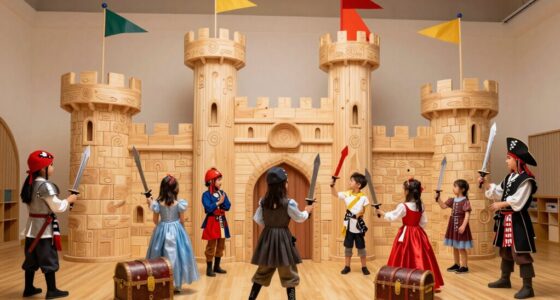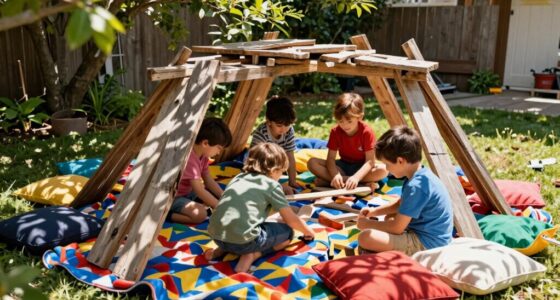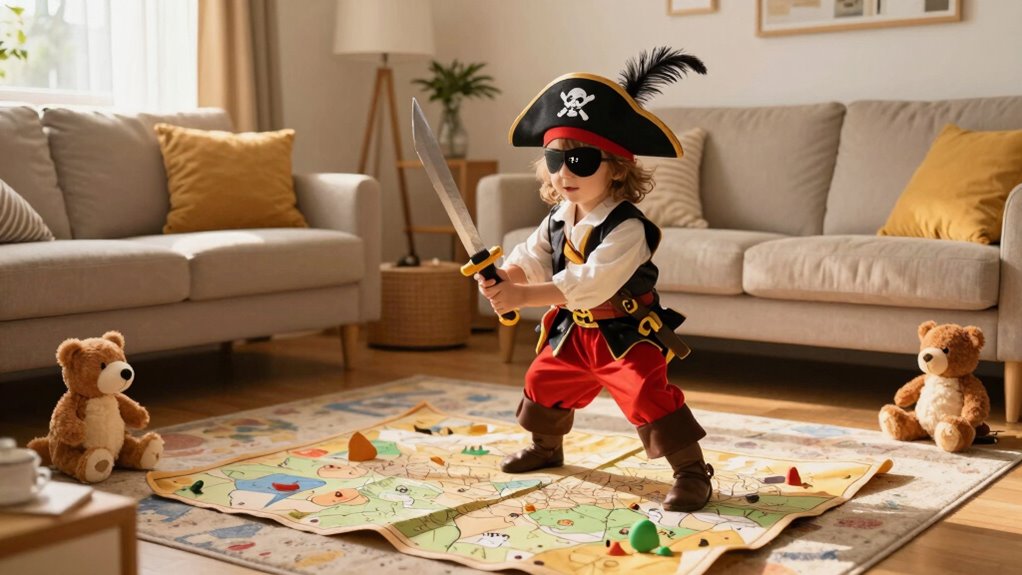

To encourage more role play at home, create fun, engaging scenarios that mimic real-life settings or imagine fantastical worlds. Use costumes, props, and storybooks to inspire creativity and make role play enjoyable rather than a chore. Incorporate educational themes like nature or careers to deepen learning. When you foster imaginative play, you help your child develop social skills, emotional understanding, and problem-solving abilities. Keep exploring ways to make role play exciting—there’s plenty more to discover!

Turn the school run and nap time into listening time
- Thousands of audiobooks, podcasts and originals
- Listen on your phone, tablet or Echo — also offline
- Cancel anytime
Key Takeaways
- Create themed scenarios using everyday objects and costumes to make role play engaging and relatable.
- Incorporate educational themes, like careers or environmental topics, to add learning value.
- Set up designated role play areas to encourage spontaneous and sustained imaginative play.
- Join in play to model social skills, communication, and problem-solving techniques.
- Use open-ended questions and prompts to inspire creativity and deeper storytelling during role play.
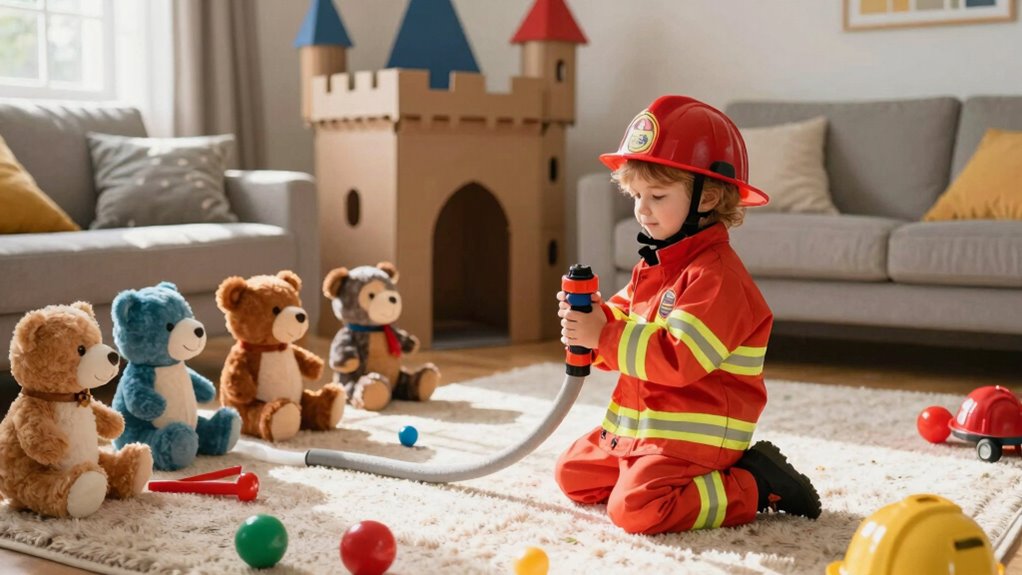
Encouraging more role play at home can boost your child’s creativity, social skills, and problem-solving abilities. When you create opportunities for your child to engage in imaginative play, you open the door to countless learning experiences. One effective way to do this is by introducing creative scenarios that are both fun and meaningful. Think about setting up situations that mimic real life or fantastical worlds—like a grocery store, a doctor’s office, or a space station. These scenarios spark your child’s imagination and keep them engaged, making role play an enjoyable activity rather than a chore.
The role play benefits extend beyond just entertainment. When your child immerses themselves in these scenarios, they develop empathy by putting themselves in others’ shoes. They learn to communicate, negotiate, and collaborate with you or other family members. For example, if you’re pretending to be a shopkeeper, your child practices asking questions, counting money, or making decisions, all of which enhance their social and cognitive skills. Additionally, role play helps children process their emotions. By acting out different roles, they can explore feelings like frustration, joy, or fear in a safe environment, which promotes emotional regulation. Understanding the importance of entertainment content like biographies and sports icons can also inspire them to learn about different careers and achievements. Incorporating educational tools such as storybooks or role-specific costumes can further enrich their imaginative experiences. Exploring biodiversity and conservation themes during play can also foster an early appreciation for the environment and living beings. Engaging in imaginative play can stimulate critical thinking and adaptability, skills that are vital for their overall development. Incorporating elements of design thinking by encouraging children to come up with their own scenarios and solutions can further enhance their creativity and problem-solving skills.
As an affiliate, we earn on qualifying purchases.
Frequently Asked Questions
What Are Some Age-Appropriate Role Play Ideas for Toddlers?
You can spark your toddler’s imagination with age-appropriate role play ideas like pretending to be a doctor or a chef, encouraging creative storytelling. Use simple costumes and props to create imaginative scenarios that captivate their interest. Playing house, vet, or shopkeeper helps develop social skills and language. Keep it fun and relaxed, allowing your toddler to explore different roles freely, fostering their creativity and confidence through engaging role play activities.
How Can I Involve Siblings in Role-Playing Activities?
Did you know that siblings who engage in shared activities like role play are 60% more likely to develop strong bonds? To involve your kids, set up collaborative storytelling or themed role-plays where they take on different characters. Encourage teamwork by giving each sibling a unique role, making sure everyone gets a turn. This not only boosts sibling bonding but also nurtures creativity and communication skills during your role-playing sessions.
What Safety Precautions Should I Take During Role Play?
You should prioritize safety during role play by using safety gear like helmets, pads, or gloves when necessary. Always supervise your kids closely, especially when they’re engaging in physically active or imaginative scenarios. Establish clear rules to prevent accidents, and stay nearby to intervene if needed. Regularly check the play area for hazards, and encourage safe, respectful interactions. These supervision tips help guarantee everyone enjoys role play safely.
How Can I Motivate Shy Children to Participate in Role Play?
Imagine a shy child hesitant to speak during a family game. You can promote confidence by starting with simple, familiar scenarios, like pretending to shop at a grocery store. Gently encouraging participation and praising efforts helps build social skills and eases anxiety. Over time, create a supportive environment where your child feels safe experimenting with role play, boosting their confidence and helping them engage more actively.
Are There Any Recommended Role Play Toys or Costumes?
You should consider costume suggestions like princess dresses, firefighter gear, or doctor kits to inspire imagination. Toy recommendations include pretend kitchen sets, dollhouses, and action figures, which make role play more engaging. These options help shy children feel more comfortable by providing familiar themes and characters. Incorporate these into playtime to boost confidence and encourage participation, making role play both fun and educational at home.
Conclusion
By opening your home to imaginative adventures, you turn everyday moments into epic stories that can rival the greatest tales ever told. When you encourage role play, you’re not just having fun—you’re nurturing creativity, empathy, and problem-solving skills that can shape your child’s future. So, keep the doors wide open and the props ready, because with your support, their imagination can soar higher than the tallest skyscraper, transforming your home into a world of endless possibilities.
Halloween Picks
halloween
As an affiliate, we earn on qualifying purchases.