TL;DR

Turn the school run and nap time into listening time
- Thousands of audiobooks, podcasts and originals
- Listen on your phone, tablet or Echo — also offline
- Cancel anytime
Educational toys for preschoolers create chances to explore, solve problems, talk, move, and invent through active play. Choose toys that fit your child’s interests and abilities, check age guidance and CPSC recalls, and remember that cardboard, crayons, and blocks can offer as much play value as expensive gadgets.
A cardboard box can become a boat before breakfast and a dragon’s cave by lunch. That kind of make-believe is a good reminder: the price tag doesn’t decide whether a toy is educational.
For children roughly ages 3 to 5, play offers everyday chances to use words, count, build, create, and solve small problems. Here’s how to choose toys that invite those moments, suit your child, and meet basic safety checks.
Look for toys that invite children to make choices, create, talk, move, or try again.
Blocks, books, art supplies, puzzles, and pretend-play materials can support different kinds of practice.
Use age guidance alongside your child’s interests, abilities, and sensory needs.
Combine independent play with occasional open-ended prompts during shared play.
Read toy warnings, inspect construction, and check CPSC recalls before buying.
What makes a preschool toy educational?
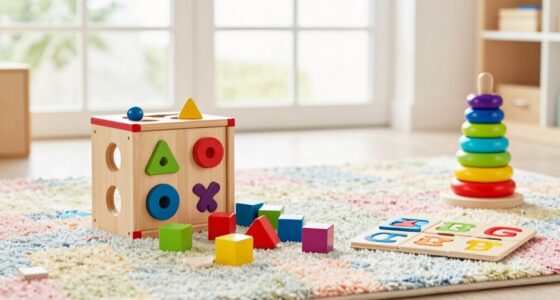
Educational toys for preschoolers invite children to do something: explore, make choices, solve a problem, communicate, create, or try again. A toy’s label matters less than the play it makes possible. A set of wooden blocks, for example, can become a tall tower, a pretend grocery store, or a line of numbered “train cars.” Each use asks the child to make different decisions, so one set can stay interesting as their ideas change.
Think of an open-ended toy as a kitchen ingredient, not a ready-made meal. The child decides what to make. While playing shop, your preschooler might count pretend apples, ask you what you’d like to buy, and invent prices—all in one lively game. Because there isn’t one correct finished product, the child can adjust the game to their current skills: you can count together at first, then let them set the prices or make up new rules.
Repeated button-pressing can entertain a child, but a flashing toy isn’t automatically educational. It may hold attention without giving the child much control over what happens next. Look for chances to make decisions and do things; the learning comes through the child’s play, and no single toy guarantees a particular result. A more structured toy can still be a good fit when your child enjoys its clear goal, though it may offer fewer ways to play once that goal is familiar.
Choose toys that turn play into many kinds of practice
Educational toys for preschoolers can create opportunities for early math, language, creativity, coordination, and social play. Choose the kind that matches what your child enjoys: a puzzle for a child who likes fitting pieces, or dress-up clothes for a child who builds elaborate stories. For example, sorting colored buttons with an adult can turn into counting, color naming, and a conversation about a made-up button shop. The same material may invite different kinds of practice depending on the child’s idea and whether someone joins in, so these possibilities are starting points rather than guaranteed lessons.
| Play material | What your child might practice | A simple play idea |
|---|---|---|
| Blocks and stacking toys | Shapes, counting, planning, coordination | Build a bridge wide enough for a toy car |
| Picture books and puppets | New words, listening, storytelling | Give a puppet a problem and invent an ending |
| Play dough and art supplies | Creative choices, hand control, describing | Make a “bakery” and name each pretend treat |
| Puzzles and sorting games | Matching, persistence, noticing patterns | Sort pieces by color before assembling the picture |
| Pretend-play materials | Conversation, imagination, cooperation | Take turns as doctor and patient with a toy animal |
These are invitations, not a checklist your child needs to complete. A puzzle offers a clear target and can be satisfying for a child who likes solving one problem at a time; blocks allow more freedom but may need an adult’s idea to get started. If a puzzle stays untouched but a pile of blocks gets used every afternoon, the blocks are the better fit right now. Interest matters because children are more likely to return to play that feels enjoyable, and repeat play gives them room to try a new approach.
Match the toy to your child, not just the age label
Age guidance is a starting point; your child’s interests, coordination, attention, and current abilities help you judge whether a toy will feel inviting. A puzzle marked for preschoolers may still be too frustrating for one child and comfortably familiar to another. Watch what happens at playtime: do they stay curious, or ask for help after every move? A toy that is far beyond their current reach can turn practice into frustration, while one that is already easy may lose its appeal quickly.
For example, if a large-piece puzzle feels hard, try sorting its pieces together by color and then leave room for your child to take over. That small adjustment lowers the number of things they have to manage at once while preserving the satisfying challenge of fitting pieces. If they love it, you can offer a puzzle with a few more pieces later. A good challenge gives them a reason to keep trying without turning play into a daily struggle.
Accessibility matters too. Look for comfortable textures and sounds, easy-to-grip pieces, adjustable difficulty, and controls a child can use. These details affect whether a child can take part independently or needs repeated adult help, so a simpler design may be more useful than a toy with extra features. If you’re unsure what suits a child with different abilities or sensory needs, ask the child or caregiver what works well for them.
Use shared play to stretch a good idea
Playing together can add conversation and cooperation to the skills a toy already invites, while independent play gives your child room to follow their own ideas. You don’t need to direct every move. Too many instructions can narrow the play to getting your approval; one open question lets the child decide what happens and gives you a way to join without taking over.
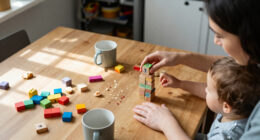
Imagine your child builds a wobbly block tower. Instead of fixing it, ask, “What could help it stand?” Your child might widen the base, fetch another block, or decide the tower is now a castle under attack. Each answer gives you a glimpse into their thinking. If they want help, you can offer a suggestion; if they are absorbed in their own plan, waiting gives them space to test it themselves.
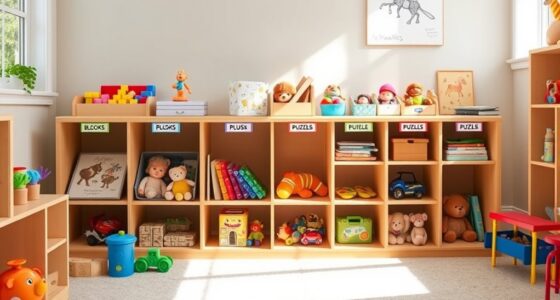
Keep a small selection within reach and rotate toys when interest fades. A few accessible blocks, books, art supplies, and pretend-play items can be easier to choose from than a crowded bin, where pieces are harder to see and gather. Everyday materials such as a clean cardboard box or crayons can refresh play without another shopping trip. Rotation can bring back a familiar toy with fresh appeal, though a child may also benefit from keeping a favorite available while other choices change.
Check safety before the toy joins the playroom
Check the age label, warnings, and current CPSC recall notices before buying a toy for a preschooler. Look over its construction and materials, and think about whether small parts, magnets, batteries, or cords suit the child. These features can create risks that depend on both the product and the child’s habits, so the age label alone cannot settle whether a toy fits your home. For example, a pretend-play set may look sturdy in the package; after opening it, check that pieces don’t loosen easily and follow the maker’s care instructions.
Age-appropriate does not mean automatically safe in every home, so consider the child’s habits and who else may use the toy. A toy that suits a preschooler may need to be stored out of reach if a younger sibling could access small parts. Inspect toys for damage over time, especially pieces that get dropped, chewed, or carried outdoors. If a toy uses an app or connects online, check what the digital feature adds, how much adult help it needs, and what data or online functions it uses; extra features can add setup and supervision needs without adding much to the play.
A useful educational toy gives children something to do, decide, or imagine. A screen or a learning claim on the box can’t make that choice for you.
Labels about recycled materials, repair, or inclusivity can also help guide a purchase, but check what a specific claim means. A toy that represents different families or abilities can make pretend play feel more welcoming; the label alone doesn’t tell you how durable or suitable it is. Weigh those claims alongside practical questions such as whether the toy fits your child’s play and can be cared for in your home.
Use this quick routine to choose your next toy
- Start with the child. Name an interest you see now: building, stories, pretend cooking, art, or movement.
- Look for active play. Ask what the child will touch, choose, build, say, or change. If the answer is mostly “watch,” think about whether that suits your goal.
- Match the challenge. Check age guidance, then consider the child’s coordination, attention, and comfort with the task.
- Check safety and recalls. Read warnings and care guidance, inspect the product, and search CPSC recall information before purchase.
- Make room for repeat play. Choose something the child can use in different ways, and put it where they can reach it.
Say your child loves animals and storytelling. A few sturdy animal figures and a cardboard box “barn” may offer more repeat play than a complicated electronic set they need you to operate each time. The figures can move between stories, while the box can become a barn, a bus, or a shelter. Try prompts such as, “Where will the animals go next?” and let the story wander.
Price is not a dependable measure of learning value. A small, well-loved set can be more useful than a large collection that is hard to manage. The practical tradeoff is whether the toy’s features earn their place: a higher price may buy convenience or a specific activity, but that matters only if it suits your child and gets used. Choose for the play you can actually picture in your home.
Frequently Asked Questions
What makes a toy educational for a preschooler?
A toy can be educational when it invites active exploration, problem-solving, creativity, movement, conversation, or shared play. A child counting pretend groceries or inventing a puppet’s story is putting those opportunities to use.
Which toys can support early math and literacy?
Blocks, puzzles, sorting toys, picture books, letter games, counting objects, and pretend-play materials all offer ways to use numbers, shapes, sounds, and stories. Try counting blocks as you build a bridge or asking your child to tell you what happens next in a book.
Are electronic toys better than traditional toys?
Not automatically. Consider whether an app or electronic feature adds active play and conversation, and check its supervision, screen, privacy, and online needs before choosing it.
How many toys does a preschooler need?
There’s no fixed number. A manageable, reachable selection that your child uses regularly can work well; rotating toys may renew interest without buying more.
What should I check before buying a preschool toy?
Read the recommended age and warnings, check construction and care instructions, and consider small parts, magnets, batteries, and cords. Search current CPSC recalls before buying, then inspect the toy for damage as your child uses it.
Conclusion
Choose the toy your child can use safely and wants to return to. A box, a handful of blocks, and a story starter may be all it takes for your living room to become a bright, noisy little world.
Cold & flu season Picks
humidifiers
As an affiliate, we earn on qualifying purchases.