
To rotate toys without making it complicated, select a few toys to stay accessible, and store the rest out of sight in labeled bins or shelves. When boredom hits, swap the current toys with stored ones, making the change feel fresh and exciting. Keep this process simple by setting a routine, such as weekly or when interest dips. Using organized storage solutions helps you stay on top of toy management effortlessly—keep exploring for more tips!

Turn the school run and nap time into listening time
- Thousands of audiobooks, podcasts and originals
- Listen on your phone, tablet or Echo — also offline
- Cancel anytime
Key Takeaways
- Keep a small, accessible selection of toys out, and store the rest out of sight for easy swapping.
- Rotate toys when your child shows signs of boredom or decreased interest.
- Use labeled bins or shelves to quickly organize and swap toys without hassle.
- Incorporate toy rotation into your regular routine for consistency and simplicity.
- Focus on a few toys at a time to prevent clutter and make rotations straightforward.
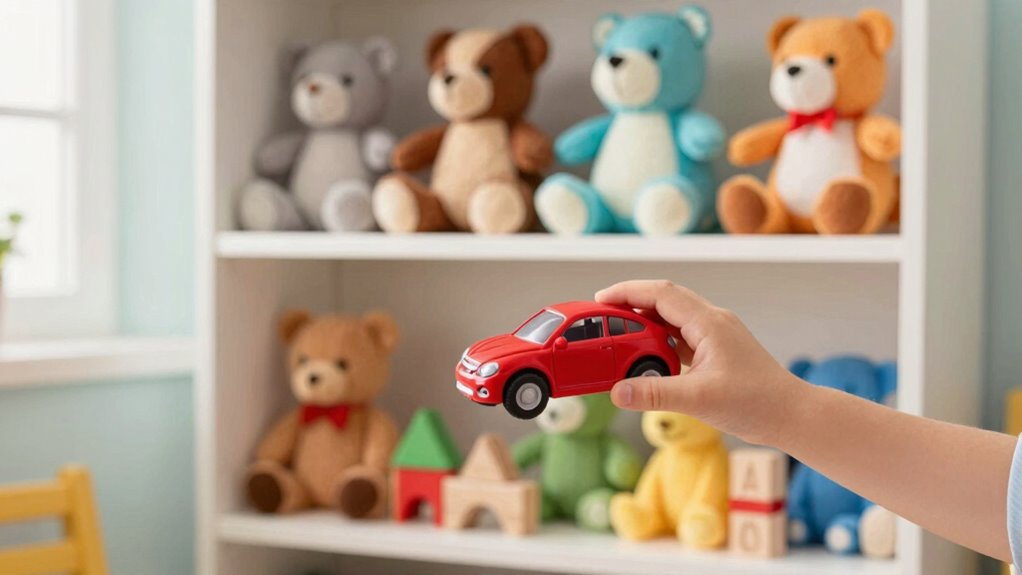
Wondering how to keep your child’s playtime fresh and engaging? One of the simplest ways is to rotate toys regularly. You don’t need complicated systems or a huge storage space—just a bit of planning and organization can make a big difference. The key is to use toy storage effectively, so you can swap out toys without creating clutter or overwhelming your child. When toys are stored out of sight, they feel new and exciting when brought back into play. This approach not only keeps playtime lively but also encourages your child’s curiosity and imagination. This method not only keeps your home tidy but also boosts your child’s engagement, as they’ll be curious to explore the toys that haven’t been seen in a while.
Rotating toys keeps playtime fresh, exciting, and your home organized without extra clutter or stress.
Start by selecting a few toys to keep accessible at any given time. Store the rest in a designated toy storage area, such as bins, shelves, or even under the bed. When your child seems bored or you’ve noticed a dip in their interest, it’s time to rotate. Simply remove some of the current toys, replace them with others from storage, and watch their curiosity rekindle. This process keeps playtime dynamic without adding stress or extra work for you. Incorporating toy management techniques can further streamline the process, making it easier to maintain your system over time. Using effective toy storage solutions can help keep everything organized and accessible, making the rotation smoother and more enjoyable. Additionally, understanding how clutter affects organization can help you design a more efficient toy rotation system. Recognizing how clutter impacts home organization can motivate you to keep your space tidy and well-structured.
To make toy rotation seamless, label storage containers or shelves with categories or age-appropriate themes. When it’s time to swap toys, you’ll find it easier to gather and put away items. Keep in mind, toy rotation isn’t about hiding toys or making playtime feel restrictive—it’s about creating a fresh experience that sparks your child’s imagination and keeps their interest high. By managing toy storage thoughtfully, you ensure that your child stays engaged and excited about play, while keeping your living space organized and clutter-free.
With a simple system in place, toy rotation becomes a natural part of your routine. It’s a smart way to challenge your child’s engagement levels without turning it into a complicated task. Instead, it becomes a fun, manageable way to keep playtime lively and your home well-organized.
As an affiliate, we earn on qualifying purchases.
Frequently Asked Questions
How Often Should I Rotate My Child’s Toys?
You should rotate your child’s toys every 2-4 weeks. This helps maintain toy safety by preventing wear and tear, and keeps playtime fresh and engaging. Regular rotation also enhances your child’s developmental and educational value from toys, as they can explore new options. Keep an eye on toy safety, ensuring no broken parts, and switch toys out to foster curiosity and learning without overwhelming your child with too many choices at once.
What Are the Best Storage Solutions for Toy Rotation?
The best storage solutions for toy rotation involve using clear, stackable storage containers for easy toy organization. Label each container to identify contents quickly, making it simple to swap toys in and out. Consider using under-bed storage or multi-compartment bins for space efficiency. These options keep toys organized, protect them from dust, and streamline your rotation process, ensuring your child always has fresh, engaging toys to play with.
How Can I Involve My Child in the Toy Rotation Process?
Did you know that involving children in decisions boosts their independence and creativity? To involve your child in toy rotation, encourage open parent-child communication by explaining why rotating toys helps keep play exciting. Let them choose which toys to put away or bring out, fostering a sense of responsibility. This process encourages creativity and makes them feel valued, turning toy rotation into a fun, collaborative activity rather than a chore.
What Signs Indicate It’s Time to Rotate Toys?
You’ll notice signs like toys becoming dull, missing pieces, or your child losing interest, indicating it’s time to rotate. Creative organization helps you spot these cues quickly, ensuring toys stay engaging and well-maintained. Rotating toys also offers educational benefits, as it introduces fresh options that stimulate your child’s imagination and learning. Keep an eye on their reactions and condition of toys to maintain a best play environment.
Are There Any Toys That Shouldn’t Be Rotated?
Certain toys shouldn’t be rotated, especially toys with batteries, plush toys, or fragile items. Toys with batteries can pose safety risks if batteries leak or corrode, so keep them out of rotation until they’re checked or replaced. Plush toys may harbor allergens or germs, so avoid rotating them frequently unless cleaned thoroughly. Focus on rotating durable, safe toys that are easy to sanitize and don’t present safety hazards.
Conclusion
Rotating your toys is like giving them a mini vacation, keeping playtime fresh and exciting. By swapping out toys regularly, you prevent clutter and spark your child’s curiosity. Remember, it’s simple and doesn’t have to be complicated—think of it as a fun game rather than a chore. With a little planning, you’ll keep things organized and your little one happily engaged, just like a treasure chest constantly revealing new surprises.
Halloween Picks
halloween
As an affiliate, we earn on qualifying purchases.