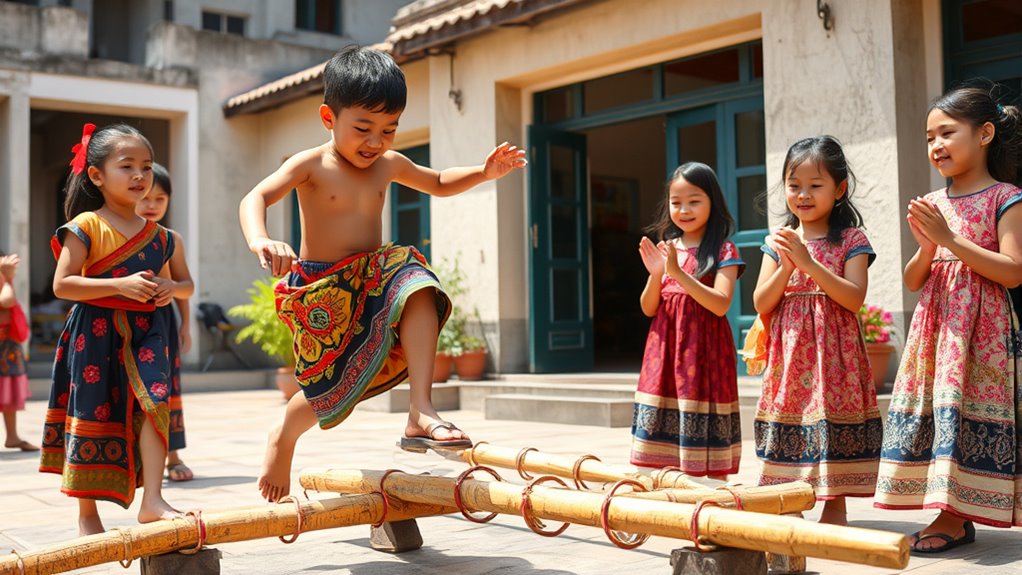

Culture greatly influences how children play around the world. It shapes whether play is structured or spontaneous, how kids interact, and what’s considered acceptable behavior. In some places, children play assertively or competitively, while elsewhere cooperation and harmony are valued. Physical contact and social norms vary as well, reflecting broader cultural values like hierarchy or equality. Understanding these differences helps you appreciate diverse play customs—if you want to explore more about how culture shapes play, keep going.
Key Takeaways
- Play styles vary globally, with some cultures favoring structured activities and others promoting spontaneous, freeform play.
- Cultural norms influence playground etiquette, emphasizing either competition and assertiveness or cooperation and consensus.
- Cultural backgrounds shape children’s perceptions of behaviors, determining whether interactions are seen as friendly or aggressive.
- Play serves as a reflection of societal values, illustrating differences in social hierarchy, personal space, and communication styles.
- Recognizing cross-cultural play differences fosters respect, inclusivity, and better understanding among children worldwide.
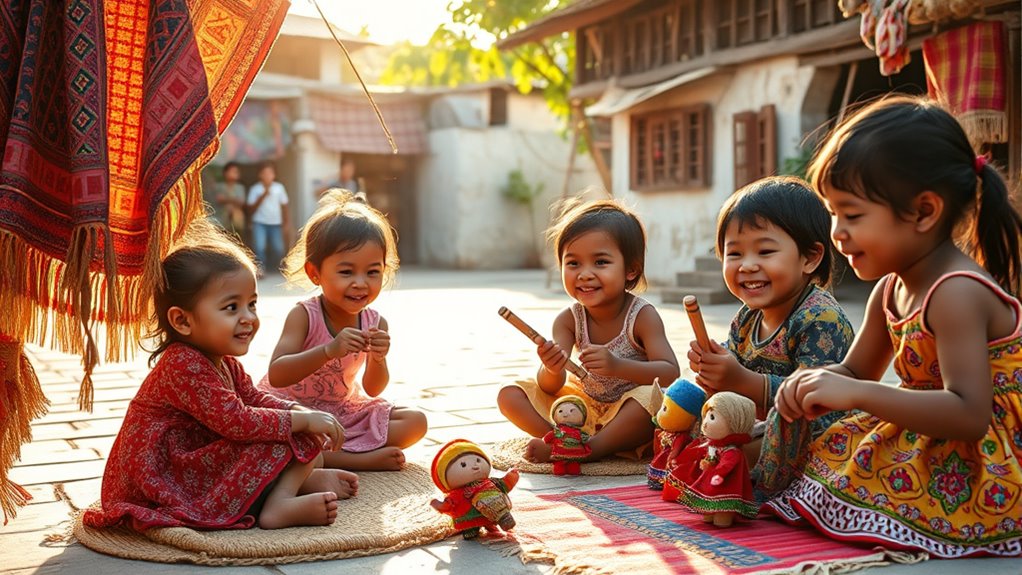
Have you ever wondered how culture shapes the way we play? It’s fascinating to realize that your approach to play isn’t just about individual preferences but is deeply influenced by the cultural environment around you. Across different societies, you’ll notice significant cross-cultural differences in how children and even adults engage in play. For example, in some cultures, play is highly structured, emphasizing rules, discipline, and social harmony, while in others, it’s more spontaneous and freeform. These differences aren’t just about the activities themselves but extend into playground etiquette—the unwritten rules that govern behavior during play. What’s considered polite or appropriate in one country might be seen as rude or confusing in another. For instance, in certain cultures, sharing toys is a given, fostering cooperation and community, whereas in others, children are encouraged to keep their belongings to themselves, emphasizing individual ownership. Understanding these nuances helps you appreciate the diversity of play styles around the world and recognize that what seems normal in one place might be unfamiliar elsewhere.
As you navigate different playground settings, you’ll find that playground etiquette varies widely. In some countries, children are encouraged to assert themselves and compete openly, while in others, cooperation and consensus are prioritized. This influences how children learn to interact, share, and resolve conflicts during play. For example, in some Asian cultures, children might be taught to wait their turn patiently and respect elders, shaping a more disciplined play environment. Conversely, in Western cultures, children might be encouraged to express themselves more freely, even if that means interrupting or taking the lead. These differences reflect broader cultural values—collectivism versus individualism, hierarchy versus equality—and show up clearly in play behaviors. Recognizing these distinctions helps you avoid misunderstandings and fosters respect for diverse play customs.
Furthermore, your cultural background influences how you interpret others’ play behavior. What you see as friendly and engaging might be perceived as overly aggressive or reserved elsewhere. In some societies, physical contact during play is common and seen as a sign of camaraderie, while in others, personal space is highly valued, and such interactions might be viewed as intrusive. By learning about cross-cultural differences and playground etiquette, you develop a more nuanced understanding of how play functions as a cultural expression. Additionally, understanding the cost of different types of bikes, such as electric bikes, can inform your perspective on mobility and leisure activities across cultures. Ultimately, these insights enable you to connect with others more effectively, respecting their norms while sharing in the universal joy of play. Recognizing that play isn’t a universal language but a culturally shaped experience enriches your perspective and deepens your appreciation for the diverse ways people around the world enjoy and learn through play.
Frequently Asked Questions
How Do Cultural Norms Influence Children’s Play Behaviors?
Cultural norms influence your children’s play behaviors by shaping what they see as acceptable or not. Play stereotypes may limit their imagination, reinforcing gender roles or social expectations. Cultural restrictions can restrict certain types of play or activities, guiding children toward behaviors aligned with their community’s values. As a result, your children’s play experiences reflect these norms, influencing their social development and perceptions of what’s appropriate in their culture.
Are There Universal Elements in Play Across Cultures?
Yes, there are cross-cultural similarities in play that highlight its universal nature. You’ll find that children worldwide engage in play that promotes social skills, creativity, and problem-solving, demonstrating inherent play adaptability. These common elements show that despite cultural differences, children naturally seek ways to learn and connect through play. Recognizing these universal aspects helps you understand that play is a fundamental part of childhood, transcending cultural boundaries.
How Does Language Affect the Way Play Is Experienced Globally?
Language influences how you experience play by shaping communication styles and reflecting cultural values. With linguistic diversity across the globe, you notice that play often involves specific words, gestures, and storytelling methods unique to each culture. These differences affect your interactions, making play more meaningful and engaging. As you adapt to various languages, you gain a deeper understanding of cultural nuances, enriching your overall play experience worldwide.
What Role Does Tradition Play in Shaping Play Activities?
Tradition plays a crucial role in shaping your play activities by preserving traditional games and encouraging ritualistic play. These activities connect you to your cultural roots, fostering a sense of identity and community. You often participate in rituals and customs passed down through generations, which influence how you play and what you value in play. This cultural continuity guarantees that traditional games remain meaningful and relevant in your life.
How Do Cultural Perceptions of Gender Impact Play Choices?
Gender roles act like invisible barriers, shaping your play choices and reinforcing stereotypes. Play stereotypes often guide what activities you’re encouraged or discouraged to pursue, reflecting cultural perceptions of gender. These perceptions influence whether you feel free to express yourself through sports, dress-up, or creative activities. Recognizing this helps you understand how societal expectations limit or expand your play, encouraging you to challenge stereotypes and explore a broader range of interests.
Conclusion
As you explore how culture shapes play, remember that nearly 70% of children worldwide engage in traditional games unique to their communities. This shows that play isn’t just fun—it’s a reflection of your culture’s values and history. By understanding these differences, you see how play connects people across borders, fostering shared identities. So, next time you play, think about how your culture influences every move, making play a truly global language of connection.