
To teach preschoolers about color theory through play, start with hands-on activities like mixing primary paints to create new shades, encouraging exploration and sensory engagement. Use playful stories, songs, and colorful materials to make learning fun and memorable. Compare shades together to develop observation skills, and connect colors to arts and media for inspiration. Keep activities lively and interactive to foster curiosity, and you’ll discover simple ways to help them understand colors while sparking their creativity.
Key Takeaways
- Use hands-on activities like finger painting to help preschoolers identify primary colors through sensory play.
- Mix primary colors in fun experiments to teach secondary color creation and color relationships.
- Incorporate storytelling and songs about colors to make learning engaging and memorable.
- Encourage children to compare shades using color swatches, fostering observation and descriptive language skills.
- Connect colors to creative media like cartoons and art projects to inspire imagination and understanding of color use.

Introducing color theory to preschoolers can be a fun and engaging way to help them understand the vibrant world around them. Kids at this age are naturally curious about colors, and you can harness that curiosity to teach basic concepts like mixing primary colors and identifying color shades. When you start exploring colors through play, children learn best by doing, so hands-on activities become your best tools.
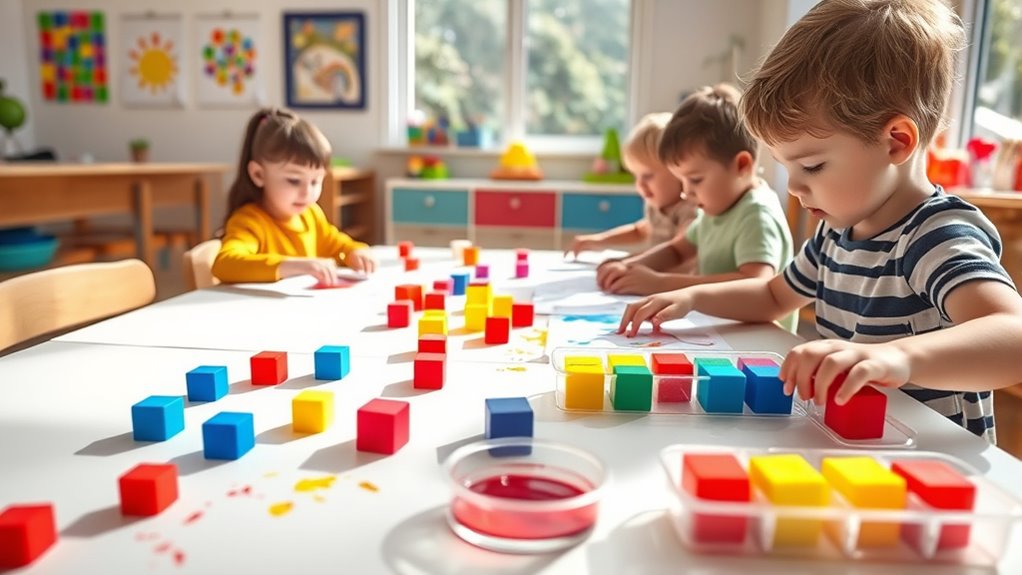
Begin by showing them the primary colors—red, blue, and yellow—and encourage them to observe and name these colors. Once they’re familiar, you can introduce mixing primary colors to create new shades. For example, you might have them pick two primary colors and watch what happens when they blend them together. Using paints, colored water, or even finger paints, children can see firsthand how mixing red and yellow produces orange, while blue and yellow create green. These experiments turn learning into a lively, sensory experience that cements their understanding of how colors interact.
Introduce primary colors—red, blue, yellow—and explore mixing to create vibrant new shades through hands-on fun.
As they experiment, you also guide them in identifying color shades. You can ask questions like, “Is this shade darker or lighter than the original color?” or “Can you find a color that’s a little more pink or a little more purple?” This encourages them to pay close attention to subtle differences and develop their ability to recognize and describe shades. You might introduce simple tools like color swatches or paint chips to help them compare shades side by side, making the concept of gradation clear and tangible. Additionally, exploring color theory in animation can inspire children by showing how colors are used creatively in movies and cartoons.
Throughout these activities, keep the tone playful and encouraging. Celebrate their discoveries—whether they mix the colors perfectly or create a new shade that surprises you. Use storytelling to make the concepts stick; for example, pretend the colors are characters in a story, each with its own personality and unique shade. Incorporate songs or rhymes about colors and mixing to reinforce learning in a fun, memorable way.
Frequently Asked Questions
How Can I Incorporate Color Mixing Into Daily Play Routines?
You can incorporate color mixing into daily play routines by setting up simple sensory exploration activities. Use materials like water, food coloring, or paint for kids to experiment with combining colors. Encourage them to observe how mixing colors creates new shades, fostering curiosity and understanding. Incorporate these activities during snack time, art projects, or outdoor play, making color mixing a fun, educational part of your everyday routine.
Are There Specific Colors That Stimulate Preschoolers’ Development More Than Others?
You’ll find that bright primary colors like red, blue, and yellow often appeal to preschoolers’ color preferences and can stimulate their senses effectively. These colors are linked to positive emotional associations, encouraging engagement and exploration. Using a variety of vibrant hues in your activities can boost their development by fostering curiosity, improving recognition skills, and supporting emotional understanding through color interactions.
What Are Some Age-Appropriate Art Tools for Exploring Colors Safely?
You should choose age-appropriate art tools like safe brushes and washable paints for preschoolers. Safe brushes have soft bristles and non-toxic handles, ideal for little hands. Washable paints allow easy cleanup and reduce mess, making exploration safer and more enjoyable. These tools encourage creativity while ensuring safety, helping children learn about colors confidently. Always supervise their art activities to keep the experience fun and risk-free.
How Do Cultural Differences Influence Children’s Understanding of Colors?
Imagine a world painted with vibrant hues, each color telling a story. You’ll see that cultural symbolism and language influence shape children’s understanding of colors, making some shades more meaningful in certain cultures. For instance, white might symbolize purity in one place but mourning in another. As you guide children, recognize how these cultural differences influence their perceptions, helping them appreciate the rich tapestry of global color meanings.
Can Color Theory Activities Support Children With Visual Impairments?
Yes, color theory activities can support children with visual impairments by incorporating adaptive techniques and sensory integration. You can use textured, high-contrast, or tactile materials to help them explore colors through touch and sound. By modifying activities to their sensory needs, you enable meaningful engagement, foster understanding of color concepts, and promote inclusive play. This approach ensures all children benefit from the educational and developmental opportunities color activities provide.
Conclusion
As you explore color theory with preschoolers through play, you’ll notice how spontaneous moments often reveal the most surprising lessons. Coincidentally, those small, unplanned discoveries become powerful teaching tools, turning everyday activities into vibrant lessons. By embracing these chance moments, you foster a love for color and learning. So, keep encouraging playful exploration—sometimes, the most meaningful lessons happen when you least expect them.