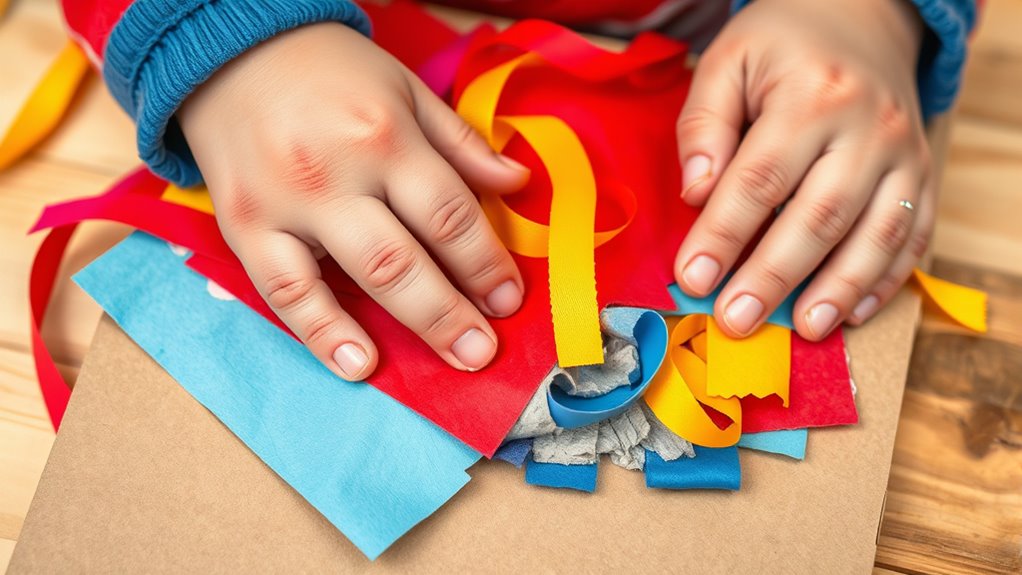

To build fine motor skills through collage techniques, you can focus on activities that involve cutting, ripping, and gluing textured materials like paper and fabric. Manipulating small objects and layering textures improve hand-eye coordination and finger strength. Tasks such as shaping, tearing, and pressing materials require precision and control, which enhance dexterity. Engaging in these artistic processes stimulates sensory development and fine motor growth, and if you continue, you’ll discover even more ways to strengthen tiny muscles and coordination skills.
Key Takeaways
- Incorporate tearing and ripping of paper to develop hand strength and control.
- Use precise cutting with scissors to enhance fine motor coordination and dexterity.
- Apply glue with small brushes for detailed placement and finger strength building.
- Layer textured materials to improve tactile engagement and manual precision.
- Manipulate small objects and found items to refine hand-eye coordination and finger agility.
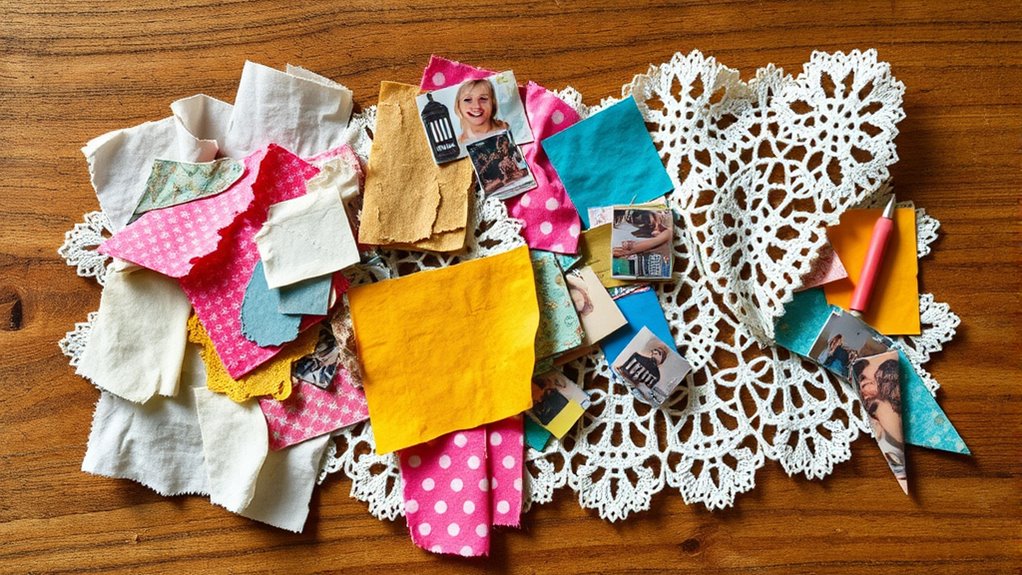
Ever wondered how artists transform everyday materials into mesmerizing artwork? One of the most captivating techniques is collage, which involves combining various objects and textures to create a unified piece. When you immerse yourself in collage work, you’re engaging in more than just assembling images; you’re developing fine motor skills as you carefully manipulate and arrange different materials. Incorporating mixed media is a key aspect of this process, allowing you to combine paper, fabric, photographs, and even small found objects into a single artwork. This approach not only makes your piece more dynamic but also challenges your hand-eye coordination. As you work with different textures, you learn to control your movements with precision, which is essential for developing fine motor skills. Additionally, working with diverse materials can stimulate sensory development, which supports overall personal growth. Creating textured layers is another fundamental element in collage art. When you build up layers of varied materials, you’re actively practicing dexterity—peeling, cutting, gluing, and layering—each requiring control and patience. For example, ripping paper into rough edges or cutting intricate shapes demands control and steadiness. Applying textured materials, like fabric or textured paper, involves gripping and pressing, which further enhances your hand strength and coordination. These textured layers add depth and physical interest to your artwork, making it more tactile and engaging. As you experiment with different textures, you become more adept at manipulating small objects and controlling your movements for detailed work. Throughout the process, you’ll discover that working with mixed media and textured layers encourages deliberate, focused actions. This attention to detail helps build endurance in your fine motor muscles, improving your ability to perform precise tasks over time. Using scissors to cut out shapes or applying glue with a small brush demands steady hands and careful control, reinforcing skills like hand steadiness and finger strength. As you layer materials, you also learn to think critically about composition and balance, which sharpens your visual and spatial awareness. All these activities—cutting, gluing, tearing, arranging—are excellent exercises for developing fine motor skills, especially for kids or anyone looking to enhance their manual dexterity.
Frequently Asked Questions
How Can Collage Activities Improve Children’s Handwriting Skills?
You can help children improve their handwriting skills through collage activities by encouraging texture exploration and color matching. As they manipulate different materials, they develop finger strength and coordination essential for writing. When they cut, paste, and arrange pieces, they refine hand-eye coordination and control. These activities also boost concentration and patience, making handwriting practice more engaging and effective. Incorporating various textures and colors keeps children motivated while strengthening their fine motor skills.
What Safety Precautions Should Be Taken During Collage Art?
Think of safety as your superhero shield during collage art. You should always have your child wear safety gear like smocks and gloves, especially when using glue or scissors. Keep a close eye on them through vigilant supervision, ensuring they don’t handle sharp tools or toxic materials alone. Creating a safe environment helps your little artist explore confidently, turning each project into a fun and worry-free adventure.
Are There Specific Age Groups Best Suited for Collage Techniques?
You’ll find that collage techniques suit a range of age groups, especially when you choose age-appropriate activities aligned with developmental milestones. Young children benefit from simple cutting and gluing to develop fine motor skills, while older kids can handle more detailed projects. Tailoring your projects to their age guarantees they stay engaged and challenged, helping them build confidence and refine their motor coordination effectively.
How Can Collage Help Children With Sensory Processing Issues?
Imagine being transported back to a time when children explored worlds through tactile exploration. Collage helps children with sensory processing issues by promoting sensory integration through hands-on activities. As they manipulate various textures and materials, they improve their ability to process sensory input. This engaging process encourages focus, calming overstimulation, and enhances coordination, giving children a safe space to build confidence while developing essential fine motor skills.
What Materials Are Most Effective for Developing Fine Motor Skills?
You should use textured materials like fabric scraps, textured paper, and foam to enhance fine motor skills through texture exploration. Incorporate small, colorful pieces so children can practice color matching and grasping. Using scissors, glue, and tweezers with these materials encourages precise movements, improving hand-eye coordination. By engaging with diverse textures and colors, kids develop dexterity and sensory awareness, making the activity both fun and beneficial for fine motor development.
Conclusion
By exploring these collage techniques, you’ll find your fine motor skills growing stronger like a tree reaching for the sky. Each cut and paste sharpens your hand-eye coordination and boosts your confidence. Remember, practice makes perfect, and with every new project, you’re building a sturdy foundation for more intricate artwork. So, pick up those scissors and glue, and watch your skills blossom like a vibrant garden in full bloom. Keep creating, and enjoy the journey!