
You learn that through repeated play, children build motor skills, gain confidence, and develop social understanding. Repetition helps strengthen muscles, improve coordination, and internalize social rules like sharing and turn-taking. It also reinforces neural pathways, making new skills feel natural and less intimidating. As children practice, they become more resilient and motivated to explore and learn. Keep exploring, and you’ll discover how these repeated activities truly shape a child’s growth and development.

Turn the school run and nap time into listening time
- Thousands of audiobooks, podcasts and originals
- Listen on your phone, tablet or Echo — also offline
- Cancel anytime
Key Takeaways
- Repetition in play refines motor skills and enhances coordination through consistent practice.
- It reinforces understanding of social rules and improves communication via repeated social interactions.
- Repetition solidifies neural pathways, supporting long-term memory and making skills feel natural.
- Children gain confidence and emotional resilience as they master activities through repeated efforts.
- Engaging in repeated natural environment activities deepens understanding of ecosystems and promotes holistic learning.

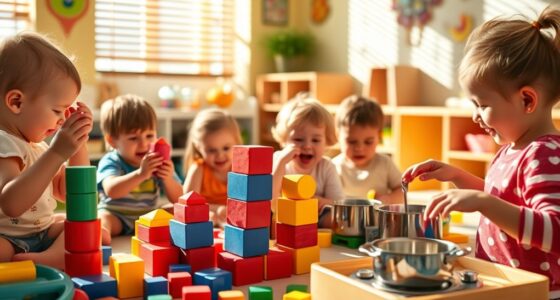
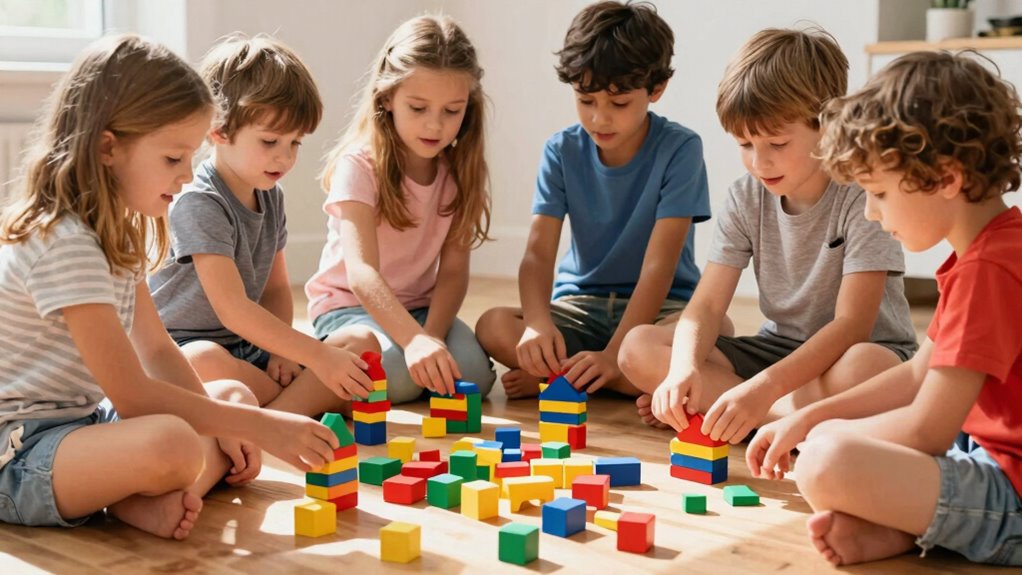
Children learn through play, especially when they repeat activities. When your child engages in the same game or movement multiple times, they’re building essential skills that serve as the foundation for their development. Repetition helps children refine their motor skills, such as grasping objects, jumping, or balancing. Each time they practice, their muscles strengthen and coordination improves, making these actions more natural and effortless over time. For example, stacking blocks repeatedly not only enhances their fine motor skills but also teaches patience and persistence. As they master these movements through repetition, they gain confidence and independence in their physical abilities.
Repetition in play also plays a pivotal role in developing social interaction skills. When children repeat certain social games or role-playing activities, they learn how to communicate, share, and interpret social cues. Playing the same game multiple times allows them to grasp the rules and expectations, which boosts their understanding of social norms. If your child enjoys playing pretend or engaging in group activities, they’re practicing turn-taking, patience, and empathy. These repeated interactions help them understand others’ perspectives and develop meaningful relationships. Over time, they become more comfortable maneuvering social situations, which is essential for their emotional growth and social competence. Repetition can also help children remember and internalize social rules, making their interactions smoother and more confident.
You might notice your child returning to favorite activities again and again. It’s not just about fun—repetition provides a safe space for them to experiment and learn. When they master a movement or social interaction through repeated practice, they’re reinforcing neural pathways that support long-term learning. This process makes new skills feel more natural and less intimidating. Consistent practice helps children solidify their understanding and build resilience when faced with challenges. As they gain mastery, they’re more willing to try new challenges, knowing they can fall back on familiar strategies. Moreover, when children see their progress, it motivates them to continue exploring and learning through play. Incorporating biodiversity into their play activities, such as exploring natural environments or observing animals, can also reinforce their understanding of the importance of living organisms and ecosystems. Understanding the role of repetition in strengthening neural pathways emphasizes how vital consistent practice is for their development and how it supports the development of motor and social skills. Additionally, awareness of learning through play highlights the importance of safe, engaging environments for children to develop resilience and confidence.
Frequently Asked Questions
How Does Repetition in Play Affect Long-Term Memory?
Repetition in play considerably boosts your child’s long-term memory by strengthening neural connections, aiding memory retention. When kids repeatedly engage in the same activities, their cognitive development improves as they better understand concepts and routines. This consistent practice helps solidify learning, making it easier for children to recall information later. Ultimately, repetition in play supports their brain growth and enhances their ability to retain and apply knowledge over time.
What Types of Play Activities Best Promote Learning Through Repetition?
You might think only complex games boost learning, but simple activities like stacking blocks or role-playing actually excel. These repetitive play types enhance motor skills and encourage social interaction, making learning natural and fun. Ironically, it’s often the simplest games that provide the most profound benefits, as children repeatedly practice movements and communication, solidifying skills. So, don’t overlook the power of basic, repetitive play for your child’s development.
How Can Parents Encourage Healthy Repetition Without Boredom?
You can encourage healthy repetition by setting creative boundaries that challenge your child without causing boredom. Introduce new variations of familiar activities to keep sensory exploration engaging, like changing materials or themes. Offer gentle guidance to help them discover different ways to approach play. By balancing structure with novelty, you foster both comfort and curiosity, ensuring your child stays motivated and develops essential skills through enjoyable, repetitive play.
Does Repeated Play Lead to Improved Problem-Solving Skills?
Yes, repeated play acts as a springboard for improving problem-solving skills. Think of it as sharpening a blade—each round helps your child hone their abilities. Through creative exploration, they discover new solutions and strategies. Repetition reinforces skills, making them more automatic and accessible, which boosts confidence. As your child revisits activities, they learn to approach challenges with greater insight, turning play into a powerful tool for cognitive growth.
How Does Repetition Differ Across Age Groups in Children?
Repetition varies across age groups due to age-specific learning and developmental stages. Younger children often repeat activities to explore and understand their environment, while older children repeat tasks to refine skills and master concepts. As children grow, their play becomes more complex and purposeful, reflecting their developmental progress. You’ll notice that each age group’s repetitive behaviors serve different learning needs, helping them build on previous knowledge and develop new abilities.
Conclusion
So, when you see children circling back to the same game or activity, remember it’s more than mere mimicry. Repetition reveals their remarkable drive to develop, deepen, and discover. Through playful practice, they perfect their skills and reinforce understanding, building a sturdy foundation for future learning. Embrace their enthusiasm, encourage their curiosity, and watch how play transforms into powerful progress. Repetition isn’t just routine; it’s the secret to their soaring success!
Halloween Picks
halloween
As an affiliate, we earn on qualifying purchases.