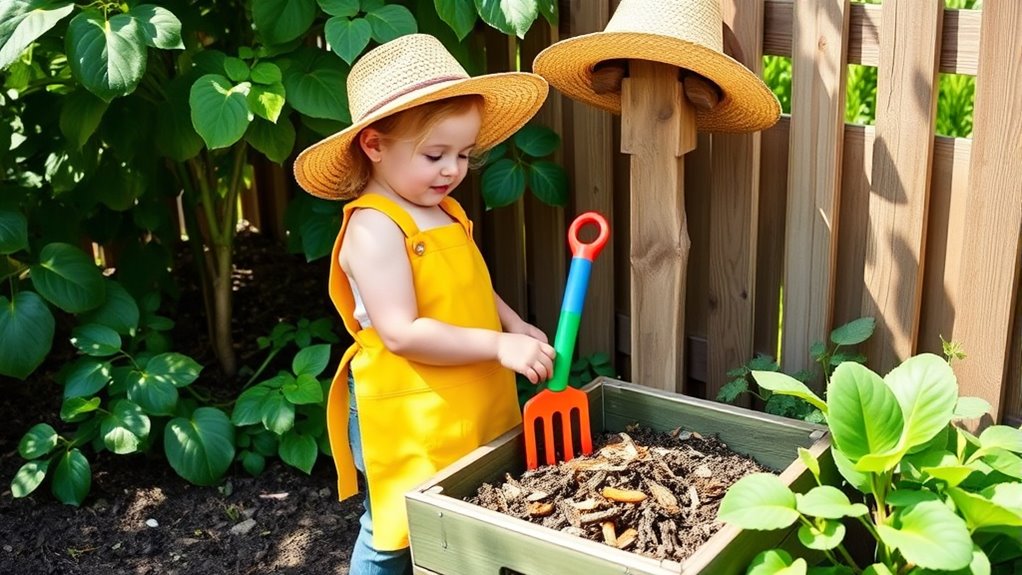
To care for the environment with children, give them simple, age-appropriate tools like small recycling bins, gloves, or watering cans. Assign easy tasks such as sorting recyclables, watering plants, or picking up litter during outdoor activities. These hands-on roles build responsibility and awareness early on. By involving children in daily eco-friendly habits, you set the stage for a lifetime of caring behaviors. Keep exploring ways to help children become environmental heroes.
Key Takeaways
- Provide children with age-appropriate recycling bins to teach proper sorting and waste management habits.
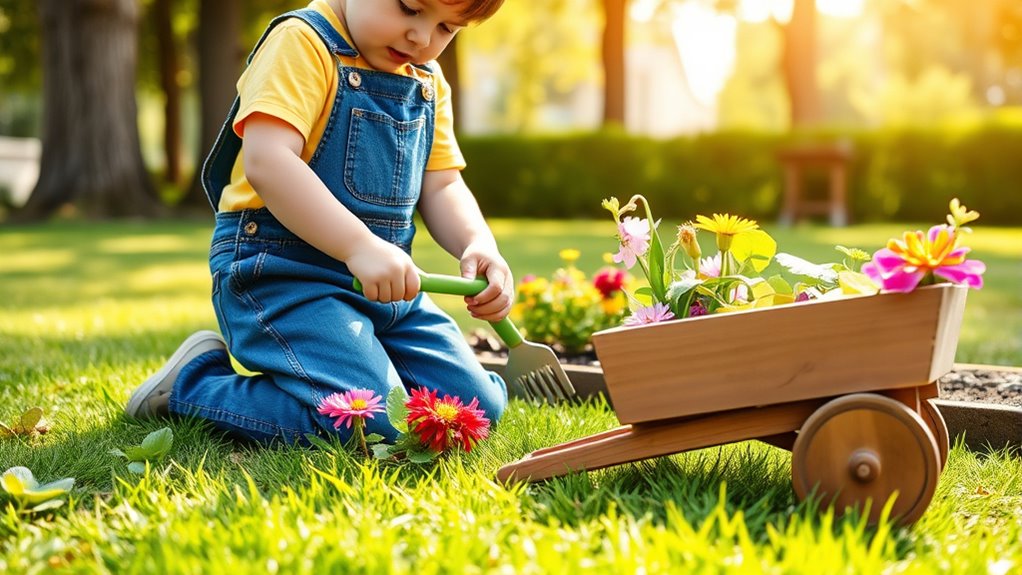
- Introduce child-sized gardening tools to foster outdoor responsibility and environmental care.
- Assign simple eco-friendly tasks, like watering plants or collecting recyclables, to develop routine environmental habits.
- Use reusable containers and utensils suitable for children to reduce single-use waste during daily activities.
- Incorporate outdoor activities that educate children about nature, wildlife, and conservation practices.
Have you ever thought about how your daily actions impact the environment? It’s easy to overlook how small choices add up over time, especially when it comes to your recycling habits and outdoor activities. As someone who cares about the planet, you can make a real difference by being mindful of what you do each day. Recycling isn’t just about tossing cans and bottles into a bin; it’s about developing habits that reduce waste and conserve resources. When you get into the habit of sorting your recyclables correctly, you help guarantee that materials like plastic, paper, and glass get reused rather than ending up in a landfill. Teaching children to recycle from a young age encourages them to develop environmentally responsible behaviors that stick with them into adulthood. You can set an example by showing them how to rinse out containers, flatten boxes, and place items in the proper bins. These small acts can inspire lifelong habits that benefit the environment.
Outdoor activities also play a crucial role in caring for the environment. Whether you’re hiking, biking, or simply playing in the park, you have a chance to connect with nature and learn how to protect it. When you participate in outdoor pursuits, you become more aware of the importance of preserving green spaces and wildlife habitats. You can teach children to respect nature by encouraging them to stay on designated paths, avoid disturbing plants and animals, and pick up trash they see along the way. Bringing reusable water bottles, snacks in eco-friendly packaging, and avoiding single-use items during outdoor adventures reduces waste and minimizes your ecological footprint. Additionally, engaging in outdoor activities with children offers an excellent opportunity to educate them about environmental issues and how their actions matter. You can show them how to be gentle with the environment, such as turning off unused flashlights, conserving water, and recycling any waste they generate.
Making small changes in your daily routine can have a meaningful impact on the environment. Incorporating good recycling habits and being mindful during outdoor activities helps create a healthier planet. When you model these behaviors for children, you’re not only teaching them practical skills but also instilling a sense of responsibility to care for the earth. Every effort counts, from properly sorting waste to respecting nature during outdoor adventures. By consciously choosing eco-friendly options and encouraging children to do the same, you’re nurturing a new generation that values and protects the environment. Remember, caring for the planet isn’t just a big task; it’s a series of small, consistent actions that, when combined, lead to significant change.
Frequently Asked Questions
How Can Children Learn About Recycling Effectively?
You can teach children about recycling effectively through engaging recycling games that make learning fun and interactive. Incorporate eco storytelling to help them understand the importance of caring for the environment and the impact of recycling. Encourage hands-on activities, like sorting waste, and use stories that highlight eco-friendly habits. These methods help children grasp recycling concepts, making them more likely to adopt sustainable behaviors naturally.
What Are Safe Tools for Children to Pick up Trash?
Think of child-friendly tools as gentle giants for trash pickup, making safety and fun collide. You should provide children with lightweight, sturdy gloves, tongs, or grabbers designed for little hands. These tools act like trustworthy sidekicks, helping kids pick up trash without risking cuts or injuries. Always supervise and teach proper use, turning trash pickup into an adventure where safety is your guiding star.
How Can I Introduce Environmental Concepts to Young Kids?
You can introduce environmental concepts to young kids through fun nature exploration activities that spark curiosity. Encourage sustainable habits like recycling and conserving water by modeling them yourself. Use simple stories or games that highlight the importance of caring for the environment, making it engaging and memorable. By involving children in outdoor activities and discussions, you help them develop a love for nature and a sense of responsibility early on.
What Are Age-Appropriate Tasks for Children to Help the Environment?
You can teach young kids simple tasks like planting seeds in a small, child-sized garden, which introduces sustainable gardening. Encourage eco-friendly crafts using recycled materials to foster creativity and environmental awareness. These activities let children “get their hands dirty,” showing them how their efforts make a difference. Keep tasks fun and manageable, so they feel accomplished while learning to care for the planet in ways suited to their age.
How Can I Encourage Children to Develop Eco-Friendly Habits?
You can encourage children to develop eco-friendly habits by modeling eco-conscious choices yourself and involving them in sustainable routines. Teach them about recycling, conserving water, and using reusable items. Make these habits fun and engaging, like turning recycling into a game. Praise their efforts to reinforce positive behavior. By consistently practicing sustainable routines and showing your commitment, you inspire children to adopt eco-conscious choices naturally.
Conclusion
So, you might think that small tools for kids are just toys, but they actually teach responsibility and respect for the environment. Ironically, by giving children child-sized tools, you’re helping them develop habits that protect the planet—something adults often overlook. It’s funny how tiny hands can make a big difference. So, next time you’re tempted to dismiss their efforts, remember: even the smallest actions by kids can have a huge impact on our world.