
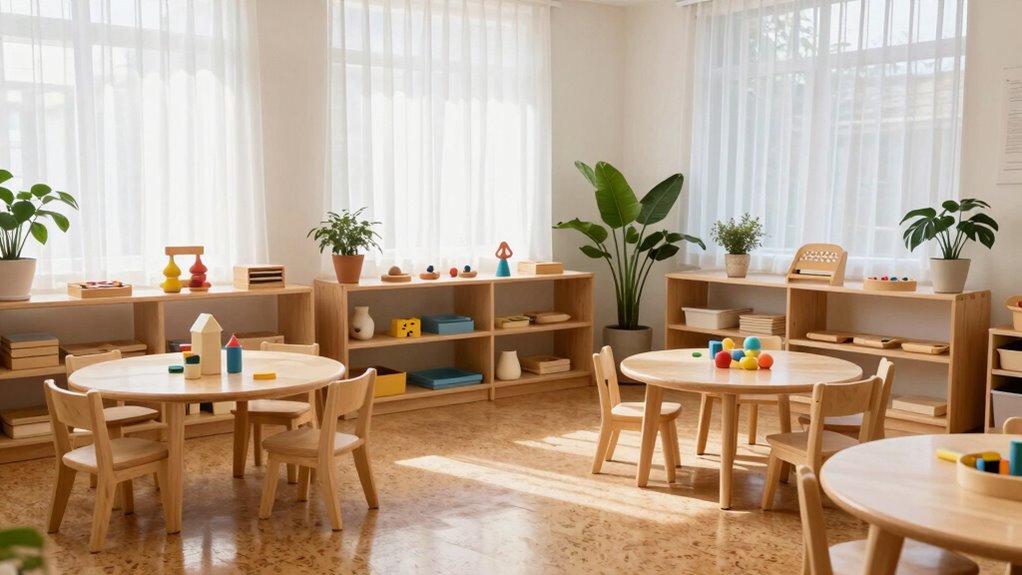

A calm Montessori play space feels peaceful and inviting, with soft natural light, gentle colors, and clutter-free surfaces that promote focus. You’ll notice natural materials like wood, cotton, and wool that invite touch and sensory exploration. The environment is simple yet purposeful, encouraging independence and mindful movement. It’s a place where quiet curiosity and confidence grow through carefully chosen activities. If you keep exploring, you’ll discover how each detail fosters development and serenity.

Turn the school run and nap time into listening time
- Thousands of audiobooks, podcasts and originals
- Listen on your phone, tablet or Echo — also offline
- Cancel anytime
Key Takeaways
- It offers a peaceful environment with natural light, muted colors, and minimal clutter to promote focus and tranquility.
- The space uses natural materials like wood, cotton, and wool to create warmth and sensory engagement.
- Items are intentionally accessible at child’s eye level, fostering independence and self-directed exploration.
- Movement activities are gentle and purposeful, supporting motor skills and sensory development.
- Overall, it feels like a nurturing sanctuary that encourages calm, curiosity, and holistic growth.

Have you ever wondered how a peaceful, well-designed space can transform a child’s learning experience? When you walk into a calm Montessori play space, you immediately sense a gentle stillness that encourages focus and curiosity. This intentional design supports biodiversity by incorporating natural elements that connect children with the environment. This isn’t just about tidiness; it’s about creating an environment where a child feels safe and inspired to explore. The atmosphere is quiet but lively, filled with natural light and soft textures that invite touch and discovery. You notice the deliberate use of natural materials—wood, cotton, wool—that bring warmth and authenticity to the space. These materials aren’t just aesthetic choices; they serve a purpose in sensory exploration, helping children develop a deeper awareness of textures, shapes, and sounds. As they manipulate smooth wooden blocks or feel the roughness of untreated fabric, their senses are engaged in a meaningful way.
The design of a calm Montessori space focuses on simplicity and order, which helps children feel grounded. Each item has a clear purpose and is easily accessible, encouraging independence. You see shelves at a child’s eye level, stocked with carefully selected materials that foster concentration and self-directed activity. The environment promotes calmness through its restrained color palette—muted earth tones and soft pastels—that soothe the mind and reduce overstimulation. Without loud colors or overwhelming clutter, children can focus on their tasks without distraction, allowing their sensory exploration to deepen naturally. Additionally, intentional space planning plays a key role in creating a harmonious environment that supports the child’s developmental needs. Creating a sense of calm and order is essential in helping children develop self-regulation and emotional resilience. Incorporating natural materials further enhances this balance by engaging children’s senses in a gentle, grounding manner.
In this space, movement is gentle and purposeful. You observe children engaging in activities that involve fine motor skills, like threading beads or pouring water, which further enhances their sensory development. The tactile experiences are integral, grounding children in the present moment and nurturing their innate curiosity. Sensory-rich environments are important for holistic development, as they allow children to explore and understand their world through multiple senses. The quiet ambiance encourages mindfulness, helping children become aware of their feelings and surroundings. This environment supports not just cognitive growth but emotional regulation as well, as children learn to work independently and patiently. When thoughtfully designed, a Montessori space nurtures both the mind and the heart, creating a truly balanced environment.
Ultimately, a calm Montessori play space feels like a sanctuary. It’s where natural materials and sensory exploration come together to foster a sense of peace and confidence. When you’re in this environment, you realize that its true power lies in its ability to nurture a child’s natural desire to learn—through touch, sight, and sound—within a setting that respects their need for calm and order.
Products Worth Considering

Therabody Theragun Relief Massage Gun

Withings Body Smart Wi-Fi and Bluetooth Body Composition Scale

Hyperice Normatec Elite Wireless Compression Boots, Standard Size
As an affiliate, we earn on qualifying purchases.
Frequently Asked Questions
How Does a Calm Montessori Play Space Support Emotional Development?
A calm Montessori play space supports emotional development by fostering self-awareness and resilience. You notice how the environment encourages your child to recognize and manage their feelings through peaceful, organized surroundings. As they explore independently, they build emotional resilience by overcoming challenges calmly. This nurturing space helps children understand their emotions better, develop self-awareness, and grow confident in handling their feelings, laying a strong foundation for healthy emotional growth.
What Are the Key Elements That Create a Peaceful Environment?
You create a peaceful environment by focusing on sensory integration and visual aesthetics. Use soft, natural lighting and calming colors to foster tranquility. Incorporate sensory-rich materials that encourage exploration without overwhelming your child. Keep the space organized and clutter-free, allowing for easy movement and focus. When these elements come together, your child feels safe, relaxed, and ready to engage in mindful play, supporting emotional and cognitive growth seamlessly.
How Can Parents Adapt a Montessori Space at Home?
Imagine your home as a gentle river guiding your child’s curiosity. To adapt a Montessori space, you actively involve yourself through parent engagement, creating a nurturing environment. Incorporate sensory activities that awaken their senses and foster independence. Organize materials within their reach, keeping the space calm and clutter-free. Your thoughtful efforts transform your home into a tranquil sanctuary where your child’s natural love for learning flows effortlessly.
What Activities Promote Independence in a Montessori Play Area?
You can promote independence by offering activities that encourage sensory exploration and practical life skills. For sensory exploration, include materials like textured fabrics, water, or sand for your child to investigate. Practical life activities, such as pouring, buttoning, or sweeping, help your child develop coordination and confidence. These activities empower your child to learn at their own pace, fostering independence and a sense of achievement in a calm, supportive environment.
How Does a Calm Space Influence a Child’s Concentration?
They say, “Still waters run deep,” and a calm space truly deepens your child’s focus. It enhances concentration by providing a peaceful environment that supports sensory integration, allowing kids to process their feelings and surroundings better. With fewer distractions, your child can engage more fully in activities, sharpening their focus. This tranquil setting nurtures independence and mindfulness, making learning a gentle, immersive experience that cultivates inner calm and attentiveness.
Conclusion
A calm Montessori play space wraps you and your child in a peaceful embrace, fostering independence and curiosity. As you watch your little one explore with focused intent, you realize that a serene environment isn’t just soothing—it’s a fertile ground for growth. Remember, you’re planting seeds that will blossom over time. Keep nurturing this calm, and watch your child’s confidence and love for learning flourish—sometimes, patience truly is a virtue.