
Choosing a first ride for a toddler is less about flash and more about stability. If you are looking for a wooden balance trike for toddlers that grows with your child, the Kinderfeets Tiny Tot Plus stands out as the most versatile option, offering a rare age range from 18 months to 4 years. For parents prioritizing a brand they already trust for indoor safety, the Radio Flyer Steady Start provides a plastic-and-metal hybrid that is quieter and more durable for hard floors, though it lacks the organic aesthetic of pure wood. Meanwhile, the original Kinderfeets Tiny Tot remains the go-to for parents who want a compact, eco-friendly entry point for smaller children, even if it means outgrowing it sooner.

Turn the school run and nap time into listening time
- Thousands of audiobooks, podcasts and originals
- Listen on your phone, tablet or Echo — also offline
- Cancel anytime
The main tradeoff in this category is between longevity and size. Wooden trikes are often smaller to accommodate tiny legs, which means they are outgrown faster than their plastic counterparts. I have compared these five models based on how well they handle the transition from tricycle stability to two-wheel balance, the durability of their materials, and how easy they are for a toddler to control. This guide will help you decide if the sustainability of birchwood is worth the potential size limitation, or if a hybrid design offers better value for your specific living situation.
Complete the kit


Key Takeaways
- The Kinderfeets Tiny Tot Plus offers the longest usable life, fitting children up to age 4, unlike the standard Tiny Tot which is outgrown by age 2.
- Pure wooden models like the Kinderfeets line require careful monitoring on rough terrain due to airless tires providing less cushion than pneumatic alternatives.
- The Radio Flyer Steady Start is not wood but offers superior indoor durability and noise reduction for apartment dwellers with hardwood floors.
- Most wooden balance trikes rely on airless EVA tires, which eliminate punctures but may transmit more vibration to the rider on uneven sidewalks.
- Conversion mechanisms on 2-in-1 trikes add complexity to assembly; parents should expect 10-15 minutes of setup time for tool-based adjustments.
| Kinderfeets Tiny Tot Plus Balance Bike |  | Best Overall For Longevity | Age Range: 18 months to 4 years | Weight Limit: 55 lbs (25 kg) | Seat Height: 10 to 13 inches | VIEW ON AMAZON | See Our Full Breakdown |
| Kinderfeets Tiny Tot 2-in-1 Balance Bike |  | Best For Small Toddlers | Age Range: 12-24 months | Weight Capacity: 44 lbs (20 kg) | Seat Height: 8.5-11 inches | VIEW ON AMAZON | See Our Full Breakdown |
| Radio Flyer Steady Start Balance Bike |  | Best For Indoor Use | Ages: 1-3 years | Design: 3-wheel fixed | Seat: Adjustable, padded | VIEW ON AMAZON | See Our Full Breakdown |
| Kinderfeets Tiny Tot Wooden 2-in-1 Tricycle |  | Best Bamboo Option | Age Range: 12–24 months | Max Weight: 55 lb | Seat Height: 8.5–11 in | VIEW ON AMAZON | See Our Full Breakdown |
| Kinderfeets Wooden Balance Bike |  | Best For Motor Skill Development | Material: Birch wood | Seat Adjustment: 12 to 15 inches | Weight Capacity: 65 lbs | VIEW ON AMAZON | See Our Full Breakdown |
| wooden balance trike for toddler | Material | Tire Type | Age Range | Seat Height |
|---|---|---|---|---|
| Kinderfeets Tiny Tot Plus Bala | Sustainable Birchwood | Airless | 18 months to 4 years | 10 to 13 inches |
| Kinderfeets Tiny Tot 2-in-1 Ba | Birchwood | Airless | 12-24 months | 8.5-11 inches |
| Radio Flyer Steady Start Balan | Plastic and metal | — | — | — |
| Kinderfeets Tiny Tot Wooden 2- | Bamboo | 7 in airless | 12–24 months | 8.5–11 in |
| Kinderfeets Wooden Balance Bik | Birch wood | EVA airless | — | — |
More Details on Our Top Picks
Kinderfeets Tiny Tot Plus Balance Bike
This model is the clear winner for parents who want to buy one bike and be done with it for several years. Unlike the standard Tiny Tot, which is strictly for toddlers, the Tiny Tot Plus extends its age range to 4 years and supports up to 55 pounds. This makes it a better investment if you have multiple children or want to avoid buying a second bike shortly after the first. The sustainable birchwood frame is sturdy, and the adjustable seat accommodates a wider range of heights, from 10 to 13 inches. Compared to the Radio Flyer, this wooden option feels more natural and lighter to steer, though it lacks the plastic fenders that protect clothes from mud.
However, the conversion process from tricycle to balance bike is not instantaneous; it requires disassembling the rear axle. This is a tradeoff for the stability it offers early on. The bike itself weighs about 6.6 pounds, which is manageable for most toddlers but might be slightly heavy for a very small 18-month-old compared to the lighter standard Tiny Tot. If your priority is getting the most years out of a single purchase, this is the strongest contender.
Pros:- Extends usability up to age 4 years
- Higher weight capacity of 55 lbs
- Eco-friendly birchwood construction
- Puncture-proof airless tires
Cons:- Heavier than standard toddler trikes
- Conversion requires tools and time
- Limited color options
Best for: Parents seeking a single bike that lasts from age 1.5 to 4.
Not ideal for: Families needing a ultra-lightweight bike for very small toddlers under 18 months.
- Age Range:18 months to 4 years
- Weight Limit:55 lbs (25 kg)
- Seat Height:10 to 13 inches
- Material:Sustainable Birchwood
- Tire Type:Airless
- Bike Weight:6.6 lbs
Our verdict“The Tiny Tot Plus is the most cost-effective wooden option because it eliminates the need for an early upgrade.”
Kinderfeets Tiny Tot 2-in-1 Balance Bike
The original Kinderfeets Tiny Tot is designed specifically for the smallest riders, targeting ages 12 to 24 months. Its compact geometry means a toddler can plant both feet firmly on the ground immediately, which builds confidence faster than larger bikes. When compared to the Tiny Tot Plus, this model is significantly lighter, making it easier for a 1-year-old to lift and steer. The eco-friendly birchwood is finished with non-toxic paints, adhering to strict safety standards like ASTM and EN71. However, this small size is a double-edged sword; most children will outgrow the seat height range of 8.5 to 11 inches well before age 2.5.
While it converts from a tricycle to a balance bike, the transition is less seamless than the Plus model due to the smaller wheelbase. The airless tires are a benefit for maintenance but can feel rough on gravel. If you have an older sibling who already used a bike, this model is likely too small for a second child unless you are buying specifically for a new baby. It is a specialized tool for the earliest stage of riding, not a long-term solution.
Pros:- Lightweight for easy handling
- Low seat height for small legs
- Strict safety certifications
- Compact footprint for storage
Cons:- Short usable lifespan
- Less cushioning on rough surfaces
- Requires assembly
Best for: Parents of 12-24 month olds who need a lightweight, low-to-the-ground starter.
Not ideal for: Children who are already walking confidently or are over 24 months.
- Age Range:12-24 months
- Weight Capacity:44 lbs (20 kg)
- Seat Height:8.5-11 inches
- Material:Birchwood
- Tire Type:Airless
- Certifications:CE, ASTM, EN71
Our verdict“Ideal for the earliest riders, but expect to replace it within a year or two.”
Radio Flyer Steady Start Balance Bike
While not made of wood, the Radio Flyer Steady Start deserves a spot in this roundup for its practicality in modern homes. The three-wheel design is fixed and does not convert, meaning it remains a trike until the child is ready for a completely different bike. This lack of conversion is a pro for simplicity but a con for long-term value. The plastic and metal construction is significantly more resistant to knocks against walls and doorframes than wood, making it ideal for tight apartments. The wide treaded wheels provide better grip on smooth floors than the narrow wooden wheels of competitors.
Compared to the Kinderfeets options, this bike is louder on hard surfaces but requires zero maintenance regarding tire pressure or wood conditioning. The adjustable padded seat is comfortable and grows with the child up to age 3. It does not offer the balance bike experience of a two-wheeler, so it does not teach the same core skill of balancing on two wheels. It is a stepping stone, not a destination. Choose this if you prioritize durability and indoor safety over the aesthetic and skill-building benefits of wood.
Pros:- Durable plastic and metal build
- Stable 3-wheel design stands on its own
- Quiet ride indoors
- No assembly required
Cons:- Does not convert to balance bike
- Not made of wood
- Limited to age 3
Best for: Families with hardwood floors and limited outdoor space.
Not ideal for: Parents who want a bike that converts to a two-wheel balance bike.
- Ages:1-3 years
- Design:3-wheel fixed
- Seat:Adjustable, padded
- Wheels:Wide, treaded
- Material:Plastic and metal
- Color:Red
Our verdict“A sturdy, low-maintenance option for indoor play, though it lacks the versatility of wooden converters.”
Kinderfeets Tiny Tot Wooden 2-in-1 Tricycle
This model is a variant of the standard Tiny Tot, distinguished by its bamboo construction. Bamboo is harder and more durable than birch, offering a slight edge in resistance to dents and scratches. For parents who are concerned about the longevity of wooden toys, this material choice is a significant upgrade. The adjustable padded seat and nontoxic grips mirror the features of its birch counterpart, but the bamboo grain gives it a unique, modern aesthetic. It still adheres to the 12-24 month age range, meaning it shares the same limitation of being outgrown quickly.
When compared to the wooden balance bike (Model 4), this trike offers more initial stability due to its three-wheel configuration. However, the conversion mechanism is identical to the birch version, requiring adult intervention to switch modes. The airless tires are 7 inches, providing a slightly smoother ride than smaller wheeled alternatives. This is a niche pick for those who specifically want bamboo for its sustainability profile and durability, but functionally, it is very similar to the standard Tiny Tot with a higher price tag for the material.
Pros:- Bamboo is more durable than birch
- Converts from trike to bike
- Non-toxic water-based finishes
- Lightweight 2.3 kg frame
Cons:- Narrow age range
- Higher cost than birch models
- Small frame size
Best for: Eco-conscious parents who prefer bamboo for its durability and look.
Not ideal for: Those looking for the lowest price point in the wooden category.
- Age Range:12–24 months
- Max Weight:55 lb
- Seat Height:8.5–11 in
- Material:Bamboo
- Item Weight:2.3 kg
- Tire Type:7 in airless
Our verdict“A stylish, durable bamboo alternative to the standard birch trike, but with the same size limitations.”
Kinderfeets Wooden Balance Bike
This is a dedicated wooden balance bike rather than a convertible trike. It is designed for toddlers who have already mastered walking and can handle a two-wheeled vehicle, or for those who want to skip the tricycle phase entirely. With a seat height adjustable from 12 to 15 inches, it accommodates larger toddlers and even small preschoolers. Compared to the Tiny Tot models, this bike is larger and more mature in design, focusing purely on balance rather than trike stability. The 10-minute assembly is straightforward, and the frame supports up to 65 pounds, offering a longer lifespan than the smaller trikes.
The lack of pedals is the defining feature, forcing the child to use their feet for propulsion and braking. This is highly effective for developing motor skills. However, it is not suitable for a 12-month-old who lacks the balance to stay upright on two wheels. It is a step up from the Tiny Tot Plus in terms of age appropriateness for older toddlers. If your child is already 2.5 years old and stable on their feet, this is a better fit than the smaller trikes, which would feel like toys to them.
Pros:- Higher seat height for older toddlers
- Supports up to 65 lbs
- Fast assembly
- Focuses on balance skills
Cons:- No tricycle mode
- No pedals included
- Too large for small toddlers
Best for: Toddlers over 2 years old who are ready for a two-wheeler.
Not ideal for: Beginners under 2 years old who need three-wheel stability.
- Material:Birch wood
- Seat Adjustment:12 to 15 inches
- Weight Capacity:65 lbs
- Tire Type:EVA airless
- Assembly Time:10 minutes
- Dimensions:33″ L x 14″ W
Our verdict“The best choice for older toddlers ready to bypass the trike stage and learn balance immediately.”
How We Picked
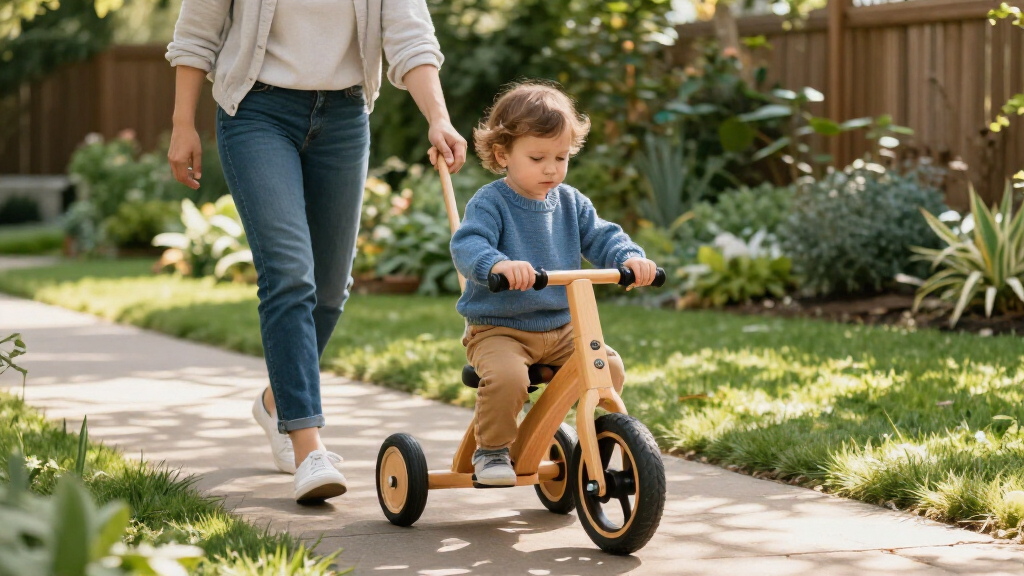
To curate this list, I focused on models that specifically address the tricycle-to-balance-bike transition. Many products claim to be balance bikes but lack the initial three-wheel stability needed for children under two. I prioritized options with adjustable seat heights that accommodate the rapid growth spurts common between ages 1 and 3. I also evaluated material safety, ensuring all wooden options use non-toxic finishes and sustainable sources, while including one hybrid model to represent the best non-wood alternative for indoor use. Durability of the frame joints and the ease of converting the wheel configuration were key differentiators in this selection process.
| wooden balance trike for toddler | Material |
|---|---|
| Kinderfeets Tiny Tot Plus Bala | Sustainable Birchwood |
| Kinderfeets Tiny Tot 2-in-1 Ba | Birchwood |
| Radio Flyer Steady Start Balan | Plastic and metal |
| Kinderfeets Tiny Tot Wooden 2- | Bamboo |
| Kinderfeets Wooden Balance Bik | Birch wood |
Factors to Consider When Choosing Wooden Balance Trike For Toddlers
Selecting the right wooden balance trike requires balancing the child’s current physical abilities against your long-term budget. I recommend considering three main factors: age appropriateness, material durability, and the learning curve of the design.
Age and Size Fit
Wooden trikes are often smaller than plastic equivalents. Always check the minimum seat height. A toddler needs to be able to sit with their feet flat on the ground, knees slightly bent. If the seat is too high, they cannot push effectively. The Kinderfeets Tiny Tot series is best for 12-24 months, while the Tiny Tot Plus stretches to 4 years. If your child is over 2.5 years, look at the dedicated Wooden Balance Bike instead.
Wood vs. Hybrid Materials
Wood offers sustainability and aesthetics but can be susceptible to moisture damage if left outside. Bamboo is a harder, more durable alternative to birch. Hybrid models like the Radio Flyer use plastic and metal for maximum durability and noise reduction, making them better for indoor-heavy use. If you plan to ride outdoors frequently, wood is fine, but it needs to be stored indoors to preserve the finish.
Tire Types and Terrain
Most wooden trikes use airless EVA tires. These are maintenance-free and puncture-proof but offer less shock absorption than pneumatic tires. On smooth pavement, this is fine. On gravel or grass, the ride can be jarring. If you have rough terrain, consider if the child can handle the vibration, or look for models with wider tread patterns like the Radio Flyer for better grip.
Frequently Asked Questions
Do wooden balance trikes require maintenance?
Yes, wooden trikes require more care than plastic ones. You should wipe them down with a dry cloth after outdoor use to prevent moisture from warping the wood or peeling the paint. Periodically check the bolts and screws, as the vibration from riding can loosen them over time. Unlike air-filled tires, the airless EVA tires on these models do not need inflation, which is a significant maintenance advantage, but the wooden frame itself needs to be kept dry to ensure longevity.
Can a toddler use a balance bike before they can walk?
No, it is generally not recommended. Balance bikes and trikes are designed for children who can walk steadily and have sufficient core strength to support their upper body while seated. The Kinderfeets Tiny Tot and similar models are designed for children aged 12 months and up, but this assumes the child is already a confident walker. Starting too early can lead to frustration and poor posture, as the child lacks the coordination to push and steer simultaneously.
Is it better to start with a tricycle or a balance bike?
For most toddlers, starting with a convertible 2-in-1 model is the best strategy. It allows the child to start with the stability of a tricycle, which reduces the fear of falling, and then convert to a balance bike once they have developed the necessary coordination. This gradual transition builds confidence. Pure balance bikes are better for older toddlers who already have strong balance skills, while pure tricycles limit the skill development of balancing on two wheels.
How do I know if the seat height is correct?
The correct seat height allows the child to sit with their feet flat on the ground, with a slight bend in the knees. If the legs are straight, the seat is too high, and the child will struggle to push off effectively. If the knees are bent significantly, the seat is too low, which can cause pedaling or pushing inefficiencies. Most wooden trikes, like the Tiny Tot Plus, offer adjustable seats to accommodate this growth, so you should check the fit every few months.
Are wooden bikes safe for outdoor use in rain?
While the finishes on modern wooden bikes like those from Kinderfeets are water-resistant, they are not waterproof. Prolonged exposure to rain can cause the wood to swell, crack, or lose its finish. It is best to ride in dry conditions and store the bike indoors. If it gets wet, dry it immediately with a soft cloth. For areas with frequent rain, a hybrid plastic-and-metal model like the Radio Flyer is a more practical choice.
Conclusion
If you want the best value and longevity, the Kinderfeets Tiny Tot Plus is my top recommendation. It bridges the gap between toddler trike and preschool balance bike effectively. For parents with very small toddlers under 18 months, the original Tiny Tot is the safest, most manageable choice. If your home is primarily indoors with hard floors, the Radio Flyer Steady Start offers unmatched durability and noise control, even if it isn’t wood. For older toddlers over 2.5 years, skip the trike phase and go straight to the Kinderfeets Wooden Balance Bike for faster skill development.