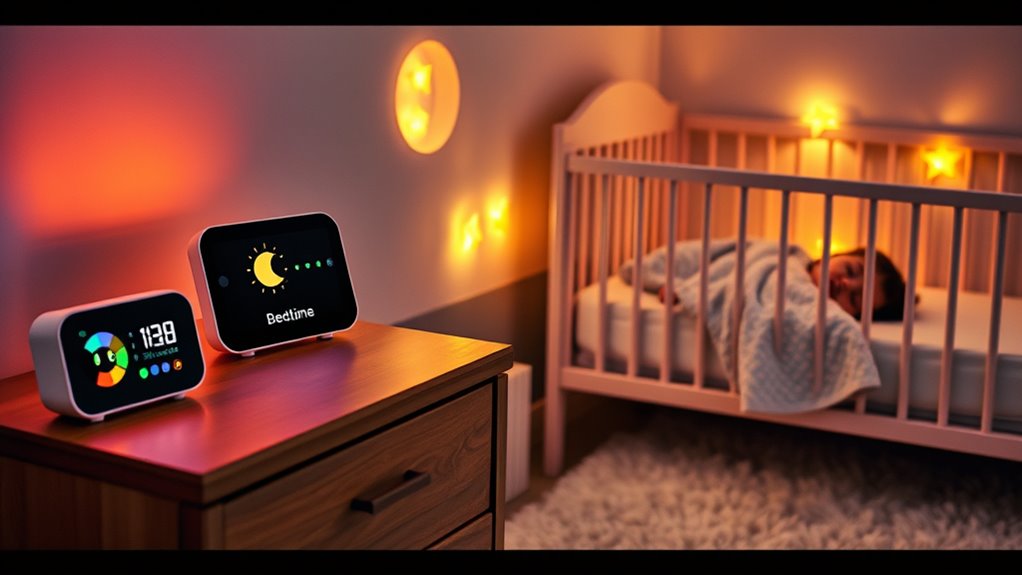

Choosing the right sleep training clock is one of the most effective ways to help toddlers understand when it is time to stay in bed and when they are allowed to get up. The I·CODE Ok to Wake Alarm Clock stands out as the best overall pick because it combines a simple red-green light system with intuitive controls that toddlers can easily grasp. For parents seeking a multi-functional device, the LittleHippo Mella Kids Alarm Clock offers superior versatility by integrating sound machines and night lights into a single, durable unit. Buyers typically face a tradeoff between simplicity and feature richness; some clocks are stripped-down tools for immediate behavior correction, while others are complex gadgets that may confuse younger children. This guide breaks down the specific strengths and drawbacks of each model to help you select the tool that fits your child’s developmental stage and your household’s noise tolerance.

Turn the school run and nap time into listening time
- Thousands of audiobooks, podcasts and originals
- Listen on your phone, tablet or Echo — also offline
- Cancel anytime
Complete the kit


Key Takeaways
- The I·CODE model wins for pure behavioral training due to its lack of distracting buttons, whereas multi-function clocks like LittleHippo require more parental management to prevent button-mashing.
- Sound machine quality varies drastically; budget options often produce static or looping artifacts that can disrupt sleep, while premium picks offer white noise that masks household sounds effectively.
- Light intensity is a critical differentiator; several low-cost clocks emit light that is too bright for a dark room, potentially stimulating rather than soothing the child.
- Nap timer functionality is a hidden gem in models like the iHoo, offering a structured routine that many dedicated ‘ok-to-wake’ clocks lack entirely.
- Battery life and power source flexibility matter more than advertised in cheaper models, with some requiring frequent USB charging that interrupts the sleep routine.
| I·CODE Ok to Wake Alarm Clock and Sleep Trainer for Toddlers |  | Best for Customizable Timers | Brand and model: I·CODE A500 | Display: Digital | Sleep-training cues: Red and green lights with sleepy and smiling emojis | VIEW ON AMAZON | See Our Full Breakdown |
| LittleHippo Mella Kids Alarm Clock, Sleep Trainer, Night Light, Sound Machine, OK to Wake – Tropical Teal |  | Best for a Combined Sleep Routine | Display: Digital | Power: Corded electric | Mounting and use: Tabletop; indoor use | VIEW ON AMAZON | See Our Full Breakdown |
| Learn & Climb Good Morning Buddy Kids Sleep Trainer Clock |  | Best for Teaching the Routine | Brand: Learn & Climb | Display: Digital | Light cues: Red, yellow, and green | VIEW ON AMAZON | See Our Full Breakdown |
| Welgo Ok-to-Wake Alarm Clock for Kids with Night Light |  | Best for Adjustable Light and Sound | Brand and model: Welgo G4-3rd-Gen | Display: LED; brightness adjustable from 0–100% | Sleep-training cues: Red and green lights | VIEW ON AMAZON | See Our Full Breakdown |
| LittleHippo Mella Kids Alarm Clock, Sleep Trainer, Night Light, Sound Machine, OK to Wake – Bright Purple |  | Best for a Simple All-in-One Setup | Display: Digital | Functions: Alarm, OK to Wake, snooze, night light, and sleep-sound features | Adjustments: Adjustable brightness and volume | VIEW ON AMAZON | See Our Full Breakdown |
| ANNNGUL Kids OK-to-Wake Sleep Training Alarm Clock |  | Best Minimalist Design | Display Type: Analog | Power Source: Corded Electric | Night Light Colors: 10 | VIEW ON AMAZON | See Our Full Breakdown |
| Windflyer Little Teddi Kids Sleep Training Alarm Clock |  | Best All-in-One Functionality | Display: Digital | Key Features: Alarm, Night Light, Sound Machine, Nap Timer | Dimensions: 4.6 in W x 5.5 in H | VIEW ON AMAZON | See Our Full Breakdown |
| iHoo Toddlers Sleep Training Clock |  | Best for Nap Scheduling | Display Type: LED | Power Source: Corded Electric | Key Features: Nap Timer, Child Lock, Night Light | VIEW ON AMAZON | See Our Full Breakdown |
| Kids Alarm Clock with Red Green Light |  | Most Customizable Visuals | Light Colors: 10 | Brightness Levels: 5 | Sound Options: 5 | VIEW ON AMAZON | See Our Full Breakdown |
| LittleHippo Mella Kids Sleep Trainer |  | Best Premium Build | Brand: LittleHippo | Materials: ABS Plastic and Silicone | Night Light Colors: 5 | VIEW ON AMAZON | See Our Full Breakdown |
| MooLarm Kids Sleep Training Alarm Clock with Night Light and Sound Machine |  | Best for Nap Schedule Management | Nap Timer Options: 30, 60, 90, 120 minutes | Sound Options: 17 (White noise, music, nature sounds) | Night Light Colors: 10 | VIEW ON AMAZON | See Our Full Breakdown |
| LittleHippo Mella Kids Alarm Clock, Night Light, Sound Machine, and Sleep Trainer – Blush Pink |  | Best Design and Material Quality | Material: Child-safe ABS and Silicone | Color: Blush Pink | Sleep Sounds: White Noise, Waves, Lullabies | VIEW ON AMAZON | See Our Full Breakdown |
| sleeptraining clock | Display | Dimensions |
|---|---|---|
| I·CODE Ok to Wake Alarm Clock | Digital | — |
| LittleHippo Mella Kids Alarm C | Digital | 1.5 in W × 4.49 in H |
| Learn & Climb Good Morning Bud | Digital | — |
| Welgo Ok-to-Wake Alarm Clock f | LED; brightness adjustable from 0–100% | — |
| LittleHippo Mella Kids Alarm C | Digital | — |
| ANNNGUL Kids OK-to-Wake Sleep | — | 4 x 4 inches |
| Windflyer Little Teddi Kids Sl | Digital | 4.6 in W x 5.5 in H |
| iHoo Toddlers Sleep Training C | — | 5.3 in W x 4.9 in H |
| Kids Alarm Clock with Red Gree | — | — |
| LittleHippo Mella Kids Sleep T | — | 4.25 in W x 4.5 in H |
| MooLarm Kids Sleep Training Al | — | 4.5 in W x 5.5 in H |
| LittleHippo Mella Kids Alarm C | — | — |
More Details on Our Top Picks
I·CODE Ok to Wake Alarm Clock and Sleep Trainer for Toddlers
The I·CODE is a practical sleep trainer for families who want more than a simple wake-up signal. Red and green lights paired with sleepy and smiling emojis give young children an easy visual cue, while the five nap countdown choices can support daytime routines as well as mornings. Its two alarms and child lock add useful flexibility, though the 4 × 4-inch tabletop body may be harder to read from across a larger bedroom. Compared with the Learn & Climb Good Morning Buddy, it offers more listed nap-timer intervals and a child lock, while Learn & Climb includes a storybook and reward chart to help introduce the routine. The tradeoff is that the I·CODE relies on corded power and has no listed battery backup.
Pros:- Red and green lights with emoji cues make stay-in-bed and wake-up signals easy to teach.
- Five nap-timer durations cover a range of daytime routines.
- Two alarms, snooze, and a child lock add scheduling flexibility.
- Night light has brightness controls and four auto-off timer settings.
Cons:- Corded power limits placement and makes it less suitable for travel.
- The 4 × 4-inch size may be difficult to see from across a bedroom.
- No battery backup is listed for keeping the clock running during an outage.
Best for: Parents of toddlers who want a compact visual sleep trainer with separate alarms and several nap-timer choices.
Not ideal for: Families who need a clock visible from far across the room or want battery backup during power outages.
- Brand and model:I·CODE A500
- Display:Digital
- Sleep-training cues:Red and green lights with sleepy and smiling emojis
- Alarms:2 alarms with snooze
- Nap timer:15, 30, 60, 90, or 120 minutes
- Night-light timer:15, 30, 60, or 120 minutes
- Power and mounting:Corded electric; tabletop
- Dimensions and weight:4 × 4 in; 10.4 oz
- Recommended age:2–9 years
Our verdict“Choose the I·CODE if you want a small, feature-flexible sleep trainer with clear visual cues and multiple nap timers.”
LittleHippo Mella Kids Alarm Clock, Sleep Trainer, Night Light, Sound Machine, OK to Wake – Tropical Teal
The Tropical Teal Mella suits parents who want a sleep trainer that can also provide light and soothing sounds, rather than a clock focused mainly on color signals. Its friendly face and gentle visual cues give children a simple way to connect the clock with bedtime and morning routines, while the sound and light functions add options for settling down. Compared with the I·CODE A500, the Mella is described as a broader sleep-environment device, but the I·CODE provides more specific timer details, including two alarms and five nap countdown lengths. Mella’s listed dimensions are unusually narrow, and the display may feel small to some buyers. It also needs corded power, so this is better suited to a fixed bedside spot than portable use.
Pros:- Combines sleep-training visuals, an adjustable night light, and soothing sounds.
- Friendly face cues offer a simple routine signal for young children.
- Can serve as both a sleep trainer and an activity timer.
- ABS and silicone construction is specified.
Cons:- Requires corded power, limiting placement and portability.
- The digital display may be small for children viewing it from bed.
- The provided specifications do not list nap-timer intervals or detailed alarm options.
Best for: Parents who want a child-friendly sleep trainer with a night light and soothing sounds in one bedside device.
Not ideal for: Buyers who need a clearly specified nap timer, a larger easy-to-read display, or a clock that works away from an outlet.
- Display:Digital
- Power:Corded electric
- Mounting and use:Tabletop; indoor use
- Functions:Alarm clock, sleep trainer, activity timer, night light, and soothing sounds
- Materials:ABS and silicone
- Dimensions:1.5 in W × 4.49 in H
- Weight:8 oz
- Battery listing:1 lithium metal battery listed
Our verdict“Pick the Tropical Teal Mella if your priority is a combined sleep trainer, night light, and sound machine rather than detailed timer controls.”
Learn & Climb Good Morning Buddy Kids Sleep Trainer Clock
The Good Morning Buddy is the strongest fit for parents who want teaching aids alongside the clock itself. Red, yellow, and green lights separate staying in bed, getting ready, and starting the day, giving children a middle step that simpler red-and-green trainers such as the Welgo G4 do not list. Its included storybook and reward chart can help parents explain the signals and reinforce a routine. The clock also adds a nap countdown, nightlight, and two speaker volume levels. Compared with the I·CODE A500, it offers more routine-learning materials and a specified battery backup for saving settings, while the I·CODE lists more nap durations and a child lock. Keep in mind that backup batteries are not included, and USB power is still required for operation.
Pros:- Three light colors provide a distinct cue for staying in bed, getting ready, and waking.
- Includes a storybook, quick-start guide, tip sheet, and reward chart.
- Nap countdown, nightlight, alarm, and two speaker volume levels support multiple routines.
- Battery backup saves settings during power outages.
Cons:- Backup batteries are not included.
- USB power is required for normal operation.
- The speaker offers only two listed volume levels.
Best for: Parents introducing sleep training who want a three-color cue system and storybook or reward-chart support.
Not ideal for: Families who need fully battery-powered operation or do not want to source separate backup batteries.
- Brand:Learn & Climb
- Display:Digital
- Light cues:Red, yellow, and green
- Functions:Alarm, nightlight, and nap countdown
- Speaker:Two sound levels
- Power:USB adapter with battery backup; backup batteries not included
- Dimensions and material:5 × 5 in; ABS plastic
- Included learning materials:Illustrated storybook, quick-start guide, instruction manual, tip sheet, and reward chart
Our verdict“Choose the Good Morning Buddy if you want a sleep trainer that helps teach a step-by-step routine through colors and included learning materials.”
Welgo Ok-to-Wake Alarm Clock for Kids with Night Light
The Welgo stands out for parents who want to tailor the room’s light and sound around the sleep-training cues. Its 10 night-light brightness levels and display dimming from 0–100% make it easier to keep the clock visible without adding unwanted brightness at bedtime. It also lists 21 bedtime melodies and eight wake-up tones, a wider sound selection than the two-level speaker listed for the Learn & Climb Good Morning Buddy. Both use color signals, but Learn & Climb adds a yellow middle-stage cue and routine-learning materials; Welgo instead leans into lighting and audio customization. The 8-inch-wide form may be easier to spot than the compact I·CODE, though it takes more bedside space and still requires corded power.
Pros:- Red and green lights give a straightforward bedtime and wake-up signal.
- Ten night-light levels and a fully adjustable display allow detailed brightness control.
- Offers 21 bedtime melodies and eight wake-up tones with adjustable volume.
- Child lock helps prevent accidental changes.
Cons:- Corded electric power limits portability and placement.
- The 8-inch width takes more bedside space than the 4-inch I·CODE A500.
- No nap timer or battery-backup details are provided.
Best for: Families who want a sleep trainer with fine control over display brightness, night-light levels, and bedtime or wake-up sounds.
Not ideal for: Buyers seeking a compact clock, battery-powered placement, or a sleep trainer with a listed nap timer.
- Brand and model:Welgo G4-3rd-Gen
- Display:LED; brightness adjustable from 0–100%
- Sleep-training cues:Red and green lights
- Night light:10 brightness levels
- Sounds:21 bedtime melodies and 8 wake-up tones
- Volume:Adjustable across 0–30 levels
- Power and mounting:Corded electric; tabletop
- Dimensions and weight:8 in W × 2 in H; 12 oz
- Warranty:1-year manufacturer warranty
Our verdict“Pick the Welgo if adjustable lighting and a broad choice of sounds matter more to your sleep-training routine than compact size or nap timing.”
LittleHippo Mella Kids Alarm Clock, Sleep Trainer, Night Light, Sound Machine, OK to Wake – Bright Purple
The Bright Purple Mella is a sensible pick for families who want one bedside device to handle sleep-training cues, a night light, and soothing sound. Its friendly face display gives the clock a child-oriented signal, while adjustable brightness and volume let parents tune the room without adding separate devices. Compared with the Welgo G4, Mella offers a more compact listed footprint and combines several sleep-related functions, while Welgo provides explicit brightness ranges, more named sound choices, and a child lock. The Mella’s product details list an alarm, snooze, and OK-to-wake function, but do not specify nap-timer intervals or the exact sleep cues. Its corded power also makes it a stationary indoor choice, and the face design may lose appeal for some children over time.
Pros:- Combines alarm, OK-to-wake function, night light, and sleep-sound features.
- Adjustable brightness and volume allow some customization for the bedroom.
- Compact listed dimensions suit a smaller bedside surface.
- Includes one lithium metal battery in the product listing.
Cons:- Requires an electrical outlet and is listed for indoor use.
- The provided specs do not identify nap-timer options or specific sound choices.
- Some children may find the face display less engaging over time.
Best for: Parents looking for a compact, child-friendly bedside device that combines an alarm, sleep-training cues, night light, and sound functions.
Not ideal for: Families who want clearly specified nap-timer settings, battery-powered use, or extensive sound and brightness controls.
- Display:Digital
- Functions:Alarm, OK to Wake, snooze, night light, and sleep-sound features
- Adjustments:Adjustable brightness and volume
- Power:Corded electric
- Battery listing:1 lithium metal battery included
- Smart-home compatibility:Not compatible
- Use:Indoor
- Dimensions and weight:1.5 in W × 4.49 in H; 8 oz
- Materials:ABS and silicone
Our verdict“Choose the Bright Purple Mella if you want a compact all-in-one sleep trainer and do not need detailed timer or sound specifications.”
ANNNGUL Kids OK-to-Wake Sleep Training Alarm Clock
This unit strips away the clutter found in more complex models. Unlike the Windflyer Little Teddi, which packs in a sound machine and multiple timers, the ANNNGUL focuses strictly on visual cues. It uses a simple red/green light system that is easy for toddlers to grasp without overwhelming them with options. The analog display appeals to families who prefer a traditional look, though the digital alternatives often offer clearer time reading for older kids. The tradeoff is a lack of audio features; if your child relies on white noise or music to fall asleep, this clock does not provide it. It is a solid, no-nonsense choice for parents who want a basic OK-to-wake signal without the extra bells and whistles.
Pros:- Simple red/green light system is easy for toddlers to understand.
- Compact 4×4 inch footprint fits easily on small nightstands.
- Five brightness levels allow for customization in dark rooms.
Cons:- Lacks a built-in sound machine or white noise generator.
- Plastic construction feels less durable than silicone-based competitors.
- Must remain plugged in, limiting placement options.
Best for: Parents seeking a simple, distraction-free visual cue for early sleep training.
Not ideal for: Families who need integrated sound machines or complex timer settings.
- Display Type:Analog
- Power Source:Corded Electric
- Night Light Colors:10
- Brightness Settings:5 Levels
- Dimensions:4 x 4 inches
- Weight:8 ounces
Our verdict“Ideal for parents who want a straightforward visual sleep trainer without audio distractions.”
Windflyer Little Teddi Kids Sleep Training Alarm Clock
The Windflyer stands out because it combines a sleep trainer, nap timer, and sound machine into one device. Compared to the ANNNGUL, which offers only visual cues, the Windflyer provides a complete bedtime ecosystem. The facial expressions are particularly effective for pre-readers, offering a clear emotional cue for sleep versus wake times. However, this density of features comes with a steeper learning curve for parents during setup. The child lock is a significant advantage over simpler models, preventing curious toddlers from altering critical settings. While it requires a power outlet, the included backup battery ensures your schedule isn’t lost during brief outages, a feature many budget competitors lack.
Pros:- Integrates sleep training, nap timer, and sound machine.
- Facial expressions provide intuitive cues for non-readers.
- Child lock prevents accidental setting changes by toddlers.
- Backup battery preserves settings during power interruptions.
Cons:- Interface is more complex to program than simpler alternatives.
- Requires a corded connection for primary operation.
- Larger footprint than compact models like the ANNNGUL.
Best for: Parents who want a single device to handle sleep training, naps, and white noise.
Not ideal for: Those who prefer a minimalist interface or find complex menus frustrating.
- Display:Digital
- Key Features:Alarm, Night Light, Sound Machine, Nap Timer
- Dimensions:4.6 in W x 5.5 in H
- Weight:14.4 oz
- Backup Battery:1 CR2032 included
- Material:ABS Plastic
Our verdict“The best choice for families seeking a comprehensive bedtime solution in one compact unit.”
iHoo Toddlers Sleep Training Clock
The iHoo clock distinguishes itself with its dedicated nap timer and sun/moon indicators. While the LittleHippo Mella uses yellow and green for wake-up warnings, the iHoo uses celestial icons which can be easier for very young children to associate with day and night. This model is particularly strong for toddlers who struggle with daytime naps, as the timer helps enforce consistent rest periods. It lacks weekday/weekend alarm differentiation, which might frustrate parents with different schedules for school days versus weekends. The soothing sounds are a nice touch, though the volume range is narrower than some competitors, potentially limiting its utility in larger rooms.
Pros:- Dedicated nap timer helps enforce daytime rest schedules.
- Sun and moon indicators are intuitive for young children.
- Includes soothing sounds to aid relaxation before sleep.
- Child lock ensures settings remain unchanged by kids.
Cons:- No separate alarm settings for weekdays and weekends.
- Requires a power outlet with no battery backup option.
- Limited volume control for sounds compared to other models.
Best for: Parents focused on establishing strict nap and bedtime routines for toddlers.
Not ideal for: Families needing separate alarm times for weekdays and weekends.
- Display Type:LED
- Power Source:Corded Electric
- Key Features:Nap Timer, Child Lock, Night Light
- Dimensions:5.3 in W x 4.9 in H
- Weight:0.4 kg
- Suitable Age:2-9 Years
Our verdict“A strong contender for parents prioritizing consistent nap and bedtime structure.”
Kids Alarm Clock with Red Green Light
This star-shaped clock offers extensive customization for light and sound preferences. Unlike the ANNNGUL, which limits color options to ten, this model allows for broader personalization, letting parents match the light to their child’s favorite colors or room decor. The variety of sounds and volume levels is a plus, though the lack of clear power source specifications raises concerns about reliability or battery life. The playful design is engaging, but the reliance on visual and audio cues alone means it lacks the structured facial expressions found in the Windflyer, which can be more effective for teaching specific behaviors. It is a fun option, but parents may find the setup less intuitive than more established brands.
Pros:- Highly customizable with 10 light colors and 5 sounds.
- Star-shaped design is visually appealing to children.
- Multiple brightness and volume settings for room adaptation.
Cons:- Power source and battery details are not clearly specified.
- Lacks structured facial expressions for clearer behavioral cues.
- Setup process may be less intuitive for some parents.
Best for: Parents who want to customize light colors and sounds to match their child’s interests.
Not ideal for: Users who need detailed power specifications or battery-operated flexibility.
- Light Colors:10
- Brightness Levels:5
- Sound Options:5
- Volume Settings:6
- Design Shape:Star
- Primary Function:OK-to-Wake Training
Our verdict“Best for those prioritizing aesthetic customization and varied sensory cues.”
LittleHippo Mella Kids Sleep Trainer
The LittleHippo Mella is the benchmark for quality in this category. Its silicone and ABS construction feels significantly more durable and child-safe than the hard plastic found in the ANNNGUL or iHoo models. The yellow-to-green transition is a subtle, effective warning system that reduces morning anxiety. The silent countdown feature is a unique advantage for managing transitions like brushing teeth or getting dressed, something most competitors overlook. While it is more expensive, the one-year warranty and robust build justify the cost for many. It lacks the complex nap timer of the Windflyer, focusing instead on core sleep training, which makes it less cluttered but potentially less versatile for nap-heavy schedules.
Pros:- Premium silicone and ABS materials are durable and safe.
- Yellow warning light provides a gentle wake-up transition.
- Silent countdown timer aids in morning routine management.
- Includes a one-year warranty for added peace of mind.
Cons:- Higher price point compared to basic plastic models.
- Lacks a dedicated nap timer feature.
- Must be plugged in to operate.
Best for: Parents willing to invest in a durable, high-quality device with transition timers.
Not ideal for: Those seeking a budget-friendly option or extensive nap-timing features.
- Brand:LittleHippo
- Materials:ABS Plastic and Silicone
- Night Light Colors:5
- Sleep Sounds:3
- Dimensions:4.25 in W x 4.5 in H
- Warranty:1 Year
Our verdict“The premium choice for durability and effective, gentle wake-up routines.”
MooLarm Kids Sleep Training Alarm Clock with Night Light and Sound Machine
The MooLarm stands out in this lineup because it treats nap times with the same seriousness as nighttime sleep. While competitors like the LittleHippo Mella focus heavily on nighttime routines, this model includes a dedicated nap countdown timer with four preset durations. This feature is invaluable for parents managing daycare schedules or quiet time at home. The visual cues use sun, moon, and star icons, which are intuitive for toddlers who are not yet reading the clock. However, the corded-only power source limits where you can place it, making it less flexible than battery-operated alternatives. The plastic construction feels durable but lacks the premium tactile feel of silicone-based models. It is a functional choice for households where daytime naps are a critical part of the daily rhythm.
Pros:- Dedicated nap timer with four preset durations (30, 60, 90, 120 minutes)
- 17 sound options provide varied white noise and nature sound choices
- Automatic nighttime dimming reduces sleep disruption for the child
- Clear visual cues (sun, moon, star) support early literacy sleep habits
Cons:- Requires a constant power source, limiting placement options
- Standard plastic build may feel less premium than silicone competitors
Best for: Parents who need to enforce consistent nap times alongside nighttime sleep training
Not ideal for: Families who need a portable clock for travel or bedrooms without nearby outlets
- Nap Timer Options:30, 60, 90, 120 minutes
- Sound Options:17 (White noise, music, nature sounds)
- Night Light Colors:10
- Power Source:Corded electric
- Dimensions:4.5 in W x 5.5 in H
- Brightness Levels:4
Our verdict“This is the most practical sleep trainer for families who struggle with nap consistency rather than just nighttime waking.”
LittleHippo Mella Kids Alarm Clock, Night Light, Sound Machine, and Sleep Trainer – Blush Pink
The LittleHippo Mella in Blush Pink offers a more sophisticated aesthetic than the utilitarian MooLarm or the plastic-heavy Windflyer Little Teddi. Its use of child-safe ABS and silicone makes it softer to the touch and more durable against drops, a key consideration for toddlers who might grab their clocks. The facial expressions and gentle color transitions provide emotional cues that go beyond simple red/green lights, helping children understand the mood of the day. However, the setup process is more involved than simpler one-button models, requiring time to customize sound loops and light colors. It is designed primarily for nighttime sleep training, lacking the dedicated nap timer found in the MooLarm. This makes it a better fit for families focused on nighttime independence rather than daytime routine management.
Pros:- Premium silicone and ABS construction offers a softer, safer tactile experience
- Emotive facial expressions provide nuanced visual cues for sleep states
- Multi-functional design grows with the child into a general activity timer
- Modern aesthetics blend seamlessly into contemporary nursery designs
Cons:- Setup requires more time to customize sounds and light settings
- Lacks a dedicated nap timer compared to specialized models like MooLarm
Best for: Design-conscious parents who prioritize premium materials and aesthetic integration into nursery decor
Not ideal for: Users who want a plug-and-play device with minimal customization or nap-specific features
- Material:Child-safe ABS and Silicone
- Color:Blush Pink
- Sleep Sounds:White Noise, Waves, Lullabies
- Night Light Colors:6
- Safety Standards:FCC, CE, RoHS, CA65, REACH, CPSIA
- Primary Function:Sleep Trainer and Alarm Clock
Our verdict“This is the ideal sleep trainer for parents who value build quality and design elegance over specialized nap features.”
How We Picked
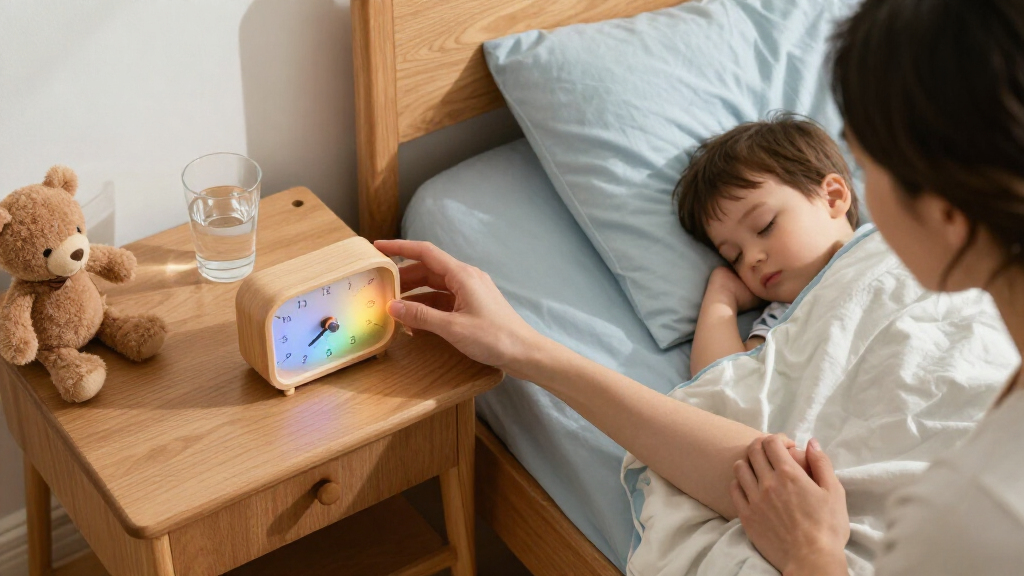
I evaluated these sleep training clocks based on three core criteria: behavioral clarity, sleep environment impact, and durability. Behavioral clarity refers to how easily a toddler can understand the visual cue (usually a color change) without needing complex logic. I prioritized devices with simple red-green indicators over those with digital numbers or complex menus. Sleep environment impact assessed the quality of night lights and sound machines, specifically looking for flicker-free dimming and non-intrusive audio loops. Durability was judged by build quality, especially for drop-prone toddler rooms, and the ease of cleaning or battery replacement.
The ranking logic places tools that minimize parental intervention higher. A clock that requires a parent to reset a timer every hour is less effective than one with a simple, long-duration setting. I also weighed the value of multi-functionality; while a 4-in-1 device is convenient, it loses points if the added features (like Bluetooth apps) create friction or security concerns. Products were compared directly against competitors in similar price brackets to highlight specific tradeoffs, such as sound quality versus button simplicity.
| sleeptraining clock | Display |
|---|---|
| I·CODE Ok to Wake Alarm Clock | Digital |
| LittleHippo Mella Kids Alarm C | Digital |
| Learn & Climb Good Morning Bud | Digital |
| Welgo Ok-to-Wake Alarm Clock f | LED; brightness adjustable from 0–100% |
| LittleHippo Mella Kids Alarm C | Digital |
| ANNNGUL Kids OK-to-Wake Sleep | — |
| Windflyer Little Teddi Kids Sl | Digital |
| iHoo Toddlers Sleep Training C | — |
| Kids Alarm Clock with Red Gree | — |
| LittleHippo Mella Kids Sleep T | — |
| MooLarm Kids Sleep Training Al | — |
| LittleHippo Mella Kids Alarm C | — |
Factors to Consider When Choosing Sleeptraining Clock
Selecting a sleep training clock is not just about buying a gadget; it is about installing a visual anchor for a new routine. The following factors will help you decide which features are necessary for your child and which are marketing fluff.Visual Cue Simplicity and Color Logic
The core function of these devices is to replace an abstract concept (time) with a concrete visual signal (color). Red-green logic is the industry standard for a reason: red signals ‘stop’ and green signals ‘go,’ mimicking traffic lights that toddlers often learn early. However, some clocks use blue, yellow, or digital displays, which can confuse children who have not yet mastered color-to-action associations. I recommend choosing a clock with a large, unambiguous light indicator that is visible from across the room. Avoid models with small LEDs or dim displays that require the child to approach the device to check the status, as this encourages walking out of bed to verify the signal. The best clocks make the decision from bed easy and immediate.
Sound Machine Quality and Volume Control
Many ‘ok-to-wake’ clocks bundle a sound machine, but the quality of that audio varies wildly. White noise loops in budget models often have audible ‘seams’ or clicks where the audio file restarts, which can jolt a sleeping child awake. Premium options use continuous, seamless loops or analog-style white noise generators that are far less disruptive. Consider whether you need the sound machine to mask household noises (like a TV or siblings) or if it is just for soothing. If you need masking, look for volume ranges that go high enough to compete with ambient noise without distorting. Also, check if the sound machine can be turned off independently of the clock function, as not all models allow this flexibility.
Button Lock and Child-Proofing Features
Toddlers are natural experimenters, and a clock with accessible buttons is a toy waiting to be misused. Child lock features are essential to prevent your child from changing the alarm time, turning off the night light, or resetting the nap timer in the middle of the night. Some clocks achieve this through a physical switch on the back, while others require a specific button combination to unlock settings. I found that physical switches are generally more reliable and easier for parents to use quickly in the dark than complex digital menus. Without effective child-proofing, the clock becomes a source of frustration rather than a training tool, as you will spend more time resetting settings than enforcing the rule.
Night Light Intensity and Dimmability
A night light serves two purposes: comfort and visibility. However, a light that is too bright can suppress melatonin production and make it harder for the child to fall back asleep if they wake up. Adjustable dimming is a critical feature, allowing you to set the light to a faint glow that reassures the child without illuminating the entire room. Look for clocks that offer a ‘night mode’ where the display dims automatically or can be manually reduced. Some models offer color-changing lights, which can be a distraction; for sleep training, I often recommend sticking to a single, warm color temperature that mimics sunset or candlelight, as blue-spectrum lights are known to disrupt circadian rhythms.
Power Source and Placement Flexibility
Where you place the clock determines its effectiveness, and power constraints dictate placement. Rechargeable batteries offer the most flexibility, allowing you to move the clock to a bedside table without needing a nearby outlet. However, you must consider the charging frequency; a clock that dies mid-week requires a parent to intervene, which breaks the autonomy the training aims to build. Plug-in models are reliable but limit placement to areas with accessible outlets, which might not be ideal for certain room layouts. I recommend looking for models with USB-C charging for convenience and checking user feedback on battery life under continuous light and sound usage, as specifications often list ‘standby’ life rather than ‘active’ life.
Frequently Asked Questions
How long does it typically take for a toddler to understand an ok-to-wake clock?
Most toddlers begin to grasp the concept within three to seven days of consistent use, though full independence can take several weeks. The speed of understanding depends heavily on the child’s age and prior routine consistency. I recommend starting the training during a low-stress period, such as a weekend, and using the clock strictly as a visual cue without engaging in lengthy explanations at bedtime. If the child wakes before the light changes, guide them back to bed with minimal interaction, reinforcing that the light is the boss, not the parents. Consistency in the response is more important than the clock’s specific features.
Can I use a sleep training clock for nap times as well as nighttime?
Yes, many models like the iHoo or LittleHippo Mella include specific nap timer functions that allow for shorter sleep cycles during the day. Using the same device for naps and nights helps reinforce the routine, creating a stronger association between the visual cue and sleep. However, you must ensure the clock allows you to set different times for naps versus nights without complex reprogramming each time. Some basic models only have one alarm setting, which makes nap training difficult unless you manually reset it every afternoon. Check for a dedicated ‘nap mode’ or multiple alarm settings before purchasing if daytime naps are a priority.
What should I do if my child wakes up before the green light and turns the clock off?
This is a common hurdle in early sleep training. If your child turns the clock off, you must immediately turn it back on and return them to bed with minimal fuss. This reinforces that tampering with the device does not result in getting up. To prevent this, choose a clock with a back-mounted switch or a secure child lock that requires a key or specific sequence to disable. If the buttons are too accessible, consider placing the clock out of reach on a high shelf or dresser, ensuring the light is still visible from the bed but the buttons are not easily reachable by small hands.
Are app-controlled sleep training clocks worth the extra cost?
App-controlled clocks offer convenience for parents who want to adjust settings from their phone, but they introduce potential points of failure. If the Wi-Fi drops or the app crashes, you may lose control over the alarm or light settings until the device is manually reset. For most families, a physical clock with simple buttons is more reliable and less prone to technical glitches. I generally recommend avoiding app-connected devices unless you have a specific need for remote monitoring or data tracking, as the added complexity rarely improves the sleep training outcome for toddlers.
How do I choose between a red-green light and a digital display clock?
For toddlers under age 4, a red-green light system is far superior because it relies on immediate visual recognition rather than abstract numerical understanding. Digital displays require the child to read numbers and understand that 6:30 means ‘get up,’ which is a cognitive leap that many preschoolers cannot make. Digital clocks are better suited for older children who are already reading and understanding time. If your child is in the early stages of sleep training, stick to the color-coded models to reduce cognitive load and frustration. Once they are older and more independent, you can switch to a digital alarm clock if desired.
Conclusion
Choosing the right sleep training clock depends largely on your child’s age and your specific routine needs. For most families, the I·CODE Ok to Wake Alarm Clock is the best overall choice because it removes distractions and focuses purely on the visual cue, making it ideal for toddlers who need clear, simple boundaries. If you want a device that grows with your child and offers sound masking, the LittleHippo Mella is the best premium option, despite its higher price and button complexity. For parents on a budget, the Welgo Ok-to-Wake provides the essential red-green functionality without the extra frills, making it the best value pick. If you need nap timer functionality specifically, the iHoo stands out for its dedicated scheduling features. Start with the simplest tool that meets your core need; complexity can be added later if the basic routine succeeds.