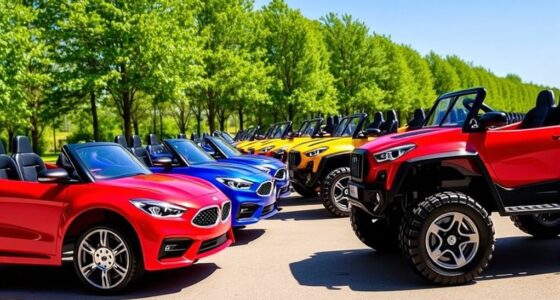


Finding a ride-on school bus for toddlers means choosing between small push toys for early play and large battery-powered buses that suit older children. My strongest picks cover both ends: the WADDLE Crayola 2-in-1 pairs a compact ride-on with coloring activities, while the LUIBAS 24V bus adds parent remote control for families seeking a more vehicle-like experience. For shared play, the TOBBI two-seater offers room for a passenger, but its nearly 59-inch length takes substantial storage space.

Turn the school run and nap time into listening time
- Thousands of audiobooks, podcasts and originals
- Listen on your phone, tablet or Echo — also offline
- Cancel anytime
The main tradeoff is age and scale. A toddler who is just learning to push and steer may be better matched to a simple, low ride-on or a push-along bus; a preschooler ready for powered driving may want remote control, seat belts, and a larger vehicle. I ranked these options by how clearly they fit a toddler household, considering age guidance, supervision features, storage needs, and the kind of play each supports. The Fisher-Price toy is included for pretend play, but it is a push-along toy rather than a ride-on vehicle.
Complete the kit


Key Takeaways
- The WADDLE Crayola is the clearest small-footprint pick for age two and up, with coloring supplies and under-seat storage; its 44-pound capacity sets a firm limit.
- The VEVOR push car starts at 19 months and offers a backrest and anti-backward support bar, but it is a basic ride-on rather than a school-bus-shaped toy.
- The LUIBAS bus includes parent remote control and is specified for ages three to eight, making it more appropriate for preschoolers than younger toddlers.
- The TOBBI carries two riders and has seat belts and remote control, but its 68-pound weight and 58.7-inch length make moving and storing it difficult.
- The Fisher-Price Little People bus is for pushing and pretend play, not sitting and riding; choose it for imaginative play rather than locomotion.
| Waddle Crayola School Bus 2-in-1 Ride-On Toy with Lights, Sounds, Storage, Crayons, and Stencils |  | Best Overall for Toddler Activity Variety | Age range: 2 years and up | Weight capacity: 44 lb | Dimensions: 22.75 × 9.75 × 15.5 in | VIEW ON AMAZON | See Our Full Breakdown |
| VEVOR Ride On Push Car for Toddlers, Ages 19+ Months, Ride Racer, Sit to Stand Toddler Ride On Toy, Kids Ride On Car with Music Steering, Horn & Under Seat Storage |  | Best for Younger Toddlers | Age range: 19 months and up; described for ages 1–3 | Weight capacity: 48.5 lb / 22 kg | Material: Impact-resistant PP | VIEW ON AMAZON | See Our Full Breakdown |
| LUIBAS 24V 4WD Kids Ride-On School Bus, Yellow |  | Best Powered Bus for Parent-Controlled Play | Recommended age: 3–8 years | Battery: 24V | Drive: 4WD with four motors | VIEW ON AMAZON | See Our Full Breakdown |
| TOBBI 2-Seater Kids Electric Ride-On School Bus with Remote Control |  | Best for Siblings or Shared Rides | Age range: 3–8 years | Seating: 2 seats | Maximum weight capacity: 132 lb | VIEW ON AMAZON | See Our Full Breakdown |
| Fisher-Price Little People School Bus Toddler Toy |  | Best for Pretend Play, Not Riding | Age guidance: Ages 1+ years, toddler and preschool | Toy type: Push-along vehicle | Included components: 1 vehicle and 2 figures | VIEW ON AMAZON | See Our Full Breakdown |
| ride on school bus for toddler | Age range | Dimensions |
|---|---|---|
| Waddle Crayola School Bus 2-in | 2 years and up | 22.75 × 9.75 × 15.5 in |
| VEVOR Ride On Push Car for Tod | 19 months and up; described for ages 1–3 | — |
| LUIBAS 24V 4WD Kids Ride-On Sc | — | 40.2 × 25.6 × 22.4 in |
| TOBBI 2-Seater Kids Electric R | 3–8 years | 58.7 × 27.4 × 23.2 in |
| Fisher-Price Little People Sch | — | — |
More Details on Our Top Picks
Waddle Crayola School Bus 2-in-1 Ride-On Toy with Lights, Sounds, Storage, Crayons, and Stencils
I put the WADDLE Crayola 2-in-1 first because its age guidance starts at two and its appeal is not limited to riding. A child can steer the four-wheel toy, activate lights and sounds, then use the included crayons and reusable stencils for a seated activity. That mix makes it a better match for a toddler household than the LUIBAS and TOBBI electric buses, which are larger vehicles specified for ages three to eight.
Its under-seat storage gives small art supplies a place to go, and the 22.75-inch length is much easier to accommodate than TOBBI’s 58.7-inch body. The tradeoff is a modest 44-pound capacity, so this is not a long-term choice for a child nearing that limit. It also relies on child-powered movement rather than a motor or parent remote. I would choose it for a young toddler who enjoys switching between active and creative play, not for a family seeking a realistic powered bus.
Pros:- Combines ride-on play with crayons and reusable stencils.
- Steering wheel activates lights and sounds.
- Under-seat storage can hold small toys or art supplies.
- Listed for ages two and up.
Cons:- Weight capacity is limited to 44 pounds.
- At 22.75 inches long, it still needs floor space for riding.
- No motor or parent remote-control mode is listed.
Best for: Families with a child aged two or older who want a compact, child-powered ride-on that also supports coloring play.
Not ideal for: Children over the 44-pound limit, buyers seeking a motorized bus, or households that do not want crayons and art supplies in the play area.
- Age range:2 years and up
- Weight capacity:44 lb
- Dimensions:22.75 × 9.75 × 15.5 in
- Movement:Four-wheel, child-powered ride-on
- Sound and lights:Steering wheel activates lights and sounds
- Storage:Under-seat compartment
- Included activity items:Crayons and reusable stencils
- Model:WD25001CR
Our verdict“My first choice for a toddler who will get more use from a ride-on that also offers a simple creative activity.”
VEVOR Ride On Push Car for Toddlers, Ages 19+ Months, Ride Racer, Sit to Stand Toddler Ride On Toy, Kids Ride On Car with Music Steering, Horn & Under Seat Storage
For a child younger than the WADDLE’s stated two-year starting age, the VEVOR push car has the clearest age fit in this group: it is listed for 19 months and older. Its wide backrest and anti-backward support bar address the needs of a beginning rider more directly than the powered LUIBAS and TOBBI buses, both specified for ages three to eight. The music steering wheel and horn add play cues without requiring a battery-powered driving system.
This is a basic ride-on, not a school-bus-shaped vehicle, so it answers the riding part of the search better than the school-bus theme. Under-seat storage is useful for a toy or small outing item, while impact-resistant PP provides a durable material choice. Its 48.5-pound capacity exceeds WADDLE’s 44 pounds, though the product is still described as intended for children up to age three. I would skip it if the child is already large for toddler ride-ons or if a recognizable yellow bus is the priority.
Pros:- Listed age range begins at 19 months.
- Wide backrest and anti-backward support bar add support for early riding.
- Music steering wheel and horn encourage interactive play.
- Under-seat storage and impact-resistant PP construction.
Cons:- It is a ride-on car, not a school bus.
- Described for children up to age three, limiting its useful age span.
- No adjustable features are specified.
Best for: Parents seeking a simple, supported push car for a toddler aged 19 months to around three years.
Not ideal for: Buyers who specifically want a school-bus design, a powered ride, or a vehicle with adjustable fit for a growing child.
- Age range:19 months and up; described for ages 1–3
- Weight capacity:48.5 lb / 22 kg
- Material:Impact-resistant PP
- Ride style:Push car / sit-to-stand ride-on
- Steering features:Music steering wheel and horn
- Support features:Wide backrest and anti-backward support bar
- Storage:Under-seat compartment
Our verdict“My pick for a younger toddler who needs a straightforward supported ride-on more than a bus theme or electric features.”
LUIBAS 24V 4WD Kids Ride-On School Bus, Yellow
The LUIBAS 24V school bus is the clearest choice for a family that wants a powered, bus-shaped vehicle and a caregiver control option. A child can drive manually, while a parent can use the remote; that second mode distinguishes it from the WADDLE and VEVOR, which are child-powered. Four motors and wear-resistant tires support its 4WD setup, and its listed speed range is 2–5 mph.
There are practical reasons to place it below the toddler-focused push-ons: its recommended age is three to eight, and its 40.2 × 25.6 × 22.4-inch body needs more storage room than either smaller ride-on. Two lockable doors, LED lights, Bluetooth, walkie-talkies, and a music player create a more elaborate play experience, but those extras do not make it the right fit for a child who is not ready for a powered vehicle. Compared with TOBBI, LUIBAS is shorter and is listed with ASTM and CPSIA certifications, while TOBBI offers two seats and seat belts. I would favor LUIBAS for one older preschool rider and caregiver-supervised driving.
Pros:- Manual driving and parent remote-control modes.
- Four-motor 4WD setup and wear-resistant tires.
- Two lockable doors and LED lights.
- Includes Bluetooth, walkie-talkies, a horn, and music player.
Cons:- Recommended age begins at three, not toddlerhood for younger children.
- Large dimensions require substantial storage space.
- A powered vehicle calls for close adult supervision.
Best for: Families with a child aged three or older who want a single-seat electric school bus with parent remote control.
Not ideal for: Younger toddlers, households without room for a large vehicle, or buyers looking for a small push-along toy.
- Recommended age:3–8 years
- Battery:24V
- Drive:4WD with four motors
- Speed:2–5 mph
- Dimensions:40.2 × 25.6 × 22.4 in
- Driving modes:Manual and parent remote control
- Features:Two lockable doors, LED lights, horn, Bluetooth, walkie-talkies, music player
- Certifications:ASTM and CPSIA, as listed
Our verdict“My powered-bus pick for preschool-age children whose caregivers want remote control and a shorter body than the TOBBI two-seater.”
TOBBI 2-Seater Kids Electric Ride-On School Bus with Remote Control
If the point of buying a bus is letting two children ride together, the TOBBI two-seater has an advantage none of the other options can match. It lists two seats, seat belts, lockable doors, parent remote control, and independent driving for children aged three to eight. Six wheels and a 4WD, 35W drive system distinguish it from the LUIBAS, which is smaller and lists four motors but does not advertise a second seat.
That extra capacity comes with the biggest space penalty in this roundup. At 58.7 inches long and 68 pounds, TOBBI is difficult to move and needs a dedicated storage spot; LUIBAS measures about 40 inches long by comparison. The stated maximum capacity is 132 pounds, but buyers should still check the manufacturer’s guidance for seating and fit. With rear-view mirrors, a stop sign, lights, horn, and music, this is a feature-rich play bus, yet its size and age rating make it a poor match for a small toddler or compact home. I rank it below LUIBAS for general family fit, but above it for siblings who will actually use both seats.
Pros:- Two seats support shared rides.
- Parent remote and independent driving modes.
- Seat belts and lockable doors are included.
- Adds six wheels, lights, a stop sign, mirrors, horn, and music.
Cons:- At 68 pounds, it may be cumbersome to move.
- Its 58.7-inch length demands substantial storage space.
- Listed for ages three to eight rather than younger toddlers.
Best for: Families with two children aged three or older who have ample room to store and use a large electric bus.
Not ideal for: Younger toddlers, one-child households that do not need a second seat, or anyone who needs to move the vehicle frequently.
- Age range:3–8 years
- Seating:2 seats
- Maximum weight capacity:132 lb
- Drive:35W, 4WD
- Wheels:6
- Dimensions:58.7 × 27.4 × 23.2 in
- Item weight:68 lb
- Features:Remote control, seat belts, lockable doors, lights, horn, music, stop sign, rear-view mirrors
- Warranty:1 year
Our verdict“My choice for siblings who need two seats and have room for a large, heavy electric vehicle.”
Fisher-Price Little People School Bus Toddler Toy
The Fisher-Price Little People School Bus earns a place here as the most toddler-oriented school-bus toy, but the distinction matters: it is a push-along vehicle, not a sit-on ride-on. Lights, music, sounds, phrases, opening doors, and a fold-out stop sign give a young child simple ways to act out pickup and drop-off. Two included Little People figures add characters without the added work of buying a separate play set.
Compared with the WADDLE and VEVOR, it does not help a child practice sitting, steering, or moving under their own power. Its advantage is small-scale pretend play that does not call for the floor area or adult control involved with the LUIBAS and TOBBI electric buses. Additional figures are sold separately, and the product requires batteries, with inclusion unspecified in the provided details. I recommend it for toddlers who like school-bus stories and interactive sounds, but not for anyone shopping specifically for a child to ride on.
Pros:- Lights, music, sounds, and phrases support interactive pretend play.
- Includes two Little People figures.
- Opening doors and fold-out stop sign add play details.
- Push-along scale avoids the storage needs of electric ride-on buses.
Cons:- Not designed as a sit-on ride-on vehicle.
- Additional figures are sold separately.
- Requires batteries; whether they are included is not specified.
Best for: Toddlers and preschoolers who want a small interactive bus for pushing and storytelling.
Not ideal for: Anyone who needs a sit-on ride-on, a motorized vehicle, or a toy with all figures included.
- Age guidance:Ages 1+ years, toddler and preschool
- Toy type:Push-along vehicle
- Included components:1 vehicle and 2 figures
- Interactive features:Lights, music, sounds, and phrases
- Play details:Fold-out stop sign and opening doors
- Battery requirement:Requires batteries; inclusion not specified
- Model number:HWB30
Our verdict“My pick for bus-themed pretend play, but I would skip it if riding is the main requirement.”
How We Picked
I compared each option against the specific needs behind a search for a toddler school bus ride-on: a child-friendly age range, manageable size, understandable riding style, and useful safety or caregiver-control features. I gave more weight to products that state an age or capacity and make it clear whether a child pushes, steers, or uses a motor. I also treated parent remote control, seat belts, support features, and storage demands as practical differences rather than assuming that more features automatically make a better toddler choice.
The ranking reflects fit for toddler households, not a claim that every item is the same kind of toy. The VEVOR and WADDLE are small, child-powered ride-ons; the LUIBAS and TOBBI are large electric vehicles listed for ages three and up; Fisher-Price is a push-along pretend-play toy. I ranked the WADDLE first for its stated age-two-plus fit and dual activity, then the VEVOR for its younger starting age and support details. The powered buses follow because they suit older, larger riders and require considerable space. Fisher-Price rounds out the list as a school-bus-themed alternative, not a sit-on ride.
I used the supplied product details and did not infer unlisted features. Where battery inclusion, assembly, or particular safety standards were not specified, I leave those questions open for buyers to verify. An age label is a starting point, not a substitute for checking a child’s fit, the manufacturer’s instructions, and adult supervision.
Factors to Consider When Choosing Ride On School Bus For Toddlers
I would start by deciding whether the child needs to sit and ride, push a toy bus, or drive a powered vehicle. Those are different play experiences, and the products here are not interchangeable.Match the toy to the child’s age and riding ability
For a child around 19 months, the VEVOR is the only ride-on in this list with an age starting below two; its support bar and backrest make it a more direct early-rider option. The WADDLE is listed for age two and up. Both are child-powered, so they suit families who want simple movement rather than a motor. The two electric buses begin at age three, a meaningful distinction for toddler shoppers. A child may be interested in a bus before being ready to operate a powered vehicle, so use the stated age range and the manufacturer’s full instructions rather than the theme alone.
Choose between bus theme and actual ride-on use
The LUIBAS and TOBBI are the most recognizably bus-like options and offer electric driving. The WADDLE is a child-powered bus-themed ride-on with a second coloring activity. VEVOR supports riding but is a car, not a bus. Fisher-Price has the strongest school-bus pretend-play details, though a child pushes it rather than sitting on it. I would treat those distinctions as the first filter: a product called a bus toy does not necessarily carry a child.
Think through supervision and caregiver control
Parent remote control appears on both electric buses, giving caregivers a control mode beyond the child’s own driving. LUIBAS lists manual and remote modes; TOBBI adds those alongside its two seats, seat belts, and lockable doors. Neither remote control nor a seat belt replaces adult supervision. VEVOR instead lists a wide backrest and anti-backward support bar, while WADDLE is a simpler child-powered option. Check the instructions for the intended surface, assembly, charging, and safe use before letting a child ride.
Measure the storage spot before choosing a powered bus
Size may decide the choice before features do. The WADDLE is 22.75 inches long, and LUIBAS is 40.2 inches long; TOBBI stretches to 58.7 inches and weighs 68 pounds. That makes TOBBI much less convenient to move or store, even though it is the only two-seat choice. Measure the doorway, storage area, and usable riding space, and think about how the vehicle will be moved when not in use. The VEVOR and Fisher-Price listings do not provide dimensions in the supplied details, so check those before ordering if space is tight.
Compare play value with the weight limit
WADDLE’s coloring kit gives it a second use beyond riding, and its storage compartment can keep small supplies nearby. VEVOR’s music steering wheel and horn add interactive play, while Fisher-Price emphasizes sounds, figures, and storytelling. The powered buses supply more vehicle-style features, including music and lights, with LUIBAS also listing Bluetooth and walkie-talkies. Consider whether those extras match the child’s interests, then check the stated capacity: WADDLE is limited to 44 pounds, VEVOR to 48.5 pounds, and TOBBI lists 132 pounds maximum. Capacity alone does not establish seat fit or suitability for every child.
Frequently Asked Questions
Which option is best for a toddler younger than three?
For a sit-on ride-on, I would compare the VEVOR, listed for ages 19 months and up, with the WADDLE, listed for age two and up. VEVOR includes a wide backrest and anti-backward support bar, while WADDLE adds coloring activities. The electric LUIBAS and TOBBI buses are listed for ages three to eight, so they are less directly suited to younger toddlers. Follow the manufacturer’s instructions and check that the child fits the product.
Is the Fisher-Price Little People bus a ride-on?
No. Fisher-Price describes it as a push-along vehicle with figures, lights, sounds, opening doors, and a fold-out stop sign. A child can push it during pretend play, but it is not listed as a vehicle for sitting and riding. For that purpose, consider the WADDLE or VEVOR for child-powered movement, or an electric bus only when the child meets its age guidance.
Which school bus has parent remote control?
The LUIBAS and TOBBI electric school buses both list parent remote-control driving. LUIBAS also lists manual driving and a 2–5 mph speed range; TOBBI provides two seats and seat belts. These are larger vehicles specified for ages three to eight, so remote control should be treated as a supervision feature rather than a reason to select one for a younger child.
Which ride-on takes up the least storage space?
Among products with dimensions provided, WADDLE is the smallest listed at 22.75 inches long, followed by LUIBAS at 40.2 inches and TOBBI at 58.7 inches. VEVOR and Fisher-Price do not have dimensions in the supplied product details, so I would check their current listings if storage space is limited. Remember that the space needed to use a ride-on can exceed its parked footprint.
Can two children ride the same bus?
TOBBI is the only product in this lineup that lists two seats, making it the relevant choice for siblings or shared rides. It is also the largest and heaviest option here, at 58.7 inches long and 68 pounds. Confirm each child’s fit and the manufacturer’s seating guidance before use; the other products listed are not described as two-seaters.
Conclusion
For a toddler who wants both movement and a second activity, I would choose the WADDLE Crayola 2-in-1, provided the child stays within its 44-pound limit. For a younger rider who needs a simpler supported push car, the VEVOR has the youngest stated starting age, though it is not bus-shaped. Choose the LUIBAS for a single preschool rider whose caregiver wants remote control, or the TOBBI when two eligible children can share the ride and storage space is plentiful. If the goal is school-bus storytelling rather than riding, Fisher-Price Little People is the appropriate pick. I would make age fit, ride type, and available space the deciding factors before comparing sound and accessory features.