
For gamers seeking the highest quality visuals and peak performance, premium graphics cards are essential. The GIGABYTE GeForce RTX 5080 Gaming OC 16G stands out as the best overall choice, offering top-tier speed and ray tracing capabilities. The MSI Gaming RTX 5080 16G SUPRIM SOC is another notable option, excelling in cooling and build quality. However, choosing the right card involves tradeoffs: high-end models come with premium prices, larger physical sizes, and increased power demands. Continue reading for a detailed breakdown of the best premium options and what makes each unique.
Open a free Amazon Business account
Business pricing, bulk buying and tax-exempt orders.
Create a free accountAs an affiliate, we earn on qualifying purchases.
Complete the kit


Key Takeaways
- Top-tier performance and ray tracing capabilities are concentrated in the latest RTX 5080 and RX 9070 XT models.
- Build quality and cooling solutions vary significantly, affecting long-term durability and noise levels.
- Price-to-performance ratios differ; some high-end cards offer diminishing returns at certain price points.
- Physical size and power requirements are critical considerations for fitting cards into smaller or existing rigs.
- The selection reveals a pattern: Nvidia’s RTX 5080 series dominates for raw power, while AMD’s RX 9070 XT offers competitive performance at a slightly lower price.
| ASUS Prime Radeon RX 9060 XT 16GB GDDR6 OC Edition Gaming Graphics Card |  | Best Overall for High-Performance Gaming | GPU Model: Radeon RX 9060 XT | Memory: 16GB GDDR6 | Boost Clock: up to 3330 MHz | VIEW ON AMAZON | See Our Full Breakdown |
| ASUS Dual GeForce RTX 3050 6GB GDDR6 OC Edition Gaming Graphics Card |  | Best for Compact Builds and Entry-Level High-End Gaming | GPU: GeForce RTX 3050 | Memory: 6GB GDDR6 | Boost Clock: 1500 MHz (OC), 1470 MHz (Default) | VIEW ON AMAZON | See Our Full Breakdown |
| ASUS TUF Gaming GeForce RTX 5070 12GB GDDR7 OC Edition Graphics Card |  | Best for Heavy Load and Future-Proof Gaming | GPU Architecture: NVIDIA Blackwell | Memory: 12GB GDDR7 | Boost Clock: 2640 MHz | VIEW ON AMAZON | See Our Full Breakdown |
| ASUS Prime Radeon RX 9070 XT 16GB GDDR6 OC Edition Gaming Graphics Card |  | Best for Enthusiasts Wanting Advanced Cooling and Overclocking | Memory: 16GB GDDR6 | Boost Clock: up to 3030 MHz in OC mode | Design: 3.125-slot | VIEW ON AMAZON | See Our Full Breakdown |
| RX560 4GB GDDR5 4 HDMI Multi Monitor Graphics Card |  | Best for Multi-Monitor and Basic Gaming Setups | Memory: 4GB GDDR5 | Ports: 4 HDMI | Power Consumption: 60W | VIEW ON AMAZON | See Our Full Breakdown |
| MSI Gaming RTX 5080 16G SUPRIM SOC Graphics Card |  | Best Overall for Ultra-High-End Gaming and Professional Use | Chipset: NVIDIA GeForce RTX 5080 | Video Memory: 16 GB GDDR7 | Memory Interface: 256-bit | VIEW ON AMAZON | See Our Full Breakdown |
| Radeon RX 560 XT 8GB GDDR5 Graphics Card, 1792 Stream Processors, 128-bit Interface, DVI, HDMI, DisplayPort |  | Best Value for 4K Gaming and Multi-Monitor Setups | Graphics Coprocessor: Radeon RX 560 XT | Memory: 8 GB GDDR5 | GPU Clock Speed: 1206 MHz | VIEW ON AMAZON | See Our Full Breakdown |
| RX 580 Graphics Card 8GB 2048SP GDDR5 PCI Express 3.0 Gaming Video Card |  | Best Mid-Range for Gaming and Multitasking | Graphics Coprocessor: RX 580 | Graphics Card RAM: 8 GB | GPU Clock Speed: 1286 MHz | VIEW ON AMAZON | See Our Full Breakdown |
| GIGABYTE GeForce RTX 5070 Ti Gaming OC 16G Graphics Card |  | Best for High-End Gaming with PCIe 5.0 Support | Memory: 16GB GDDR7 | Memory Interface: 256-bit | PCIe Version: 5.0 | VIEW ON AMAZON | See Our Full Breakdown |
| ASUS Dual GeForce RTX 5060 Ti 16GB GDDR7 OC Edition Gaming Graphics Card |  | Best for Quiet, Efficient High-Performance Gaming | Memory: 16GB GDDR7 | Architecture: NVIDIA Blackwell | Clock Speed: 2632 MHz (OC), 2602 MHz (Default) | VIEW ON AMAZON | See Our Full Breakdown |
| GIGABYTE GeForce RTX 5080 Gaming OC 16G Graphics Card |  | Best Overall for High-End Gaming and Creative Work | Memory: 16GB GDDR7 | Memory Interface: 256-bit | Architecture: NVIDIA Blackwell | VIEW ON AMAZON | See Our Full Breakdown |
| ASUS TUF Gaming GeForce RTX 5070 Ti 16GB GDDR7 OC Edition Graphics Card |  | Best for Durability and Heavy Workloads | Memory: 16GB GDDR7 | Boost Clock: 2610MHz | Design: 3.125-slot, triple Axial-tech fans | VIEW ON AMAZON | See Our Full Breakdown |
| ASUS TUF Gaming GeForce RTX 5080 16GB GDDR7 OC Edition Graphics Card | 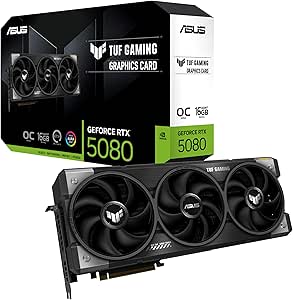 | Best for High-Res Gaming and Professional Use | GPU Clock Speed: 2730 MHz | Memory: 16GB GDDR7 | Video Output: DisplayPort 2.1a x3, HDMI 2.1b x2 | VIEW ON AMAZON | See Our Full Breakdown |
| Kelinx AISURIX RX 580 Graphics Card, 8GB GDDR5, PCIe 3.0, 2XDP, HDMI, Supports 4K Gaming |  | Best Budget 4K Gaming Card | Memory: 8GB GDDR5 | Memory Interface: 256-bit | Core Clock: 1750 MHz | VIEW ON AMAZON | See Our Full Breakdown |
| GIGABYTE Radeon RX 9070 XT Gaming OC ICE 16G Graphics Card |  | Best for High-Performance Gaming and Visual Fidelity | Memory: 16GB GDDR6 | Memory Interface: 256-bit | Cooling System: WINDFORCE | VIEW ON AMAZON | See Our Full Breakdown |
| premium graphics cards for gaming rig | Memory |
|---|---|
| ASUS Prime Radeon RX 9060 XT 1 | 16GB GDDR6 |
| ASUS Dual GeForce RTX 3050 6GB | 6GB GDDR6 |
| ASUS TUF Gaming GeForce RTX 50 | 12GB GDDR7 |
| ASUS Prime Radeon RX 9070 XT 1 | 16GB GDDR6 |
| RX560 4GB GDDR5 4 HDMI Multi M | 4GB GDDR5 |
| MSI Gaming RTX 5080 16G SUPRIM | — |
| Radeon RX 560 XT 8GB GDDR5 Gra | 8 GB GDDR5 |
| RX 580 Graphics Card 8GB 2048S | — |
| GIGABYTE GeForce RTX 5070 Ti G | 16GB GDDR7 |
| ASUS Dual GeForce RTX 5060 Ti | 16GB GDDR7 |
| GIGABYTE GeForce RTX 5080 Gami | 16GB GDDR7 |
| ASUS TUF Gaming GeForce RTX 50 | 16GB GDDR7 |
| ASUS TUF Gaming GeForce RTX 50 | 16GB GDDR7 |
| Kelinx AISURIX RX 580 Graphics | 8GB GDDR5 |
| GIGABYTE Radeon RX 9070 XT Gam | 16GB GDDR6 |
More Details on Our Top Picks
ASUS Prime Radeon RX 9060 XT 16GB GDDR6 OC Edition Gaming Graphics Card
This model stands out for delivering impressive high clock speeds—up to 3330 MHz—making it a strong choice for gamers seeking top-tier performance. Compared to the ASUS TUF RTX 5070, it offers higher clock speeds and a quieter operation thanks to 0dB technology, though it shares a similar 2.5-slot design requiring ample case space. Its dual-ball fan bearings promise longer lifespan, and the dual BIOS feature allows for tailored performance. However, the absence of price data and the need for a spacious case may limit its accessibility for budget-conscious or compact system builders. Ideal for gamers prioritizing speed and quiet operation, but less suited for those with tight case constraints or budget limits.
Pros:- High clock speeds up to 3330 MHz enhance gaming performance
- Silent operation with 0dB technology minimizes noise during casual gaming
- Reliable dual-ball fan bearings extend lifespan
- Dual BIOS provides customization options
Cons:- No pricing information available, complicating purchase decisions
- Requires ample case space due to its 2.5-slot form factor
Best for: High-end gaming enthusiasts with spacious cases and a focus on maximum performance
Not ideal for: Budget builders or users with limited case space, due to its 2.5-slot design
- GPU Model:Radeon RX 9060 XT
- Memory:16GB GDDR6
- Boost Clock:up to 3330 MHz
- Game Clock:up to 2760 MHz
- Design:2.5-slot
- Cooling:Dual-ball fan bearings
Our verdict“This card suits gamers seeking top performance and quiet operation in spacious setups.”
ASUS Dual GeForce RTX 3050 6GB GDDR6 OC Edition Gaming Graphics Card
This card excels for users with small chassis needing reliable ray-tracing and AI features, thanks to NVIDIA’s Ampere architecture. Its axial-tech fan design, combined with dust resistance (IP5X), provides efficient cooling suited to smaller cases. Compared to the ASUS TUF RTX 5070, the RTX 3050 is less powerful but consumes less power and fits better in compact setups. The 6GB VRAM limits its ability for demanding games at high settings, but for casual gaming or multi-monitor setups, it offers solid value. Its durable stainless steel bracket adds to its longevity, though the limited VRAM and compact size might restrict high-end gaming ambitions. Best for gamers with small cases or lower-resolution gaming needs.
Pros:- Enhanced ray-tracing and AI capabilities with NVIDIA Ampere architecture
- Axial-tech fan design improves cooling efficiency
- Dust resistance (IP5X) extends component lifespan
- Stainless steel bracket adds durability
Cons:- Limited to 6GB VRAM, which may hinder performance in demanding titles
- Requires a compatible small chassis for best fit
Best for: Gamers with small or compact PC cases seeking dependable performance for casual or multi-monitor gaming
Not ideal for: High-end gamers aiming for ultra settings or future-proofing with more VRAM
- GPU:GeForce RTX 3050
- Memory:6GB GDDR6
- Boost Clock:1500 MHz (OC), 1470 MHz (Default)
- Design:2-slot
- Fan Design:Axial-tech
- Dust Resistance:IP5X
Our verdict“This GPU offers reliable performance for compact builds and casual gaming, but falls short for high-end enthusiasts.”
ASUS TUF Gaming GeForce RTX 5070 12GB GDDR7 OC Edition Graphics Card
The ASUS TUF Gaming RTX 5070 is built to handle demanding workloads with NVIDIA’s Blackwell architecture and 12GB of GDDR7 memory. Its boost clock of 2640MHz ensures fast rendering, while its multi-fan, multi-slot design provides advanced cooling. Compared with the ASUS Prime RX 9060 XT, it offers superior ray-tracing and DLSS 4 capabilities, making it ideal for future-proof gaming. The military-grade components and phase-change thermal pads bolster durability, but its size—over three slots wide—and high power draw mean it demands a spacious case and a robust power supply. For users prioritizing longevity and high performance, this card is a compelling choice, though its size and power needs can restrict compatibility. Best for gamers demanding maximum performance and durability.
Pros:- High performance with 12GB GDDR7 memory
- Durable military-grade components ensure longevity
- Advanced cooling with multiple fans and thermal pads
- Reliable manufacturing process
Cons:- Large and heavy, requiring ample case space
- High power consumption necessitates a strong PSU
Best for: Enthusiasts with large cases and high-performance demands looking for future-proofing
Not ideal for: Smaller cases or users with limited power supply capacity
- GPU Architecture:NVIDIA Blackwell
- Memory:12GB GDDR7
- Boost Clock:2640 MHz
- Design:3.125-slot
- Cooling:Fin array with three Axial-tech fans
- Manufacturing:Auto-Extreme
Our verdict“This GPU is ideal for gamers seeking a durable, high-performance solution with room for growth.”
ASUS Prime Radeon RX 9070 XT 16GB GDDR6 OC Edition Gaming Graphics Card
This card combines high-performance features with a focus on cooling efficiency and overclocking potential. Its axial-tech fans with longer blades and barrier rings boost airflow, while phase-change thermal pads ensure effective heat transfer. The boost clock can reach up to 3030 MHz in OC mode, surpassing many comparable models like the RX 9060 XT. Compared to the RX 9060 XT, it offers better cooling options and higher clock speeds, but its larger size and power consumption require a spacious case and a strong power supply. Perfect for overclockers and enthusiasts who want maximum tuning flexibility, though it isn’t ideal for small or budget builds. Best for enthusiasts aiming for aggressive overclocking and cooling performance.
Pros:- Enhanced cooling with axial-tech fans and phase-change thermal pads
- High boost clock up to 3030 MHz in OC mode
- Supports overclocking with advanced thermal design
- Built with durable phase-change thermal pads
Cons:- Large size and high power consumption may limit compatibility
- Requires a spacious case and robust PSU
Best for: Overclockers and gamers seeking advanced cooling and high overclocking headroom
Not ideal for: Compact PC builders or those with limited power capacity
- Memory:16GB GDDR6
- Boost Clock:up to 3030 MHz in OC mode
- Design:3.125-slot
- Cooling:Axial-tech fans with barrier ring
- Thermal Solution:Phase-change thermal pads
- Manufacturing:Auto-Extreme
Our verdict“This GPU caters to overclocking enthusiasts who prioritize cooling and maximum performance gains.”
RX560 4GB GDDR5 4 HDMI Multi Monitor Graphics Card
The RX560 is designed for users who need multi-monitor support and casual gaming at office resolutions. Its 4 HDMI ports make it straightforward to connect multiple displays, ideal for productivity or light entertainment. Compared to higher-end cards like the RX 9060 XT or RTX 5070, it offers significantly lower performance, but its low power consumption (60W) and compact size make it suitable for small or budget builds. It’s not suited for demanding gaming or high-resolution rendering but shines in multi-monitor setups and basic tasks. Its limited VRAM and modest performance mean it’s best for users prioritizing connectivity over raw gaming power. Ideal for multi-monitor multitasking or casual gaming in small or budget-friendly systems.
Pros:- Supports up to four HDMI monitors for multitasking
- Low power consumption with no external power required
- Efficient cooling ensures quiet operation
- Compact size fits in small cases
Cons:- Limited performance not suitable for high-end gaming
- Only 4GB VRAM restricts modern gaming and demanding applications
- Not designed for high-resolution or VR gaming
Best for: Office users or casual gamers needing multiple HDMI outputs and low power draw
Not ideal for: High-end gamers or those seeking demanding gaming performance
- Memory:4GB GDDR5
- Ports:4 HDMI
- Power Consumption:60W
- Size:180*120*40mm
- Supported OS:Windows 7/10/11 64-bit
Our verdict“This card fits users with multi-monitor needs and casual gaming, but isn’t built for serious gaming performance.”
MSI Gaming RTX 5080 16G SUPRIM SOC Graphics Card
This MSI RTX 5080 model stands out for delivering exceptional performance with 16 GB of GDDR7 memory and support for resolutions up to 7680 x 4320, making it a top choice for gamers seeking cutting-edge visuals or professionals needing high-resolution workflows. Compared to the GIGABYTE GeForce RTX 5070 Ti, it offers more memory and higher resolutions, though at the expense of increased power consumption and heat output. Its multiple outputs support a broad multi-monitor setup, perfect for immersive gaming or productivity. The tradeoff is its likely high price and the need for a robust, high-end PC setup to handle its power demands. This card is best suited for enthusiasts and professionals who prioritize raw power and high resolution over budget constraints.
Pros:- Exceptional 16 GB GDDR7 memory for demanding tasks
- Supports ultra-high resolutions up to 7680 x 4320
- Multiple high-speed outputs for multi-monitor setups
Cons:- High power consumption and heat output
- Expensive and potentially overkill for casual use
Best for: Gamers and professionals who demand the absolute highest graphics performance and resolution capabilities
Not ideal for: Casual gamers or users with smaller or budget-oriented systems, due to its high power needs and cost
- Chipset:NVIDIA GeForce RTX 5080
- Video Memory:16 GB GDDR7
- Memory Interface:256-bit
- Outputs:DisplayPort x 3 (v2.1a), HDMI 2.1b
- Maximum Resolution:7680 x 4320
- Power Requirements:High
Our verdict“This card is perfect for users who need maximum performance and high-resolution support, despite its cost and power requirements.”
Radeon RX 560 XT 8GB GDDR5 Graphics Card, 1792 Stream Processors, 128-bit Interface, DVI, HDMI, DisplayPort
Compared with the RX 580, the Radeon RX 560 XT offers a more affordable entry point into modern gaming with 8 GB of GDDR5 memory and support for 4K resolution, making it suitable for budget-conscious gamers who still want high-quality visuals. Its dual cooling fans help manage heat during extended gaming sessions, similar to the cooling features in the RX 580, but at a more accessible price. While it doesn’t match the performance of higher-tier options like the MSI RTX 5080 or GIGABYTE RTX 5070 Ti, it provides sufficient power for many AAA titles at 1080p and decent 4K output for less demanding titles. The tradeoff is its limited performance ceiling and older architecture, which may struggle with future titles or intensive workflows. This pick makes sense for gamers prioritizing affordability without sacrificing 4K or multi-monitor support.
Pros:- Affordable price point for decent gaming performance
- Supports 4K resolution and multiple monitors
- Dual cooling fans improve heat management
Cons:- Limited to older architecture, less future-proof
- Power consumption at 150W may require a solid power supply
Best for: Budget-conscious gamers needing reliable 4K output and multi-monitor support
Not ideal for: Enthusiasts seeking cutting-edge performance or high frame rates at ultra settings
- Graphics Coprocessor:Radeon RX 560 XT
- Memory:8 GB GDDR5
- GPU Clock Speed:1206 MHz
- Video Output Interface:DVI, HDMI, DisplayPort
- Maximum Resolution:3840×2160
- Power Consumption:150W
Our verdict“Ideal for budget gamers aiming for 4K and multi-monitor setups without high-end performance demands.”
RX 580 Graphics Card 8GB 2048SP GDDR5 PCI Express 3.0 Gaming Video Card
The RX 580 8GB remains a solid choice for mid-range gaming, offering strong performance at 1080p and capable 4K support, especially when paired with high-refresh-rate monitors. Its semi-automatic fan technology helps reduce noise during lighter loads, similar to the cooling features in the Radeon RX 560 XT but with a bit more horsepower. Compared to the newer RX 560 XT, it generally provides better performance for slightly more demanding setups, making it a versatile option for gamers who want a balance of price and power. Still, its older architecture means it might lag behind newer graphics cards like the ASUS Dual GeForce RTX 5060 Ti in future titles or ray-traced workloads. It’s a reliable pick for gamers who prioritize value and performance without needing the latest tech.
Pros:- Good performance for 1080p and 1440p gaming
- Semi-automatic fans reduce noise during light loads
- Supports high-resolution displays and multi-monitor setups
Cons:- Older architecture may limit future performance
- No included accessories or warranty info available
Best for: Mid-range gamers seeking reliable performance at 1080p or 1440p with some 4K capability
Not ideal for: Players looking for high-end 4K gaming or future-proofing for upcoming titles
- Graphics Coprocessor:RX 580
- Graphics Card RAM:8 GB
- GPU Clock Speed:1286 MHz
- Video Output Interface:HDMI, DisplayPort
- Maximum Display Resolution:3840×2160
- Cooling Technology:Semi-automatic fans
Our verdict“Best suited for gamers who want dependable mid-range performance without paying for the latest tech.”
GIGABYTE GeForce RTX 5070 Ti Gaming OC 16G Graphics Card
This GIGABYTE RTX 5070 Ti Gaming OC with 16 GB GDDR7 offers a compelling mix of high-performance gaming and future-proofing thanks to PCIe 5.0 support and NVIDIA’s Blackwell architecture. Its 16 GB of VRAM rivals the MSI RTX 5080, but with the added benefit of PCIe 5.0, it can transfer data faster, optimizing performance in demanding workflows. The WINDFORCE cooling system helps manage heat under load, yet the card’s high power consumption means it might require a large case and robust power supply—similar to the MSI model but with potentially better efficiency due to newer architecture. Compared to the ASUS Dual GeForce RTX 5060 Ti, it offers more VRAM and PCIe 5.0, but at a higher power cost. This card is best for users seeking future-ready specs and high-end gaming performance.
Pros:- High 16 GB GDDR7 VRAM for demanding applications
- Supports PCIe 5.0 for faster data transfer
- Effective WINDFORCE cooling system
Cons:- High power consumption requiring robust PSU
- Large size may limit compatibility in small cases
Best for: High-end gamers and content creators looking for advanced PCIe 5.0 support and ample VRAM
Not ideal for: System builders with limited space or lower wattage power supplies, due to size and power needs
- Memory:16GB GDDR7
- Memory Interface:256-bit
- PCIe Version:5.0
- Cooling System:WINDFORCE
- Architecture:NVIDIA Blackwell
- DLSS Version:4
Our verdict“Best suited for high-end users who want future-proofing with PCIe 5.0 and ample VRAM, accepting the power and size tradeoffs.”
ASUS Dual GeForce RTX 5060 Ti 16GB GDDR7 OC Edition Gaming Graphics Card
This ASUS Dual GeForce RTX 5060 Ti OC Edition combines the latest NVIDIA Blackwell architecture with 16 GB GDDR7 memory, making it a strong contender for gamers who value efficient cooling and quiet operation. Its 2.5-slot design with axial-tech fans enhances airflow and cooling efficiency compared to single-fan models like the RX 580, while dual BIOS options allow tuning for silence or performance. Its high AI TOPS performance (767 TOPS) makes it suitable for AI workloads and ray tracing, but the absence of detailed price info makes assessing value harder. Compared to the GIGABYTE RTX 5070 Ti, it offers similar high-end features but may be more compact, although large case compatibility could be an issue. This card is ideal for gamers who want high performance with minimal noise and customizable operation.
Pros:- High AI TOPS performance with DLSS 4
- Effective cooling with 2.5-slot design and axial-tech fans
- Quiet operation with 0dB technology and dual BIOS
Cons:- Potential size limitations in small cases
- Price information not provided, making value assessment difficult
Best for: Enthusiasts seeking a quiet, efficient high-performance GPU with AI capabilities
Not ideal for: Users with small cases or those on a tight budget, due to its size and potential cost
- Memory:16GB GDDR7
- Architecture:NVIDIA Blackwell
- Clock Speed:2632 MHz (OC), 2602 MHz (Default)
- Design:2.5-slot
- Fan Technology:Dual ball bearings, axial-tech
- Features:AI performance, DLSS 4, 0dB technology, dual BIOS
Our verdict“Ideal for users who prioritize quiet operation and high AI performance in a high-end gaming setup.”
GIGABYTE GeForce RTX 5080 Gaming OC 16G Graphics Card
The GIGABYTE GeForce RTX 5080 Gaming OC stands out for its cutting-edge NVIDIA Blackwell architecture and 16GB GDDR7 memory, making it an excellent choice for gamers who also do content creation. Compared with the ASUS RTX 5080, it offers slightly better cooling thanks to its WINDFORCE system, but this often comes with a higher power draw and cost. This card is ideal for users who prioritize raw performance and future-proofing, but the high power consumption and premium price tag make it less appealing to budget-conscious gamers.
Pros:- Powerful NVIDIA Blackwell architecture for demanding tasks
- Large 16GB GDDR7 memory supports high-resolution textures and future titles
- Effective WINDFORCE cooling system maintains thermal stability
Cons:- Potentially high power consumption requiring robust PSU
- Premium price point may be prohibitive for some users
Best for: High-end gamers and creators needing top-tier performance and large memory buffers
Not ideal for: Casual gamers or users with limited power supply capacity who prefer more affordable options
- Memory:16GB GDDR7
- Memory Interface:256-bit
- Architecture:NVIDIA Blackwell
- Cooling System:WINDFORCE
- Interface:PCIe 5.0
Our verdict“This card is best suited for enthusiasts seeking maximum performance and are ready to invest in premium hardware.”
ASUS TUF Gaming GeForce RTX 5070 Ti 16GB GDDR7 OC Edition Graphics Card
The ASUS TUF Gaming RTX 5070 Ti offers a blend of high performance with military-grade durability, making it an excellent choice for users who need reliability during long gaming or workload sessions. Compared to the GIGABYTE RTX 5080, it offers a slightly lower clock speed of 2610MHz but compensates with solid build quality and advanced thermal management via triple Axial-tech fans. Its 16GB GDDR7 memory supports demanding titles, but the requirement of an 850W power supply and its large 3.125-slot design may limit compatibility for some users.
Pros:- High-performance RTX 5070 Ti with 2610MHz boost clock
- Military-grade components for extended durability
- Robust thermal management with triple fans and phase-change pads
Cons:- Requires an 850W power supply, limiting upgrade options
- Large size may not fit in compact cases
Best for: Gamers and professionals seeking a durable, high-performance GPU with excellent longevity
Not ideal for: Small-form-factor builders or those with limited PSUs under 850W
- Memory:16GB GDDR7
- Boost Clock:2610MHz
- Design:3.125-slot, triple Axial-tech fans
- Power Requirement:850W PSU, 16-pin 12V-2×6 connector
- Manufacturing:Auto-Extreme
Our verdict“This GPU is a strong pick for users who prioritize durability and consistent high performance over compactness.”
ASUS TUF Gaming GeForce RTX 5080 16GB GDDR7 OC Edition Graphics Card
The ASUS TUF Gaming RTX 5080 features a 2730 MHz boost clock and military-grade components, making it suitable for demanding gaming and professional workloads. Compared with the GIGABYTE RTX 5080, it offers higher clock speeds but shares similar power requirements, including a minimum 850W PSU. Its three axial-tech fans provide strong cooling, yet the large size and high power demands may exclude some users with smaller cases or limited power supplies. This card is ideal for those who want top-tier performance in a durable package.
Pros:- High boost clock of 2730 MHz for quick rendering and gaming
- Robust cooling with three fans maintains thermal stability
- Durable military-grade components ensure longevity
Cons:- Requires at least 850W power supply, increasing total system cost
- Large form factor may not fit in all cases
Best for: High-resolution gamers and professionals needing a reliable, high-clock GPU
Not ideal for: Budget builders or those with limited space and power capacity
- GPU Clock Speed:2730 MHz
- Memory:16GB GDDR7
- Video Output:DisplayPort 2.1a x3, HDMI 2.1b x2
- Cooling System:3x Axial-tech fans
- Size:13.7″ L x 5.7″ W
Our verdict“This GPU is well-suited for users demanding peak performance and durability in high-resolution gaming or professional tasks.”
Kelinx AISURIX RX 580 Graphics Card, 8GB GDDR5, PCIe 3.0, 2XDP, HDMI, Supports 4K Gaming
The Kelinx AISURIX RX 580 offers a capable 8GB GDDR5 setup for 4K gaming at a more accessible price point. While it can’t match the raw power of the RTX 5080 series, it handles high-definition output with support for DirectX 12 and multiple displays. Compared with the higher-end options like the GIGABYTE RTX 5080, it excels in affordability but falls short in performance and future-proofing. Its PCIe 3.0 interface limits bandwidth slightly compared to newer PCIe 5.0 cards, but for casual or budget-conscious gamers, it provides solid 4K support without breaking the bank.
Pros:- Supports 4K gaming with decent output quality
- Low noise operation due to efficient fan system
- Single 8-pin power connector simplifies upgrades
Cons:- Limited to 2 monitor outputs
- Maximum power draw of 185W may require a capable PSU
- No overclocking features or advanced cooling
Best for: Budget-conscious gamers wanting 4K support without premium price
Not ideal for: Heavy-duty gaming or professional workloads requiring high frame rates and memory bandwidth
- Memory:8GB GDDR5
- Memory Interface:256-bit
- Core Clock:1750 MHz
- Outputs:2x DisplayPort, 1x HDMI
- Power Consumption:185W
Our verdict“This card fits budget builds aiming for 4K gaming, but it’s less suited for demanding, high-refresh-rate titles.”
GIGABYTE Radeon RX 9070 XT Gaming OC ICE 16G Graphics Card
The GIGABYTE Radeon RX 9070 XT Gaming OC ICE combines 16GB GDDR6 memory with innovative cooling and a reinforced build, making it ideal for gamers pushing high resolutions and advanced graphics settings. Its 16GB GDDR6 is slightly different from the GDDR7 found in NVIDIA counterparts but still delivers excellent performance for AAA titles. The WINDFORCE cooling system, thermal gel, and reinforced backplate support long gaming sessions without throttling. Compared to the ASUS RTX 5080, it offers a different ecosystem with AMD’s features, but both are comparable in raw power. The large size and need for PCIe 5.0 compatibility can be limiting for some builds.
Pros:- High-performance 16GB GDDR6 memory for AAA gaming
- Advanced cooling with WINDFORCE technology
- Reinforced metal backplate for durability
Cons:- Requires PCIe 5.0 slot for full compatibility
- Large physical size may not suit all cases
- Performance mode may generate more noise
Best for: Gamers seeking a high-quality AMD alternative with excellent cooling and durability
Not ideal for: Small form factor systems or users with PCIe 4.0 slots and limited space
- Memory:16GB GDDR6
- Memory Interface:256-bit
- Cooling System:WINDFORCE
- Backplate:Reinforced metal
- Display Outputs:HDMI, DP 2.1
Our verdict“This GPU is perfect for AMD fans and gamers who prioritize cooling and long-term durability at high resolutions.”

How We Picked
These products were evaluated based on performance benchmarks, build quality, thermal management, and value for the price. We prioritized cards that offer cutting-edge features like ray tracing and DLSS, while also considering factors such as size compatibility and power efficiency. Our ranking reflects a balance between raw performance and usability, aiming to identify options suitable for high-end gaming rigs without overestimating niche features that may not impact everyday gaming. Additionally, we considered user reviews and reliability reports to ensure the selections are durable and well-supported.Factors to Consider When Choosing Premium Graphics Cards For Gaming Rigs
Choosing a premium graphics card for your gaming rig involves more than just raw power. It’s essential to consider several factors that influence performance, compatibility, and overall value. Paying attention to these details can help you avoid costly mistakes and ensure your investment meets your gaming needs for years to come.Performance and Future-Proofing
High-end cards like the RTX 5080 and RX 9070 XT promise excellent frame rates at 4K resolutions and support upcoming game features. However, consider whether you need this level of power, as some models may be overkill for your monitor or gaming style. Future-proofing involves not just raw specs but also support for new APIs and technologies, ensuring your system stays relevant for several years without requiring an upgrade.
Size and Compatibility
Premium cards tend to be larger and more complex in cooling design. Always check your case dimensions and power supply capacity before purchasing. A physically large card may not fit in smaller cases or may block other components, while a weak power supply can limit performance or cause stability issues. Compatibility is often overlooked but critical for smooth installation and operation.
Thermal Management and Noise
High-performance GPUs generate significant heat, demanding advanced cooling solutions. Models with robust cooling tend to run quieter and last longer, but they also tend to be larger and more expensive. Consider your environment—if noise is a concern, look for cards with enhanced cooling and quieter fans, especially if your rig is in a living space.
Price-to-Performance Ratio
While premium cards are expensive, not all offer equal value. Look beyond the sticker price and assess benchmarks, feature sets, and energy consumption. Sometimes, a slightly lower-tier model provides nearly the same gaming experience at a fraction of the cost, making it a smarter investment for most users.
Power Consumption and Requirements
High-end graphics cards often demand significant power, requiring high-capacity PSUs and adequate power connectors. Failing to match your power supply can cause stability issues or prevent you from fully utilizing the card’s capabilities. Ensure your system’s wattage and connectors align with the GPU’s specifications before purchasing.
Frequently Asked Questions
Does a higher VRAM capacity always mean better gaming performance?
Not necessarily. While more VRAM can improve performance in high-resolution gaming or with texture-heavy mods, many games still rely heavily on GPU core performance. For most 4K gaming, 12GB or 16GB VRAM is sufficient, but beyond that, the benefits diminish unless you’re running very specific workloads or future titles that will utilize larger textures.
Is it worth paying extra for ray tracing features?
Ray tracing offers more realistic lighting and shadows, greatly enhancing visual fidelity in supported games. However, enabling ray tracing can significantly impact frame rates, especially on less powerful cards. If you prioritize visuals and your hardware can handle it without sacrificing too much performance, investing in a card with ray tracing support makes sense. Otherwise, you might prefer to disable it for smoother gameplay.
Should I prioritize cooling solutions or factory overclocking?
Both are important. Strong cooling solutions help maintain performance and extend the lifespan of your GPU, especially during long gaming sessions. Factory overclocking can boost performance right out of the box but may generate more heat and noise. A well-cooled card with a modest overclock often delivers the best balance of performance, longevity, and quiet operation.
Are larger cards suitable for all cases?
Not all cases can accommodate large, high-end GPUs. Before purchasing, measure your case dimensions and check for clearance around PCIe slots and adjacent components. Compact or mini-ITX cases may require smaller or specially designed cards, which might sacrifice some cooling or performance features found in larger models.
Is it better to buy a slightly older top-tier model or the latest mid-range?
This depends on your budget and performance needs. Older top-tier models often offer excellent performance at a lower price, but they may lack the latest features or efficiency improvements. The latest mid-range cards might provide better value with newer technologies and improved power efficiency, making them a smarter choice for most gamers seeking high performance without premium prices.
Conclusion
For those who want the absolute best and have the budget, the GIGABYTE GeForce RTX 5080 Gaming OC 16G stands out as the top choice for overall performance. Gamers seeking a balance of price and power should consider the ASUS Prime Radeon RX 9070 XT 16GB, which offers excellent value without sacrificing too much performance. Newcomers or those upgrading an existing system might find the ASUS Dual GeForce RTX 3050 6GB sufficient, especially if they prioritize size and lower power requirements. Heavy multitaskers and future-proofers should look at the latest RTX 5080 or RX 9070 XT models, while those with limited space or budgets should consider slightly older or more compact options. This guide aims to match your specific needs with the right high-end graphics card for a seamless gaming experience in 2026.
Flea & tick season Picks
flea and tick prevention
As an affiliate, we earn on qualifying purchases.