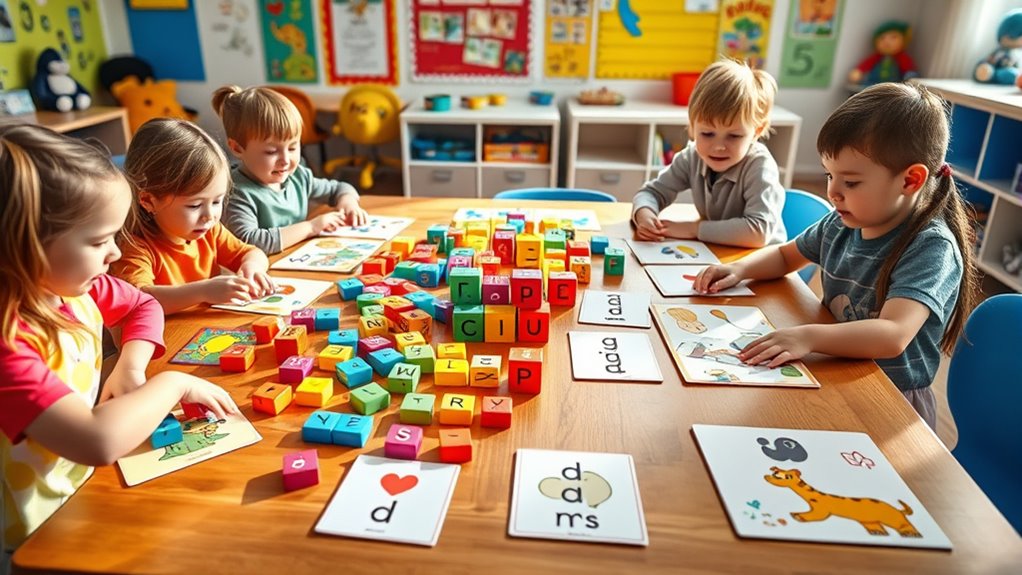

When searching for language development puzzles, parents and educators want engaging tools that foster vocabulary, sentence structure, and language comprehension. The 110PCS Sentence Building Double-Sided Puzzle stands out as the best overall, thanks to its versatility and age range. For younger learners, the Key Education Sentence Building Game offers simplicity and fun, while the Development of Language, 10th Edition provides a comprehensive academic resource. These options highlight the main tradeoffs: between playful engagement and educational depth. Continue reading for a full breakdown of the top puzzles and how they compare.
Complete the kit


Key Takeaways
- Top picks vary from playful games to academic resources, reflecting different learning needs and age groups.
- Versatility in puzzle design—double-sided options or multi-skill focus—sets leading products apart.
- Price often correlates with depth of content; higher cost options tend to serve more advanced learners or educators.
- Most effective puzzles balance engagement with educational value, avoiding overly complex or overly simplistic designs.
- Choosing the right puzzle depends heavily on the child’s age, learning goals, and the context of use—home or classroom.
| 110PCS Sentence Building Double-Sided Puzzles with Sight Words & Blanks for Kids Learning |  | Best Hands-On Learning Tool for Early Sentence Construction | Number of Puzzle Cards: 110 | Pre-printed Cards: 90 | Blank Cards: 20 | VIEW ON AMAZON | See Our Full Breakdown |
| Key Education Sentence Building Game for Kids Ages 6-8 |  | Best Interactive Sentence Construction Game for Elementary Kids | Number of Word Cards: 55 | Card Size: 2.2 x 2.2 inches | Includes: Punctuation cards, photo cards, activity ideas | VIEW ON AMAZON | See Our Full Breakdown |
| The Development of Language, 10th Edition |  | Best In-Depth Theoretical Resource for Language Development | VIEW ON AMAZON | See Our Full Breakdown | |||
| Language Development: An Introduction |  | Best Introductory Overview for Students and Professionals | VIEW ON AMAZON | See Our Full Breakdown | |||
| Language Development |  | Best General Support for Language Skills Across Ages | VIEW ON AMAZON | See Our Full Breakdown | |||
| A Puzzle of Language Development (Korean Edition) |  | Best for Language Learners Focused on Korean | Language Focus: Korean | Intended Audience: Learners and educators | Content Type: Insightful strategies and linguistic analysis | VIEW ON AMAZON | See Our Full Breakdown |
| The Language Puzzle: Piecing Together the Six-Million-Year Story of How Words Evolved |  | Best for Language History Enthusiasts and Scientific Minds | Scope: Evolutionary history of language | Audience: Language enthusiasts and students | Content Type: Scientific and historical analysis | VIEW ON AMAZON | See Our Full Breakdown |
More Details on Our Top Picks
110PCS Sentence Building Double-Sided Puzzles with Sight Words & Blanks for Kids Learning
This puzzle set stands out for its durable construction and user-friendly design, making it ideal for children aged 3 and up who are just beginning to explore sentence building. Unlike the Key Education game, which offers more interactive activities for slightly older children, this set emphasizes repetitive practice with color-coded parts of speech, aiding early recognition and comprehension. The inclusion of blank cards allows for creative sentence formation, but it requires dry-erase markers, which can be an extra step for parents or teachers. While the set’s thick cardboard ensures longevity, younger kids may need supervision to avoid frustration with more complex puzzles. Overall, this set is perfect for introducing language concepts through tactile play, especially for those who prefer physical manipulatives over digital tools.
Pros:- Durable, thick cardboard construction for long-term use
- Color-coded system helps children identify parts of speech easily
- Includes blank cards for creative sentence building and customization
- Double-sided design offers more learning opportunities
Cons:- Requires dry-erase markers or writing tools for blank cards
- May be too advanced for children under 3 without supervision
Best for: Parents and educators seeking a durable, versatile puzzle set to develop foundational sentence skills for preschoolers and early learners.
Not ideal for: Children under 3 or very early learners who might find the complexity of color-coded parts and blank cards overwhelming without guided instruction.
- Number of Puzzle Cards:110
- Pre-printed Cards:90
- Blank Cards:20
- Material:High-quality thick cardboard
- Suitable Age:3+
- Manufacturer Part Number:Gru487
Our verdict“This set is best suited for preschoolers and educators looking for a sturdy, hands-on tool to reinforce early sentence construction skills.”
Key Education Sentence Building Game for Kids Ages 6-8
Compared to the puzzle-based approach of the 110PCS set, this game offers a more dynamic, interactive experience for children aged 6 to 8, making it ideal for classroom or homeschool settings. The inclusion of various card types—word, punctuation, photo, and activity ideas—fosters not only sentence construction but also a broader understanding of grammar and punctuation. However, the game’s complexity means it may require adult supervision for younger or less experienced children, and some users might find the set limited if they need extensive practice. Its engaging format encourages cooperative learning, but it might be less suitable for very early learners who still struggle with basic vocabulary. Overall, this product provides a valuable step up from simpler puzzles, promoting language development through playful interaction.
Pros:- Engages children with interactive, multi-card activities
- Includes punctuation and photo cards for contextual learning
- Fosters teamwork and conversation skills
- Suitable for classroom or homeschool environments
Cons:- Requires adult supervision for younger children
- Limited for extensive practice beyond initial learning
- Puzzles may be too challenging for some early learners
Best for: Elementary teachers and parents seeking an engaging, multi-faceted language game for children aged 6-8 to support classroom or home learning.
Not ideal for: Parents of children under 6 or those looking for a purely tactile, non-digital method for very early language development.
- Number of Word Cards:55
- Card Size:2.2 x 2.2 inches
- Includes:Punctuation cards, photo cards, activity ideas
Our verdict“This game is an excellent choice for slightly older children who benefit from interactive, collaborative language activities to reinforce sentence structure and grammar.”
The Development of Language, 10th Edition
This textbook offers a comprehensive overview of how language develops, making it ideal for students and professionals in linguistics or psychology. It stands apart from the more practical, game-like options by providing detailed theories, research, and contextual understanding. However, the lack of interactive features or activities makes it less suitable for direct classroom use with young children. Its depth can be overwhelming for casual readers or those seeking quick insights into language development, but it excels in providing a scholarly foundation for understanding complex language processes. Compared with the introduction book, this edition offers more detailed research, although it lacks practical exercises or engaging visuals for young learners.
Pros:- Comprehensive coverage of language development theories
- Includes latest research and practical applications
- Suitable for academic and professional study
- Detailed analysis of linguistic development stages
Cons:- No interactive features or practical exercises
- Lacks supplementary online or multimedia resources
- Potentially dense for casual readers
Best for: Graduate students, researchers, or professionals looking for a thorough academic resource on language development theories.
Not ideal for: Parents or teachers seeking hands-on activities or simplified explanations for young children.
Our verdict“This textbook is best for scholars and advanced students seeking an exhaustive, research-based understanding of language development processes.”
Language Development: An Introduction
Compared to the detailed textbook, this book offers a concise overview of key theories and findings in language development, making it accessible for learners at various levels. It provides a solid foundation but lacks the depth found in the 10th edition of ‘The Development of Language.’ While it covers essential concepts well, it doesn’t include specific features or interactive components, limiting its use for hands-on activities. This makes it more suitable for beginners or those seeking a quick, structured summary rather than an in-depth exploration. For educators, it serves as a good supplementary text but might not satisfy those looking for detailed case studies or recent research.
Pros:- Clear, concise overview of key theories
- Accessible language suitable for beginners
- Good for foundational learning and quick reference
- Suitable for classroom use as an introductory text
Cons:- Lacks detailed content or recent research updates
- No interactive or multimedia features
- Limited depth for advanced learners
Best for: Undergraduate students or new educators seeking a straightforward, well-organized introduction to language development theories.
Not ideal for: Advanced researchers or practitioners needing detailed, up-to-date research and practical applications.
Our verdict“This book is best for newcomers to language development who need a straightforward, organized summary of core concepts.”
Language Development
Although this product’s description is vague, it appears designed to support language learning broadly across different age groups. Unlike the targeted, activity-rich options like the 110PCS set or the Key Education game, it seems more like a general resource or program. Its lack of detailed features or customer reviews makes it harder to evaluate, but it could serve as a flexible tool for various language development needs. However, because it offers less specific guidance or interactive elements, it might fall short for users seeking structured, engaging activities. This product makes the most sense for those needing a broad support system rather than targeted language puzzles or games.
Pros:- Supports language skill development broadly
- Suitable for multiple age groups
- Flexible use across different settings
- Potentially easy to incorporate into existing curricula
Cons:- Lack of detailed features or content specifics
- No customer reviews to validate effectiveness
- Unclear whether it includes interactive or practical components
Best for: Parents or educators looking for a flexible, general resource to support language development for various ages without requiring specific activities.
Not ideal for: Users seeking detailed, hands-on puzzles or research-based textbooks, as this product seems more generic and less targeted.
Our verdict“This product may serve as a broad, adaptable support tool for general language development needs across different ages, but it lacks specificity and depth.”
A Puzzle of Language Development (Korean Edition)
This book stands out for its deep dive into Korean language development, offering valuable insights and strategies tailored specifically to Korean learners and educators. Compared with broader language evolution titles like ‘The Language Puzzle,’ it provides a more practical approach for those immersed in Korean. However, its narrow focus limits its usefulness for learners of other languages, and the lack of detailed author information makes assessing its credibility more challenging. Its strength lies in the nuanced understanding of Korean linguistic growth, making it ideal for dedicated Korean language students or teachers seeking targeted strategies. Still, those seeking a broader overview of language development may find it too specialized. In-depth insights into Korean language growth and practical strategies are its key advantages, but its limited scope and sparse content details are notable drawbacks.Pros:- Provides detailed insights into Korean language development processes
- Useful for educators designing Korean language curricula
- Offers practical strategies tailored to Korean learners
Cons:- Limited to Korean language context, reducing relevance for other language learners
- Lacks detailed content outline and author credentials, affecting credibility
Best for: Korean language learners and educators seeking specialized insights into Korean linguistic development
Not ideal for: Learners interested in general language development or other languages, due to its narrow focus and limited content breadth
- Language Focus:Korean
- Intended Audience:Learners and educators
- Content Type:Insightful strategies and linguistic analysis
- Format:Book
- Language Development Scope:Korean language specifics
- Author Information:Not specified
Our verdict“This pick is best suited for those deeply invested in Korean language learning or teaching, looking for targeted insights.”
The Language Puzzle: Piecing Together the Six-Million-Year Story of How Words Evolved
This book excels in offering a comprehensive, scientifically grounded overview of how human language evolved over millions of years. Compared with the Korean-focused ‘A Puzzle of Language Development,’ it appeals to readers interested in the origins of language and evolutionary linguistics. Its detailed research and engaging narrative make it a compelling read for enthusiasts, though its technical depth may alienate casual readers seeking a lighter introduction. If you’re curious about the broad story of language’s origins, this book delivers a well-structured, evidence-based account. However, those new to linguistic science might find it overwhelming or too dense. Rich scientific insights and engaging storytelling make this ideal for dedicated language history buffs, but not for casual learners seeking simplicity.Pros:- Provides a thorough overview of language evolution over millions of years
- Backed by scientific research and well-referenced sources
- Engaging narrative that makes complex topics accessible for enthusiasts
Cons:- May be too technical and dense for casual readers or beginners
- Lacks practical strategies for language learners or educators
Best for: Language enthusiasts and students interested in the evolutionary history of human speech
Not ideal for: Casual readers or those seeking straightforward guides on modern language development
- Scope:Evolutionary history of language
- Audience:Language enthusiasts and students
- Content Type:Scientific and historical analysis
- Format:Book
- Research Depth:High
- Technical Level:Advanced
Our verdict“This book is ideal for those fascinated by the origins of language and eager for a detailed, science-based perspective.”

How We Picked
We evaluated each product based on its ability to enhance language skills through engaging puzzles, its suitability for specific age groups, and overall build quality. Usability was a key factor—whether the puzzles are intuitive and easy to use for kids or educators. We also considered the educational depth—whether the product offers meaningful learning opportunities or just casual entertainment—and assessed value in relation to cost. The ranking reflects a combination of versatility, content quality, and user feedback, prioritizing tools that deliver tangible language development benefits for their target audience.Factors to Consider When Choosing Language Development Puzzles
Selecting the right language development puzzle involves understanding several key factors that influence learning effectiveness, engagement, and longevity. The best puzzles not only captivate children but also align with their developmental stage and language goals. Considering these factors helps avoid common pitfalls like choosing overly complex puzzles for young children or underwhelming options for more advanced learners.Age Appropriateness and Skill Level
Choosing a puzzle suited to the child’s age ensures that the challenge is appropriate and engaging. Younger children benefit from simple, colorful puzzles that promote basic vocabulary, while older kids or language learners may need more complex sentence-building or thematic puzzles. A mismatch can lead to frustration or boredom, so check age recommendations carefully.
Educational Focus and Content Depth
Some puzzles emphasize vocabulary building, others focus on sentence structure, and some combine both. Think about your primary goal—are you reinforcing basic words or aiming to improve grammar and syntax? Higher-quality puzzles often balance fun with learning, but be wary of products that lean too heavily on entertainment at the expense of educational value.
Durability and Material Quality
Language puzzles should withstand active use, especially with young children. Look for puzzles made of sturdy, safe materials that are easy to clean and handle. Cheaper options may fall apart quickly, which diminishes value and frustrates learners. Investing in well-made puzzles pays off in longevity and sustained engagement.
Versatility and Expandability
Some puzzles are designed for single-use fun, while others can evolve with the learner, offering additional levels or related activities. Consider whether the puzzle can be integrated into broader language curricula or adapted for different skill levels. This flexibility maximizes the long-term usefulness of your purchase.
Price and Value
While budget options can be effective for casual use, investing in higher-quality puzzles often yields better learning outcomes and durability. Balance your budget with the educational richness you seek. Sometimes, paying more upfront results in a more engaging, longer-lasting learning tool that truly supports language development.
Frequently Asked Questions
Are language development puzzles suitable for home use or classroom settings?
Language development puzzles are highly versatile and can be used effectively in both environments. For home use, they offer a fun, engaging way to reinforce language skills during daily activities. In classrooms, they serve as interactive tools that promote collaborative learning and targeted language instruction. Selecting puzzles that match the setting’s needs and the child’s age ensures maximum benefit and sustained interest.
Should I prioritize puzzles that focus on vocabulary or sentence structure?
The choice depends on the child’s current language level and learning goals. For beginners, vocabulary-focused puzzles lay a foundation of basic words, helping build confidence. For more advanced learners, puzzles emphasizing sentence construction and grammar deepen understanding and fluency. Combining both approaches over time offers a comprehensive language development experience.
How important are the materials used in language puzzles?
Materials impact both safety and durability, especially for younger children who tend to handle puzzles roughly. High-quality puzzles made from sturdy, non-toxic materials last longer and withstand frequent use. Cheaper options often break or wear quickly, which can frustrate learners and diminish the value of your investment. Prioritizing quality materials ensures the puzzle remains a helpful educational tool over time.
Can language puzzles help with bilingual or multilingual language learning?
Yes, many puzzles are designed with multilingual learners in mind, offering language labels, dual-language options, or thematic content that supports bilingual development. These puzzles can reinforce vocabulary in multiple languages and expose learners to different grammatical structures. When choosing for bilingual use, look for products explicitly designed for multilingual environments to maximize their effectiveness.
When should I consider investing in more advanced, curriculum-based language puzzles?
Advanced puzzles are best suited for learners who have already mastered basic vocabulary and are ready for more complex language concepts, such as syntax and grammar. These tools are ideal for homeschooling, language classes, or children showing rapid progress. However, for complete beginners, starting with simpler, game-based puzzles often yields better initial engagement and confidence-building.
Conclusion
For parents seeking an engaging, versatile tool, the 110PCS Sentence Building Double-Sided Puzzle offers excellent overall value. Educators or advanced learners should consider the Language Development: An Introduction or The Language Puzzle for deeper learning. Beginners or casual users will find the Key Education Sentence Building Game approachable and fun, while those prioritizing durability and longevity might lean toward higher-end, well-made options. Ultimately, choosing the right puzzle depends on the child’s age, learning goals, and whether the focus is playful engagement or structured language mastery.