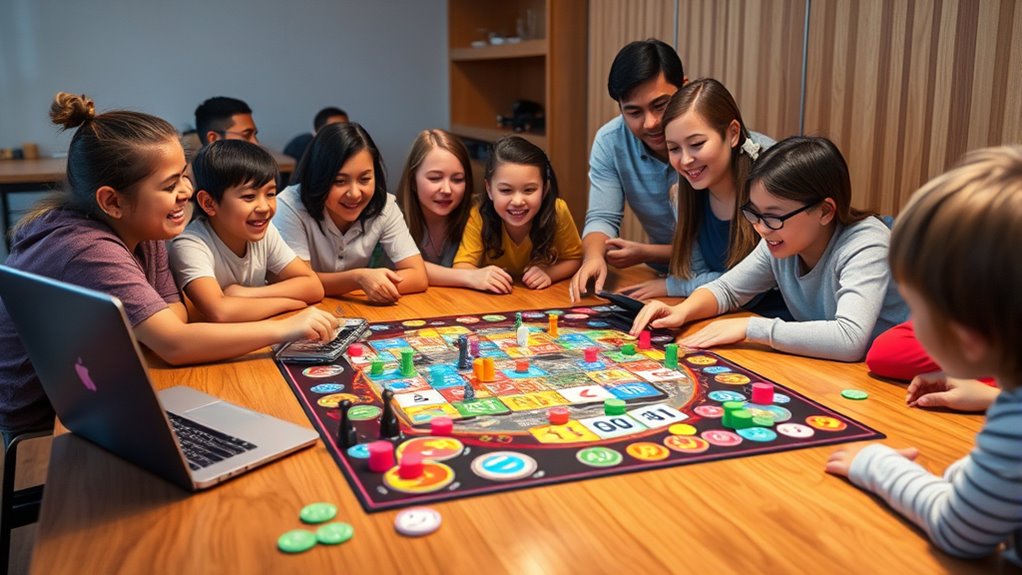

Choosing the right coding board game in 2026 means balancing educational value, age appropriateness, and gameplay complexity. The Coder Bunnyz stands out as the most comprehensive STEM game, ideal for those seeking a broad programming introduction. ThinkFun Circuit Maze offers an engaging circuitry experience for slightly older children, while Coder Mindz introduces AI concepts early. Hacker provides a cybersecurity challenge for advanced players. Each has distinct strengths and tradeoffs, making your choice dependent on age, prior knowledge, and learning goals.

Turn the school run and nap time into listening time
- Thousands of audiobooks, podcasts and originals
- Listen on your phone, tablet or Echo — also offline
- Cancel anytime
Complete the kit


Key Takeaways
- The Coder Bunnyz offers the most extensive programming coverage suitable for classroom or family settings.
- Circuit Maze emphasizes circuitry and logical reasoning with physical components, ideal for ages 8 and up.
- Coder Mindz introduces AI concepts in a playful manner for younger children, fostering early STEM interest.
- Hacker is best for older kids ready for more advanced cybersecurity challenges.
- Tradeoffs include complexity levels and component types, influencing who each game is best suited for.
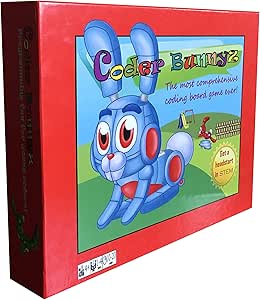


| coding board game | Age Range |
|---|---|
| The Most Comprehensive STEM Co | Baby |
| ThinkFun Circuit Maze Game | 8 years and up |
| ThinkFun Code Master Programmi | 8 and Up |
| Game for AI Learners! NBC Feat | 6+ |
| Think Fun Hacker Cybersecurity | 10 years and up |
More Details on Our Top Picks
The Most Comprehensive STEM Coding Board Game Ever! Learn All the Concepts You Need in Computer Programming in a Fun Adventure
This game excels at covering a wide spectrum of programming concepts, making it ideal for those seeking a thorough introduction. Its detailed rule set and multi-level gameplay might be overwhelming for very young children but provide excellent value in educational settings. Compared to other options, it offers a more complete curriculum, though this comes with increased complexity and setup time. It’s perfect for schools or families committed to deep learning but less so for casual play.
Pros:- Teaches a wide range of programming concepts
- Suitable for children and adults, promoting family learning
- Used globally in schools and libraries
Cons:- May be complex for very young children
- Setup and rules are slightly detailed for casual play
Best for: Educational settings and dedicated learners seeking comprehensive programming coverage
Not ideal for: Very young children or casual players looking for simple gameplay
- Brand Name:Coder Bunnyz
- Genre:Educational, Fantasy
- Number of Players:4
- Edition:Standard Edition
- Age Range:Baby
- Minimum Age Recommendation:36 months
Our verdict“This pick makes the most sense for educators and families prioritizing extensive programming education.”
ThinkFun Circuit Maze Game – STEM Toy for Learning Circuitry, Brain-Boosting Puzzle for Ages 8 and Up
Compared with the comprehensive coding game, Circuit Maze narrows focus to circuitry and logic, making it ideal for children interested in electronics. Its challenging puzzles develop critical thinking and spatial skills, but the need for batteries and slightly complex setup may be a hurdle for some younger children. This game is less about broad programming and more about understanding how circuits work, which makes it highly focused but less versatile for general coding concepts.
Pros:- Teaches circuitry fundamentals through gameplay
- Includes 60 challenges of increasing difficulty
- High-quality components and instructions
Cons:- Requires 3 AAA batteries (not included)
- Setup can be slightly complex for younger children
Best for: Children aged 8 and up interested in circuitry and hands-on STEM learning
Not ideal for: Children under 8 or those seeking broad programming concepts
- Brand:ThinkFun
- Age Range:8 years and up
- Number of Challenges:60
- Batteries Required:3 AAA (not included)
- Warranty:Lifetime
Our verdict“This game excels for kids who want a tactile, circuitry-focused STEM challenge but isn’t ideal for complete beginners or very young players.”
ThinkFun Code Master Programming Logic Game and STEM Toy
Code Master offers a structured approach to learning programming logic through multiple levels and components. It suits children and teens who enjoy problem-solving and sequencing challenges, but its reliance on reading and understanding instructions can be a barrier for younger or less experienced players. Unlike the more comprehensive games, it focuses specifically on logic and sequencing, making it a good stepping stone but less broad in scope.
Pros:- Teaches programming logic and sequencing
- Includes multiple levels for extended play
- Good for developing critical thinking skills
Cons:- Requires reading and understanding instructions
- No digital or electronic components
Best for: Older children and teens developing coding logic and sequencing skills
Not ideal for: Very young children or those without strong reading skills
- Age Range:8 and Up
- Included Components:10 maps, 60 levels
- Manufacturer:ThinkFun
- Model Number:1950
Our verdict“Ideal for developing core programming skills in kids comfortable with reading, but less suited for total beginners or younger children.”
Game for AI Learners! NBC Featured: First Ever Board Game for Kids Age 6+ Teaches Artificial Intelligence & Programming
Created by a young inventor, Coder Mindz introduces children as young as 6 to AI and basic programming fundamentals through engaging gameplay. It is unique in combining AI concepts like image recognition with coding basics, making it highly suitable for early STEM exposure. However, its simplified approach means it’s less comprehensive for those seeking in-depth coding knowledge, and adult supervision is recommended for younger players. It’s perfect for sparking curiosity but less ideal for those wanting a deep dive into coding skills.
Pros:- Teaches AI and coding concepts in a playful way
- Created by a young inventor with media recognition
- Includes free curriculum for extended learning
Cons:- Requires adult supervision for younger children
- Limited game component information
Best for: Children aged 6+ interested in AI and introductory coding concepts
Not ideal for: Older children or those seeking advanced programming skills
- Age Range:6+
- Created By:Samaira
- Media Coverage:TIME, NBC, Business Insider
- Educational Focus:Artificial Intelligence, Coding
Our verdict“This game makes early AI and coding concepts accessible and fun, ideal for young learners with curiosity about technology.”
Think Fun Hacker Cybersecurity Coding Game and STEM Toy for Ages 10 and Up
Hacker is tailored for older children ready for more complex programming and cybersecurity challenges. Its 120 challenges cover critical thinking, logical reasoning, and core coding principles, making it stand out for those interested in cyber defense and hacking concepts. The high-quality components and clear instructions support immediate play, but challenges can be tough for beginners and might require adult help. Compared with other options, it offers a specialized focus that’s perfect for those aiming at cybersecurity skills.
Pros:- Develops critical thinking and programming skills
- Includes 120 varied challenges
- High-quality components with straightforward instructions
Cons:- Challenges may be too difficult for beginners
- Requires adult supervision for some tasks
Best for: Pre-teens and teens eager to explore cybersecurity and advanced coding challenges
Not ideal for: Younger children or beginners seeking a gentle introduction
- Age Range:10 years and up
- Included Components:36 game tokens, challenge booklet
- Model Year:2018
- Unit Count:1
Our verdict“This game is ideal for older kids ready to tackle cybersecurity and more complex coding puzzles, but less suited for casual or younger players.”

How We Picked
Our selection process focused on educational value, gameplay engagement, age appropriateness, and replayability. We compared the breadth of concepts covered, component quality, and versatility for different learning environments. Tradeoffs were carefully considered—games with broader coverage may be more complex, while simpler options might lack depth. Our aim was to identify a range of options that serve different needs, from beginners to more advanced learners.
Factors to Consider When Choosing Coding Board Games
Selecting the best coding board game depends on the child’s age, prior experience, and learning goals. The right game can introduce core programming concepts, foster problem-solving skills, and even spark a lifelong interest in STEM fields. Understanding the focus—whether it’s broad programming, circuitry, AI, or cybersecurity—helps narrow choices. Consider gameplay complexity, component quality, and whether adult supervision is needed to ensure the game matches the player’s skill level and engagement capacity.Age and Skill Level
Choose games aligned with the child’s age and reading ability. Younger children (6-8) benefit from simplified, visual, or story-driven games like Coder Mindz. Older kids (8-12+) can handle more detailed, rule-based games like Code Master or Hacker. The complexity should match their current understanding without causing frustration or boredom.
Concept Coverage
Decide whether you want a game that covers a broad range of programming concepts or focuses on a specific area. The Coder Bunnyz offers a comprehensive curriculum suitable for classroom use, while Circuit Maze centers on circuitry. For early AI exposure, Coder Mindz provides an engaging introduction, whereas Hacker targets cybersecurity skills for older players.
Gameplay and Components
Look for well-made components that support durable, engaging gameplay. Games like Hacker and Circuit Maze feature physical tokens and circuit boards, offering tactile learning. More complex games might require adult assistance for setup. The number of challenges and levels influences replay value—more levels mean extended engagement but potentially more complexity.
Educational Focus
Identify whether the game emphasizes programming logic, circuitry, AI, or cybersecurity. This focus guides the choice based on the child’s interest. For example, Code Master emphasizes logic and sequencing, while Coder Mindz introduces AI concepts early. Matching the game’s educational goal with the learner’s curiosity ensures sustained engagement and learning.
Frequently Asked Questions
What age is suitable for coding board games?
Most coding board games are designed for specific age ranges, starting from around 6 or 8 years old for basic concepts and extending to teens for advanced challenges. It’s essential to match the game’s complexity with the child’s reading skills and prior experience to keep the game engaging and educational.
Can coding board games replace digital coding tools?
While coding board games provide valuable hands-on, tactile learning experiences, they serve as a supplement rather than a replacement for digital coding platforms. They introduce foundational concepts and problem-solving skills that can make transitioning to actual programming languages smoother later on.
Are these games suitable for classroom use?
Many of these games, especially those covering comprehensive programming concepts, are well-suited for classroom settings. They promote collaborative learning, critical thinking, and understanding of core STEM principles, making them valuable educational tools when integrated properly.
Do these games require adult supervision?
Most coding board games are designed for independent or guided play. However, games with complex rules or advanced concepts, such as Hacker or The Coder Bunnyz, may benefit from adult supervision, especially for younger children or beginners, to facilitate understanding and maintain engagement.
How long does a typical game session last?
The duration varies depending on the game and the players’ familiarity. Basic games like Coder Mindz or Code Master generally take 30-45 minutes, while more comprehensive games like The Coder Bunnyz can extend beyond an hour if players explore multiple levels or concepts.
Conclusion
For parents and educators seeking a broad, foundational programming experience, The Coder Bunnyz offers unmatched coverage suitable for classroom or family learning. Those interested in circuitry and physical STEM exploration should consider Circuit Maze. Younger children eager to explore AI will find Coder Mindz a captivating starting point, while older kids and teens aiming at cybersecurity skills should try Hacker. Each game aligns with specific learning goals and age groups, so select based on the child’s current interests and skill level to maximize both fun and educational value.
Fall Picks
fall essentials
As an affiliate, we earn on qualifying purchases.