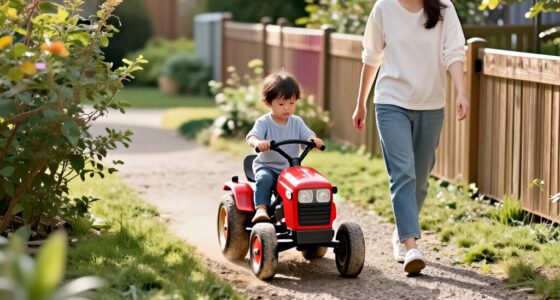


For families seeking an all-terrain ride-on car for kids, I would start with the First Ride On 36V Two-Seater Kids Electric UTV as the best overall fit on paper: its 36V setup and two-seat format target more demanding outdoor play than the 24V picks. The First Ride On 36V 400W UTV is another standout for its listed EVA wheels, metal frame, and rear suspension, while the AceCruisers AC-028 24V 4WD offers a four-wheel-drive option without moving to a 36V model. The key tradeoffs are power and terrain capability versus speed control, comfort, battery needs, and how much room your child has to grow. Features such as 4WD or suspension do not replace checking the surface, slope, rider limits, and supervision guidance in the manufacturer’s manual. Read on for the full breakdown and a guide to choosing a model that fits your child and outdoor space.

Turn the school run and nap time into listening time
- Thousands of audiobooks, podcasts and originals
- Listen on your phone, tablet or Echo — also offline
- Cancel anytime
Complete the kit


Key Takeaways
- The two 36V First Ride On UTVs lead this lineup for buyers prioritizing outdoor performance. One is a general two-seater choice; the 400W version lists extra specifics, including 14-inch EVA wheels, a metal frame, and rear suspension.
- Voltage alone does not tell the whole terrain story. The AceCruisers and ELEMARA both list 4WD, while the 36V models foreground higher voltage; compare the complete drive, wheel, and suspension details rather than relying on one spec.
- The two licensed Ford Bronco Raptor models suit buyers who value the familiar design and parent remote control. The ENYOPRO also lists shock absorption and soft start, while the First Ride On version lists LED lights and high/low speeds.
- Fit and comfort separate the ELEMARA from several rivals. Its listed 20-inch XL seat and 10Ah battery make it worth checking for families focused on seating space and battery capacity, though those figures do not by themselves establish runtime.
- Match the car to the actual play area. A higher-powered two-seater can be a poor fit for a small, smooth yard, while a model with 4WD or suspension still needs suitable terrain, safe slopes, and adult supervision.


| all terrain ride on car for kid | Battery | Recommended age | Runtime | Maximum speed |
|---|---|---|---|---|
| First Ride On 36V Two-Seater K | 36V 9Ah | 6–10 years | 40–60 minutes per charge, depending on terrain | — |
| First Ride On Licensed Ford Br | 24V | 3–8 years | 50 minutes to 2 hours, depending on use and speed | 4.3 mph |
| AceCruisers AC-028 24V 4WD Two | 24V 7Ah | 3–14 years | — | 5.5 mph |
| First Ride On 36V Kids Ride On | 36V 9Ah | 6 years and up | 40–60 minutes | — |
| ENYOPRO 2 Seater Ride On Car f | 24V 7Ah rechargeable battery | 3–8 years | — | Up to 4.4 mph |
| ELEMARA 24V Ride on Car for Ki | 24V 10AH | — | — | — |
More Details on Our Top Picks
First Ride On 36V Two-Seater Kids Electric UTV, Black Camo
For families prioritizing off-road capability and room for two, this 36V UTV is a stronger fit than the slower, younger-child-focused ENYOPRO Ford Bronco Raptor. Its dual 200W motors, 14-inch EVA tires, and rear metal suspension are suited to grass, dirt, and gravel, while gradual start and electronic braking add control for riders learning to handle a larger vehicle. The 20.5-inch seat and 132-pound limit also leave useful space for two children or one older rider. The tradeoff is less adult oversight: unlike the AceCruisers AC-028, it has no parental remote. Its 40–60-minute runtime also calls for shorter outings or charging between sessions, particularly on demanding terrain.
Pros:- Dual 200W motors and 14-inch EVA tires are suited to grass, dirt, and gravel.
- Rear metal spring suspension helps soften uneven ground.
- Wide two-person seat and 132-pound capacity accommodate two children or one older rider.
- Three-point seat belts, gradual start, and electronic braking provide useful control and restraint features.
Cons:- No parental remote, so adults cannot steer or stop it remotely.
- 40–60-minute runtime may limit longer outings, especially on rough terrain.
- Its 55-inch length and 35-inch width need substantial storage and turning space.
Best for: Families with children ages 6–10 who want a two-seat UTV for supervised rides on grass, dirt, or gravel and can manage driving without a parental remote.
Not ideal for: Families seeking remote steering or a long play session; this model has no remote and its stated runtime is 40–60 minutes.
- Recommended age:6–10 years
- Battery:36V 9Ah
- Motor power:400W total; dual 200W motors
- Top speed:5–8 mph
- Runtime:40–60 minutes per charge, depending on terrain
- Tires and suspension:14-inch EVA tires; rear metal spring suspension
- Seating and weight limit:Two children or one older rider; maximum 132 lbs
- Dimensions:55 × 35 × 31 in
Our verdict“Choose this UTV for older children who need a roomy, terrain-ready ride and can drive without parental remote control.”
First Ride On Licensed Ford Bronco Raptor 24V 2 Seater Kids Ride on Toys, Battery Powered Electric Ride on Car, Remote Control Electric Car w/Led Lights, Music, High Low Speed (24V, White)
The licensed Bronco Raptor is the most parent-guided choice here for younger riders: its remote control, soft start, and three speed options let an adult shape early driving practice more directly than the manual-only First Ride On 36V UTV. A 21-inch dual seat and two three-point belts make shared rides practical, while the rear shock function is a useful addition for outdoor paths. Its stated maximum speed of 4.3 mph is gentler than the 5–8 mph First Ride On UTV, though that also means less pace for older children. The product description gives a battery range of 50 minutes to two hours, depending on use and speed. It offers some outdoor versatility, but the available information does not specify tire material or a weight capacity, making terrain and fit harder to judge than on the AceCruisers AC-028.
Pros:- Parental remote control with a stated range of up to 98 feet supports adult guidance.
- Three speed choices and soft start suit riders building confidence.
- 21-inch dual seat and individual three-point belts allow two children to ride together.
- Rear shock function and adjustable-volume audio add comfort and entertainment features.
Cons:- Maximum speed of 4.3 mph is slower than the 5–8 mph First Ride On 36V UTV.
- Tire material and maximum rider weight are not specified in the supplied product details.
- Battery duration varies widely, from about 50 minutes to two hours depending on use and speed.
Best for: Parents introducing children ages 3–8 to ride-ons who want remote supervision, slower speed choices, and space for a passenger.
Not ideal for: Buyers who need confirmed all-terrain tire details or a published weight limit; the supplied product information does not provide either, and its maximum speed is modest.
- Recommended age:3–8 years
- Battery:24V
- Maximum speed:4.3 mph
- Speed options:Three: 2.0, 2.7, and 4.3 mph
- Runtime:50 minutes to 2 hours, depending on use and speed
- Seating:Two seats; 21-inch dual seat
- Remote control range:Up to 98 feet
- Dimensions and item weight:44 × 31.7 × 30.7 in; 56 lbs
Our verdict“Pick the Bronco Raptor for younger children whose parents want remote control and a slower learning pace more than confirmed rough-terrain hardware.”
AceCruisers AC-028 24V 4WD Two-Seater Ride-On Car, Black
The AC-028 earns the strongest all-terrain position in this group by pairing four-wheel drive with 15-inch EVA tires and dual independent suspension. That hardware gives it a clearer rough-ground case than the ENYOPRO Ford Bronco Raptor, whose supplied specs list PP tires, or the manual-only First Ride On 36V UTV. It also stands out for control: children can drive manually, while an adult can use the remote’s three speed settings and emergency stop. Two independently adjustable seats can fit younger passengers or give one older rider more room. The 220-pound capacity is the highest stated here, but it is still a shared total limit, not permission to exceed it. At 5.5 mph, this 24V model is not the fastest option, and its 7Ah battery capacity is specified without a runtime estimate.
Pros:- Four 200W motors, 15-inch EVA tires, and independent suspension are a strong combination for uneven surfaces.
- Remote control includes three speed settings and an emergency stop.
- Two independently adjustable seats can be configured for different rider sizes.
- 220-pound maximum capacity is higher than the stated limits of the other listed models.
Cons:- No runtime figure is provided, making outing length harder to plan.
- Maximum speed of 5.5 mph is below the First Ride On 36V UTV’s stated upper speed.
- The 220-pound limit applies to the combined load, which may restrict larger riders sharing the seats.
Best for: Families wanting a two-seat ride-on for varied outdoor surfaces, with remote intervention and enough stated capacity for two children within the combined limit.
Not ideal for: Buyers who need a known runtime or a higher published speed; this model lists neither a runtime nor speed above 5.5 mph.
- Recommended age:3–14 years
- Battery:24V 7Ah
- Motors:Four 200W motors
- Maximum speed:5.5 mph
- Tires and drive:15-inch all-terrain EVA tires; 4WD
- Suspension:Dual independent suspension
- Seating:Two independently adjustable seats; 22-inch combined width
- Maximum weight capacity:220 lbs
Our verdict“Choose the AC-028 if varied terrain and adult remote intervention matter more than a published runtime or the highest speed.”
First Ride On 36V Kids Ride On UTV, 2-Seater 400W Electric Car for Kids 6+, 5-8 MPH Speed, 14″ EVA Wheels, Metal Frame, Bluetooth Music, Rear Metal Suspension Off-Road Vehicle
This First Ride On UTV is a practical pick for older children who want manual driving and outdoor capability without the remote-control setup found on the AceCruisers AC-028. Its 36V battery, dual 200W motors, 14-inch EVA wheels, and rear metal suspension match the Black Camo First Ride On UTV, so the core appeal is similar: a two-seat format made for grass, dirt, and other uneven surfaces. Compared with the AceCruisers, however, this listing gives less control flexibility and a lower stated load limit. The 5–8 mph speed range may suit experienced riders better than beginners, while the 40–60-minute runtime can curtail longer trips. It is also listed for ages 6 and up, which makes it less suitable for younger children than the Bronco Raptor.
Pros:- 36V power and dual 200W motors support a stated top speed of 5–8 mph.
- 14-inch EVA wheels and rear metal suspension are designed for outdoor surfaces.
- Two-seat layout, safety belts, and a metal frame suit shared, supervised rides.
- Bluetooth music, LED lights, and rear storage add practical ride features.
Cons:- No parental remote is listed, unlike the AceCruisers AC-028 and Bronco Raptor.
- 40–60-minute runtime varies with terrain and may limit longer play sessions.
- The 130-pound load limit is lower than the 220-pound limit listed for the AceCruisers.
Best for: Families with children aged 6 or older who want a manual two-seat UTV for outdoor rides and do not need parent-operated remote controls.
Not ideal for: Families with younger beginner drivers or caregivers who want remote steering and stopping; this model is listed for ages 6+ and does not specify a parental remote.
- Recommended age:6 years and up
- Battery:36V 9Ah
- Motor power:Two 200W motors
- Top speed:5–8 mph
- Runtime:40–60 minutes
- Wheels:14-inch EVA
- Frame and suspension:Metal frame; rear metal suspension
- Seating and maximum load:Two seats; 130 lbs
Our verdict“This is a fit for older children who want a manual, two-seat outdoor UTV and do not need remote adult control.”
ENYOPRO 2 Seater Ride On Car for Kids, 24V Licensed Ford Bronco Raptor Electric Power Ride On Truck with Remote Control, 4 Wheels Shock Absorption, Soft Start, Bluetooth, Radio, 3 Speed – Blue
The ENYOPRO Ford Bronco Raptor is aimed at younger riders who need adult remote control and a calmer pace more than maximum off-road power. Its 4.4 mph top speed, soft start, remote, and metal spring suspension make it a gentler alternative to the 5–8 mph First Ride On 36V UTVs. Two 21-inch seats, lockable doors, and safety harnesses support shared rides, though the 132-pound total limit may constrain two larger children. The anti-skid PP tires are described as wear-resistant, but they are a less convincing rough-terrain proposition than the EVA tires and four-wheel drive on the AceCruisers AC-028. Bluetooth, radio, headlights, and a horn add familiar vehicle touches. Choose it for supervised family outings on manageable ground, not demanding off-road routes or higher-speed driving.
Pros:- Remote control and soft start give adults more oversight of young drivers.
- Two 21-inch seats allow siblings or friends to share a ride.
- Metal spring suspension, safety harnesses, and lockable doors add comfort and restraint features.
- Bluetooth, radio, headlights, and a horn provide several built-in entertainment and vehicle features.
Cons:- Top speed of 4.4 mph is slower than the First Ride On 36V UTVs.
- PP tires are a less clearly suited choice for rough terrain than the EVA tires on the AceCruisers AC-028.
- 132-pound maximum capacity can limit use with two larger children.
Best for: Parents of children ages 3–8 who want a slower two-seat ride-on with a remote, soft start, and safety features for supervised outdoor play.
Not ideal for: Families planning frequent rides on rough ground or needing a higher speed and load capacity; its PP tires and 132-pound limit are less suited to those demands than the AceCruisers AC-028.
- Recommended age:3–8 years
- Battery:24V 7Ah rechargeable battery
- Motors:Dual 90W
- Maximum speed:Up to 4.4 mph
- Seating:Two seats; 21 inches each
- Maximum weight capacity:132 lbs
- Tires and suspension:Anti-skid, wear-resistant PP tires; metal spring suspension
- Features:Remote control, Bluetooth, radio, headlights, horn, engine sound, lockable doors
Our verdict“Choose the ENYOPRO for younger children who need remote supervision and shared-seat play on manageable outdoor surfaces.”
ELEMARA 24V Ride on Car for Kids, 2 Seater XL 20″ Seat, 10AH Battery, 4WD, Remote Control, Music, Lights, Ages 3-8
The ELEMARA suits families who want a two-seat, four-wheel-drive ride-on for younger children and value time between charges over higher speed. Its stated 90-minute playtime is a useful advantage for longer outdoor sessions, while parent remote control gives adults a way to guide a child who is not ready to drive independently. Compared with the First Ride On 36V Kids Ride On UTV, ELEMARA is aimed at a younger age range and offers a more moderate top speed of 4.5 MPH rather than that model’s stated 5–8 MPH. That makes it a calmer fit for ages 3–8, though older kids seeking a faster ride may find it tame. The tradeoffs are practical: charging takes 8–12 hours, and its heavy construction can be awkward to move when the battery is depleted. Bluetooth, USB, music, and lights add entertainment, but they do not change its main appeal: shared seating and extended play.
Pros:- Stated playtime of up to 90 minutes supports longer outings between charges.
- Parent remote control provides a way to guide younger or inexperienced drivers.
- Two-seat layout gives siblings or friends room to ride together.
- Bluetooth, USB, music, and lights provide entertainment beyond driving.
Cons:- An 8–12-hour charge time requires planning between play sessions.
- Top speed of 4.5 MPH may feel slow to older children, especially beside the 36V First Ride On UTV.
- Heavy construction can make it difficult to move or store.
Best for: Families with children ages 3–8 who want a two-seat 4WD ride-on, parent remote control, and longer play sessions between charges.
Not ideal for: Families whose older children want a faster ride, or caregivers who need a lightweight vehicle that is easy to lift and store.
- Battery:24V 10AH
- Motor:4 × 45W
- Drive:4WD
- Speed:3.7 / 4.5 MPH
- Charge time:8–12 hours
- Stated playtime:Up to 90 minutes
- Remote range:Up to 20 meters
- Seating and age range:Two seats; ages 3–8
Our verdict“Choose the ELEMARA for younger siblings who need a parent-guided, two-seat 4WD ride-on with extended stated playtime, not for families prioritizing speed or easy portability.”
How We Picked
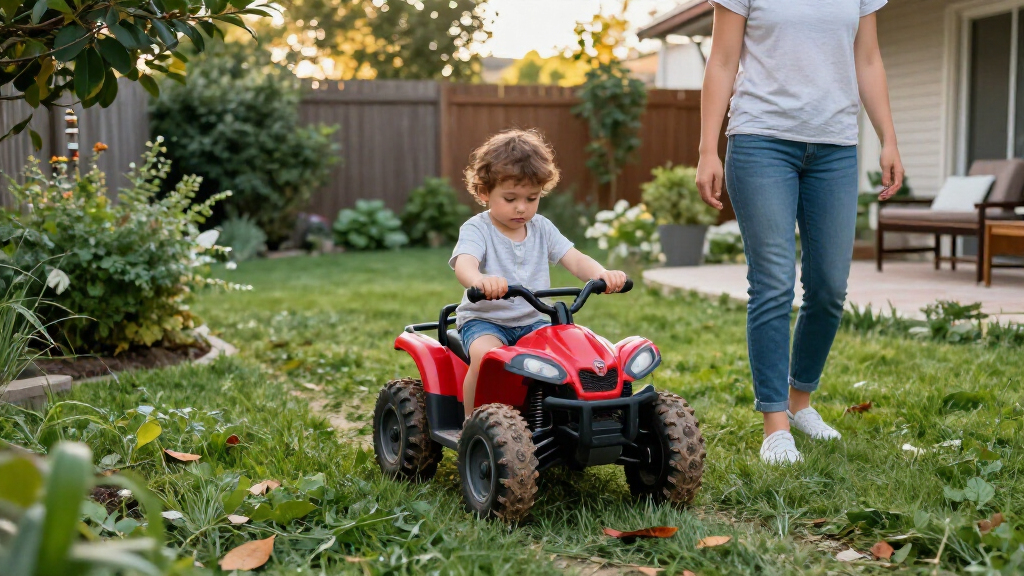
I compared the six options against the needs behind an all-terrain ride-on car for kids: drive layout, voltage and motor details when listed, wheel and suspension information, seating, speed controls, and parent-control features. I also looked at practical fit signals such as stated age guidance, seat dimensions, battery capacity, and whether the product description gives enough detail for a buyer to check suitability. Where a specification was not provided, I treated it as unknown rather than assuming performance.
The ranking favors products that describe a stronger outdoor-use case with useful supporting details, then accounts for control, comfort, and versatility. That places the 36V UTVs ahead for buyers prioritizing power-oriented outdoor play, with the 400W version distinguished by its more explicit wheel and suspension details. The 24V 4WD options follow as alternatives for shoppers who value four-wheel drive, licensed styling, remote operation, or seating features. This is a feature-based comparison, not a claim that any model can handle every trail or surface; buyers should confirm rider limits, terrain guidance, assembly requirements, and safety instructions with the manufacturer.
| all terrain ride on car for kid | Seating |
|---|---|
| First Ride On 36V Two-Seater K | — |
| First Ride On Licensed Ford Br | Two seats; 21-inch dual seat |
| AceCruisers AC-028 24V 4WD Two | Two independently adjustable seats; 22-inch combined width |
| First Ride On 36V Kids Ride On | — |
| ENYOPRO 2 Seater Ride On Car f | Two seats; 21 inches each |
| ELEMARA 24V Ride on Car for Ki | — |
Factors to Consider When Choosing All Terrain Ride On Car For Kids
Choosing an all-terrain ride-on involves more than picking the highest voltage or the most rugged-looking body. I would start with where the car will actually run, then check whether the child can control it comfortably and whether the listed specifications support that use.
Match the Drive System to Your Ground
4WD, voltage, wheel design, and suspension describe different things. Four-wheel drive relates to how power is sent to the wheels, while voltage is only one part of the electrical setup. Wheel material and size affect the contact with the ground, and suspension can help manage bumps, but neither guarantees safe travel on grass, gravel, or slopes. A common mistake is buying for the roughest surface a child might encounter rather than the surface they will use regularly. Check the manufacturer’s terrain guidance and avoid assuming a ride-on is suitable for steep, loose, wet, or uneven ground unless its instructions say so. For a mostly level yard, controllability may matter more than maximum power.
Treat Speed and Parent Controls as a Safety Pair
Speed settings and remote control solve different supervision needs. High/low speed options can help a child build confidence, while a parent remote can let an adult intervene during early rides or in a confined area. Neither feature removes the need for close supervision or makes an unsuitable surface safe. Before buying, check whether the remote controls movement or only certain functions, and review the manual for its range and operating instructions. Soft start, listed on the ENYOPRO Bronco, may be appealing to families seeking gentler acceleration, but buyers should confirm how the feature operates. Choose controls based on the child’s coordination and the space available, not only on the number of speed modes.
Check the Fit for Both Riders
A two-seat label does not guarantee comfortable room for two children. Compare seat width or length, rider weight limits, and age guidance with the children who will use the car now and as they grow. If the listing gives a measurement, such as the ELEMARA’s stated 20-inch XL seat, treat it as a useful starting point rather than proof that every pair of riders will fit. Also check whether the total permitted load applies to both seats combined. Buyers often focus on age ranges and overlook legroom, shoulder room, and how easy it is for children to get in and out. When dimensions or weight limits are unclear, ask the manufacturer before purchasing.
Read Battery Claims as Capacity, Not Guaranteed Playtime
Battery voltage and amp-hour capacity are not runtime promises. Actual playtime can vary with rider weight, terrain, speed, temperature, and how often the car stops and starts. The ELEMARA lists a 10Ah battery, but that figure alone cannot be compared directly with another model’s runtime unless the full battery and operating details are available. Check charging time, battery replacement availability, charger requirements, and storage instructions before deciding. Families with frequent outdoor use may value accessible replacement parts more than a small difference in listed capacity. Avoid leaving a battery discharged or storing it outside its stated temperature range.
Account for Size, Storage, and Setup
A capable ride-on still needs a practical place to live and charge. Measure gates, paths, storage areas, and the route from the assembly space to the play area before choosing a large two-seater. Check product dimensions and shipping or assembled weight, since the adult may need to move the vehicle when its battery is depleted. Assembly time, tools, and the need for a second adult can affect the first day as much as the feature list. Buyers sometimes compare body styling but miss turning space and storage access. If the car must be carried up steps or stored in a small shed, a smaller, simpler model may be the more usable choice.
Pay More for Useful Capability, Not Extra Labels
Added features are worthwhile only when they suit your routine. A higher-powered setup may better fit a large outdoor play area, while a parent remote, soft start, or speed settings can matter more for a beginner. Music and lights can add play value, but they do not improve traction or comfort. Before paying for a premium configuration, compare the details that affect use: drive system, wheel construction, suspension, rider limits, battery support, and warranty terms. Confirm what is included and whether replacement batteries or parts are available. The best choice is the one whose documented capabilities match the child, surface, and storage plan—not simply the model with the longest feature list.
Frequently Asked Questions
Is a 36V ride-on automatically better for rough ground than a 24V 4WD model?
No. Voltage is one specification, while 4WD describes the drive layout; neither alone predicts how well a vehicle handles a particular surface. In this lineup, the First Ride On 36V options emphasize higher voltage, while the AceCruisers and ELEMARA list 4WD. Wheel design, suspension, motor details, rider load, and the maker’s terrain guidance also matter. Compare those details together and avoid using a ride-on on ground the manual does not approve.
Which features matter most if my child is new to ride-on cars?
I would prioritize manageable speed controls, adult supervision features, a comfortable seating position, and a play area with clear boundaries. A parent remote can help an adult intervene, while high/low settings or soft start may make it easier to begin at a gentler pace. A higher voltage rating is not a substitute for those controls or for a child who is ready to operate the vehicle. Check the stated age and weight limits, read the instructions before the first ride, and start on a flat, open surface.
Can two children ride together just because the car has two seats?
Not necessarily. The combined rider weight, seat dimensions, and any age restrictions determine whether two children can ride safely and comfortably. A product may have two seats but limited room for larger riders, and manufacturers can set a total load limit that applies across both seats. Check the exact measurements and weight guidance rather than relying on the seat count or age range alone. If those limits are missing from the listing, confirm them with the manufacturer before buying.
How should I compare battery capacity when runtime is not listed?
Use capacity as one clue, not a direct promise of playtime. Runtime depends on factors such as terrain, rider weight, speed, temperature, and driving style, so two batteries with different figures may not yield an easy comparison without more information. Ask the manufacturer for expected runtime under stated conditions, charging time, and replacement battery details. Also check the recommended charging and storage practices. This helps you judge whether the car can support your family’s routine without treating a single battery number as a guarantee.
What should I verify before using an all-terrain ride-on on grass or gravel?
Check the owner’s manual for approved surfaces, slopes, weather limits, rider load, and operating instructions before the first ride. Grass and gravel vary widely: a short, firm lawn is different from wet grass, loose stones, or a steep incline. Clear the route of traffic, drop-offs, and obstacles, and keep an adult close enough to supervise. Confirm that the vehicle’s wheels and drive setup match the intended surface, but do not treat 4WD or suspension as permission to use hazardous terrain. Stop using it if the surface or conditions exceed the manufacturer’s guidance.
Conclusion
Best overall: I would choose the First Ride On 36V Two-Seater Kids Electric UTV for shoppers who want a two-seat, higher-voltage option for outdoor play. Best for feature-specific terrain details: the First Ride On 36V 400W UTV stands out with listed EVA wheels, a metal frame, and rear suspension. Best value-minded alternative: the AceCruisers AC-028 is worth a close look if 24V and listed 4WD better match your needs than moving to a 36V model. Best for beginners: the ENYOPRO Ford Bronco Raptor is the clearest fit for families drawn to soft start and parent remote control. For licensed styling with lights and high/low speeds, compare the First Ride On Ford Bronco; for a larger stated seat and listed 10Ah battery, check the ELEMARA’s fit and limits. I would make the final choice only after confirming dimensions, rider limits, terrain guidance, and battery support for the model you prefer.