To build a backyard obstacle course that boosts strength, focus on including low-height climbing walls, balance beams, crawling tunnels, and stepping stones made from sturdy, non-slip materials. Keep safety in mind by padding sharp edges and anchoring structures securely. Incorporate variety and adjustable challenges to keep kids engaged as they grow stronger. Proper layout guarantees smooth flow and safe spacing. If you continue exploring, you’ll discover ways to create a fun, safe, and effective course that promotes active development.
Key Takeaways
- Incorporate climbing walls, rope swings, and monkey bars to develop upper body and core strength.
- Use sturdy, stable obstacles with low heights and padded edges for safe, challenging strength-building activities.
- Design courses with crawling tunnels and balance beams to enhance coordination and lower-body strength.
- Include varied, eco-friendly materials that provide resistance and durability for active strength exercises.
- Arrange obstacles to promote continuous movement and active engagement, maximizing strength development safely.

Creating a backyard obstacle course is a fun and engaging way to keep kids active and entertained. Not only does it encourage movement, but it also helps build strength and coordination. However, to guarantee your little adventurers stay safe while having fun, you need to pay close attention to safety precautions and obstacle design. By planning carefully, you can create an exciting course that minimizes risks and maximizes benefits.
Start by focusing on safety precautions before building your obstacle course. Always check the area for hazards like sharp objects, rocks, or uneven ground. Use a level surface such as grass, mulch, or rubber mats to provide a soft landing if kids fall. Make sure all equipment is sturdy, well-maintained, and age-appropriate. Supervision is key—never leave children unattended during playtime. Encourage kids to wear appropriate footwear and clothing that won’t get caught or cause tripping. Establish clear rules, like no pushing or climbing on unstable parts, and teach kids to be cautious and respectful of the obstacles.
Prioritize safety by inspecting the area, using soft surfaces, and supervising children at all times.
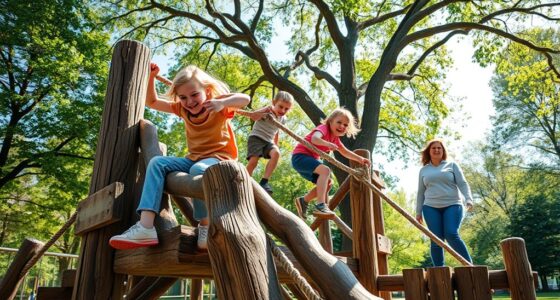
When designing the obstacles, think about both safety and challenge. A well-designed obstacle course should be exciting but not overwhelming. Incorporate elements like low balance beams, crawling tunnels, and stepping stones that promote strength without risking injury. For climbing components, use sturdy, non-slip surfaces and keep heights low—around 3 to 4 feet at most. Use soft materials or padding around elevated or sharp edges to cushion any falls. When creating climbing walls or rope swings, make sure they’re securely anchored and tested regularly. The obstacle design should prioritize stability and safety, but also include variety to keep kids motivated. Use bright colors and interesting shapes to stimulate their imagination and encourage active participation. Additionally, researching natural techniques can help you select durable, eco-friendly materials that support safety and sustainability.
In addition to structural safety, consider the flow of the course. Arrange obstacles in a way that minimizes congestion and allows for smooth movement from one station to the next. Incorporate rest spots or easy sections where kids can catch their breath or switch activities. Make the course adaptable; as children grow or improve, you can add more challenging elements or rearrange obstacles to keep their strength-building journey ongoing.
Frequently Asked Questions
What Safety Gear Is Recommended for Kids Using Obstacle Courses?
You should guarantee your kids wear protective helmets to safeguard their heads during obstacle course activities. Additionally, place non-slip mats underneath the course to prevent slips and falls. Always supervise their play to catch any unsafe behavior early. Using these safety measures helps create a secure environment, allowing your kids to enjoy the course while minimizing the risk of injuries. Safety gear like helmets and non-slip mats make all the difference.
How Often Should Obstacle Courses Be Inspected for Safety?
You should inspect your obstacle course weekly to guarantee safety. Follow a regular maintenance schedule, checking for loose bolts, worn-out equipment, or sharp edges. Conduct safety audits after heavy use or bad weather to catch potential hazards early. Regular inspections help prevent accidents and prolong the life of the course. Staying diligent with these checks keeps kids safe while they enjoy the challenge and strength-building fun of their obstacle course.
Can Obstacle Courses Be Customized for Different Age Groups?
Did you know kids’ motor skills develop fastest between ages 3 and 5? You can definitely customize obstacle courses for different age groups by adding age-appropriate modifications and adjustable challenges. Younger children benefit from lower heights and softer materials, while older kids can handle more complex obstacles. This way, you guarantee safety and fun, encouraging physical activity that matches each child’s abilities and keeps everyone engaged.
What Materials Are Best for Building Durable Obstacle Course Components?
For durable obstacle course components, choose materials like treated wood, galvanized steel, and high-density foam. Your materials selection should prioritize weather resistance and strength. Be sure to conduct durability testing by simulating active use and exposure to elements to guarantee safety. Avoid flimsy materials that wear out quickly. By focusing on sturdy, tested materials, you’ll create a reliable, long-lasting obstacle course that withstands regular play and outdoor conditions.
Are There Any Insurance Considerations for Installing Backyard Obstacle Courses?
Think of insurance coverage as a safety net catching you if things go wrong. You should check liability concerns before installing a backyard obstacle course, as it can increase your risk. Many homeowners’ policies don’t automatically cover these structures, so you might need to add riders or get separate liability insurance. Doing this guarantees you’re protected from potential accidents and that you’re prepared for any unexpected falls or injuries.
Conclusion
So, why settle for boring old swings when you can turn your yard into the ultimate strength-testing adventure? Who needs a gym when you’ve got a homemade obstacle course that doubles as a workout and entertainment? Just be prepared—your kids might become so strong they’ll start lifting the furniture. But hey, at least you’ll have the coolest yard on the block, and they’ll burn off energy faster than you can say “parenting win.”