
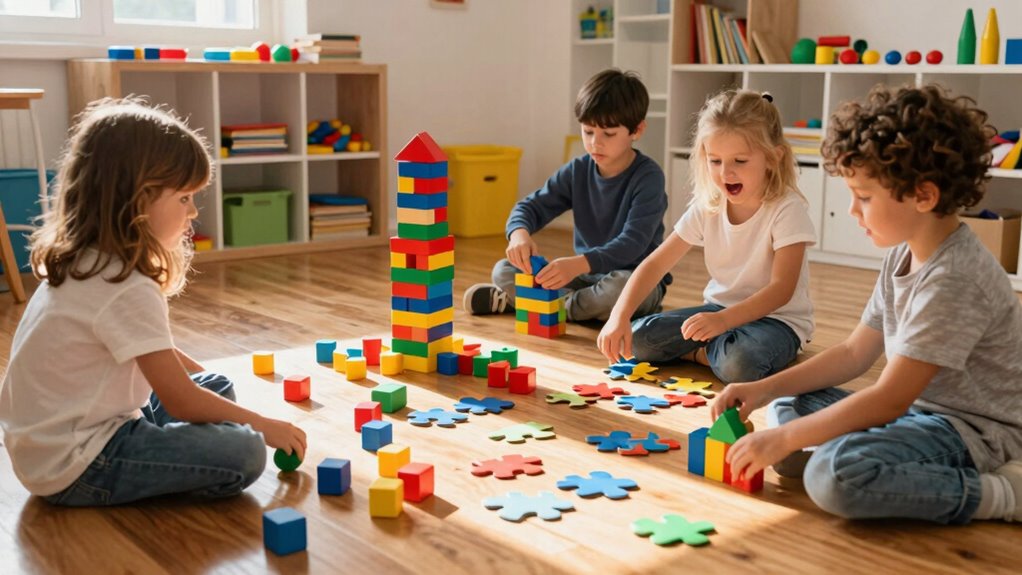

Engaging in play helps you develop critical thinking and creativity, essential for solving complex problems in the future. Through play, you learn to imagine new scenarios, adapt to challenges, and generate innovative ideas. Playing with others also sharpens your communication, teamwork, and empathy skills, which are crucial for collaboration. As you face obstacles during play, you build resilience and flexibility that support persistent problem-solving. Keep exploring how play can boost your skills even further.

Turn the school run and nap time into listening time
- Thousands of audiobooks, podcasts and originals
- Listen on your phone, tablet or Echo — also offline
- Cancel anytime
Key Takeaways
- Play fosters creative thinking, enabling children to generate innovative solutions to future problems.
- Collaborative play develops communication, negotiation, and teamwork skills essential for problem-solving.
- Engaging with ecological concepts during play builds awareness and understanding of complex systems.
- Facing obstacles in play teaches resilience and adaptability, preparing for real-world challenges.
- Play enhances cognitive development and critical thinking skills crucial for effective problem solving.
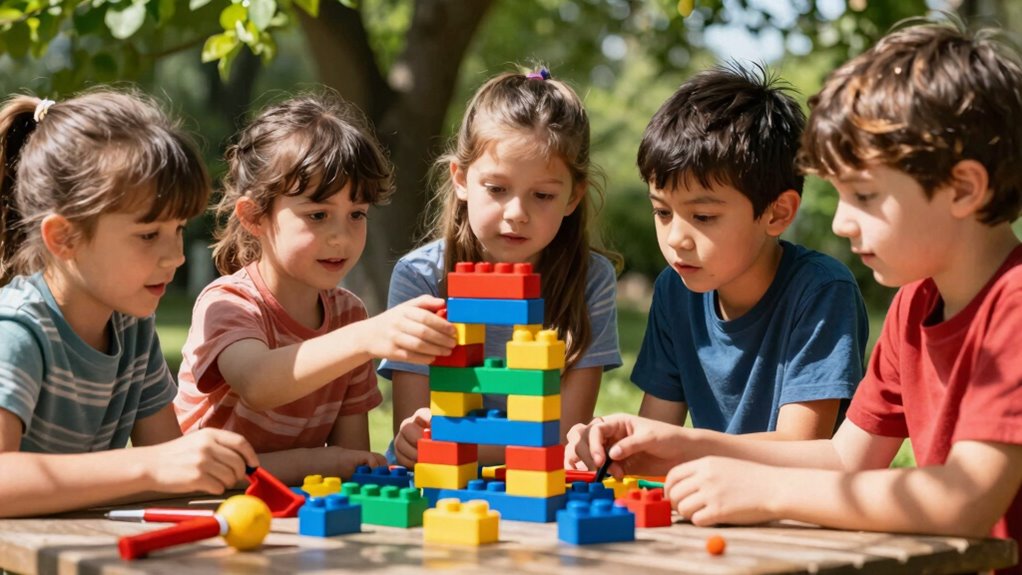
Play isn’t just fun—it’s an indispensable tool for developing future problem-solving skills. When you engage in play, you’re not only entertaining yourself but also sharpening your mind in ways that will benefit you later in life. One key aspect of play that fosters this growth is creative thinking. During play, you’re encouraged to imagine new scenarios, invent rules, and explore different ways to approach challenges. These activities stretch your ability to think outside the box and come up with innovative solutions. Whether you’re building a tower with blocks or imagining a new game, you’re exercising your brain’s capacity to generate ideas and adapt to new circumstances. Over time, this nurturing of creative thinking becomes a foundation for tackling complex problems with confidence and originality.
Beyond individual skills, play also enhances social collaboration, which is essential for future problem solving. When you play with others—be it children or adults—you learn how to communicate your ideas clearly, listen to different perspectives, and negotiate to reach shared goals. This social interaction teaches you how to work as part of a team, a skill that’s increasingly valuable in many professional and personal contexts. During collaborative play, you practice resolving conflicts, compromising, and building consensus—all of which prepare you to handle real-world problems that require collective effort. As you navigate these social dynamics, you also develop empathy and emotional intelligence, enabling you to better understand and relate to others’ viewpoints. This collaborative experience helps you see problems from multiple angles, making you more adept at devising extensive solutions. Engaging in biodiversity activities during play can further deepen your understanding of ecosystems and the importance of conservation efforts, which are crucial for sustainable living. Incorporating opportunities for social-emotional learning in play can also strengthen your ability to manage emotions and build resilience in face of challenges. Additionally, understanding environmental concepts like ecosystems and conservation can enhance your overall awareness of the interconnectedness of living systems, which is vital for developing comprehensive problem-solving skills. Recognizing the importance of interconnected systems in nature highlights how solutions often require considering multiple factors simultaneously. Moreover, research shows that engaging in play-based learning can significantly boost cognitive development, further supporting the growth of problem-solving capabilities.
Play also encourages resilience and flexibility. When faced with obstacles in a game or activity, you learn to adapt your approach without giving up. This resilience is indispensable for problem-solving because it teaches you that setbacks are part of the process and that persistence leads to success. Moreover, the adaptable mindset cultivated through play enables you to shift strategies when needed, avoiding rigid thinking that can hinder progress. These traits—creativity, collaboration, resilience, and adaptability—intertwine during play and collectively build a robust problem-solving toolkit.
In essence, play provides a dynamic environment where you develop essential skills for the future. It’s not just about having fun; it’s about training your brain to think creatively, work with others, and persevere through challenges. These experiences in play lay the groundwork for approaching real-world problems with confidence, innovation, and teamwork. So, next time you’re playing, remember that you’re actively preparing yourself for the complex problem-solving tasks that lie ahead.
building blocks for creative play
As an affiliate, we earn on qualifying purchases.
As an affiliate, we earn on qualifying purchases.
Frequently Asked Questions
How Does Play Influence Cognitive Development Over Time?
Play influences your cognitive development over time by fostering creativity and enhancing problem-solving skills. When you engage in play, you actively explore new ideas, experiment with different scenarios, and develop your imagination. Social interaction during play helps you learn cooperation, negotiation, and communication. These experiences strengthen your brain’s flexibility, preparing you for future challenges. Ultimately, play nurtures critical thinking and adaptability, which are essential for lifelong learning and success.
Are There Specific Types of Play That Better Develop Problem-Solving Skills?
You might wonder which play types sharpen problem-solving skills best. Creative exploration, like building with blocks or inventing stories, challenges your mind to think outside the box. Social interactions during pretend play push you to negotiate and strategize with others. These activities ignite curiosity and adaptability, fueling your ability to tackle future problems with confidence. The secret lies in play that sparks imagination and collaboration—your ultimate tools for problem-solving success.
How Can Parents Encourage Effective Play for Skill Development?
You can encourage effective play by providing opportunities that spark creative imagination and promote social interaction. Offer diverse toys, art supplies, and open-ended materials that inspire creative thinking. Arrange playdates or group activities to foster social skills and teamwork. Be actively involved, ask open-ended questions, and encourage your child to explore ideas and collaborate. These approaches help develop problem-solving skills that will benefit them in the future.
What Age Is Most Critical for Play in Developing Problem-Solving Abilities?
You should focus on the early childhood years, especially between ages 2 and 4, as this is when play milestones are most critical for developing problem-solving skills. During this stage, children navigate new challenges, like building towers or solving puzzles, which align with their developmental stages. For example, a preschooler experimenting with different ways to fit shapes into a puzzle hones their critical thinking and adaptability, laying a strong foundation for future problem-solving abilities.
Can Play Compensate for Formal Education in Problem-Solving Skills?
Play can’t fully replace formal education, but unstructured exploration and imaginative scenarios greatly enhance your problem-solving skills. When you engage in open-ended play, you develop critical thinking and creativity that support learning in structured settings. By exploring freely and imagining different scenarios, you strengthen your ability to analyze situations, adapt strategies, and innovate, all of which are essential for tackling future challenges effectively.
Conclusion
Research suggests that play isn’t just fun—it actively builds your problem-solving skills for the future. When you play, you’re practicing critical thinking, creativity, and adaptability, all essential for tackling real-world challenges. Some experts even believe that unstructured play fosters innovation and resilience. So, next time you’re playing, remember: you’re not just having fun—you’re sharpening skills that’ll serve you well in life’s complex puzzles ahead. Play truly is a powerful tool for your future success.
Halloween Picks
halloween
As an affiliate, we earn on qualifying purchases.