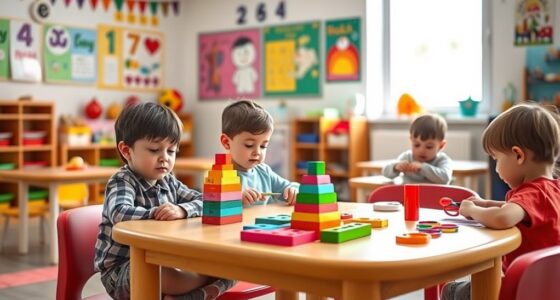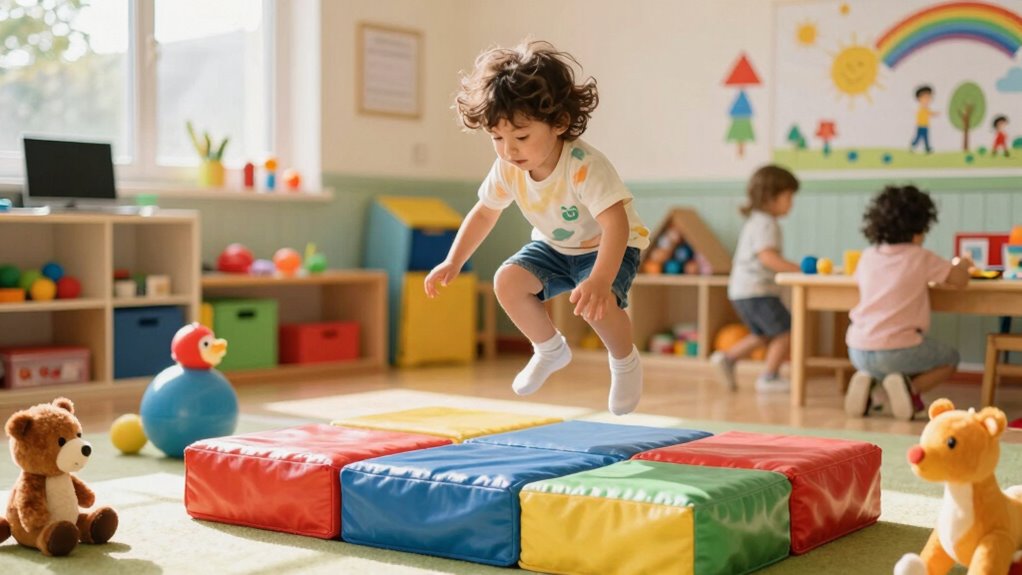
Movement toys are essential for your preschooler’s development because they promote physical growth, coordination, and balance through active play. They also help your child process sensory information, improve focus, and build confidence by steering obstacle courses or riding toys. These toys encourage social skills like sharing and cooperation, while supporting emotional regulation and critical thinking. By engaging in movement play, your child develops a strong foundation for lifelong learning and well-being—discover more about their benefits below.

Turn the school run and nap time into listening time
- Thousands of audiobooks, podcasts and originals
- Listen on your phone, tablet or Echo — also offline
- Cancel anytime
Key Takeaways
- Promote motor skills, coordination, and balance essential for physical and cognitive growth.
- Support sensory integration by providing varied tactile, visual, and movement experiences.
- Enhance social skills through cooperative play, sharing, and taking turns during active activities.
- Build confidence and independence by navigating obstacle courses and using ride-on toys.
- Establish a strong foundation for lifelong learning, health, and overall well-being through active play.
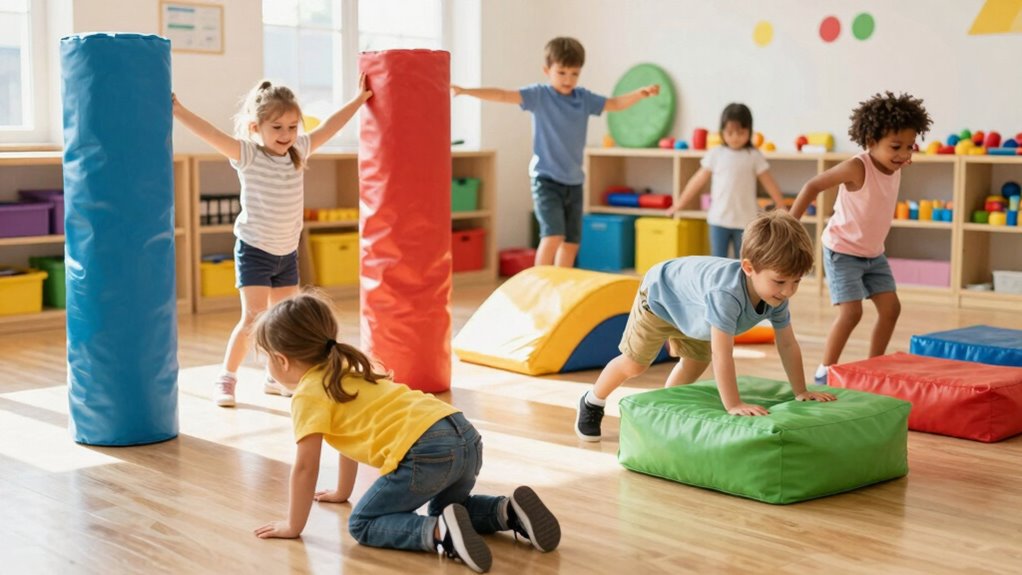
Movement toys play a pivotal role in preschool development because they help children build motor skills, coordination, and balance while having fun. When you choose the right toys, you’re giving your child opportunities to develop essential physical abilities that form the foundation for future learning and activity. These toys are more than just playthings—they support sensory integration, which helps kids process and respond to sensory information from their environment. As children engage with movement toys, they learn to coordinate their movements and adapt to new challenges, which enhances their overall motor coordination.
Movement toys boost preschoolers’ motor skills, coordination, and sensory development through fun, active play.
As your preschooler interacts with these toys, they experience a variety of sensory inputs—touch, sight, sound, and movement—that help their brain make sense of the world around them. This process, known as sensory integration, is indispensable for children to develop focus, attention, and emotional regulation. Movement toys like balance beams, balls, or ride-on vehicles encourage children to explore different textures, motions, and sensations, strengthening their sensory pathways. The more they play, the better they become at filtering relevant sensory information and ignoring distractions, which improves their ability to engage in classroom activities and social interactions.
Motor coordination is another key benefit of movement toys. As your child climbs, jumps, or swings, they practice controlling their muscles and timing their movements. This repeated practice boosts their ability to perform complex motor tasks, such as tying shoelaces or writing, with greater ease. When they navigate obstacle courses or play with ride-on toys, they learn to judge distances, adjust their speed, and balance their bodies. These skills are not only critical for physical health but also for cognitive development, as they help children become more confident and independent in their daily routines. Additionally, incorporating movement toys can promote physical development, which is foundational for many other areas of growth. Engaging in such active play also supports the development of critical thinking and planning skills as children decide how to move through different challenges.
Furthermore, movement toys promote active play, which is essential for healthy growth. Instead of passive screen time, your child is encouraged to move, explore, and challenge themselves. This kind of active engagement helps develop strength, endurance, and spatial awareness. It also fosters social skills when children play together, learning to share, take turns, and cooperate. Engaging in play-based learning with movement toys can also enhance problem-solving skills and creativity as children figure out new ways to navigate and manipulate their environment. According to research on sensory integration, engaging in diverse sensory activities can significantly improve children’s ability to process sensory information, making movement toys an important part of early development. Incorporating a variety of sensory experiences can further support their overall growth and resilience. Overall, integrating movement toys into your preschooler’s routine creates a dynamic environment that nurtures both their physical and sensory development, setting a strong foundation for lifelong learning and well-being.
As an affiliate, we earn on qualifying purchases.
Frequently Asked Questions
How Do Movement Toys Support Preschool Social Skills?
Movement toys support your preschooler’s social skills by encouraging group play, helping them learn cooperation and sharing. As they navigate these toys, they develop emotional regulation by managing excitement and frustration. Playing together promotes communication, turn-taking, and empathy, all crucial for social growth. You’ll see your child build friendships and confidence as they enjoy active, interactive play, reinforcing essential social skills in a fun and engaging way.
Are Movement Toys Suitable for All Preschool Age Groups?
Yes, movement toys are suitable for all preschool age groups. They encourage indoor activities that boost both gross and fine motor skills, helping children develop coordination and strength. Younger preschoolers benefit from simple, safe toys, while older kids enjoy more complex ones that challenge their skills. Always choose age-appropriate movement toys to guarantee safety and engagement, making sure every child can enjoy active play and support their overall development.
How Can Parents Safely Introduce Movement Toys at Home?
Did you know that 80% of preschoolers benefit from active play daily? To safely introduce movement toys at home, focus on indoor safety by removing hazards and supervising play. Offer a variety of toys to keep your child engaged and prevent boredom. Start with age-appropriate options, demonstrate proper use, and set clear boundaries. Regularly check toys for damage, ensuring a safe, fun environment that promotes healthy development.
Do Movement Toys Promote Cognitive Development as Well?
Yes, movement toys promote cognitive development by enhancing motor skills and sensory integration. When you encourage your preschooler to climb, balance, or spin, they improve their coordination and spatial awareness. These activities also stimulate their senses, helping them process different stimuli more effectively. As a result, your child becomes better at problem-solving and exploring their environment, laying a strong foundation for overall cognitive growth.
What Are Some Cost-Effective Movement Toy Options?
You can find budget-friendly options like inexpensive ball pits, hula hoops, or jump ropes at thrift stores or online. DIY movement toys are also great—try making a sensory obstacle course or a balance beam from household items. These options are cost-effective and engaging, encouraging active play and motor skill development without breaking the bank. Get creative with everyday items to promote movement and learning effortlessly.
Conclusion
Don’t underestimate how much movement toys can boost your preschooler’s growth. They’re more than just fun—they help develop coordination, confidence, and emotional resilience. Some might worry about safety or overstimulation, but with proper supervision, these toys create a nurturing environment for learning and joy. By encouraging active play, you’re giving your child a strong foundation for future success. Remember, every movement matters—your support today shapes their confident, capable tomorrow.
Fall Picks
fall essentials
As an affiliate, we earn on qualifying purchases.