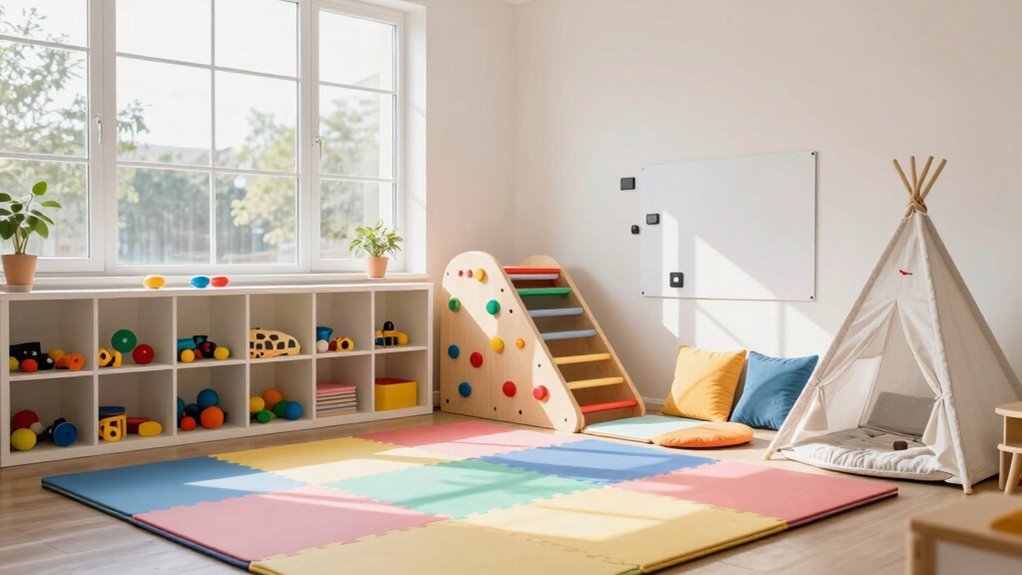

To plan a play space that evolves with your child, focus on adaptable and versatile features like creative storage options and adjustable furniture that grow with them. Use safe, eco-friendly materials and incorporate childproofing techniques to guarantee safety at every stage. Design areas that promote independence and fun while regularly updating safety and developmental features. By considering these aspects, you’ll create a flexible environment that supports your child’s growth—continue exploring for more helpful tips and ideas.
Key Takeaways
- Design flexible storage solutions that are accessible at various heights to encourage independence and easy organization.
- Use safe, eco-friendly materials that can be updated or replaced as your child’s needs change.
- Incorporate soft flooring and rounded furniture to ensure safety at every developmental stage.
- Adjust safety features and toy options to match your child’s age, abilities, and growth milestones.
- Create adaptable spaces that promote independence, responsibility, and ongoing engagement through versatile design elements.
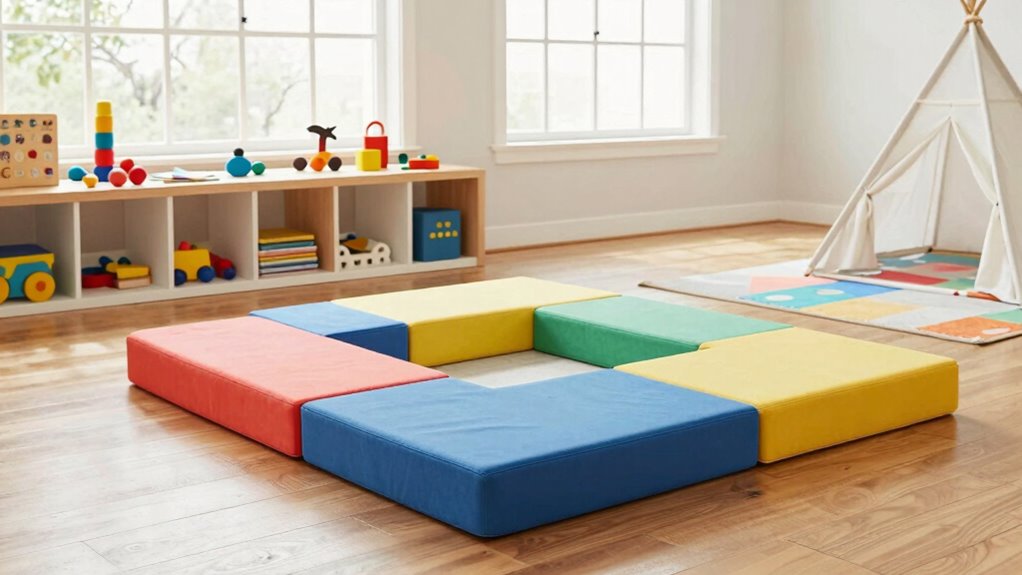
Are you wondering how to create a play space that’s both fun and safe for your kids? Planning a versatile area means considering how your child’s needs will change over time. To start, focus on flexible design elements that can adapt as your child grows. Incorporate creative storage solutions—like multi-purpose shelves, bins, and cubbies—that make it easy to tidy up and switch out toys. Creative storage not only keeps the space organized but also encourages your child to develop good habits, like putting toys away and respecting their environment. Think about storage that’s accessible at different heights, so your child can independently choose toys and help with cleanup, fostering independence and responsibility. Additionally, integrating safe and sustainable materials can help promote a healthier environment and support biodiversity. When selecting materials, look for options that are non-toxic and eco-friendly, ensuring a safer space for your little one. Safety considerations should be at the forefront of your planning. Use soft, non-slip flooring to cushion falls and reduce injuries. Avoid sharp edges on furniture by selecting rounded designs or adding corner protectors. Secure heavy furniture and shelves to the wall to prevent tipping, especially as your child becomes more mobile and curious. Keep small objects, choking hazards, and toxic materials out of reach, and choose toys that are age-appropriate to prevent accidents. Be mindful of electrical outlets; cover unused outlets and keep cords out of reach to avoid strangulation or electrical shock. Regularly inspect the space for hazards, and update safety measures as your child’s abilities evolve. Incorporating child-proofing techniques can further enhance safety and peace of mind for caregivers. Remember that child development stages influence what kind of play areas and safety features are most appropriate at each age.
adjustable kids' storage shelves
As an affiliate, we earn on qualifying purchases.
As an affiliate, we earn on qualifying purchases.
Frequently Asked Questions
How Can I Make the Play Space Accessible for All Abilities?
You can make the play space accessible for all abilities by incorporating universal design principles, ensuring the area is easy to navigate for everyone. Use inclusive toys that cater to various needs and skill levels, like textured, colorful, or sensory toys. Keep pathways clear and at accessible heights, and add adaptive equipment when needed. This creates an inviting environment where every child can explore, learn, and enjoy play freely.
What Safety Features Should I Incorporate for Different Ages?
You should include safety features suitable for different ages, like sturdy playground equipment with rounded edges for toddlers and more challenging options for older kids. Coincidentally, installing impact-absorbing safety surfacing under all equipment minimizes injuries. Regularly check that equipment is secure and age-appropriate. By prioritizing safety surfacing and versatile playground equipment, you create a space that’s safe and engaging for children of all ages, encouraging confident, risk-aware play.
How Often Should I Update or Change the Play Area?
You should update or change the play area every 6 to 12 months as your child grows and interests shift. Adjust furniture arrangement to create new zones for different activities, and refresh color schemes with new accessories or wall art to keep the space engaging. Regular updates guarantee the play space remains safe, stimulating, and adaptable, encouraging your child’s development and creativity as they evolve.
Are There Eco-Friendly Materials Suitable for Play Spaces?
Are eco-friendly toys the secret to a sustainable play space? Absolutely! You can choose eco-friendly materials like organic cotton, bamboo, and recycled plastics for furniture and toys. These sustainable options not only reduce environmental impact but also create a safe, healthy environment for your child to explore. Incorporating natural elements and non-toxic finishes makes your play area both eco-conscious and engaging, nurturing a love for the planet from the start.
How Can I Encourage Independent Exploration in the Space?
You can encourage independent exploration by creating sensory stimulation areas and dedicated creative zones. Arrange toys and materials that invite curiosity and hands-on interaction, like textured fabrics or art supplies. Keep these zones accessible and inviting, so your child feels encouraged to explore at their own pace. Rotate items regularly to maintain interest, and provide clear, open spaces that foster safe, confident exploration without constant supervision.
Conclusion
As you watch your child grow and explore, your play space will transform with them—each new stage revealing surprises you never expected. Will it become a cozy reading nook, a daring obstacle course, or something entirely different? The possibilities are endless, and the adventure of adapting your space is just beginning. Stay curious and flexible—because the best part of creating a play space is discovering where your child’s imagination takes you next. And trust me, the journey has only just begun.