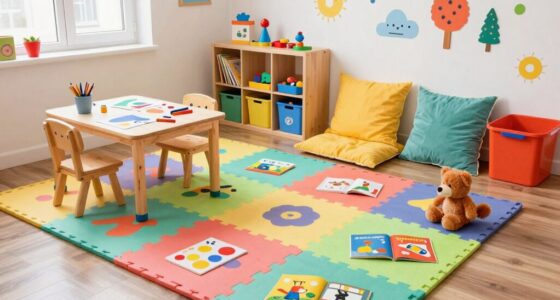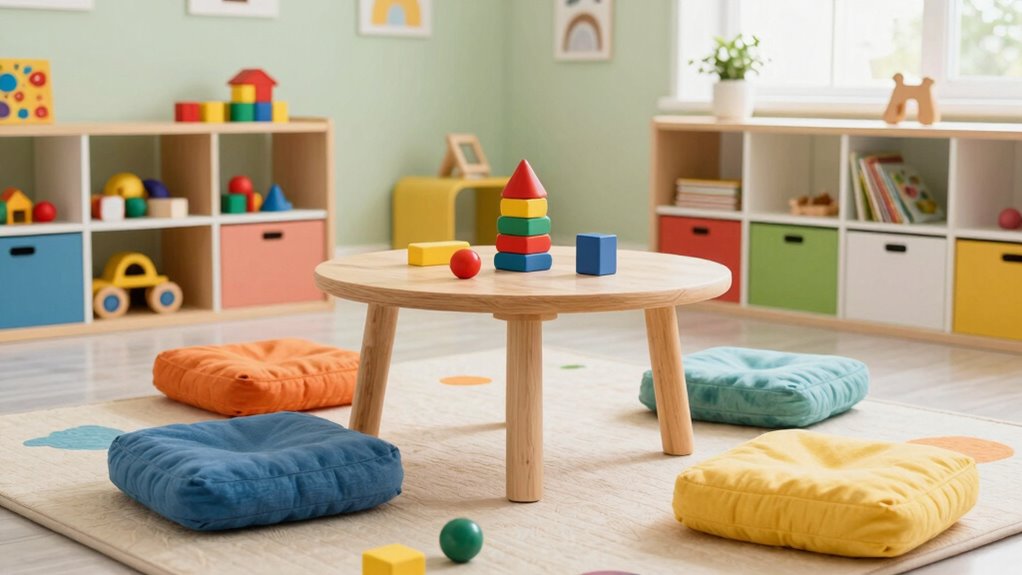

You should choose playroom furniture that supports play because it encourages your child’s creativity, active exploration, and sensory development. Instead of just providing storage, furniture like adjustable tables, climbing structures, and sensory-friendly mats help your child engage fully with their environment. This boosts their imagination and motor skills while creating a safe, stimulating space. If you keep exploring, you’ll discover even more ways to turn your playroom into a joyful support for growth.
Key Takeaways
- Supporting play fosters creativity, imagination, and cognitive development beyond mere organization.
- Furniture designed for active and sensory play enhances motor skills and emotional regulation.
- Play-supportive furniture encourages physical activity, promoting overall health and confidence.
- Integrating play elements creates engaging environments that stimulate exploration and joyful learning.
- Prioritizing play over storage ensures a balanced space that nurtures development and well-being.
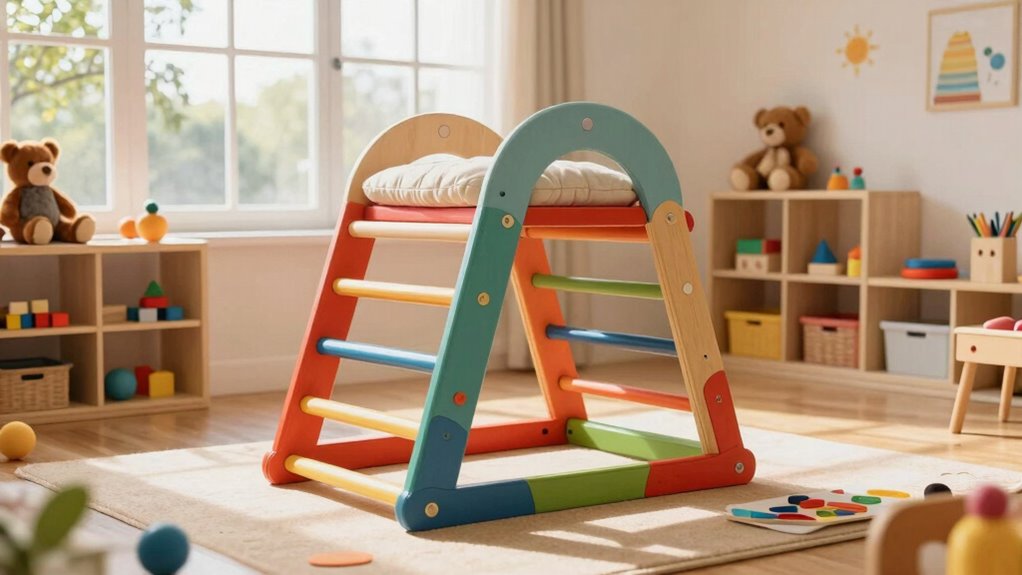
Creating a playroom that encourages active play starts with choosing the right furniture. When you select pieces that support play rather than just storage, you create an environment where your child can thrive physically, emotionally, and creatively. Playroom furniture should do more than hold toys; it should invite children to explore, imagine, and develop essential skills. For example, incorporating furniture designed for sensory integration helps children regulate their emotions and stay engaged. Items like soft, textured mats or foam blocks offer tactile experiences that stimulate the senses and promote calmness. These pieces encourage children to explore different textures and sensations, supporting their sensory development while making playtime more enjoyable. Incorporating smart home technology such as adjustable lighting or sound systems can further enhance the sensory environment and adapt to your child’s needs. Imaginative exploration is another key benefit of thoughtfully chosen playroom furniture. When you include versatile, open-ended furniture such as adjustable tables, cozy reading nooks, or modular shelves, you give children the tools to invent stories, build worlds, and experiment freely. Instead of cluttered spaces that limit creativity, well-designed furniture fosters an environment where kids can transform a simple corner into a castle, a spaceship, or a pretend kitchen. This kind of furniture invites kids to take ownership of their space and use their imagination without restrictions, nurturing their cognitive growth and problem-solving skills. Choosing furniture that supports active play also encourages movement, which is essential for your child’s overall health. Items like climbing structures, balance beams, or small slides can be integrated into the playroom to promote physical activity and coordination. When these pieces are part of the furniture collection, they become seamlessly accessible, making active play a natural part of your child’s routine. This not only helps develop motor skills but also boosts confidence as your child masters new challenges. Remember, a playroom designed for movement fosters a healthy, dynamic environment where children are inspired to be physically active. Additionally, selecting furniture that is ergonomic ensures comfort and safety during extended play sessions, supporting your child’s posture and overall well-being. To maximize the benefits, it’s important to consider how playroom design influences your child’s engagement and development. Creating a space that thoughtfully integrates sensory-friendly elements can also make a significant difference in how your child interacts with their environment, especially for those with sensory processing needs. Ultimately, when your playroom furniture prioritizes support for play over mere storage, you create a space that nurtures your child’s development in multiple areas. It becomes a place where sensory integration is facilitated naturally, imagination is sparked daily, and active play is encouraged effortlessly. By choosing versatile, engaging furniture, you’re providing a foundation for your child to learn, grow, and have fun in a safe, stimulating environment. This approach transforms a simple room into a vibrant playground for exploration, discovery, and joyful movement.
As an affiliate, we earn on qualifying purchases.
Frequently Asked Questions
How Can Furniture Encourage Creativity in a Playroom?
You can encourage creativity in a playroom by choosing furniture made from imaginative materials and featuring modular designs. These elements inspire kids to see furniture as part of their play, not just storage. Modular pieces allow them to rearrange and build new setups, sparking their imagination. Using colorful, adaptable furniture invites children to create their own play environments, fostering problem-solving skills and inventive thinking.
What Safety Features Should Playroom Furniture Have?
Imagine a sturdy, smooth-edged play table, its material durability ensuring it withstands energetic games without splintering or breaking. You should look for safety features like rounded corners, non-toxic finishes, and stable bases to prevent tipping. Not only do these elements keep your child safe, but they also enhance the aesthetic appeal of the space, making it inviting and playful while ensuring durability for long-lasting use.
How Does Furniture Design Impact a Child’s Development?
Your furniture design influences a child’s development by encouraging creativity and independence. When you choose pieces with thoughtful color coordination, it stimulates visual senses and mood. Material durability guarantees safety and longevity, allowing kids to explore freely without worry. Well-designed furniture fosters a supportive environment where children can engage in play, learn, and grow, ultimately boosting their cognitive and motor skills while making the space inviting and functional.
Are There Eco-Friendly Options for Playroom Furniture?
Yes, you can find eco-friendly playroom furniture made from sustainable materials like bamboo, reclaimed wood, or recycled plastic. Look for pieces with eco-friendly finishes that are free from harmful chemicals, ensuring safety for your child and the environment. By choosing furniture that emphasizes sustainability, you support eco-conscious living while creating a healthy, inspiring space for your child’s growth and play.
How Often Should Playroom Furniture Be Replaced or Upgraded?
You should replace or upgrade playroom furniture every few years, depending on furniture longevity and replacement frequency. Regularly assess for wear and tear, safety issues, or outdated designs. Kids grow quickly, and their needs change, so updating furniture guarantees safety, comfort, and continued encouragement of play. By staying attentive to these factors, you’ll keep the play environment fresh, functional, and engaging, making each upgrade worthwhile.
Conclusion
When choosing playroom furniture, prioritize pieces that encourage active play and creativity. Imagine a child who has a sturdy, kid-friendly table where they build and draw; this not only fosters imagination but also supports their development. By selecting furniture that supports play rather than just storage, you create a space where your child can explore, learn, and grow. Ultimately, thoughtful furniture choices turn the playroom into a vibrant hub of discovery and fun.