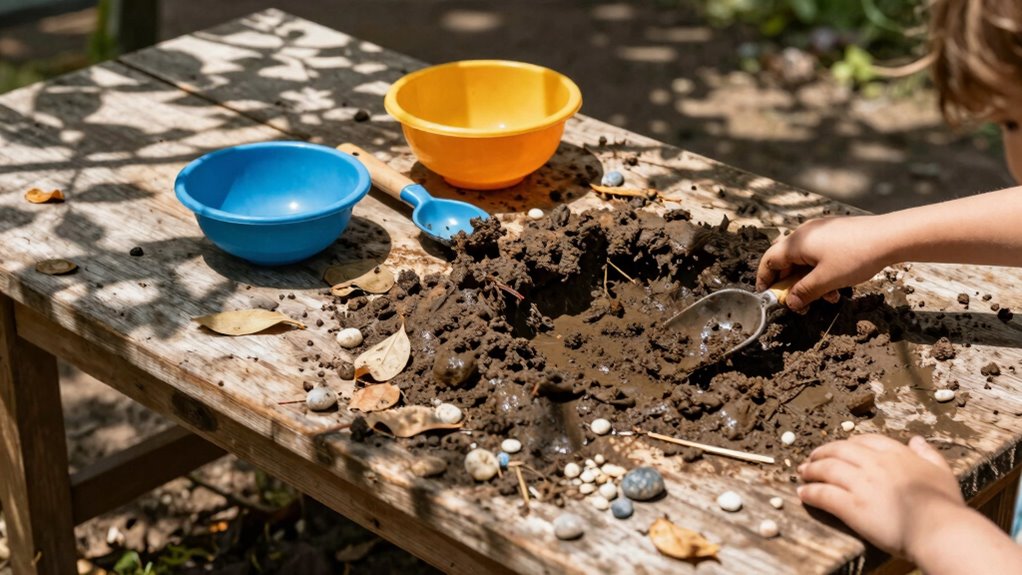
To create a simple mud kitchen routine, first designate a safe outdoor space and set up a sturdy table or container with natural materials like soil, water, leaves, and sticks. Establish a consistent schedule, such as playing a few times a week, so children know what to expect and can look forward to it. Let them lead with free exploration, mixing, digging, and pouring. Incorporate simple cleanup routines and connect activities to outdoor nature to enrich the experience. Keep exploring to discover more helpful tips.
Key Takeaways
- Establish a consistent schedule for outdoor mud kitchen activities to build routine and anticipation.
- Allow children to lead play, exploring and experimenting freely within the set routine.
- Incorporate natural materials and simple tools to encourage sensory engagement and creativity.
- Keep the setup accessible, easy to reset, and safe for children to promote independence.
- Include routine cleanup and tidying-up with songs or games to teach responsibility and foster independence.
Creating a simple mud kitchen routine can turn outdoor play into a fun, educational experience for your child. A mud kitchen isn’t just about getting dirty; it’s a fantastic way to promote sensory play and encourage your little one to explore the outdoors creatively. When you set up a routine, you give your child a structured yet flexible way to engage with their environment, fostering curiosity and developing fine motor skills. The key is to keep it simple and spontaneous, allowing your child to lead the way while you provide the necessary tools and guidance.
Creating a mud kitchen routine makes outdoor play fun, educational, and encourages creativity and fine motor skills development.
Start by designating a specific outdoor area for the mud kitchen. You don’t need a fancy setup—just a sturdy table or even a large container filled with soil, water, and natural materials like leaves, sticks, and stones. Keep the activity accessible and easy to reset for future outdoor activities. When it’s time to play, invite your child to gather ingredients and utensils like spoons, bowls, and cups. As they dig, scoop, and pour, they’ll naturally engage in sensory play, feeling the textures of mud and water, listening to the squish and splash, and observing changes in consistency. These sensory experiences are essential for their development, helping them process different sensations and learn about the world around them.
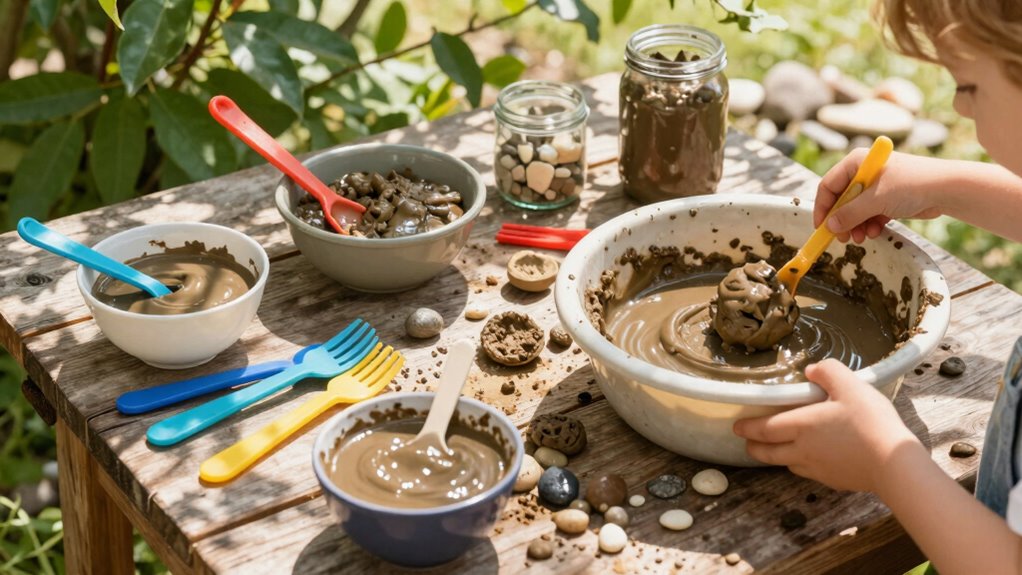
Incorporate a routine by establishing a consistent schedule for mud kitchen time, whether it’s daily or a few times a week. This predictability helps your child anticipate outdoor activities and look forward to them. During the routine, encourage your child to experiment with different combinations—adding water to mud to make “soups” or mixing leaves into the soil. As they do, they practice problem-solving and creativity, crucial skills for their growth. Remember, it’s essential to supervise but also give your child enough freedom to explore at their own pace. Allow them to decide what to make or how to play, turning the activity into a self-directed learning experience. Fostering independent play enhances their confidence and decision-making skills as they navigate the activity. Incorporating natural materials into their play can further enrich their connection to the environment and promote ecological awareness.
Additionally, understanding the importance of sensory play can help you create more meaningful and engaging activities. Incorporate opportunities for children to connect with natural biodiversity by exploring local plants, insects, and small creatures that might visit the mud kitchen area, fostering their appreciation for the environment. Wrap up the routine with a simple cleaning or tidying-up session, teaching responsibility and routine. You can make this part of the activity fun by singing a cleanup song or turning it into a game. Consistency, patience, and encouraging open-ended play are the cornerstones of a successful mud kitchen routine. Over time, your child will develop not only their sensory awareness but also their confidence and independence through these outdoor activities. Most importantly, enjoy the messy, joyful moments together, knowing you’re nurturing their development in a natural, playful way.

Tiny Land Outdoor Mud Kitchen for Kids, Wooden Play Kitchen with Water Tank, Water & Cooking Play, Sensory Fun, Weather-Resistant with Storage, Ideal for Toddlers Ages 3+
- Outdoor Mud Kitchen: Sturdy, spacious, and weather-resistant
- Modular Design: Convertible stovetop and sensory table
- Water Play Features: Integrated sink, faucet, and 4L water tank
As an affiliate, we earn on qualifying purchases.
As an affiliate, we earn on qualifying purchases.
Frequently Asked Questions
What Safety Precautions Should I Consider for Outdoor Mud Kitchens?
You should prioritize water safety by supervising children during water play and guaranteeing they don’t drink or ingest mud. When selecting materials, choose non-toxic, weather-resistant items that are easy to clean and free of sharp edges. Regularly inspect your mud kitchen for hazards like splinters or loose parts, and keep the area tidy to prevent accidents. Always supervise play to ensure safety and enjoyment for everyone.
How Can I Involve Children in Setting up the Mud Kitchen?
You can involve children in setting up the mud kitchen by encouraging their creativity and storytelling. Let them choose a theme or story for their kitchen, then guide them to decorate with natural materials like leaves and stones, adding creative touches like painted signs or fairy lights. This hands-on approach fosters ownership, sparks imagination, and makes the setup process fun, ensuring they feel excited and invested in their outdoor play space.
What Are Some Inexpensive Materials for Building a Mud Kitchen?
For a budget-friendly mud kitchen, you can gather DIY projects using basic, budget materials. Think wooden crates for counters, old kitchenware, and plastic containers for mixing. You might repurpose pallets or crates, find forgotten furniture, or use inexpensive tubs and trays. These simple, sustainable solutions turn everyday items into extraordinary, engaging elements, making your mud kitchen magical without making a mess on your wallet.
How Do I Clean and Maintain the Mud Kitchen Regularly?
You should set a cleaning schedule for your mud kitchen, ideally after each play session, using warm water and soap to wash surfaces and tools. Regular maintenance tips include checking for loose parts, repairing any damages promptly, and replacing worn-out materials. Keep the area dry and well-ventilated to prevent mold. This routine keeps the mud kitchen safe, clean, and ready for imaginative play every time your child uses it.
What Age Is Most Suitable for Children to Use a Mud Kitchen?
You might think a mud kitchen‘s only for the tiniest explorers, but actually, the suitable age varies. Kids as young as two benefit from mud kitchen benefits, developing sensory skills and creativity. Older children love the open-ended play, too. Ironically, the mess is part of the charm, helping your child learn through tactile experiences. So, whether they’re two or ten, a mud kitchen offers endless fun and developmental perks.
Conclusion
As you watch your little one happily digging and stirring in their mud kitchen, it’s a gentle reminder that play truly is the simplest, most natural way to connect and learn. Just yesterday, I found a tiny pebble in my own pocket, a little reminder of the joy we shared during those muddy adventures. Sometimes, it’s the unexpected moments that make the brightest memories—proving that even the simplest routines can create the most meaningful bonds.