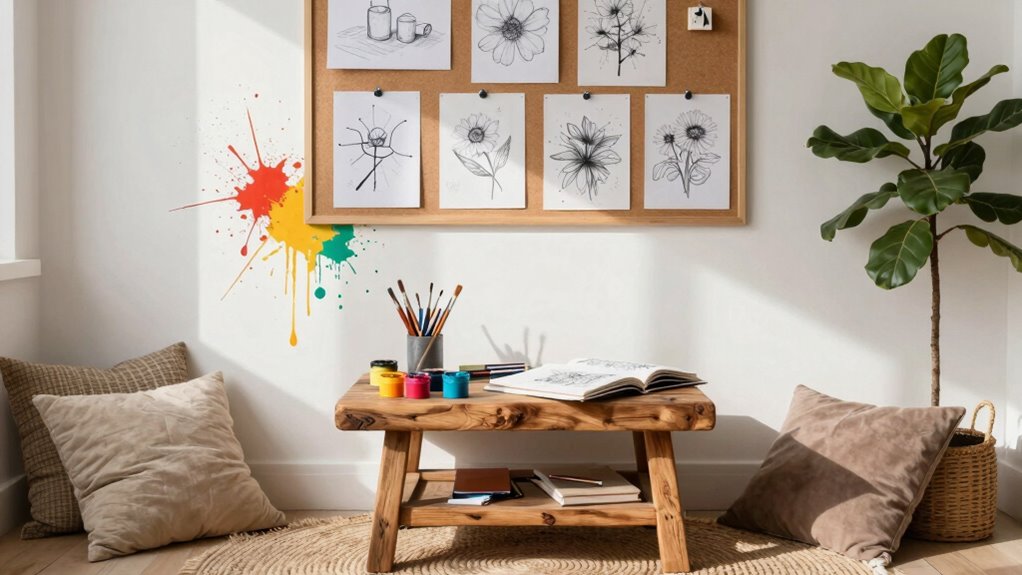

You can create an inspiring art space even without a dedicated playroom by choosing a small, manageable spot like a corner or section of a room. Make sure it’s accessible, well-lit, and integrated with your home’s style. Organize supplies in clear containers or wall-mounted shelves, and invest in a child-sized table and comfortable chair. Involving your kids in setting up the space encourages ownership. To discover more tips and ideas, keep exploring ways to personalize and maintain this creative corner.
Key Takeaways
- Choose small, accessible spaces like corners or sections within existing rooms, ensuring good lighting and integration with home decor.
- Use clear containers, wall-mounted shelves, and vertical storage to organize art supplies efficiently and keep surfaces tidy.
- Set up a child-friendly table and comfortable seating near light sources to create an inviting, functional art area.
- Incorporate quick-cleanup storage solutions and regularly declutter to maintain an organized, inspiring environment.
- Involve children in organizing and personalizing the space to foster ownership, responsibility, and ongoing creativity.
Ever wondered how to foster your child’s creativity without sacrificing precious space? Creating an art area in your home might seem challenging, especially if you don’t have a dedicated playroom. But with some clever planning, you can carve out a functional and inspiring art space that doesn’t take over your entire home. The key is focusing on art supply organization and a thoughtful creative corner design. These elements guarantee that your child’s artistic outlet remains accessible, tidy, and enjoyable.
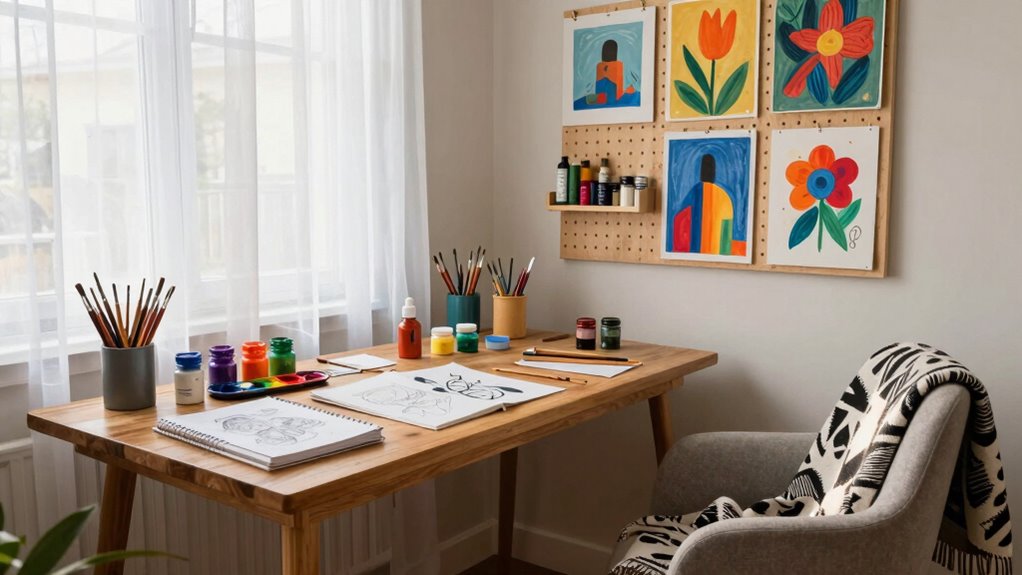
Start by identifying a small, manageable spot—perhaps a corner in the kitchen, a section of the basement, or a part of the dining room. Once you’ve chosen the space, organize the art supplies to maximize efficiency. Use clear, stackable containers or labeled bins so your child can easily find markers, crayons, paints, and paper. Incorporate vertical storage options like wall-mounted shelves or pegboards to keep supplies within reach but off the surface. This approach prevents clutter from spreading and teaches your child the importance of tidiness, making the space functional and inviting.
Designing your creative corner involves more than just storage. Invest in a sturdy table or a small desk that’s at a comfortable height for your child. Add a washable mat or tablecloth to protect the surface from messes, and choose a comfortable chair that encourages long, relaxed art sessions. Incorporate inspiring décor—bright posters, colorful art prints, or even a chalkboard wall—so your child feels encouraged to create. Lighting is essential, so position the space near a window or add a dedicated lamp to ensure good illumination. Additionally, consider art space design principles to optimize the layout and atmosphere for creativity. Creating a dedicated space also involves considering the home environment, ensuring it complements the overall aesthetic and doesn’t feel out of place. Being mindful of space limitations can guide you in selecting the right-sized furniture and storage solutions to keep everything manageable.
Furthermore, using efficient storage solutions can help keep the area tidy and manageable, making it easier for your child to focus on creating rather than cleaning up. Make sure the art space is flexible. When your child finishes creating, the area should be easy to tidy up. Incorporate storage solutions that allow quick cleanup—drawer organizers, portable caddies, or collapsible bins. Keep some spare supplies nearby so they can quickly replenish their creative corner without rummaging through the entire house. Regularly decluttering and reorganizing ensures the space remains inviting and functional.
Finally, encourage your child to take ownership of the art space. Let them decide where things should go and involve them in maintaining it. This fosters responsibility and pride in their creative corner. With a well-organized setup and a thoughtfully designed creative corner, you create an environment that nurtures your child’s artistic talents without sacrificing the overall harmony of your home. This approach allows you to cultivate their creativity while keeping your living space neat, functional, and inspiring.

GeeBom 24QT 2Packs Clear Craft Organizers and Storage with Trays, Art Supply Organizer and Storage, Craft Storage Box with Lid for Beads, Markers, Coloring Books, Sewing, Playdoh and Tools
【Double-Layer Divided Design】This plastic storage box has compartment trays for classified storage. Great as a craft organizer, sewing…
As an affiliate, we earn on qualifying purchases.
As an affiliate, we earn on qualifying purchases.
Frequently Asked Questions
What Safety Precautions Are Needed for Makeshift Art Areas?
You should prioritize safety by keeping materials storage organized and out of reach of children. Use safety equipment like aprons, gloves, and goggles to protect against spills and splashes. Make sure your space has good ventilation and keep sharp tools or hazardous supplies away from little hands. Regularly check the area for potential hazards, clean up spills immediately, and educate children on safe art practices to create a secure, fun environment.
How Can I Organize Art Supplies in Small Spaces?
Think of your small space as a treasure chest for art supplies. Use vertical storage ideas like wall-mounted shelves or pegboards to free up surface area. Creative display solutions, such as clear jars or labeled bins, keep everything accessible and organized. Consider stacking drawers or rolling carts that tuck away neatly when not in use. This way, your supplies stay tidy, inspiring endless creativity without cluttering your limited space.
What Age-Appropriate Art Activities Work in Limited Areas?
You can encourage age-appropriate art activities like art therapy and creative exploration in limited spaces by setting up small, designated areas with basic supplies. Use portable containers for easy access and cleanup. For younger kids, simple activities like finger painting or drawing with crayons work well, while older children can try sketching or collage projects. These activities foster creativity and emotional expression without requiring a large dedicated art room.
How Can I Prevent Messes During Art Sessions?
To prevent messes during art sessions, set up a designated area with a Creative display that contains spills and splatters. Use clear plastic tablecloths or washable mats to protect surfaces. Implement Clean up techniques like having wipes, paper towels, and a trash bin nearby. Encourage kids to clean their workspace after each activity, fostering responsibility while keeping your limited space organized and tidy.
What Are Budget-Friendly Ideas for Creating an Art Space?
You can turn everyday spaces into a budget-friendly art haven by using creative storage solutions like repurposed boxes, jars, or old drawers. Set up a simple art station using a small table or a sturdy desk, and keep supplies organized with affordable bins or baskets. Thrift stores often have great finds for art supplies or furniture, making it easy to craft a functional, inspiring art space without breaking the bank.

Wensdr 5-Pack Black Metal Wall Mounted Kids Bookshelf, Modern Style, 5 Shelves, Hanging Book Shelf Organizer for Kids Room, Bedroom, Kitchen, Nursery
⭐HANGING KID BOOKSHELF: Our wall-mounted children's bookshelf is designed to create a neat and organised environment in your…
As an affiliate, we earn on qualifying purchases.
As an affiliate, we earn on qualifying purchases.
Conclusion
Creating an art space without a dedicated playroom might seem tricky, but it’s like turning a small garden into a vibrant oasis—you just need the right spots and a bit of creativity. I once transformed a corner of my living room into an art haven, and now my kids spend hours creating without needing extra space. Remember, with a little ingenuity, your home can become a colorful canvas that sparks endless imagination.
kids art table and chair set
As an affiliate, we earn on qualifying purchases.
As an affiliate, we earn on qualifying purchases.
art space organization ideas for small rooms
As an affiliate, we earn on qualifying purchases.
As an affiliate, we earn on qualifying purchases.