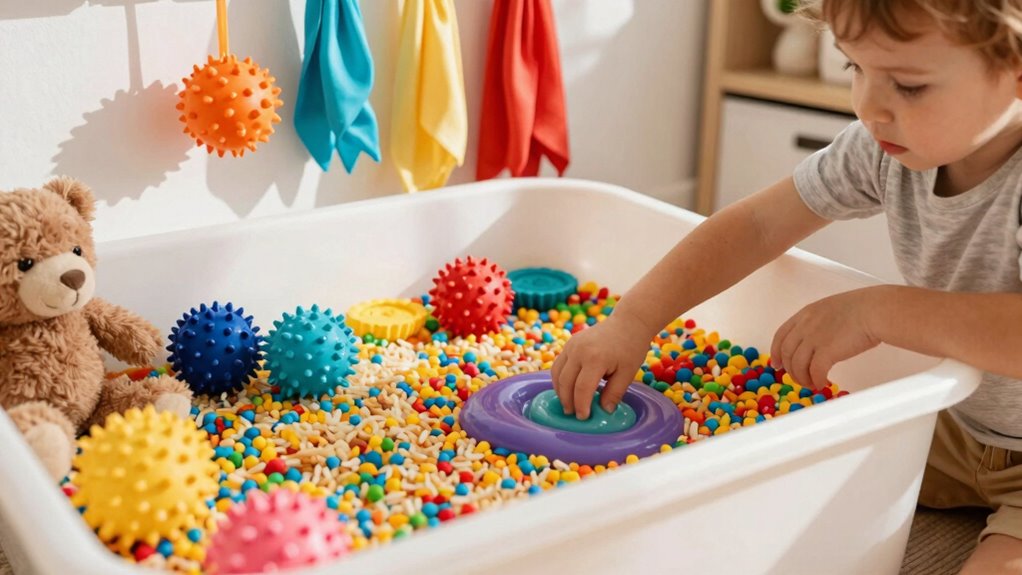

To introduce sensory play to reluctant kids, start small and use familiar textures to build comfort. Use gentle, gradual exposure by offering activities in calm, predictable settings and let your child observe first. Make it part of daily routines and avoid pressuring them to participate. Focus on creating a safe space where they feel in control, and support their exploration with patience. Keep exploring these strategies to discover how you can make sensory play more inviting.
Key Takeaways
- Start with familiar textures or objects to build comfort gradually.
- Incorporate sensory play into daily routines for consistency and normalcy.
- Allow children to choose activities to foster autonomy and reduce resistance.
- Use gentle, step-by-step exposure, respecting their cues and comfort levels.
- Create a calm, predictable environment to help children feel safe and open to exploration.
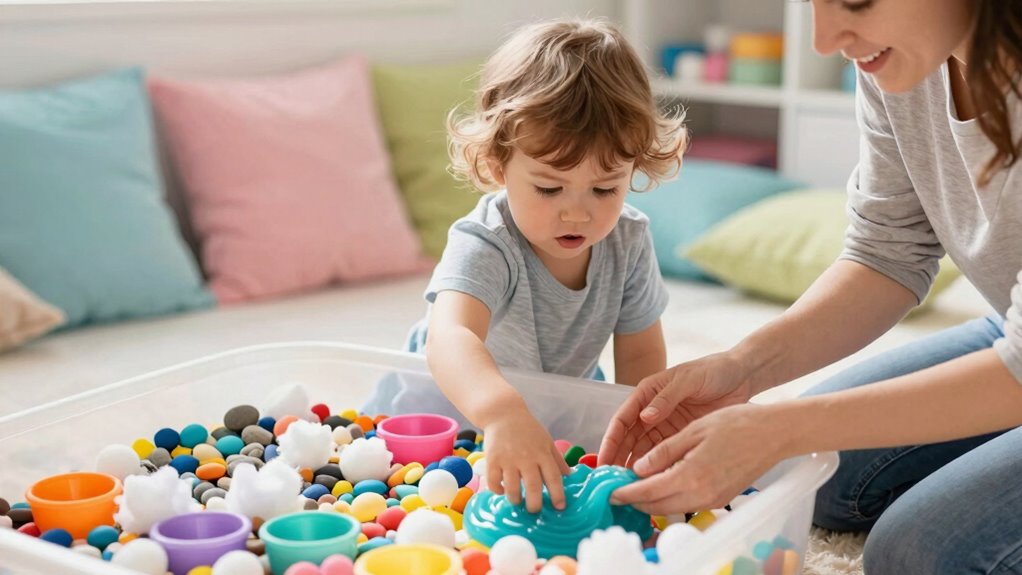
Have you ever wondered how to encourage reluctant kids to explore new activities? Introducing sensory play can seem challenging at first, especially when a child is hesitant or overwhelmed by new textures, smells, or sounds. But understanding the benefits of sensory play can help you approach the task with confidence. Sensory play isn’t just about fun; it helps children develop their motor skills, improve focus, and build emotional regulation. These benefits can motivate a reluctant child to engage more willingly once they start experiencing the positive effects firsthand.
Sensory play boosts motor skills, focus, and emotional regulation, encouraging hesitant children to explore with confidence.
If your child has sensory sensitivities, overcoming them might seem like a tall order. However, gentle, gradual exposure can make a big difference. Start by offering simple, familiar textures or objects that aren’t overwhelming. For instance, if your child is sensitive to certain textures, introduce softer or more neutral options first. You can also incorporate sensory play into routines they already enjoy, like playing with sand during outdoor time or using colored rice during quiet moments. This way, sensory activities become less intimidating and more integrated into everyday life.
When you introduce sensory play, keep the environment calm and predictable. Kids often respond better when they feel safe and in control. Let them choose the activities or materials they want to explore, and don’t pressure them to engage if they’re uncomfortable. Instead, be patient and observant of their cues, offering support and reassurance without forcing participation. You might find that allowing your child to observe others or try small, manageable parts of the activity first can ease their anxiety. Over time, these small steps help build confidence and reduce sensitivities. Recognizing that sensory sensitivities are common in children can also help normalize their experiences and reduce stress for both parent and child. Additionally, understanding sensory processing can aid in tailoring activities to better suit individual needs. Incorporating sensory-friendly environments can further support children in feeling more at ease during these activities. Creating a safe and supportive space is essential for fostering a positive sensory play experience, and being aware of sensory sensitivities can guide you in making meaningful adjustments.

Creativity for Kids Sensory Bin: Outer Space Toys – Preschool and Toddler Sensory Toys, Kids Gifts for Boys and Girls Ages 3-5+, 10.25 x 14.5 x 4.75 inches
OUTER SPACE SENSORY BIN: Blast off on a intergalactic mission with a galaxy sensory bin filled with glowing…
As an affiliate, we earn on qualifying purchases.
As an affiliate, we earn on qualifying purchases.
Frequently Asked Questions
How Can I Tell if My Child Is Truly Reluctant or Just Cautious?
You can tell if your child is truly reluctant or just cautious by observing their reactions and using open parental communication. If they hesitate but gradually warm up and express curiosity, they may be cautious. However, if they consistently avoid sensory activities despite encouragement, it could indicate true reluctance. Consider their child temperament and talk with them to understand their feelings better. This helps you tailor your approach and support their comfort levels.
Are There Age-Appropriate Sensory Activities for Very Young Children?
Think of sensory activities like gentle waves guiding your child’s exploration. For toddlers, simple, age-appropriate sensory activities promote essential sensory development. Try finger painting, soft textured toys, or playing with water and bubbles—these activities fuel curiosity while being safe and engaging. These experiences support their natural desire to explore, fostering confidence and helping them enjoy sensory play, all while nurturing their growing senses at a comfortable pace.
What Are Common Sensory Sensitivities to Watch for in Reluctant Kids?
You should watch for signs of sensory sensitivities like sensory overload, where your child might cover their ears, hide, or become overwhelmed quickly. Tactile sensitivity could cause them to avoid touching certain textures or react with discomfort to specific sensations. Notice if they seem overly distressed by bright lights, loud sounds, or certain fabrics. Recognizing these cues helps you adapt sensory activities to make your child feel safe and comfortable.
How Long Should Initial Sensory Play Sessions Last?
Start with short sensory play sessions lasting about 10 to 15 minutes. This allows your child to experience sensory integration without feeling overwhelmed. Observe their cues and gradually extend the duration as they become more comfortable. Incorporate play therapy techniques to make the experience engaging and safe. Over time, you can increase sessions up to 20 or 30 minutes, always respecting your child’s comfort level and responses.
Can Sensory Play Help With Specific Behavioral Challenges?
Sensory play can considerably aid behavioral challenges by enhancing sensory integration, helping kids better process their feelings and reactions. While it might seem simple, this form of play acts like behavioral therapy, calming agitation or impulsivity. You’ll notice improvements as kids develop coping skills and emotional regulation through engaging activities. It’s a natural, enjoyable way to support their growth, making behavioral challenges more manageable and less stressful for both of you.

teytoy Sensory Toy, Texture Toys for Babies with Rattle, Autism Sensory Toys Jellyfish Shape Tactile Sensory Toys with 10 Textures, Baby Sensory Toys for 0-3-6-18 Months Soft Baby Toys with Teethers
[Infant Sensory Toys] Our sensory toy is very soft and cute, featuring brightly colored jellyfish designs that promote…
As an affiliate, we earn on qualifying purchases.
As an affiliate, we earn on qualifying purchases.
Conclusion
By gently easing your reluctant child into sensory play, you open the door to a world of discovery and growth. Remember, patience is key—sometimes all it takes is a small, inviting step to spark curiosity. Can you imagine the joy and confidence they’ll gain as they explore new textures and sensations at their own pace? With your support, sensory play can become a delightful adventure, encouraging even the most hesitant kids to engage and thrive.

Sensory Bottle Kits for Kids, 4 Sets DIY Sensory Bottles 14 oz with Fillers, Calm Down Corner Supplies, Montessori Motor Skills Activity, Sensory Fidget Tube Toys
【Sensory Bottles】 – Sensory bottles serve as a safe and soothing sensory aid for children. The bottles are…
As an affiliate, we earn on qualifying purchases.
As an affiliate, we earn on qualifying purchases.

Yowlieu 10 Pcs Wooden Sensory Bin Tools for Toddlers & Preschool Children, Montessori Sensory Wooden Toys Fine Motor Learning Pretend Play Sensory Tools for Kids
Complete Montessori Sensory Bin Tools Kit: 10 Sensory Tool Toys + 1 storage bag for supply all-in-one convenience,…
As an affiliate, we earn on qualifying purchases.
As an affiliate, we earn on qualifying purchases.