To create a safer backyard play routine, set clear rules and actively supervise at all times, knowing your children’s locations. Regularly inspect and maintain equipment for safety, checking for loose parts or damage. Teach children safe practices and encourage natural exploration while discussing boundaries. Keep emergency supplies nearby and practice response plans periodically. By positioning yourself strategically and minimizing distractions, you can foster a secure environment. Keep exploring for more tips to guarantee your child’s safe outdoor adventures.
Key Takeaways
- Establish and enforce clear safety rules for all play activities and equipment use.
- Supervise children actively, maintaining constant visual contact and monitoring for hazards.
- Conduct regular safety inspections and maintenance of playground equipment.
- Educate children on safe play practices and boundaries regularly.
- Prepare for emergencies by keeping a first aid kit accessible and practicing response drills.
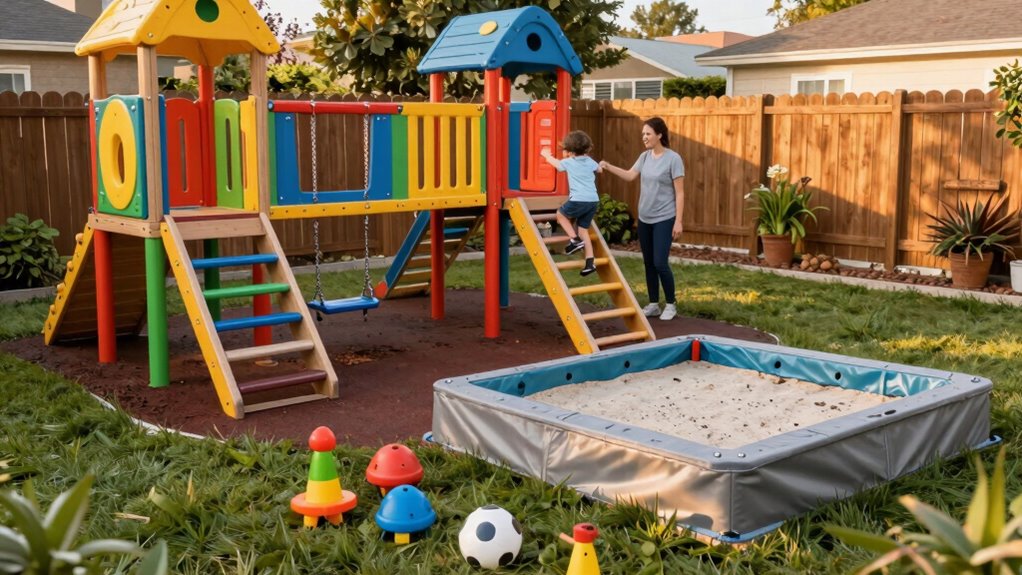
Have you ever wondered how to make your backyard a safer space for your kids to play? Creating a safe backyard play routine involves more than just setting up toys and hoping for the best. It starts with establishing clear rules and actively supervising your children during playtime. Playground supervision is essential; it means staying attentive at all times, knowing where your kids are, and ensuring they play safely. Keep a close eye on them, especially when they’re using swings, slides, or climbing structures, which can pose risks if misused. Make it a habit to regularly scan the area, quickly addressing any unsafe behavior or potential hazards before accidents happen.
Supervise your kids constantly and stay alert to prevent accidents on playground equipment.
Besides supervision, emergency preparedness should be a top priority. You need to be ready for unexpected situations, like falls or minor injuries, by having a well-stocked first aid kit nearby. Knowing basic first aid skills, such as how to treat cuts or sprains, can make a significant difference in preventing minor injuries from becoming serious. Keep emergency contact numbers, including your pediatrician and local emergency services, easily accessible. Teaching your kids basic safety rules, like not running too fast or playing on equipment that’s wet or damaged, can prevent many accidents before they occur.
Establishing a routine that incorporates these safety measures keeps safety consistent. Make it a part of your daily playtime to review safety rules with your kids, discuss what’s allowed and what isn’t, and remind them to play carefully. Consistency helps children understand boundaries and develop safe habits. Also, consider scheduling regular inspections of your backyard equipment. Check for loose bolts, rust, or broken parts, and repair or replace damaged items promptly. Routine inspections are crucial in preventing hazards from developing unnoticed. Regularly educating children about safe play practices can further reduce the risk of accidents and empower them to make safer choices during play. Additionally, ensuring proper playground equipment installation and maintenance can significantly reduce the likelihood of injuries.
To enhance safety further, incorporating biodiversity into your backyard can create a more natural and safer environment for children, promoting outdoor play and learning about nature. Creating a safe backyard routine also involves planning for supervision and emergencies before play begins. Position yourself where you can easily observe your kids from different angles, and avoid distractions like your phone during playtime. Practice emergency response scenarios periodically, so you and your children know what to do if an accident occurs. Additionally, air quality can impact children’s health during outdoor play, so ensuring proper ventilation and a clean environment can help reduce respiratory issues. A little preparation goes a long way in reducing risks and ensuring that your kids have fun without unnecessary danger. When safety becomes a priority woven into your routine, you foster a secure environment where your children can explore and enjoy their playtime confidently.

Mini First Aid Kit – 150 Piece Small Waterproof Hard Shell Medical Kit for Home, Car, Travel, Camping, Truck, Hiking, Sports, Office, Vehicle & Outdoor Emergencies- Small First Aid Medical Kit (Red)
ESSENTIALS FOR EMERGENCY: Everything you need is in this first aid kit! Our kit includes over 150 professional-grade…
As an affiliate, we earn on qualifying purchases.
As an affiliate, we earn on qualifying purchases.
Frequently Asked Questions
How Often Should I Inspect Backyard Play Equipment for Safety?
You should inspect your backyard play equipment at least once a month, more often if it’s heavily used or after severe weather. Regular playground maintenance involves using safety checklists to identify loose bolts, rust, or damaged parts. These routine safety checks help prevent accidents and keep the play area safe. Don’t forget to document your inspections and address any issues promptly to guarantee continuous safety for your kids.
What Are the Best Plants to Avoid for a Safe Play Area?
Think of your backyard as a safe harbor, and avoiding poisonous plants keeps it protected. Steer clear of toxic foliage like poison ivy, poison oak, and deadly nightshade, which can cause skin irritation or worse. Also, avoid plants with bright berries or milky sap, as they’re often poisonous. By removing these risky plants, you create a safer play area where kids can explore without the threat of harmful toxins.
How Can I Teach Children About Backyard Safety Rules?
You can teach children about backyard safety rules by using clear safety signage and engaging in supervision techniques. Explain rules simply and consistently, like staying within designated areas and avoiding plants or objects that could cause harm. Use active supervision, watch for risky behaviors, and reinforce safety messages regularly. Incorporate fun safety games to help kids understand and remember these rules, making safety a natural part of backyard play.
Are There Age-Specific Safety Considerations for Outdoor Play?
Think of outdoor play as a story where your child’s age guides the plot. Younger kids need close supervision guidelines, ensuring they don’t wander into danger. For older children, encourage independence but still emphasize safety gear like helmets and knee pads. Tailor activities to their developmental level, always watching and reinforcing safety rules. With age-specific safety considerations, you help your child build confidence while keeping risks at bay.
What Should I Do if My Child Gets Injured During Play?
If your child gets injured during play, act quickly by providing first aid to address the injury and prevent further harm. Stay calm, assess the situation, and stop any bleeding with a clean cloth. Keep your child comfortable and monitor for signs of more serious issues. Remember, injury prevention is key, so regularly check play equipment and supervise closely to minimize risks. If needed, seek medical attention promptly.

Purife 17 Inch Pack of 6 White Metal Playground Safety Handles – Playset Grab Handles, Swing Sets Hand Grips Grab Rail, Kids Monkey Bar for Indoor Playroom
Set of 6 Matte White Solid Playground Handles : Include 6 pieces white handles in total 17.2'' Long….
As an affiliate, we earn on qualifying purchases.
As an affiliate, we earn on qualifying purchases.
Conclusion
By following these tips, you’re planting the seeds for a backyard that’s both fun and safe for your little explorers. Think of your yard as a well-guarded treasure chest—every safety measure a shiny gem protecting your kids’ adventures. With a little effort, you’ll create a playground where they can laugh, learn, and grow worry-free. Remember, a safe backyard is the foundation for endless joyful memories—because nothing beats the sunshine of a secure play space.

Agedsign Playground Rules Safety Sign Tin Signs Caution Warning Sign Outdoor 8×12
PRE-DRILLED HOLES FOR EASY MOUNTING – All of our premium signs have pre-drilled holes and can be easily…
As an affiliate, we earn on qualifying purchases.
As an affiliate, we earn on qualifying purchases.

tonhui Outdoor Kids Playhouse Cover, 43" L x 47" W x 55" H Waterproof Cover for Backyard Wooden Playhouse, Heavy Duty Oxford Fabric All-Weather Protection with Zipper
【CUSTOM SIZE】The playhouse cover measures 43 inches × 47 inches × 55 inches, suitable for the playhouse shown…
As an affiliate, we earn on qualifying purchases.
As an affiliate, we earn on qualifying purchases.