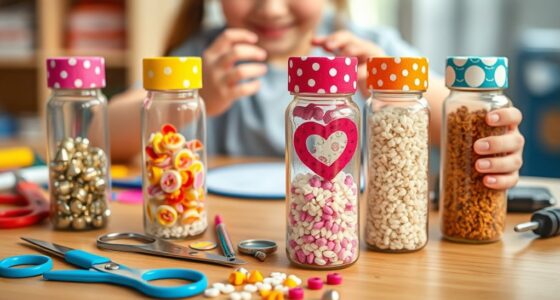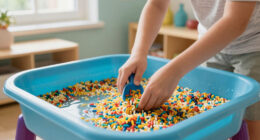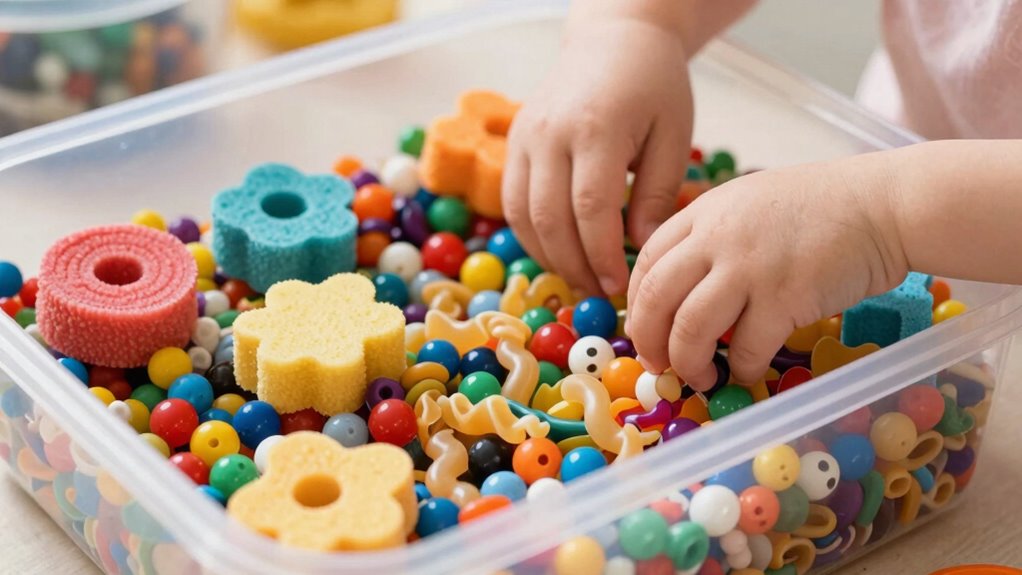

To use dry sensory bins for daily play, gather a sturdy container and fill it with colorful, safe materials like rice, beans, or pasta. Add small tools such as scoops or tweezers to encourage manipulation and exploration. Supervise as needed and organize the area for easy access. Incorporate themed challenges or sorting games to boost learning and fun. Keep content fresh by rotating items regularly—there’s more to discover to make each day engaging.
Key Takeaways
- Select a sturdy container and fill it with engaging, safe dry materials like rice, pasta, or beans for easy setup.
- Incorporate tools such as scoops or tweezers to encourage active manipulation and fine motor skills.
- Rotate contents regularly to keep play fresh and stimulate curiosity.
- Supervise initial exploration and keep the area organized for independent, safe play.
- Use themed challenges or scavenger hunts to add variety and promote problem-solving skills.
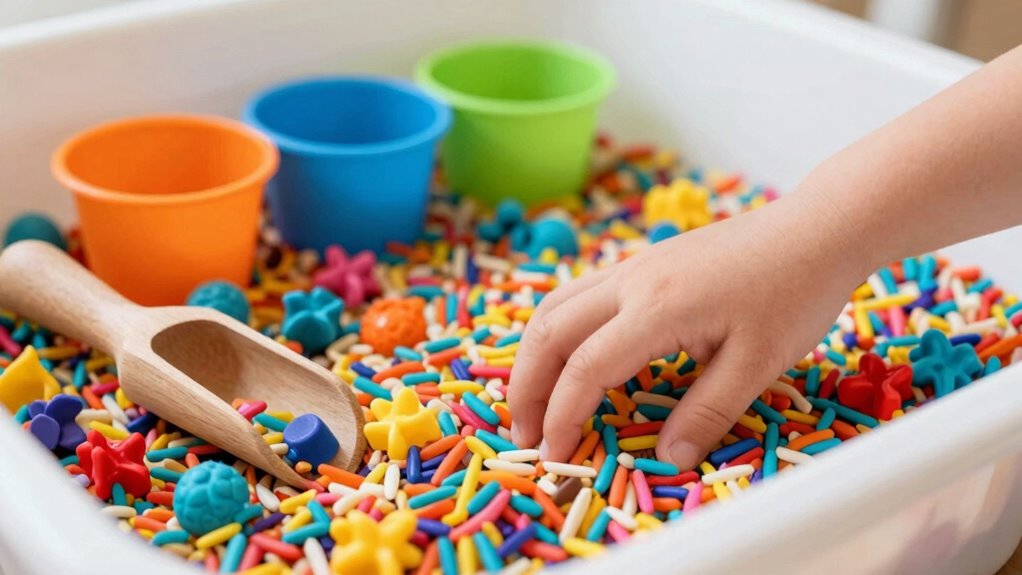
Dry sensory bins are a simple and engaging way to encourage daily play and exploration. When you set up a sensory bin, you’re providing a tactile experience that helps children develop their sensorial exploration skills. These bins are versatile tools that allow kids to explore different textures, shapes, and objects, all while keeping the activity mess-free and manageable. To get started, choose a sturdy container and fill it with dry materials like rice, pasta, beans, or small pebbles. The key is to select items that are safe, colorful, and interesting enough to capture your child’s attention.
Dry sensory bins promote tactile exploration and fine motor skills with safe, colorful, and engaging materials.
Encouraging your child to manipulate objects within the bin can significantly enhance their fine motor skills. For example, picking up small items with fingers, grasping, pinching, and sorting are all activities that promote hand strength and dexterity. You might add scoops, tweezers, or small cups to make play more dynamic and challenge their coordination. As your child scoops and transfers objects, they’re not only refining their fine motor skills but also learning about volume, capacity, and spatial relationships. These activities also boost their concentration and problem-solving abilities, making sensory bins an excellent daily educational tool.
To keep play fresh and stimulating, rotate the contents regularly. Introduce new textures, colors, or themed items—like faux gemstones, pom-poms, or small toy animals—to spark curiosity and sensorial exploration. You can also incorporate themed challenges or scavenger hunts within the bin, encouraging your child to find specific objects or sort items by color or size. This not only makes the play more engaging but also encourages cognitive development alongside sensory and motor skills. Incorporating biodiversity principles by including natural objects like small stones or shells can also enrich the sensory experience and connect children with the environment.
Supervision is important, especially when you’re introducing new items or tools, but sensory bins are generally safe for independent play once set up properly. Keep the area organized and accessible so your child can explore freely without frustration. Remember that consistent exposure to different sensory experiences can help support sensory processing and integration, which are vital for overall development. Keep the environment calm and encouraging, praising their efforts to explore and manipulate objects. Over time, you’ll notice your child becoming more confident in their fine motor control and more curious about exploring different textures and materials. Including a variety of materials can also promote sensory integration, helping children process sensory information more effectively. Using dry sensory bins daily doesn’t have to be complicated or time-consuming. With a few simple materials and some creativity, you can create a variety of sensory experiences that support your child’s growth. They’re a wonderful way to nurture your child’s natural curiosity, enhance their sensorial exploration, and strengthen their fine motor skills—all while having fun and learning through play.

Sensory-N-Stuff Rainbow Rice Sensory Bin Filler for Sensory Play 2 LB (4 Cups) – Non-Toxic Colored Rice for Sensory Tables – DIY Montessori Color Rice – Rice Sensory Bin Filler for Educational Play
- Enhances Sensory Skills: Encourages tactile exploration and coordination
- Fosters Creativity: Supports imaginative dry play scenarios
- Child-Safe Materials: Made from non-toxic, taste-safe ingredients
As an affiliate, we earn on qualifying purchases.
As an affiliate, we earn on qualifying purchases.
Frequently Asked Questions
What Age Is Appropriate for Dry Sensory Bins?
Dry sensory bins are perfect for children aged 1 to 5 years old. You’ll notice they’re great for sensory development, helping kids explore textures and strengthen fine motor skills. Plus, they’re excellent for play enhancement, encouraging creativity and problem-solving. Always supervise young children during sensory play, especially those under age 3, to guarantee safety. As kids grow, you can introduce more complex themes or tools to keep play engaging.
How Do I Clean and Maintain Dry Sensory Bins?
Think of cleaning your dry sensory bin as tending to a garden. Regular cleaning techniques involve removing all materials and wiping the bin with a damp cloth. Maintenance tips include storing it in a dry place and checking for damaged parts. You can also lightly disinfect with a mixture of water and mild soap. This keeps the bin safe, clean, and ready for daily adventures, ensuring lasting fun and hygiene.
Can Dry Sensory Bins Be Used Outdoors?
Yes, you can use dry sensory bins outdoors, but you should prioritize outdoor safety and supervise children closely. Choose a clean, shaded area to prevent dirt and debris from contaminating the sensory materials. Make certain the surface is flat and stable to avoid spills. Outdoor sensory exploration offers a wonderful experience, but always keep an eye on weather conditions and clean the bins thoroughly afterward to maintain hygiene.
What Are Some Easy DIY Dry Sensory Bin Fillers?
You can make easy DIY fillers for dry sensory bins using household items. Consider rice, pasta, beans, or oats for sensory play that’s simple and inexpensive. You might also add pom-poms, buttons, or small toys to enhance the experience. These DIY fillers are perfect for engaging children in sensory play, helping develop their fine motor skills and curiosity, all while keeping setup quick and mess manageable.
How Can I Introduce New Themes to Dry Sensory Bins?
To introduce new themes to dry sensory bins, you’ll want to make a splash with a theme shift that’s as exciting as a roller coaster ride! Swap out fillers, add themed items, and incorporate sensory exploration tools like textured toys or miniature figures. This keeps play fresh and engaging, sparking curiosity. Your child will love diving into new worlds, exploring textures, and discovering surprises, making every sensory bin a thrilling adventure!
Conclusion
Now that you know how to create dry sensory bins, you’re ready to turn everyday moments into engaging play. Imagine the mess-free fun, a stark contrast to the chaos of a busy day—yet both are essential for your child’s growth. Just like a calm oasis amidst a bustling city, these simple bins bring tranquility and learning together. So, embrace the simplicity, and watch your little one explore and thrive with every scoop and pour.