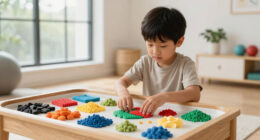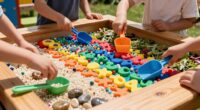
For safe, taste-safe sensory play with your toddler, try using edible items like cooked pasta, rice, or mashed fruits in sensory bins. Always supervise closely, and choose familiar foods to avoid allergic reactions and choking hazards. Cover surfaces for easy cleanup and cut larger pieces into manageable sizes. You can add natural food coloring or gentle flavors for more stimulation. Keep activities brief and observe your child carefully—you’ll find more helpful tips to guarantee safe exploration ahead.
Key Takeaways
- Use familiar, safe foods like yogurt, mashed fruits, or cooked pasta in sensory bins to ensure taste safety.
- Always supervise closely and remove items if signs of choking or discomfort occur.
- Prepare a designated, washable play area with protective coverings for easy cleanup.
- Cut larger food pieces into manageable sizes to prevent choking hazards during exploration.
- Avoid hard, allergenic, or difficult-to-chew foods, and consult a pediatrician for allergy concerns.

Sensory play is vital for your toddler’s development, especially when it comes to exploring the world through their senses. When introducing taste-safe sensory activities, safety should always be your top priority. You’ll want to keep a close eye on your child at all times, practicing diligent parent supervision to guarantee they’re exploring safely. Additionally, being aware of allergy awareness is essential, especially when using edible or food-based materials. Knowing if your toddler has food allergies helps you choose the right ingredients and avoid any potential allergic reactions.
Start with simple activities that involve familiar, safe foods like yogurt, pudding, or mashed fruits. These are easy for your child to handle and taste, and they’re unlikely to cause harm if accidentally ingested in small amounts. When setting up these activities, prepare a clean, designated area with washable surfaces to make cleanup easier. Cover the surface with a disposable cloth or an old sheet to protect your furniture, and always supervise your toddler directly to prevent them from putting too much in their mouth or trying to eat non-food items that might be nearby. Creating a safe environment for sensory play is crucial for fostering exploration without unnecessary risks. Incorporating safe food options helps ensure your child’s safety and enjoyment during these activities. You can also create sensory bins filled with taste-safe items like cooked pasta, rice, or cereal. Adding a few drops of natural flavoring or food coloring if you want to make the experience more stimulating. Remember, though, to keep these activities brief and watch your child carefully. If you notice any signs of discomfort or if they attempt to swallow large amounts, gently remove the items and offer water or a safe snack to cleanse their palate. Including proper supervision during sensory play further supports a safe and positive experience.
Start with familiar, safe foods like yogurt or mashed fruits and supervise closely for safe sensory exploration.
Another idea is to offer a variety of textured, edible objects, such as soft fruits or vegetables, that your toddler can squish, lick, or explore. Always remember to cut larger pieces into manageable sizes to prevent choking, and be cautious with any items that might be hard or difficult to chew. As with all taste-safe sensory play, avoid using anything that could pose a choking hazard or contain allergens you’re unsure of. It’s wise to consult with your pediatrician if you’re introducing new foods or if your child has known allergies. Engaging in sensory exploration with safe foods not only promotes development but also helps your child learn about different textures and flavors safely.
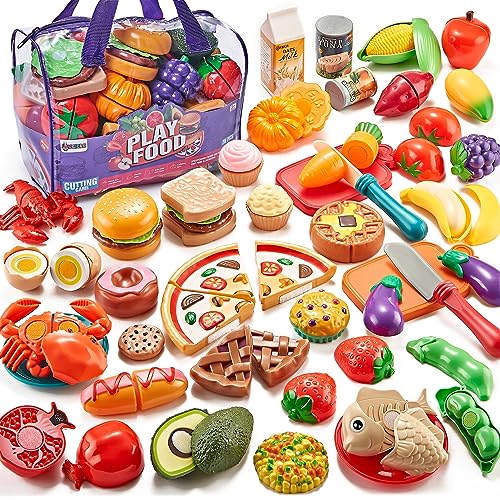
LAUGIGLE Pretend Play Food for Kids Kitchen, 78Pc Cutting Toy Food with Storage Bag
- Creative Play Food Set: Encourages creativity and sensory development
- Extensive Food Variety: Includes pizza, burgers, desserts, fruits, and more
- Complete Cooking Accessories: Sturdy knives and utensils included
As an affiliate, we earn on qualifying purchases.
As an affiliate, we earn on qualifying purchases.
Frequently Asked Questions
How Can I Ensure Sensory Play Remains Hygienic and Safe?
To keep sensory play hygienic and safe, establish regular cleaning routines for all materials used. Wash toys and play areas with soap and water, and disinfect as needed. Choose materials that prioritize safety and are non-toxic, guaranteeing they’re specifically made for sensory activities. Always supervise your toddler, and encourage hand washing afterward. These steps help prevent germs and ensure a safe, enjoyable sensory experience.
Are There Allergy Risks With Taste-Safe Sensory Materials?
Like a tightrope walker, you need to balance risk and safety. Yes, there are allergy risks with taste-safe sensory materials, especially if allergies run in your family. To avoid allergies, focus on ingredient safety by choosing products with clear labels and avoiding common allergens. Always monitor your toddler during play, and consult your doctor if you suspect any allergic reactions. Proper allergy prevention ensures safe, enjoyable sensory experiences.
At What Age Is Taste-Safe Sensory Play Appropriate?
You can introduce taste-safe sensory play as early as 6 months, once your baby shows curiosity about textures and flavors. Use safe ingredients like mashed fruits or cooked grains to minimize allergy risks. Taste-safe sensory play offers benefits like developing oral motor skills and exploring new textures safely. Always supervise your child closely, and consult your pediatrician if there are known allergies or concerns before introducing new taste-safe ingredients.
How Do I Introduce New Textures Safely to My Toddler?
Think of introducing new textures as opening a treasure chest, one safe gem at a time. You should start with familiar, safe materials like cooked pasta or soft fruits, guiding your toddler’s texture exploration. Always prioritize safe material selection, avoiding small or choking hazards. Supervise closely, and let your child gently explore each new texture at their own pace, building confidence and curiosity in a safe, joyful way.
Can Sensory Play Help With Sensory Processing Disorders?
Yes, sensory play can help with sensory processing disorders by promoting sensory integration, allowing your toddler to better understand and adapt to different stimuli. Through engaging activities, they develop improved motor skills, emotional regulation, and focus. The developmental benefits include enhanced neural connections and increased confidence in handling sensory input. Consistent, safe sensory play creates a supportive environment where your child can gradually improve their sensory processing skills.
Conclusion
As you explore these taste-safe sensory play ideas, remember that your child’s joy and curiosity are priceless. Watching them delight in simple, safe textures and flavors creates memories more vibrant than any toy. In a world filled with worries, these moments of pure discovery bring a tender sense of wonder and trust. Embrace these playful, safe experiences—they’re the sweetest gifts you can give your little one on their journey of exploration.