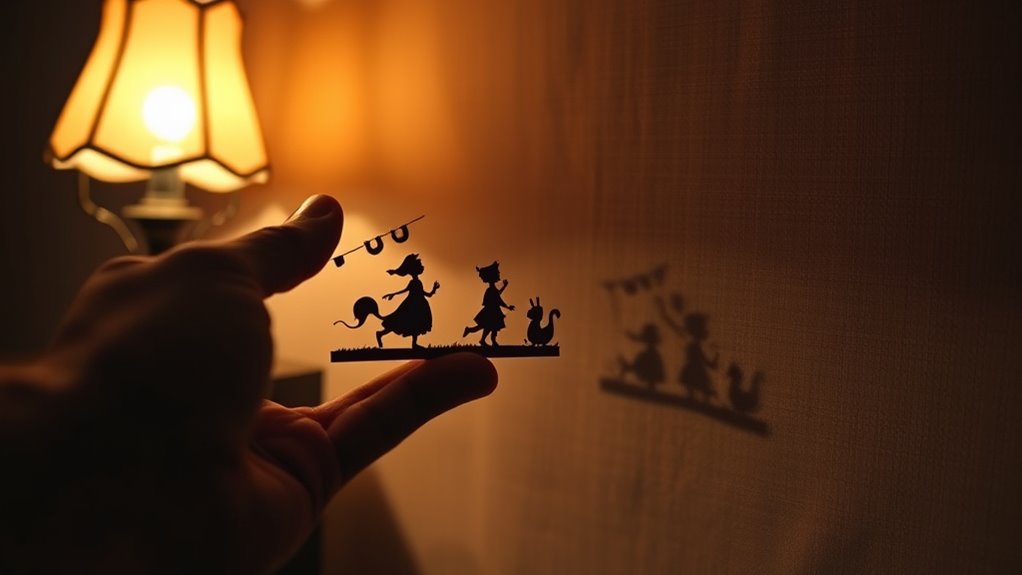

To build a simple shadow theater, start by setting up a light source behind a screen or white sheet, with a plain background opposite it. Create puppets from sturdy paper, add sticks for maneuvering, and position them behind the screen. Make sure the light casts clear shadows onto the background. Practice moving them smoothly to tell your story. For more tips and creative ideas, keep exploring ways to enhance your shadow theater experience.
Key Takeaways
- Set up a light source behind puppets and a plain background to cast clear shadows.
- Use sturdy paper or cardboard to create detailed shadow puppets with attached sticks for easy manipulation.
- Position the background opposite the light source at a suitable distance for sharp, visible shadows.
- Practice puppet movements to effectively depict story actions and emotions.
- Enhance storytelling with creative use of light, shadow effects, and simple materials for a captivating performance.
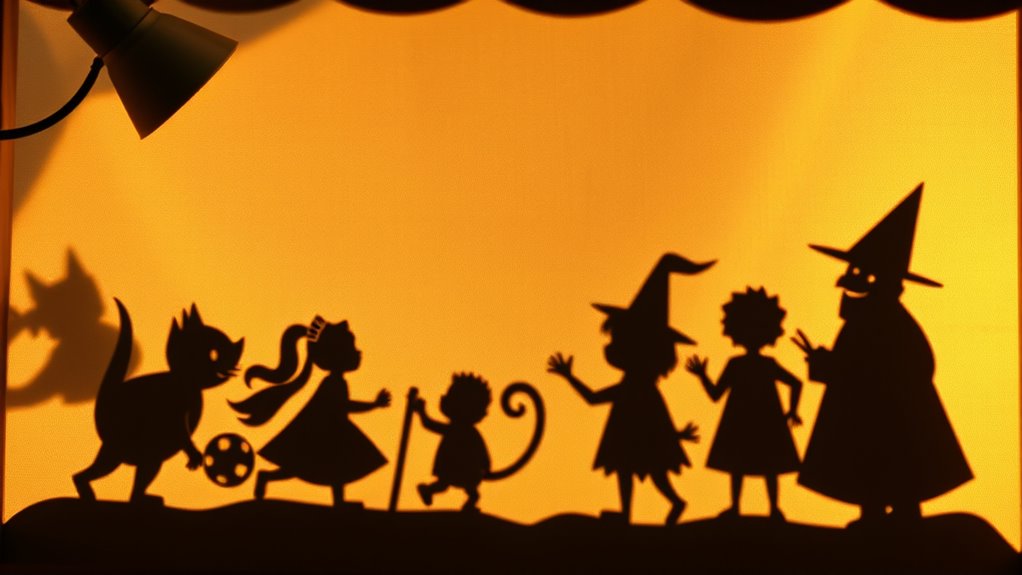
Have you ever wondered how to create your own shadow theater at home? It’s easier than you might think, and it offers a fun way to bring stories to life using simple materials. The key elements are shadow puppets and a good setup for theatrical storytelling. With just a few supplies, you can craft a mesmerizing shadow theater that will entertain and inspire.
Start by gathering some sturdy paper or cardboard for your shadow puppets. You can draw your designs directly on the paper or print pictures to cut out later. Use scissors to carefully cut out your figures, making sure they’re detailed enough to convey expressions and actions. Attaching small sticks or skewers to the puppets will make them easier to manipulate during your show. When you set up your shadow theater, you’ll want a plain, light-colored background—like a blank wall or a white sheet—opposite your light source. Position your light source behind the puppets, such as a desk lamp or flashlight, so that their shadows project clearly onto the background.
Creating shadow puppets not only enhances your story but also adds an engaging visual element. You can craft characters, animals, or objects that fit your chosen tale. As you manipulate these puppets behind the screen, you bring your story to life through theatrical storytelling. The movements of your shadow puppets can depict action, emotion, and interaction, transforming a simple setup into an immersive experience. To make your story even more dynamic, consider using different puppet sizes, or layering shadows for depth. Playing with light and shadow can create effects like glowing outlines or silhouettes that change as you move the puppets. Additionally, understanding how merchant services facilitate secure and efficient payment options can inspire you to incorporate storytelling about commerce or trade into your shadow play.
A successful shadow theater isn’t just about the puppets but also about the storytelling. Think about a narrative or theme beforehand, and plan your movements accordingly. Use voice, sound effects, or music to enhance the atmosphere. As you tell your story through shadow puppets, you’ll notice how the visual element captures your audience’s attention and sparks their imagination. The key is to practice smooth puppet movements and experiment with different shapes and sizes to keep your story engaging.
Building a simple shadow theater is a wonderful way to explore creative storytelling and theatrical arts at home. By crafting your own shadow puppets and designing a setup for theatrical storytelling, you turn everyday materials into a magical stage. Whether for a family activity or solo fun, this project invites you to experiment with light, shadow, and narrative—all within the comfort of your own space. It’s a simple, accessible way to ignite your creativity and share stories that will delight everyone watching.

CMFYDAILY Pikler Triangle Set, 7 in 1 Foldable Climbing Toys Set for Kids, Baby Jungle Gym with Ramp & Arch, Wooden Montessori Climbing Set Indoor for Toddler (Colorful)
Fun Montessori Climbing Set: CMFYDAILY Pikler Triangle Set encourages confidence, balance, and independence through guided games - perfect...
As an affiliate, we earn on qualifying purchases.
Frequently Asked Questions
What Materials Are Safest for Children When Building the Theater?
You should choose child safe materials that are non-toxic options when building your shadow theater. Opt for smooth, untreated wood or sturdy cardboard, both of which are safe and easy for children to handle. Avoid sharp edges or small parts that could pose choking hazards. Using washable, non-toxic paints and glues guarantees safety and easy cleanup. Always supervise children during construction to keep the experience safe and fun.
How Can I Make the Shadows More Vibrant and Clear?
Think of your shadows as blank canvases waiting for a splash of color. To make them more vibrant and clear, focus on perfecting your color enhancement techniques by using bright, opaque materials for your cutouts. Position your light source carefully—directly behind the puppets and at an angle—to cast sharp, crisp shadows. Adjusting light positioning and choosing vivid materials will turn your shadow theater into a lively, mesmerizing show.
What Are Some Common Troubleshooting Issues During Construction?
You might face troubleshooting issues like unstable frames or dim shadows. To fix this, make sure your lighting adjustments are *ideal*—use a strong, consistent light source. Check that your frame is stable and well-constructed, tightening joints if needed. Also, ensure the background surface is smooth and opaque. These steps will help your shadow theater work smoothly, producing clear, vibrant shadows without wobbling or blurring.
How Do I Create Different Shadow Effects With Simple Tools?
Imagine your shadows dancing like flickering flames on a wall. To create different effects, experiment with shadow puppet techniques—adjustting the size, shape, and movement of your puppets. Play with lighting adjustments: move your light source closer for sharper shadows or farther for softer ones, and change angles to cast dramatic silhouettes. Use simple tools like flashlights, cutouts, and your hands to craft a variety of mesmerizing shadow effects effortlessly.
Can This Shadow Theater Be Adapted for Outdoor Use?
Yes, you can adapt your shadow theater for outdoor use. Consider outdoor lighting considerations to guarantee visibility, like using bright, weather-resistant light sources. Weatherproofing techniques, such as waterproofing the frame and covers, protect your setup from rain and wind. Secure everything firmly to withstand wind gusts, and choose durable, weather-resistant materials. With these adjustments, your shadow theater can provide entertainment outdoors, rain or shine.

Tiny Land Pikler Triangle Set,7-in-1 Foldable Montessori Toddler Climbing Toys Indoor, Wooden Playground Jungle Gym for Kids, Climber Gift for Boys & Girls Toddler Climbing Toys (Morandi)
Tiny Land New Design Montessori Climbing Set: Crafted with a focus on both safety and aesthetics, this Montessori...
As an affiliate, we earn on qualifying purchases.
Conclusion
Now that you’ve built your shadow theater, you hold a world of stories in your hands. With just a light and some cutouts, you can create adventures brighter than the sun and mysteries deeper than the night. Remember, your imagination is the only limit—your shadows dance to your dreams. So, go ahead, turn off the lights, and let your stories shine like stars in a night sky, waiting to be discovered.

CMFYDAILY Pikler Triangle Set, 7 in 1 Foldable Climbing Toys Set for Kids, Baby Jungle Gym with Ramp & Arch,Wooden Montessori Climbing Set Indoor for Toddler (Natural)
Fun Montessori Climbing Set: CMFYDAILY Pikler Triangle Set encourages confidence, balance, and independence through guided games - perfect...
As an affiliate, we earn on qualifying purchases.

CMFYDAILY Large Pikler Triangle Set, 7-in-1 Toddler Climbing Toys Indoor, Wooden Montessori Climbing Set with Arch Ramp Ladder, Foldable Baby Jungle Gym Playground (Rainbow)
7-in-1 Montessori Climbing Set:Includes a triangle ladder, an arch rocker, and a reversible ramp (one side for climbing,...
As an affiliate, we earn on qualifying purchases.