To teach preschoolers about color theory through play, you can create hands-on activities like mixing primary colors to discover new hues. Encourage them to explore shades, tints, and tones using washable paints and simple tools. Turn color identification into fun games and foster curiosity by guiding them to predict and observe color changes. As they experiment and share their discoveries, they’ll build confidence and a love for learning about colors—keep exploring for more creative ideas.
Play games included with Prime
Start a Prime free trial and play with Amazon Luna on your devices.
As an affiliate, we earn on qualifying purchases.
Key Takeaways
- Use hands-on activities like mixing primary colors to teach color creation and build foundational color knowledge.
- Incorporate shade recognition and sorting games to develop visual perception and expand vocabulary.
- Set up engaging color stations with paints and tools to encourage exploration and prediction of color outcomes.
- Focus on experimentation and discovery to foster curiosity, confidence, and a positive learning environment.
- Promote creativity by allowing free exploration and emphasizing the importance of curiosity in understanding colors.
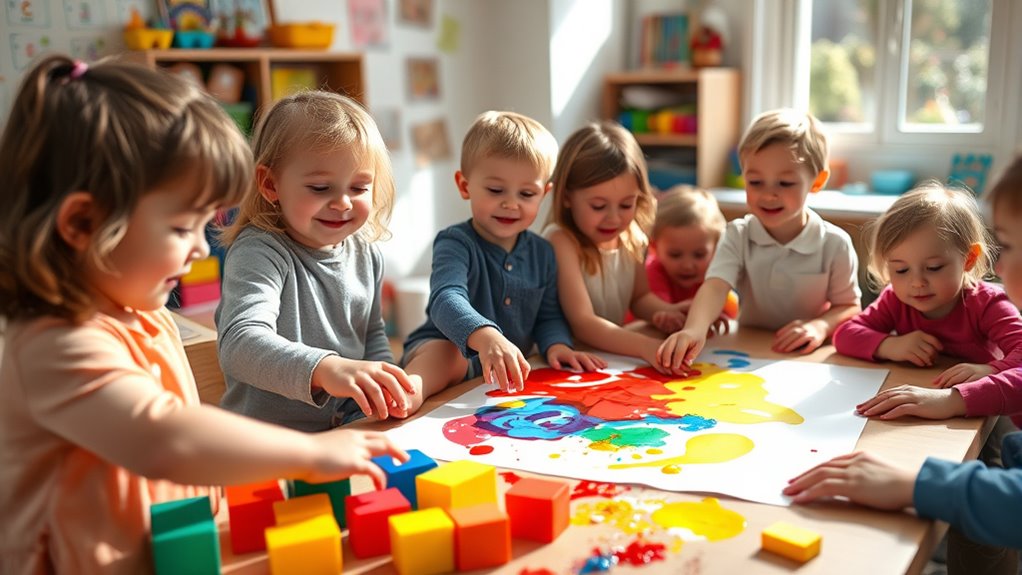
Introducing color theory to preschoolers can be both fun and educational, helping young children understand how different colors work together. One of the best ways to do this is through hands-on activities like mixing primary colors. When you encourage children to blend red, blue, and yellow, they discover firsthand how new colors emerge. For example, mixing red and blue creates purple, while yellow and blue make green. These simple experiments help them see that colors are not fixed but can change based on how they’re combined. As they experiment, kids also learn to identify shades, recognizing that colors like sky blue and navy are variations of the same hue. This process enhances their visual perception and vocabulary, as they begin to describe different shades confidently.
You can make mixing primary colors even more engaging by setting up a color station with washable paints, brushes, and mixing palettes. Invite children to explore by adding small amounts of one color into another, observing the gradual transformation. As they see the results, you’ll notice their curiosity grow, and they’ll start predicting what new color might appear when they add certain paints. This active experimentation reinforces their understanding of how primary colors are the foundation for all other hues. Additionally, introducing the concept of color mixing techniques helps children grasp the process of creating a full spectrum of colors from basic primaries.
Identifying shades is another key part of introducing color theory. Young children can start by sorting objects or pictures based on their shades—light pinks, dark greens, pastel yellows. You can turn this into a fun matching game, encouraging them to find items around the room that match specific shades. This activity sharpens their ability to distinguish subtle differences in color, which is vital for developing a sophisticated understanding of color relationships. Plus, it’s a great way to build their vocabulary, teaching words like “tint,” “shade,” and “tone” in context.
Throughout these activities, keep the focus on exploration rather than perfection. Children learn best when they’re encouraged to experiment freely and share their discoveries. Celebrate their successes and curiosity, and offer gentle guidance when they’re trying to identify shades or predict color outcomes. By integrating these playful, interactive methods, you help preschoolers grasp the fundamental concepts of color theory in a way that’s engaging and memorable. Ultimately, you’re not just teaching them about colors—you’re nurturing their creativity and confidence in exploring the vibrant world around them.
Frequently Asked Questions
How Can Parents Incorporate Color Mixing at Home Safely?
You can incorporate safe paint mixing at home by choosing non-toxic, washable paints suitable for preschoolers. Set up age-appropriate color activities, like mixing primary colors to create new shades, in a well-ventilated area. Always supervise your child closely to guarantee safe handling of paints. Use small containers and brushes, and teach them about color blending in a fun, engaging way, making the experience both safe and educational.
What Are Some Signs a Child Is Developing Color Recognition Skills?
You’ll notice your child showing strong signs of developing color recognition skills when they can identify and name basic colors like red, blue, and yellow. They might also demonstrate improved visual discrimination by distinguishing between similar shades and correctly matching colors during activities. If your child sorts objects by color or points out colors in their environment, it’s a clear indication they’re enhancing their color identification and visual discrimination abilities.
Are There Specific Colors That Stimulate Preschoolers’ Brains More?
Think of colors as keys to a child’s emotional symphony. Bright reds and yellows often stimulate excitement and energy, making them more engaging for preschoolers. Blues and greens tend to evoke calmness and focus, helping them feel secure. While individual preferences vary, introducing a variety of colors can spark curiosity and positive emotional responses, enriching their learning experience. Pay attention to their reactions to discover which colors resonate most with them.
How Can Teachers Adapt Color Activities for Children With Visual Impairments?
You can adapt color activities for children with visual impairments by incorporating tactile color activities and using adaptive visual tools. Provide textured objects in various colors to engage their sense of touch, and incorporate contrasting colors with high visibility. Use large, bold, and tactile markers or overlays on materials, ensuring children can explore colors through multiple senses. These adaptations make learning inclusive, stimulating their curiosity and understanding of colors effectively.
What Are Some Common Color-Related Mistakes to Avoid in Preschool Activities?
Think of your activities as a vibrant garden; avoid common color mistakes that can hinder growth. Be mindful of color blindness awareness, ensuring you don’t rely solely on color cues—use textures and shapes instead. Steer clear of paint toxicity concerns by choosing non-toxic, child-safe paints. Never assume all children see colors the same way, and always provide inclusive, sensory-rich experiences that foster understanding and safety for every little gardener.
Conclusion
So, next time your preschooler insists that purple is just a fancy word for “pretty,” remember, they’re actually mastering color theory—one giggle at a time. Who knew that mixing red and blue could be a revolutionary act, or that a splatter of paint could teach patience? So let them play, because in their tiny hands, the future of art, and maybe even the universe, is just a splash away.
Fall yard work Picks
leaf blowers
As an affiliate, we earn on qualifying purchases.