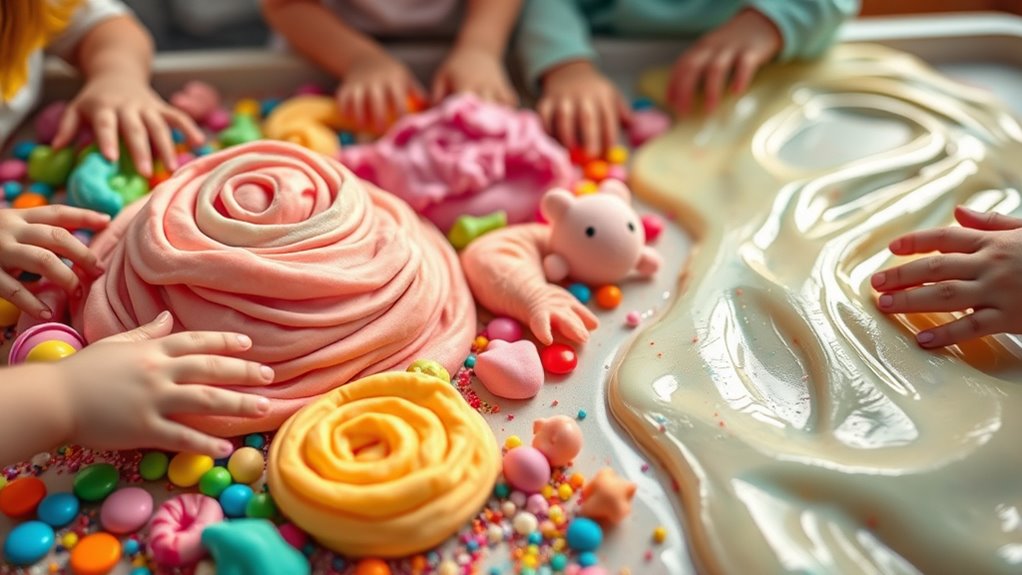

Preschool sensory play is essential for your child’s development, offering hands-on exploration through activities like playdough and slime. These experiences strengthen fine motor skills, boost focus, and encourage social interactions, all while providing comfort with different textures. Creating safe and engaging sensory environments helps your little one process environmental cues effectively. By exploring diverse textures and materials, your child builds a strong foundation for learning. Keep exploring to discover even more ways to make sensory play fun and beneficial.

Get baby and family essentials delivered free — and shop member deals
- Fast, free delivery on millions of items
- Access to Prime Big Deal Days deals on October 6–7
- Prime Video, Amazon Music and more included
Key Takeaways
- Sensory play with materials like playdough and slime enhances tactile exploration and fine motor skills in preschool children.
- Making slime introduces children to chemical reactions, promoting scientific curiosity and understanding.
- Using sensory bins with different textures supports sensory integration and environmental awareness.
- Safe, non-toxic materials ensure a secure, mess-controlled environment for engaging sensory activities.
- Incorporating diverse textures in activities fosters overall sensory development and deepens learning experiences.

Sensory play is a vital part of preschool development, helping young children explore the world through their senses. When you encourage sensory activities, you’re supporting their sensory integration, which is indispensable for organizing and processing sensory information effectively. This process helps children respond appropriately to their environment, improving their ability to focus, learn, and interact with others. One of the most engaging ways to promote sensory integration is through tactile exploration, where children use their hands and bodies to experience different textures, temperatures, and sensations.
As a caregiver or educator, you can provide a variety of tactile experiences that stimulate sensory exploration. For example, playing with soft, squishy playdough allows children to squeeze, roll, and shape, giving them direct contact with a malleable surface. These activities not only strengthen fine motor skills but also help children become more comfortable with different textures. Similarly, slime science offers a fantastic blend of tactile exploration and scientific discovery. Making slime involves mixing ingredients like glue, borax, or contact lens solution, which transforms into a gooey substance that kids can stretch, squish, and mold. The process itself provides sensory input that enhances their understanding of chemical reactions while engaging their senses.
You should consider the importance of providing a safe and clean environment for these activities. Children naturally want to explore with their hands, but it’s vital to use non-toxic materials and supervise closely to prevent ingestion or messes. Incorporating sensory bins filled with rice, beans, or sand can also be very effective for tactile exploration. These bins invite children to dig, scoop, and sift, helping them refine their motor skills and engage their senses deeply. Additionally, understanding the benefits of sensory play can motivate caregivers to integrate more sensory-rich activities into their routines, fostering their overall development. By offering a variety of textures—smooth, rough, sticky, or gritty—you help your preschoolers develop a richer sensory experience that lays the foundation for more complex learning.
Frequently Asked Questions
How Does Sensory Play Support Language Development in Preschoolers?
Sensory play boosts your preschooler’s language development by encouraging verbal interactions, where they describe textures, actions, and outcomes. As they explore materials like playdough or slime, they naturally expand their vocabulary, learning new words related to their sensory experiences. You can support this by asking questions and encouraging them to express their feelings and observations, which strengthens their communication skills and builds a solid language foundation.
What Are Safe Alternatives to Commercial Slime for Young Children?
You can make safe, homemade slime using non-toxic ingredients like glue, baking soda, and saline solution or contact lens solution. Always choose non-toxic, kid-friendly products and supervise your child during play. Avoid harsh chemicals, and opt for natural alternatives such as cornstarch and water for a fluffy slime. These options provide fun sensory experiences while ensuring safety, encouraging your child’s creativity without exposure to harmful substances.
How Can Parents Encourage Creativity During Sensory Activities?
You can encourage creativity during sensory activities by giving your child creative prompts and open-ended questions, like “What shape or color do you want to make?” or “How does this feel?” These prompts inspire imagination and problem-solving. Allow them to experiment freely, explore textures, and combine materials. Supporting their ideas and asking questions helps foster confidence and creative thinking, making sensory play both fun and educational.
Are There Specific Sensory Play Activities for Children With Allergies?
You can definitely find allergy-friendly activities using hypoallergenic materials that are safe for children with allergies. Try sensory play with gluten-free, dye-free slime, or natural clay made from safe ingredients. These activities provide engaging sensory experiences without risking allergic reactions. By choosing hypoallergenic options, you guarantee fun and safety, making sensory play inclusive and enjoyable for all children, regardless of allergies.
How Often Should Preschoolers Engage in Sensory Play for Optimal Benefits?
You should aim for a consistent sensory schedule, engaging preschoolers in sensory play at least 3 to 4 times a week. This play frequency helps build their sensory processing skills, boosts creativity, and supports emotional regulation. Keep activities varied and age-appropriate to maintain interest and maximize benefits. Regular sensory play becomes a essential part of their development, so stay attentive to their responses and adjust the play schedule as needed.
Conclusion
As you guide your little one through the world of sensory play, you’re opening a treasure chest of discovery. Each squish, stretch, and swirl becomes a brushstroke on their canvas of understanding, turning simple materials into vibrant adventures. Imagine their tiny hands as explorers charting a colorful, tactile landscape, where every feel sparks curiosity and joy. Embrace these moments—they’re the seeds of lifelong learning, blooming beautifully through the magic of play.
Halloween Picks
halloween
As an affiliate, we earn on qualifying purchases.