
To guide safe risk-taking during everyday play, encourage children to explore within safe boundaries while evaluating risks. Support their decision-making by asking guiding questions like, “Do you feel ready?” and help them consider potential outcomes. Model responsible behavior, wear protective gear when appropriate, and use visual cues to reinforce safety rules. By fostering confidence and independence, you enable kids to learn from safe challenges—continue, and you’ll discover more ways to support their growth.

Turn the school run and nap time into listening time
- Thousands of audiobooks, podcasts and originals
- Listen on your phone, tablet or Echo — also offline
- Cancel anytime
Key Takeaways
- Encourage children to assess risks by asking guiding questions like, “Do you feel ready?” and “What might happen?”
- Model safe behaviors by demonstrating thoughtful risk assessment and wearing protective gear when appropriate.
- Create a safe environment using visual aids and clear boundaries to promote responsible decision-making.
- Support children’s confidence by allowing safe exploration and helping them learn from experiences without fear.
- Balance safety with independence by setting protective limits while empowering children to explore within safe boundaries.
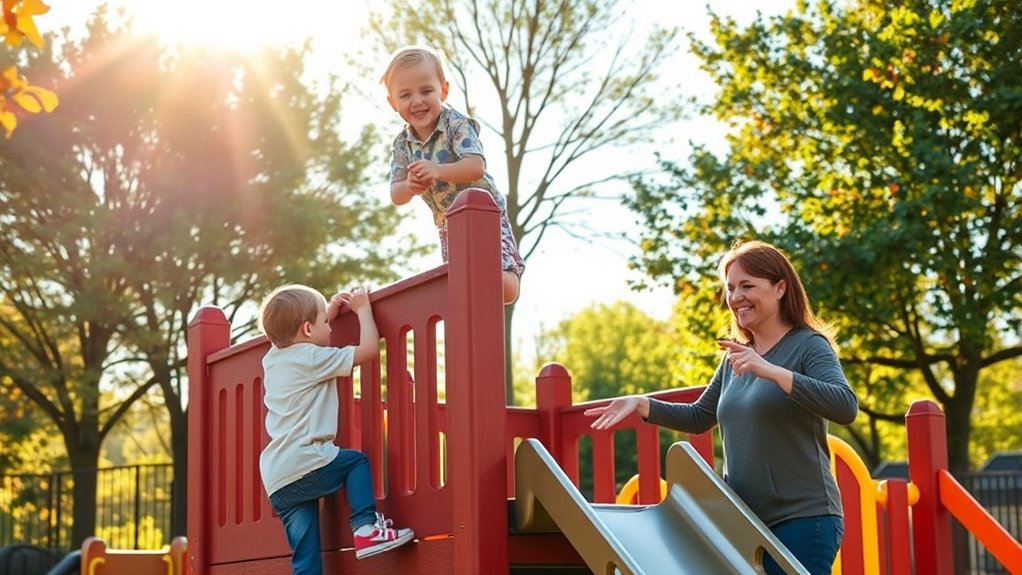
Have you ever wondered how to encourage boldness without risking unnecessary harm? It’s a delicate balance, but one that’s vital for helping children develop confidence and resilience. When guiding safe risk-taking in everyday play, you’re fundamentally balancing freedom with safety, creating an environment where kids can explore their limits while knowing they’re protected. This approach fosters independence, allowing children to learn from their experiences without feeling overwhelmed or unsafe.
To do this effectively, you need to provide children with enough freedom to challenge themselves, but within boundaries that prevent serious injury. For example, if a child wants to climb higher on a jungle gym, you can encourage that ambition while ensuring the equipment is sturdy and the ground beneath is soft enough to cushion falls. This way, you’re supporting their desire to push boundaries while minimizing potential harm. It’s about creating a space where kids feel empowered to take risks, knowing they’re backed by safety measures and your guidance.
Fostering independence plays a vital role here. When children are given opportunities to make decisions about their play, they learn to assess risks and develop judgment. Instead of constantly stepping in to prevent every stumble, you can guide them to think about safety and consequences. Ask questions like, “Do you feel ready to try that?” or “What do you think might happen if you do this?” This encourages kids to weigh their options and build confidence in their own decision-making skills. Over time, this nurtures a sense of autonomy, helping them grow into self-reliant individuals who understand their limits and capabilities.
It’s also important to model safe behavior yourself. Children learn a lot by watching adults, so demonstrate how to assess risks thoughtfully. When you encourage a child to take a chance, show them how to do it responsibly—such as checking for obstacles before jumping or wearing protective gear when needed. Praising their efforts when they take safe risks reinforces positive behavior and boosts their willingness to try new things.
Additionally, understanding projector technology can help you create a safer, more engaging environment for children by providing visual aids that clarify boundaries and safety procedures, further supporting risk awareness and responsible decision-making.
As an affiliate, we earn on qualifying purchases.
Frequently Asked Questions
How Can I Encourage Children to Take Safe Risks Independently?
You can encourage children to take safe risks by supporting their risk assessment skills and understanding their developmental milestones. Offer opportunities that challenge them appropriately and guide them through evaluating potential dangers. Praise their efforts and decision-making, helping them build confidence. Create a safe environment where they feel comfortable exploring. By doing so, you foster independence, resilience, and healthy risk-taking, ensuring they learn from experiences while staying safe.
What Signs Indicate a Child Is Ready for More Challenging Activities?
Did you know that 85% of children reach key developmental milestones by age five? You’ll notice signs like increased coordination, curiosity, and confidence when a child is ready for more challenging activities. Look for their ability to assess risks, demonstrate improved balance, or show interest in trying new tasks. These are clear indicators they’re developing the skills needed for safe risk assessment and are ready to explore at a higher level.
How Do I Balance Safety With Encouraging Adventurous Play?
You balance safety with adventurous play by choosing age-appropriate playground equipment and setting clear boundaries. Use supervision strategies like attentive watching and engaging with children to monitor risks without stifling their exploration. Encourage them to try new challenges while providing support and guidance. This way, you foster confidence and independence, ensuring they enjoy exciting activities safely and develop essential skills through positive risk-taking.
What Are Common Fears Parents Have About Risky Play?
You might worry that risky play leads to injuries, yet you also want your child to develop confidence and resilience. Supervision concerns often make you hesitant, fearing accidents or injuries despite knowing some risks are natural and beneficial. You wrestle with balancing safety and adventure, concerned that overprotectiveness could hinder your child’s growth. Ultimately, your fears stem from wanting to prevent injury while allowing your child to explore and learn through safe risk-taking.
How Can I Respond to a Child’s Fear of Trying New Risks?
You can help your child by validating their fear and encouraging a risk assessment together. Talk about what might happen and how they can stay safe. Praise their efforts to try new things, fostering emotional resilience. Offer support and reassurance, showing them that risks are opportunities to learn and grow. Gradually, they’ll build confidence, understanding that taking safe risks is a valuable part of play and development.
Conclusion
As you encourage safe risk-taking in play, you’ll discover that sometimes, the most meaningful growth happens unexpectedly. It’s funny how a simple leap or a hesitant step can reveal new strengths you hadn’t seen before. By trusting children to explore within safe boundaries, you create opportunities for resilience and confidence to develop naturally — almost as if the right moment just happens to align perfectly, reminding you that safety and adventure often go hand in hand.
Fall Picks
fall essentials
As an affiliate, we earn on qualifying purchases.