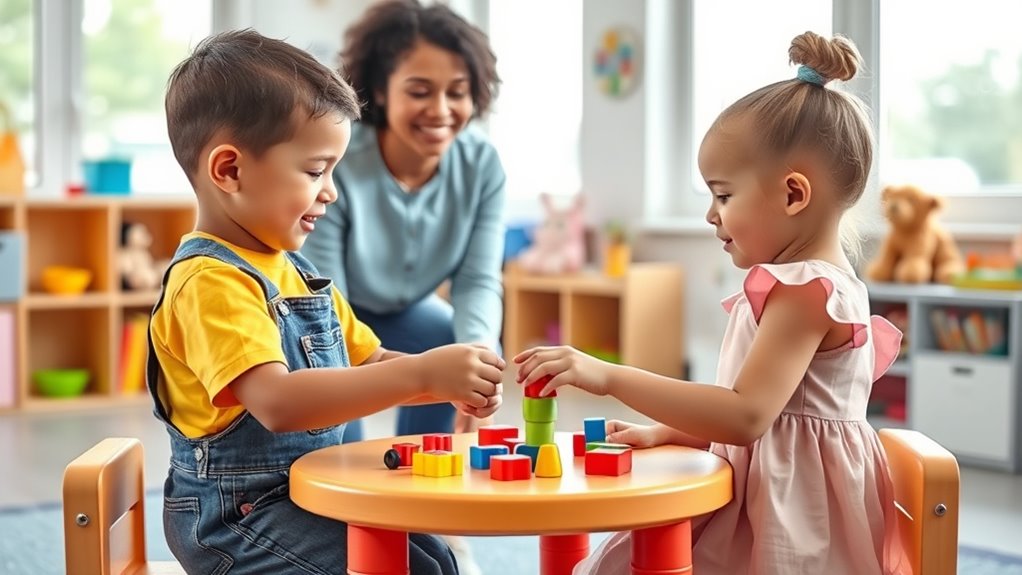

To guarantee a safe and enjoyable playdate for preschoolers, set clear rules about sharing, taking turns, and respecting personal space. Supervise closely to prevent rough play or accidents, and choose a safe, clutter-free environment. Encourage polite communication and model kind behavior. Keep toys age-appropriate and check for hazards. Promoting good hygiene, such as handwashing, is also key. If you want practical tips on maintaining smooth and safe playdates, there’s more to explore.
Key Takeaways
- Establish clear rules for sharing, turn-taking, and respectful behavior before the playdate begins.
- Supervise children closely to prevent rough play or hazards, and intervene calmly if needed.
- Ensure the play area is safe, clean, and free of small or sharp objects that could cause injuries.
- Teach children polite asking for toys and respecting others’ personal space during play.
- Promote hygiene by encouraging handwashing and confirming all children are healthy and up to date on vaccinations.
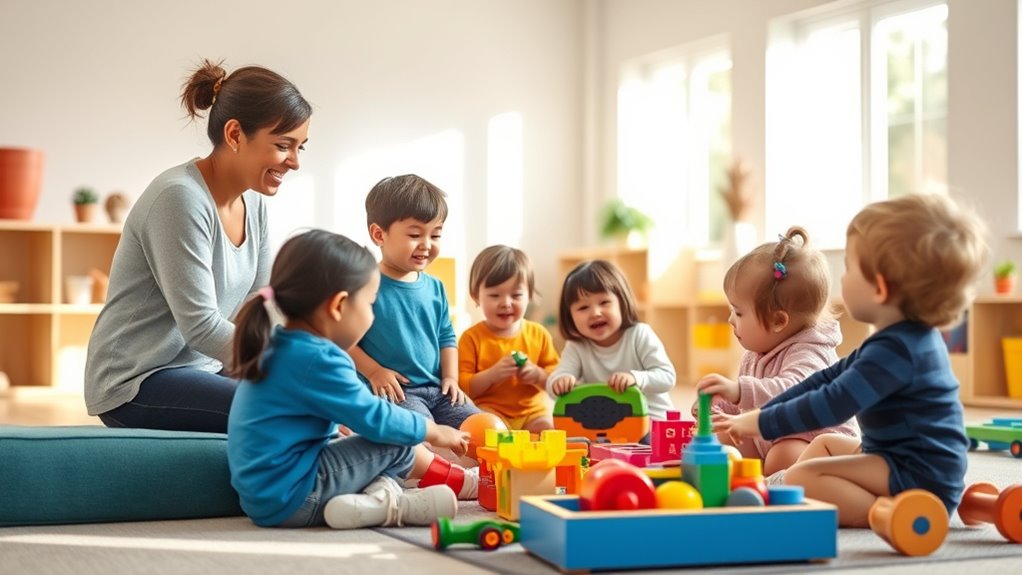
Hosting a playdate for preschoolers can be a fun way for kids to socialize and develop important skills, but it also requires some basic etiquette and safety precautions. One key aspect to focus on is teaching children about sharing toys. Preschoolers are still learning about taking turns and understanding that toys can be enjoyed by everyone. To facilitate this, you can set clear expectations beforehand, like encouraging kids to ask politely if they want to play with a certain toy or to share their own items willingly. When disputes arise, calmly intervene and remind everyone that sharing is kind and helps everyone have fun. Providing enough toys and materials can reduce conflicts, so consider setting out a variety of options to keep all children engaged and prevent possessiveness.
In addition to sharing toys, guiding children toward appropriate behavior is essential. Preschoolers often test boundaries and need gentle reminders about how to treat others. Encourage them to use kind words, listen when someone is speaking, and respect each other’s space. If a child is being rough or aggressive, step in immediately to explain that such actions can hurt feelings or cause accidents. Reinforce positive behavior by praising children when they demonstrate patience, kindness, or cooperation. Consistency is key — setting clear rules and adhering to them helps children understand what’s expected of them, making the playdate smoother and more enjoyable for everyone. Incorporating Montessori principles into play can further enhance their learning experiences by emphasizing independence and hands-on activities.
Safety should always be a top priority. Before the playdate begins, inspect the area for hazards, such as sharp objects, small items that could be swallowed, or unstable furniture. Keep a close eye on the children, especially during active play, to ensure they aren’t engaging in risky behavior or wandering into unsafe areas. Establish boundaries and gently remind kids to stay within designated play zones. If any disputes or accidents happen, address them calmly and promptly. Having a first aid kit nearby and knowing basic first aid can make a big difference if an injury occurs. Also, confirm that all children are up to date on vaccinations to prevent the spread of illnesses.
Frequently Asked Questions
How Do I Introduce My Child to New Playmates?
When introducing your child to new playmates, start by sharing interests to create an instant connection. Use conversation starters like asking about favorite toys or games to break the ice. Encourage your child to be friendly and welcoming, modeling good sharing habits and active listening. Keep the atmosphere relaxed, allowing kids to naturally bond over common interests. This approach helps foster new friendships and makes playdates enjoyable for everyone involved.
What Should I Do if My Child Has a Tantrum During a Playdate?
When your child has a tantrum during a playdate, stay calm and use calming techniques like deep breathing or offering a comfort item. Encourage emotional regulation by gently acknowledging their feelings, saying something like, “I see you’re upset,” and give them space if needed. Remove them from the situation temporarily if necessary, and reassure them with your presence. This helps them learn to manage their emotions effectively.
How Do I Handle Conflicts Between Preschoolers?
When conflicts arise over sharing toys or disagreements, you should stay calm, listen to each child’s perspective, and guide them through conflict resolution. Encourage them to express their feelings, suggest taking turns, and find common ground. Reinforce positive behaviors by praising cooperation and sharing. By modeling respectful communication and providing clear boundaries, you help preschoolers learn how to handle conflicts constructively and develop essential social skills.
When Is It Appropriate to Leave a Playdate Early?
You should consider leaving a playdate early when you notice clear exit signals like your child becoming overwhelmed, tired, or showing signs of distress. Playdate timing is important; if it’s been going on too long or your child’s behavior suggests they need a break, it’s okay to politely wrap up. Trust your instincts and communicate kindly, ensuring your child feels safe and comfortable during the exit.
How Can I Teach My Child About Personal Boundaries?
You can teach your child about personal boundaries by emphasizing respectful communication and body autonomy. Explain that their body belongs to them, and they should say “no” if someone makes them uncomfortable. Use simple language and role-playing to practice saying “stop” or “I don’t like that.” Remind them that respecting others’ boundaries is equally important. Remember, teaching boundaries now will help them grow into confident and respectful individuals.
Conclusion
By following these playdate etiquette and safety tips, you can turn every get-together into a superhero adventure—where your preschooler’s safety is so airtight, even the sneakiest villains couldn’t slip through! When you set clear boundaries, teach kindness, and supervise closely, you’re not just hosting a playdate; you’re creating a fortress of fun and safety that could withstand a tornado of tiny tantrums and a tsunami of spilled juice. Now, go conquer the world of preschool playdates!