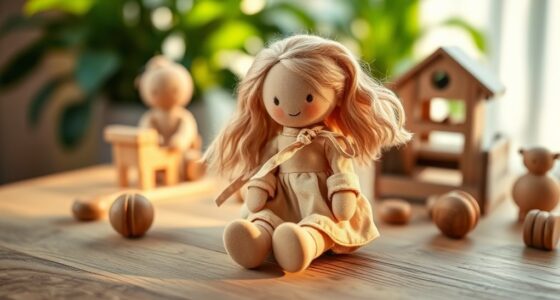

Waldorf nature tables are a wonderful way to bring seasonal stories into your home or business, inspiring curiosity and connection with nature. You can curate materials like leaves, twigs, shells, and flowers that reflect each season’s unique beauty, creating a sensory-rich environment. Arranging these items into story scenes helps children understand natural cycles and fosters wonder. Keep exploring to discover more ideas on creating engaging, meaningful seasonal displays that deepen connection and learning.

Turn the school run and nap time into listening time
- Thousands of audiobooks, podcasts and originals
- Listen on your phone, tablet or Echo — also offline
- Cancel anytime
Key Takeaways
- Create seasonally themed displays using natural materials like leaves, twigs, and stones to tell stories and reflect natural cycles.
- Incorporate storytelling by highlighting seasonal changes through visual cues and tactile objects on the table.
- Use seasonal crafts and natural materials to deepen children’s engagement and understanding of each time of year.
- Arrange items to visually represent the characteristics of spring, summer, autumn, and winter, fostering curiosity.
- Share stories that connect children to nature, enhancing their appreciation, wonder, and awareness of seasonal rhythms.

Waldorf nature tables are a beloved educational tool that bring the outdoors inside, inspiring children to explore and connect with the natural world. When you create a nature table at home, you set the stage for a rich, engaging environment where children can learn through direct experience. One of the most exciting aspects of a nature table is how it evolves with the seasons, offering a perfect backdrop for seasonal storytelling. As you gather natural materials—twigs, stones, leaves, and flowers—you naturally incorporate elements that reflect the current time of year, making the stories more meaningful and immersive. These seasonal stories help children understand the cycles of nature and develop a deep sense of place and rhythm in their lives.
To truly bring the seasons to life, you might incorporate nature-inspired crafts into your routine. For example, during spring, you could craft simple flower crowns or make bird nests from twigs and moss. In summer, you might create leaf prints or seashell art to enhance the table’s display. Autumn invites you to gather colorful leaves and acorns, turning them into collages or small sculptures. Winter, on the other hand, could see you making snowflake cutouts or decorating with pinecones and evergreen branches. These crafts not only deepen children’s appreciation for the natural materials but also serve as a tactile extension of the seasonal storytelling. As children handle these objects, they develop fine motor skills and a sensory connection to the natural world.
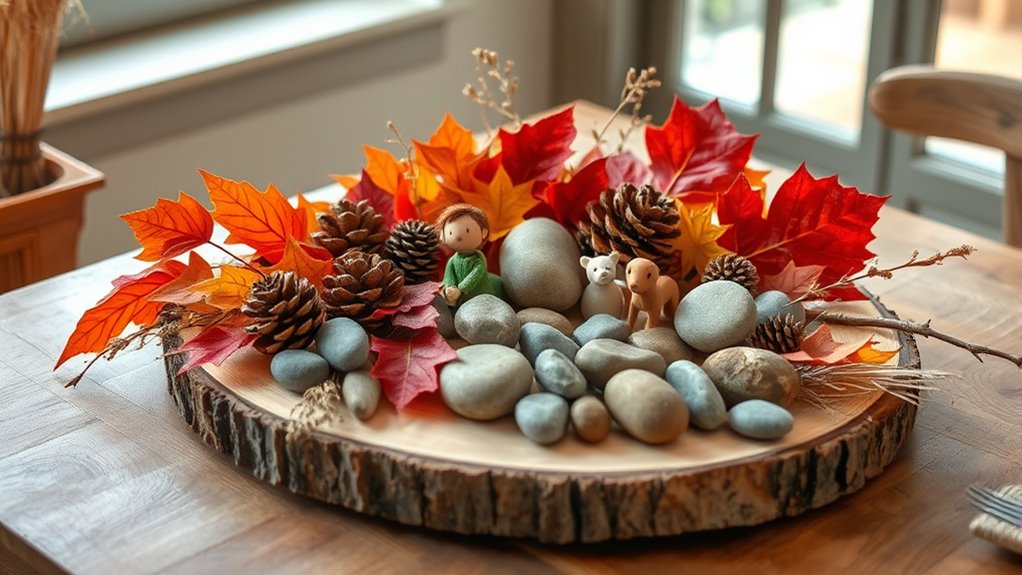
When you arrange your nature table, think about how the items tell a story of the season. For example, a spring table might feature budding branches, fresh blossoms, and a small nest with eggs, illustrating new life. Summer can include ripe berries, seashells, and bright flowers, evoking warmth and abundance. Autumn might showcase pumpkins, colorful leaves, and acorns, emphasizing harvest and change. Winter can be represented with snow-dusted pinecones, icicles, and evergreen boughs, capturing the quiet beauty of the season. As you tell seasonal stories around the table, you help children see the connections between what they observe outdoors and the stories you share. This strengthens their understanding of nature’s rhythms and fosters a sense of wonder and curiosity.
As an affiliate, we earn on qualifying purchases.
Frequently Asked Questions
How Can I Adapt Nature Tables for Small Children?
You can adapt nature tables for small children by using miniature figures and natural textures they can easily handle and explore. Keep the display simple and inviting, focusing on tactile elements like smooth stones, soft moss, or wooden pieces. Incorporate seasonal items to tell stories, and encourage hands-on interaction. This approach helps young kids connect with nature while fostering their creativity and sensory development in a safe, engaging way.
What Materials Are Safest for Outdoor-Inspired Displays?
You might think outdoor-inspired displays are all about rustic charm, but safety matters most. Choose natural materials that prioritize natural material safety, avoiding treated woods or plastics. Look for durable outdoor materials like untreated stones, shells, and sturdy wood that can withstand weather without harmful chemicals leaching. By selecting safe, durable materials, you guarantee your display endures nature’s whims while keeping your children safe and inspired by the outdoors.
How Often Should I Update My Seasonal Nature Table?
You should update your seasonal nature table with each seasonal change, typically every few weeks. This display frequency helps reflect the natural rhythms and keeps the stories fresh. As seasons shift, gather new materials and arrange them to mirror the current environment. Regular updates keep your child engaged and foster a deeper connection to nature’s cycles, making the display a meaningful part of your home’s seasonal rhythm.
Can I Incorporate Recycled or Eco-Friendly Items?
Imagine you’re crafting a timeless story, not just a modern one. Yes, you can incorporate recycled materials and eco-friendly choices into your nature table, making it more sustainable. Using recycled items adds depth to your seasonal storytelling, teaching children about caring for the Earth. These eco-conscious choices also inspire creativity and mindfulness, turning your nature table into a beautiful, meaningful display that reflects respect for nature and resourcefulness.
How Do I Encourage Children’S Storytelling Through the Table?
You can encourage children’s storytelling through the table by providing engaging storytelling prompts that spark their imagination. Invite them to create stories around the natural items, fostering imaginative play. Use open-ended questions and prompts like “What’s happening here?” or “Imagine this is part of a story,” which inspire children to craft their own tales. This nurturing approach makes storytelling a fun, creative activity that deepens their connection to nature and imagination.
Conclusion
As you arrange the twigs, leaves, and small creatures on your Waldorf nature table, imagine the gentle dance of seasons unfolding before your eyes. Each tiny piece whispers stories of spring blossoms, summer warmth, autumn’s rustling leaves, and winter’s quiet hush. With every seasonal shift, you create a living tableau that invites curiosity and wonder. Keep nurturing this sacred space at home, and watch your child’s love for nature bloom with every passing season.
Halloween Picks
halloween
As an affiliate, we earn on qualifying purchases.