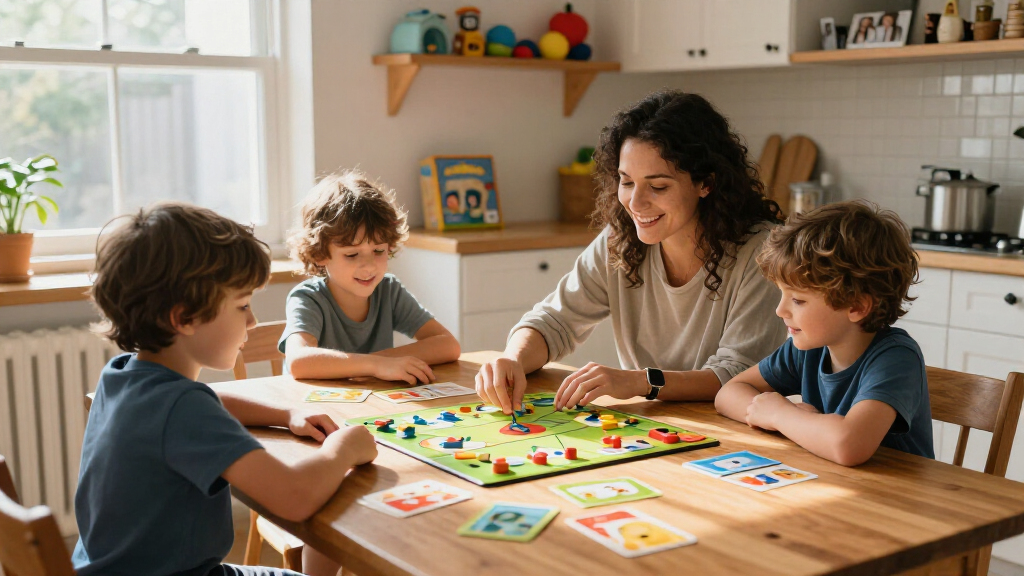

Choosing the right children’s educational board games can boost learning while keeping playtime fun. The Monopoly Junior stands out as the best overall for its engaging gameplay that teaches money skills, but options like ThinkFun Zingo and Candy Land excel at preschool-level learning and simple fun. The main challenge parents face is balancing educational value with ease of play—some games are more complex, while others focus purely on entertainment. Keep reading for a detailed breakdown of the best options, their strengths, and tradeoffs so you can pick the perfect game for your child’s age and interests.

Turn the school run and nap time into listening time
- Thousands of audiobooks, podcasts and originals
- Listen on your phone, tablet or Echo — also offline
- Cancel anytime
Complete the kit


Key Takeaways
- The top-ranked games blend educational value with engaging gameplay, making learning natural and fun.
- Simpler games like Candy Land and Hi Ho Cherry-O are ideal for younger children, but may lack depth for older kids.
- More complex options like Monopoly Junior and Sorry! offer strategic learning but can be overwhelming for very young players.
- Durability and ease of setup are key factors for busy families, influencing long-term value.
- Price varies widely; investing in higher-quality, versatile games often pays off in durability and learning potential.
| Monopoly Junior Board Game for 4 Players, Ages 5 and Up |  | Best Overall for Family Fun and Simplicity | Players: 2-4 | Recommended Age: 5 years and up | Tokens: Little Scottie, Little Hazel, Toy Car, Mr. Monopoly top hat | VIEW LATEST PRICE | See Our Full Breakdown |
| ThinkFun Zingo Bingo Award Winning Preschool Game for Ages 4 and Up |  | Best for Language and Matching Skills Development | Skill Level: Beginner | Recommended Age: 4 and up | Number of Players: Up to 7 | VIEW LATEST PRICE | See Our Full Breakdown |
| Hasbro Gaming Candy Land Kingdom of Sweet Adventures Board Game for Kids, Ages 3 & Up |  | Best for Color Recognition and Imaginative Play | Number of Players: 2-4 | Recommended Age: 3 and up | Includes: Game board, game cards, 4 gingerbread pawns, instructions | VIEW LATEST PRICE | See Our Full Breakdown |
| Hasbro Gaming Trouble Board Game for Kids Ages 5 and Up, 2-4 Players |  | Best for Quick, Classic Race Fun with a Twist | Brand: Hasbro Gaming | Age Range: 5 years and up | Number of Players: 2-4 | VIEW LATEST PRICE | See Our Full Breakdown |
| Connect 4 Classic Grid Game, 4 in a Row Strategy Board Game for Kids and Families |  | Best for Two-Player Strategy and Quick Thinking | Number of Players: 2 | Ages: 6+ | Game Type: Strategy Board Game | VIEW LATEST PRICE | See Our Full Breakdown |
| Hasbro Don’t Break The Ice Game, Classic Version for Ages 3+ |  | Best for Young Preschoolers Starting to Explore Strategy | Brand: Hasbro Gaming | Genre: Family | Number of Players: 2-4 | VIEW LATEST PRICE | See Our Full Breakdown |
| Hasbro Gaming Chutes and Ladders Board Game, for 2 to 4 Players, Ages 3+ |  | Best for Introducing Counting and Number Recognition | Number of Players: 2-4 | Age Range: Ages 3+ | Game Type: Board Game | VIEW LATEST PRICE | See Our Full Breakdown |
| Sorry! Board Game for Kids Ages 6 and Up |  | Best for Combining Luck and Strategy in Family Play | Brand: Hasbro Gaming | Genre: Family | Number of Players: 2-4 | VIEW LATEST PRICE | See Our Full Breakdown |
| Hasbro Gaming Hi Ho Cherry-O Board Game for 2 to 4 Players Kids Ages 3 and Up |  | Best for Counting, Addition, and Subtraction Practice | Number of Players: 2-4 | Ages: 3 and up | Type: Board game | VIEW LATEST PRICE | See Our Full Breakdown |
| children’s educational board game | Number of Players |
|---|---|
| Monopoly Junior Board Game for | — |
| ThinkFun Zingo Bingo Award Win | Up to 7 |
| Hasbro Gaming Candy Land Kingd | 2-4 |
| Hasbro Gaming Trouble Board Ga | 2-4 |
| Connect 4 Classic Grid Game | 2 |
| Hasbro Don’t Break The Ice Gam | 2-4 |
| Hasbro Gaming Chutes and Ladde | 2-4 |
| Sorry! Board Game for Kids Age | 2-4 |
| Hasbro Gaming Hi Ho Cherry-O B | 2-4 |
More Details on Our Top Picks
Monopoly Junior Board Game for 4 Players, Ages 5 and Up
Monopoly Junior stands out as the ideal introduction to board games for young children, thanks to its simplified rules and faster gameplay compared to the classic Monopoly. Unlike Connect 4, which focuses solely on strategy, Monopoly Junior combines basic economic concepts with engaging themes like zoos and arcades, making it more appealing for family game nights. However, its straightforward mechanics mean it offers less depth, which could leave older kids or adults seeking a more challenging experience. The colorful tokens and kid-friendly properties make it attractive, but the simplicity may limit replay value for seasoned players. This pick makes the most sense for families with preschool or early elementary children who want an inclusive, easy-to-understand game.
Pros:- Simplified, faster gameplay suitable for young children
- Kid-friendly themes like zoos and arcades
- Appealing, colorful character tokens
- Great for family game nights and gift giving
Cons:- May be too simple for older children or adults
- Less strategic depth than the original Monopoly
Best for: Families with children aged 5-7 looking for a simple, engaging game that introduces money concepts.
Not ideal for: Parents seeking a game with strategic complexity for older kids or adults, as Monopoly Junior lacks depth.
- Players:2-4
- Recommended Age:5 years and up
- Tokens:Little Scottie, Little Hazel, Toy Car, Mr. Monopoly top hat
- Game Type:Board game
Our verdict“A solid choice for introducing young children to board games in a fun, accessible way.”
ThinkFun Zingo Bingo Award Winning Preschool Game for Ages 4 and Up
Compared with Candy Land, which emphasizes color recognition and imagination, Zingo is designed to sharpen early language and matching skills through its fast-paced bingo format. Its use of a zinger device to reveal tiles keeps children actively engaged, and the ability to accommodate up to 7 players makes it ideal for group settings. However, for children who are not yet comfortable reading, some components might be challenging, limiting its full potential. The game’s straightforward rules and vibrant visuals make learning fun, but older children seeking more complexity may find it too elementary. This game is best suited for preschoolers who are just starting to develop language skills and enjoy quick-paced play.
Pros:- Develops language and matching skills effectively
- Suitable for multiple players with extra cards included
- Easy to learn with clear instructions
- Engages children with a fun, fast-paced format
Cons:- May be too simple for older children or adults
- Requires basic reading skills for some components
Best for: Parents of preschoolers or early readers wanting a game that encourages language development and social play.
Not ideal for: Families with older children or those seeking a more challenging or strategic game, as Zingo remains simple and luck-based.
- Skill Level:Beginner
- Recommended Age:4 and up
- Number of Players:Up to 7
- Includes:Extra Zingo Card, Zinger Device, Instruction Manual
Our verdict“A lively, educational game that promotes early language skills and social interaction for preschoolers.”
Hasbro Gaming Candy Land Kingdom of Sweet Adventures Board Game for Kids, Ages 3 & Up
Compared with Monopoly Junior, which introduces basic money concepts, Candy Land focuses on color recognition, turn-taking, and imagination, making it ideal for the youngest players. Its simple race-to-the-castle mechanic requires no reading, which is perfect for children as young as 3. While its bright, colorful design makes it visually appealing, the game’s limited complexity may lead to repetitive play for older children or quick boredom. The physical setup is straightforward, but space for the board can be a consideration. This game makes the most sense for preschoolers who are just beginning to explore board games without the need for strategic thinking.
Pros:- Easy to learn and suitable for very young children
- Encourages color recognition and turn-taking
- Bright, appealing illustrations and themes
- No reading required to play
Cons:- Limited to 2-4 players
- Simple gameplay may not hold older children’s interest
- Requires physical space for setup
Best for: Parents with 3- to 5-year-olds seeking a colorful, easy-to-learn game that promotes basic skills.
Not ideal for: Families with older children or those looking for a game with strategic depth or longer playtime.
- Number of Players:2-4
- Recommended Age:3 and up
- Includes:Game board, game cards, 4 gingerbread pawns, instructions
- Language:English and Spanish
Our verdict“A perfect beginner game for preschoolers to foster color skills and imaginative play in a simple format.”
Hasbro Gaming Trouble Board Game for Kids Ages 5 and Up, 2-4 Players
Compared to Connect 4, which emphasizes pattern strategy, Trouble offers a lively, chance-driven race that emphasizes quick decisions and lighthearted competition. Its iconic Pop-O-Matic bubble ensures easy die rolling without loss or confusion, making it accessible for younger players. The inclusion of the Power Up Spaces variant adds a layer of challenge for more experienced players, but the core gameplay remains simple enough for children as young as 5. However, the randomness can lead to frustration, especially if a player’s pieces are bumped back to start repeatedly. Its straightforward mechanics make it perfect for quick family sessions, but older children seeking deeper strategy might find it lacking. This game is ideal for families who want fast-paced, easy-to-understand racing fun for younger kids.
Pros:- Easy to learn and quick to set up
- Iconic Pop-O-Matic bubble makes die rolling simple
- Includes a challenging Power Up variant for variety
- Great for younger children and family game nights
Cons:- Gameplay can be frustrating due to randomness and bump-backs
- Limited strategic depth for older players
Best for: Parents seeking a quick, energetic game suitable for children aged 5 and up, especially during short play sessions.
Not ideal for: Families wanting a strategic, skill-based game for older children or adults, as Trouble relies heavily on luck.
- Brand:Hasbro Gaming
- Age Range:5 years and up
- Number of Players:2-4
- Game Type:Board game
- Die Roller:Pop-O-Matic bubble
- Gameplay Modes:Classic and Power Up Spaces
Our verdict“A lively, accessible game that delivers fast-paced fun for children and families seeking simple racing excitement.”
Connect 4 Classic Grid Game, 4 in a Row Strategy Board Game for Kids and Families
While Monopoly Junior and Candy Land focus on themes and color recognition, Connect 4 emphasizes strategic planning and two-player competition. Its modern design with vibrant colors enhances visual appeal, but the game is limited to only two players, which can restrict group play. Its simple mechanics make it easy to learn, yet the game can become repetitive after multiple rounds, especially if the players are evenly matched. Suitable for ages 6 and older, it’s perfect for quick, tactical battles, but it might not engage children who prefer longer or more social games. This pick is best for children who enjoy head-to-head strategy and quick decision-making.
Pros:- Easy to learn with quick setup
- Engages players with strategic thinking
- Modern, colorful design
- Suitable for travel and casual play
Cons:- Limited to 2 players, restricting group play
- May become repetitive over time
- Requires a flat surface for optimal play
Best for: Families with children 6 and up who enjoy competitive, strategic gameplay in short sessions.
Not ideal for: Groups or families seeking multiplayer experiences or longer, more complex games, as Connect 4 is limited to two players and simple tactics.
- Number of Players:2
- Ages:6+
- Game Type:Strategy Board Game
- Features:Pop-out, Multiple Ways to Play
Our verdict“A quick, strategic game that appeals to children and families who enjoy head-to-head competition in short bursts.”
Hasbro Don’t Break The Ice Game, Classic Version for Ages 3+
This game stands out for its simplicity, making it ideal for children as young as 3, unlike Sorry! which requires slightly more strategic thinking. Its straightforward rules allow preschoolers to enjoy family game nights without frustration, while the suspense of not breaking the ice keeps kids engaged. However, the plastic components can wear out quickly, and the game may feel too basic for older children or adults seeking more challenge. Compared to Chutes and Ladders, it offers a more tactile, physical experience that helps develop fine motor skills. The game’s durability and quick rounds make it a reliable choice for short, fun sessions with little ones.
Pros:- Easy-to-understand rules suitable for ages 3 and up
- Encourages family interaction with suspenseful gameplay
- Fast-paced rounds lasting around 30 minutes
- Durable, classic design from a trusted brand
Cons:- Plastic ice blocks and mallets may break or get lost over time
- Too simple for children beyond preschool age or for players seeking a challenge
Best for: Families with preschool-aged children who need simple, engaging games to introduce turn-taking and patience.
Not ideal for: Children older than 4 or families seeking more complex or strategic gameplay, as the game’s simplicity can quickly lead to boredom.
- Brand:Hasbro Gaming
- Genre:Family
- Number of Players:2-4
- Edition:Standard Edition
- Language:English
- Estimated Playing Time:30 minutes
- Included Components:2 mallets, ice tray frame, 4 ice tray
- Recommended Age:3 years and up
Our verdict“This game is perfect for very young children just beginning to explore game play and family bonding.”
Hasbro Gaming Chutes and Ladders Board Game, for 2 to 4 Players, Ages 3+
Compared with Hi Ho Cherry-O, which emphasizes counting through a themed race, Chutes and Ladders offers a straightforward way for preschoolers to practice number skills via simple movement on a colorful board. Its intuitive spinner and easy rules make it accessible for children as young as 3, but its repetitive gameplay might bore slightly older or more advanced children. While it encourages counting and patience, the game’s lack of strategic depth means it’s not engaging for kids ready for more complex challenges. The vibrant design and familiar gameplay make it a staple for early childhood classrooms and family play, but it may need supplementing with more varied activities as children grow.
Pros:- Simple rules that teach counting and number recognition
- Bright, engaging visuals appeal to young children
- Easy setup and quick gameplay fit busy schedules
- Suitable for classroom and family use
Cons:- Repetitive gameplay may reduce long-term interest
- Limited challenge for children beyond age 4 or 5
Best for: Parents seeking a highly accessible game to teach basic counting and turn-taking to preschoolers and early learners.
Not ideal for: Older children or families wanting a game with more strategic or competitive complexity, as the game can become monotonous.
- Number of Players:2-4
- Age Range:Ages 3+
- Game Type:Board Game
Our verdict“This game makes a great introductory tool for preschoolers learning numbers and patience, but may need upgrades for older kids.”
Sorry! Board Game for Kids Ages 6 and Up
This edition of Sorry! appeals to slightly older children, offering a mix of chance and tactical decisions that can challenge kids aged 6 and above. Compared to Chutes and Ladders, which focuses mainly on counting, Sorry! introduces strategic elements like sending opponents back and choosing moves, making it more engaging for children ready for some tactical thinking. Its longer gameplay and potential for frustration—due to frequent pawns being sent back—may not suit very young or less patient players. Nonetheless, for families wanting a game that balances luck with skill, Sorry! delivers a more dynamic experience, fostering social interaction and strategic planning.
Pros:- Engaging mix of luck and strategy
- Encourages tactical thinking and social interaction
- Familiar, easy-to-learn gameplay for families
- Suitable for indoor family game nights
Cons:- Game can be lengthy with many players
- Frequent pawn setbacks may cause frustration for some children
Best for: Families with children aged 6 and up who enjoy a mix of luck, strategy, and social interaction in game play.
Not ideal for: Young children under age 6, because the game’s strategic complexity and longer playtime may be overwhelming or frustrating.
- Brand:Hasbro Gaming
- Genre:Family
- Number of Players:2-4
- Edition:Standard Edition
- Language:English
Our verdict“This game is ideal for children ready for more strategic play and longer, social family games, but might be less suitable for very young or impatient players.”
Hasbro Gaming Hi Ho Cherry-O Board Game for 2 to 4 Players Kids Ages 3 and Up
Compared to Chutes and Ladders, which emphasizes number recognition through movement, Hi Ho Cherry-O centers on practicing counting, addition, and subtraction through a themed race to collect cherries. Its simple spinner and clear objectives make it perfect for children as young as 3, and its straightforward gameplay promotes early math skills in a fun context. However, the game’s repetitive nature can lead to quick boredom, especially for children who prefer more varied activities. It’s best suited for small groups in classroom settings or family play where the focus is on foundational math rather than strategic complexity. This game is a reliable choice for developing early numeracy skills but might need to be paired with other games for variety.
Pros:- Promotes counting, addition, and subtraction skills
- Easy to learn and set up for young children
- Bright, appealing design enhances engagement
- Ideal for small groups in classroom or family settings
Cons:- Gameplay may become monotonous over time
- Limited challenge for children over age 4 or 5
Best for: Parents and teachers wanting to reinforce counting and basic math skills with preschoolers in a fun, interactive format.
Not ideal for: Children seeking more complex gameplay or those easily bored by repetitive tasks, as the game mechanics stay consistent.
- Number of Players:2-4
- Ages:3 and up
- Type:Board game
- Theme:Counting and preschool skills
Our verdict“This game is a solid foundation for early math learning, especially suited for preschool classrooms and family activities focused on numeracy.”
How We Picked
The selection process focused on the balance of educational benefits, age appropriateness, gameplay engagement, and durability. I prioritized games that promote skills like counting, strategy, and social interaction, while also considering ease of learning and setup. Each game was evaluated for build quality, replayability, and how well it aligns with developmental milestones. Rankings reflect the overall value for different age groups and learning goals, with clear distinctions based on how these factors combine to serve both fun and education.Factors to Consider When Choosing Children’s Educational Board Games
When choosing children’s educational board games, it’s important to consider several factors beyond just age labels. The right game should match your child’s developmental stage, offer enough challenge without frustration, and foster skills like critical thinking, counting, or social cooperation. Durability and ease of storage matter for busy households, and price range can influence long-term value. Being aware of common pitfalls, such as choosing overly complex games for young children or undervaluing replayability, helps ensure a satisfying purchase.Age Appropriateness and Skill Level
Select games that align with your child’s current skills and developmental milestones. Younger children benefit from simple, color-based or counting games like Candy Land or Hi Ho Cherry-O, which promote basic skills without overwhelming them. Older kids may enjoy more strategic options like Monopoly Junior or Sorry!, which introduce planning and decision-making. Avoid games that are too advanced for their age, as this can lead to frustration and discourage continued play.
Educational Focus and Learning Outcomes
Identify what skills you want the game to develop—be it math, language, social skills, or strategic thinking. For early learners, games that emphasize counting, colors, and matching are ideal. For slightly older children, look for options that incorporate spelling, problem-solving, or negotiation. Prioritize games with clear educational goals, but ensure they are also engaging enough to hold attention over multiple sessions.
Durability and Quality
Children’s games see frequent use, so durability is key. Look for well-made components with sturdy plastic or thick cardboard and secure pieces that won’t easily break or get lost. Cheaper, flimsy games may save money upfront but often need replacement sooner. Additionally, consider whether the game pieces are small or easily lost—larger, more durable pieces tend to last longer and reduce frustration.
Replayability and Versatility
A game that can be played repeatedly without losing appeal offers better long-term value. Look for games with simple rules that can be modified or expanded for different skill levels, or those with multiple game modes. Versatile games that appeal to a broad age range or can be played in different ways tend to provide more value, especially for families with children of varying ages.
Price and Value for Money
While budget options can be tempting, investing in higher-quality games often results in better durability and more engaging content. Consider how often you’ll use the game and whether it can serve multiple children or family members. Sometimes, spending a bit more initially leads to a more satisfying experience and longer-lasting enjoyment, especially if the game combines educational value with fun gameplay.
Frequently Asked Questions
How do I choose a game that’s suitable for both preschoolers and older kids?
Look for games that have adjustable difficulty levels or multiple ways to play, allowing them to grow with your children. Games like Connect 4 or Sorry! are simple enough for preschoolers but still engaging for older kids with added strategic elements. Additionally, some games come with expansion packs or rule modifications that can extend their relevance over several years, providing ongoing educational value.
Are there any safety considerations when selecting board games for young children?
Absolutely. Always check the size of game pieces to prevent choking hazards, especially for children under 3. Ensure that materials are non-toxic and that there are no sharp edges or small parts that could be swallowed. Reading reviews about durability can also help identify products that won’t easily break into unsafe fragments after heavy use.
Should I prioritize educational content over pure fun?
While educational value is important, the game must still captivate your child’s interest. A game that is too dry or overly focused on learning might lose their attention quickly. The best choices strike a balance, making learning feel like a natural part of the game rather than a chore. Remember, children are more likely to develop skills when they associate learning with positive experiences and fun.
How important are game components and storage options?
High-quality components that are easy to clean and store contribute significantly to the game’s lifespan and ease of use. Well-designed storage solutions or compact packaging can make setup and cleanup faster, encouraging more frequent play. Durable, attractive pieces also keep children engaged longer and reduce the risk of losing parts, which is common with cheaper games.
Can these games be used for group learning or family activities?
Many children’s educational board games are designed for multiple players, promoting social skills like cooperation and turn-taking. Games like Connect 4 and Sorry! are ideal for family game nights, encouraging interaction and shared learning experiences. Choosing games that accommodate different numbers of players increases their versatility, making them more valuable for family bonding and group activities.
Conclusion
For families seeking the best overall experience, the Monopoly Junior offers engaging gameplay with educational benefits suitable for a broad age range. Those prioritizing value will appreciate the durability and simple fun of Candy Land and Hi Ho Cherry-O. If you’re looking for a premium pick, consider a more comprehensive game with expanded educational content, though these often come at a higher price. Beginners or parents new to educational games should start with straightforward options like ThinkFun Zingo or Connect 4, which are easy to learn but still promote skill development. For specific needs, such as preschool learning or strategic thinking, select the game that best matches your child’s age and interests, ensuring long-term engagement and educational growth.
Halloween Picks
halloween
As an affiliate, we earn on qualifying purchases.