The ThinkFun Gravity Maze Marble Logic Game earns the top spot among the best toys and games for kids because it blends genuine STEM skill-building with the kind of one-more-try replay value that keeps children coming back without adult prompting. Two other standouts: the Move2Play Pass the Potato is the easiest way to get a whole group of mixed-age kids laughing together, and the BooTaa 29″ Large Dart Board delivers the best active-play value for under-tens. The main tradeoff in this category is screen-based versus hands-on play, followed closely by solo-versus-group formats — what works for a rainy afternoon with cousins will not work for quiet independent time. Age fit matters more here than in almost any other product category, since a logic puzzle that thrills an eight-year-old will frustrate a four-year-old. Keep reading for the full breakdown of all 15 picks, including who each one suits and who should skip it.

Turn the school run and nap time into listening time
- Thousands of audiobooks, podcasts and originals
- Listen on your phone, tablet or Echo — also offline
- Cancel anytime
Key Takeaways
- Logic and puzzle games dominated the top of the rankings — Gravity Maze and Kanoodle both reward persistence and grow with the child, while pure novelty games like the parachute toys ranked lower on replay value.
- Group party games (Pass the Potato, The Floor is Lava, Creature Crash) offer the best cost-per-laugh for families, but nearly all of them require at least two players and an adult willing to referee.
- Screen-based picks (the retro handheld and the light-up memory game) ranked mid-pack: kids gravitate to them fastest, but they offer the least family interaction of anything in the lineup.
- Active outdoor picks like the Ayeboovi Toss and Catch and the BooTaa dart board are the most durable across age ranges, holding attention from roughly age 4 through 10 without becoming babyish.
- Licensed-property appeal (TOMY Pop Up Super Mario) buys instant enthusiasm but tends to fade once the novelty wears off, making it a weaker long-term value than open-ended games like the Ziogogco stacking blocks.
| Move2Play Pass the Potato Interactive Family Game |  | Best Active Party Game | Brand: Move2Play | Model: FOOD102 | Age Range: 6 months+ (manufacturer recommended: 4–15 years) | VIEW LATEST PRICE | See Our Full Breakdown |
| The Floor is Lava! Game by Endless Games – Classic Edition |  | Best Group Physical Game | Players: 2-6 | Recommended Age: 5 years and up | Includes: 25 colored foam safety stones, 27 challenge cards, game spinner, instructions | VIEW LATEST PRICE | See Our Full Breakdown |
| Ayeboovi Toss and Catch Ball Game (Upgraded) |  | Best Budget Outdoor Pick | Number of Players: Up to 4 | Recommended Age: 3 years and up | Includes: 4 paddles, 4 sticky balls, storage bag | VIEW LATEST PRICE | See Our Full Breakdown |
| ThinkFun Gravity Maze Marble Logic Game and STEM Toy |  | Best Overall | Brand: ThinkFun | Recommended Age: 8 years and up | Number of Challenges: 60 | VIEW LATEST PRICE | See Our Full Breakdown |
| Educational Insights Kanoodle Brain Teaser Puzzle | 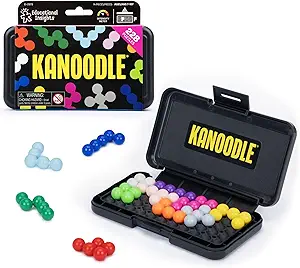 | Best Travel Puzzle | Brand: Educational Insights | Number of Puzzles: 228 | Puzzle Pieces: 12 | VIEW LATEST PRICE | See Our Full Breakdown |
| BooTaa 29″ Large Dart Board for Kids with 12 Sticky Balls |  | Best Active Play Value | Board Diameter: 29 inches | Material: Nylex fabric, plastic | Included Items: 1 dart board, 12 sticky balls (4 colors), 1 hook | VIEW LATEST PRICE | See Our Full Breakdown |
| Yeeeasy Tangle-Free Parachute Toys for Kids Outdoor Flying Game, 4 Pack |  | Best Budget Stocking Stuffer | Pieces Included: 4 parachute toys | Design: Tangle-free parachute cords | Material: Non-toxic fabric and plastic | VIEW LATEST PRICE | See Our Full Breakdown |
| Let’s Go Fishin’ Game by Pressman |  | Best Classic Family Game | Players: 1-4 | Recommended Age: 4 years and up | Game Base: Deluxe plastic rotating pond | VIEW LATEST PRICE | See Our Full Breakdown |
| Creature Crash – The Capybara Balancing Game |  | Best Travel Game | Players: 2 | Recommended Age: 6 years and up | Included Components: 49 capybaras, 1 balancing board and pillar base, 1 die, instructions | VIEW LATEST PRICE | See Our Full Breakdown |
| Skillmatics Guess in 10: National Geographic Animals Card Game |  | Best Educational Pick | Recommended Age: 6 years and up | Players: 2 or more | Average Playtime: 20 minutes | VIEW LATEST PRICE | See Our Full Breakdown |
| TOMY Pop Up Super Mario Family Action Game |  | Best Family Game Night Pick | Players: 2-4 (or teams) | Recommended Age: 4 years and up | Play Modes: Classic Play, Coin Collection, Team Play | VIEW LATEST PRICE | See Our Full Breakdown |
| Gelabur Handheld Light-Up Memory Game for Kids Ages 4-8 |  | Best Travel Toy | Brand: Gelabur | Type: Electronic handheld memory game | Features: Light-up buttons, sound effects | VIEW LATEST PRICE | See Our Full Breakdown |
| Ziogogco Balance Stacking Blocks Game, 48 Pieces |  | Best Group Party Game | Piece Count: 48 stacking blocks | Material: ABS plastic | Block Colors: Blue, red, green, yellow | VIEW LATEST PRICE | See Our Full Breakdown |
| Hasbro Gaming Operation Electronic Board Game for Kids Ages 6+ |  | Best Classic Solo-Play Option | Brand: Hasbro Gaming | Minimum Age: 6 years | Players: 1 or more | VIEW LATEST PRICE | See Our Full Breakdown |
| Handheld Game Console for Kids – 220 Retro Games, 3.0″ LCD Rechargeable (Blue) | 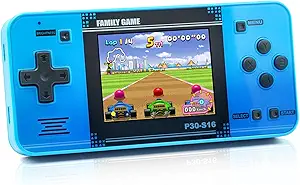 | Best Screen-Time Value Pick | Screen: 3.0-inch LCD | Preloaded Games: 220 retro titles | Battery: 860mAh rechargeable lithium-ion | VIEW LATEST PRICE | See Our Full Breakdown |
| toys and games for kid | Recommended Age | Brand | Players |
|---|---|---|---|
| Move2Play Pass the Potato Inte | — | Move2Play | — |
| The Floor is Lava! Game by End | 5 years and up | Endless Games | 2-6 |
| Ayeboovi Toss and Catch Ball G | 3 years and up | — | — |
| ThinkFun Gravity Maze Marble L | 8 years and up | ThinkFun | 1 or more |
| Educational Insights Kanoodle | — | Educational Insights | 1 |
| BooTaa 29" Large Dart Board fo | 3-12 years | — | — |
| Yeeeasy Tangle-Free Parachute | 3 years and up | — | — |
| Let’s Go Fishin’ Game by Press | 4 years and up | — | 1-4 |
| Creature Crash | 6 years and up | Relatable | 2 |
| Skillmatics Guess in 10: Natio | 6 years and up | Skillmatics | 2 or more |
| TOMY Pop Up Super Mario Family | 4 years and up | TOMY | 2-4 (or teams) |
| Gelabur Handheld Light-Up Memo | 3-12 years | Gelabur | — |
| Ziogogco Balance Stacking Bloc | — | — | — |
| Hasbro Gaming Operation Electr | — | Hasbro Gaming | 1 or more |
| Handheld Game Console for Kids | — | — | — |
More Details on Our Top Picks
Move2Play Pass the Potato Interactive Family Game
Pass the Potato stands out as the purest energy-release pick in this lineup. Unlike the Gravity Maze, which quietly builds logic skills, this one gets an entire group of kids sprinting around a room or yard. The interactive potato reacts to tossing, shaking, and tapping with more than 30 sayings and sound effects, so it plays more like hot-potato-meets-musical-chairs than a board game. An adjustable volume control is a thoughtful touch that parents of noise-sensitive households will appreciate, and batteries ship included, meaning it works right out of the box.
Where the Floor is Lava! game offers structured challenge cards, Pass the Potato is simpler and more chaotic, which is both its strength and its limit. The randomized timer creates genuine suspense, but that same intensity can overwhelm cautious or very young children, and the listing’s conflicting age ranges add confusion.
Pros:- Encourages genuinely active indoor and outdoor play
- More than 30 interactive sayings and sound effects keep rounds fresh
- Adjustable volume for noise-sensitive households
- Batteries included and machine washable
Cons:- Timer-based suspense may be too intense for cautious children
- Conflicting manufacturer age ranges make the right audience unclear
Best for: Families and party hosts with mixed-age kids who want a fast, noisy, zero-setup group game
Not ideal for: Parents of easily overwhelmed toddlers or households wanting quiet-time activities, since the random timer creates high-energy pressure
- Brand:Move2Play
- Model:FOOD102
- Age Range:6 months+ (manufacturer recommended: 4–15 years)
- Sound Effects and Sayings:More than 30
- Volume:Adjustable
- Batteries:Included
- Washability:Machine washable
Our verdict“Buy this for high-energy group play where chaos is the point, and skip it if your family prefers calm, structured games.”
The Floor is Lava! Game by Endless Games – Classic Edition
The Floor is Lava! earns its spot by turning a game kids already play imaginatively into something with rules, structure, and a winner. Compared with Pass the Potato, which is pure frantic passing, this one layers in 27 challenge cards and a spinner, so each round demands a bit of decision-making alongside the jumping. The 25 cushioned, slip-resistant foam stones mean you can set it up on carpet, grass, or pavement without special equipment, and the 2-to-6 player range makes it one of the few options here that genuinely works for the whole family at once.
The tradeoff is durability of interest rather than materials: older kids and adults may find the mechanics repetitive after a handful of sessions, something the Gravity Maze avoids with its 60 escalating challenges. The stones can also slide on polished floors, so a rug or outdoor surface is the safer venue.
Pros:- Promotes physical activity and pulls kids away from screens
- Works indoors and outdoors with no extra equipment
- Genuinely fun for kids and adults together, 2-6 players
- Cushioned, slip-resistant foam stones soften tumbles
Cons:- Foam stones may slide on very smooth floors
- Limited replay value for older players
Best for: Families with kids aged 5-10 who want a screen-busting physical game that works for siblings and parents together
Not ideal for: Households with mostly hardwood or tile floors, and families with tweens or teens who will outgrow the simple mechanics quickly
- Players:2-6
- Recommended Age:5 years and up
- Includes:25 colored foam safety stones, 27 challenge cards, game spinner, instructions
- Stone Material:Cushioned, durable, slip-resistant foam
- Play Environment:Indoor and outdoor
- Brand:Endless Games
Our verdict“This is the pick for whole-family physical play on a rainy afternoon, as long as your floors have some grip and your players are under about ten.”
Ayeboovi Toss and Catch Ball Game (Upgraded)
Ayeboovi’s toss and catch set is the simplest, cheapest-feeling entry here — and that is exactly its appeal. Four paddles, four sticky balls, and a storage bag: no rules to learn, no timer, no setup. Where the Floor is Lava! game needs floor space and multiple players, this works with just two people on a lawn, beach, or driveway, making it the easiest outdoor option to grab on the way out the door. The hook-and-loop surfaces mean young kids succeed almost immediately, quietly building hand-eye coordination and throwing fundamentals that translate to baseball and tennis later.
The upgraded stitching and waterproof padding address the flimsiness that plagues cheaper versions of this classic, but do not mistake it for a precision toy — balls lose stick as they collect lint and dirt, and the appeal fades for kids past age ten. It is a beach-bag game, not a game-night centerpiece like Gravity Maze.
Pros:- Instant success for young kids thanks to sticky catch surfaces
- Builds hand-eye coordination and throwing basics for later sports
- Waterproof padding and reinforced stitching improve durability
- Storage bag and no batteries make it genuinely grab-and-go
Cons:- Sticky surfaces collect lint and dirt, reducing catch performance over time
- Limited appeal for children older than about ten
Best for: Budget-conscious parents of 3-8 year olds who want a portable backyard, beach, or camping activity
Not ideal for: Families with tweens or teens, who will find the hook-and-loop mechanic too easy and repetitive
- Number of Players:Up to 4
- Recommended Age:3 years and up
- Includes:4 paddles, 4 sticky balls, storage bag
- Play Environment:Outdoor — yard, beach, pool, camping, playground
- Batteries Required:No
- Educational Objective:Hand-eye coordination and motor skills
Our verdict“A low-cost, low-commitment outdoor set that shines for young kids and stays out of the way the rest of the time.”
ThinkFun Gravity Maze Marble Logic Game and STEM Toy
Gravity Maze takes the top slot because it does something none of the physical games here manage: it converts real STEM reasoning into genuinely fun play. Kids arrange nine towers on a grid to build a gravity-powered marble path, solving 60 challenges that scale smoothly from gentle to genuinely head-scratching. Compared with Kanoodle, which is pure spatial fitting, Gravity Maze adds a physics layer — cause, effect, and iteration — that makes each solved puzzle feel earned. It works solo, which the Floor is Lava! game cannot, but also fits family co-solving sessions or classroom STEM time.
The tradeoffs are real, though. The 8+ recommendation is honest: younger children hit a difficulty wall partway through. And because the set includes small marbles, households with toddler siblings need to police cleanup carefully.
Pros:- Combines marble-run fun with genuine spatial reasoning and engineering skill-building
- 60 progressive challenges deliver long replay life
- Works for solo play, family co-solving, or classrooms
- Screen-free with no batteries or electronics to manage
Cons:- Challenges get too difficult for kids under the recommended age of 8
- Small marbles pose a choking hazard around younger siblings
Best for: Parents of kids 8 and up who want a screen-free solo puzzle toy with lasting educational depth
Not ideal for: Families with children under 8 or curious toddler siblings, due to difficulty and marble choking hazards
- Brand:ThinkFun
- Recommended Age:8 years and up
- Number of Challenges:60
- Includes:Game grid, 9 towers, 3 marbles, target piece
- Players:1 or more
- Type:Logic game / STEM educational toy
Our verdict“The most complete package here — buy it for an eight-and-up puzzle lover, and keep the marbles away from toddlers.”
Educational Insights Kanoodle Brain Teaser Puzzle
Kanoodle wins on portability in a way nothing else in this roundup approaches. The pocket-sized case doubles as the game board, holding 12 bead pieces and a 48-page puzzle book with 228 challenges in both 2D and 3D pyramid formats. While Gravity Maze is the richer educational experience, it stays home; Kanoodle fits in a backpack pocket and quietly occupies a child through a flight, a restaurant wait, or a car ride — no pieces to scatter across the aisle. The beginner-to-expert curve means a seven-year-old and a parent can both find puzzles at their level.
The limitations mirror its format. It is strictly single-player, so it does nothing for siblings who want to play together, and some expert-level puzzles will frustrate younger children to the point of abandonment. Think of it as a companion puzzle rather than a family activity night.
Pros:- 228 puzzles from beginner to expert keep challenge alive for years
- Truly pocket-sized, with the case doubling as the board
- Builds spatial reasoning and problem-solving without screens
- Accessible age range from kids through adults
Cons:- Single-player only, with no group or sibling mode
- Some puzzles are very difficult for younger children
Best for: Parents who need a quiet, screen-free solo activity for travel, restaurants, and waiting rooms
Not ideal for: Families wanting group play — with one player and one board, siblings will fight over it rather than share it
- Brand:Educational Insights
- Number of Puzzles:228
- Puzzle Pieces:12
- Players:1
- Puzzle Formats:2D and 3D pyramid
- Includes:12 puzzle pieces, 48-page illustrated puzzle book, carrying case
- Portability:Pocket-sized case doubles as game board
Our verdict“The best puzzle to hand a child on a plane or in a waiting room — just don’t expect it to entertain more than one kid at a time.”
BooTaa 29″ Large Dart Board for Kids with 12 Sticky Balls
BooTaa’s 29-inch dart board stands out for turning a grown-up game into something a four-year-old can actually win at. The oversized fabric target and velcro-style sticky balls remove the frustration and danger of real darts, and the 12 balls in four colors mean siblings can compete simultaneously without arguing over equipment. Compared with the Ayeboovi Toss and Catch Ball Set, this pick needs less open space and works on a rainy day indoors, though it does require a wall to hang it on. The foldable design makes it a realistic option for camping trips or grandma’s house. The real tradeoff is longevity: sticky balls shed adhesion with dust and heavy use, so this is better treated as a fun coordination trainer than a heirloom game.
Pros:- Extra-large 29-inch target makes success easy for beginners
- No sharp parts, safe for preschoolers
- Folds down for travel, camping, and outdoor play
- Builds hand-eye coordination, counting, and color recognition
Cons:- Sticky balls lose adhesion over time and attract dust
- Requires a suitable wall or hook to hang
Best for: Parents of kids aged 3-8 who want a safe, low-cost energy-burner that works indoors and out
Not ideal for: Households without a good hanging surface, or buyers wanting a game that stays grippy for years
- Board Diameter:29 inches
- Material:Nylex fabric, plastic
- Included Items:1 dart board, 12 sticky balls (4 colors), 1 hook
- Recommended Age:3-12 years
- Design:Foldable and portable
- Play Environment:Indoor or outdoor
Our verdict“A cheap, safe way to keep young kids moving — buy it for the short-term fun, not the long haul.”
Yeeeasy Tangle-Free Parachute Toys for Kids Outdoor Flying Game, 4 Pack
Sometimes the simplest toy wins the afternoon, and Yeeeasy’s tangle-free parachutists are exactly that. Toss them up and they drift down slowly, which is genuinely mesmerizing for younger kids — and the tangle-free cord design solves the single most annoying failure mode of classic parachute toys. Compared with the BooTaa dart board, this four-pack costs pocket change and needs no wall or setup, though the play loop is shallower: throw, watch, retrieve, repeat. Where the Let’s Go Fishin’ game offers structured turn-taking, this is pure open-ended outdoor chaos — ideal as a party favor or basket filler rather than a main gift. The physics angle gives it a thin educational hook, but don’t expect sustained attention from kids over eight.
Pros:- Tangle-free design keeps play frustration-free
- No setup, batteries, or assembly required
- Non-toxic, durable enough for rough outdoor play
- Four-pack suits siblings and group play
Cons:- Repetitive play loop limits long-term engagement
- Small parts make it unsuitable for toddlers under 3
Best for: Buyers needing cheap, no-setup outdoor fun for younger kids or small party-favor gifts
Not ideal for: Anyone seeking a structured family game night option — this is a novelty, not a game
- Pieces Included:4 parachute toys
- Design:Tangle-free parachute cords
- Material:Non-toxic fabric and plastic
- Play Environment:Outdoor flying game
- Recommended Age:3 years and up
- Gift Suitability:Birthdays, holidays, party favors
Our verdict“A low-stakes impulse buy that shines as a filler gift but won’t anchor a toy collection.”
Let’s Go Fishin’ Game by Pressman
Let’s Go Fishin’ earns its spot on nostalgia and genuine skill-building in equal measure. The rotating pond and snapping-mouth fish create real pressure, and chasing them with tiny poles quietly develops hand-eye coordination and timing in kids who may be too young for the Skillmatics Guess in 10 card game. Unlike the Creature Crash balancing game, which tops out at two players, this supports up to four — making it a better fit for siblings or small family matchups. The molded plastic base and 21 colorful fish feel built to survive toddler enthusiasm. The honest downsides: gameplay is thin for anyone over eight, the motor noise gets grating, and small fish pieces will inevitably migrate under furniture. It’s a starter game, not a forever game.
Pros:- Supports 1-4 players for real sibling competition
- Builds hand-eye coordination in preschoolers
- Durable molded plastic base and 21 fish pieces
- Rules take under a minute to learn
Cons:- Outgrown quickly by kids past early elementary age
- Small fish pieces are easy to lose
- Motorized base noise can wear on adults
Best for: Families with kids aged 4-7 who want a fast, giggle-filled game for up to four players
Not ideal for: Families with older kids or anyone sensitive to repetitive motorized noise
- Players:1-4
- Recommended Age:4 years and up
- Game Base:Deluxe plastic rotating pond
- Included Pieces:21 colorful fish, mini fishing poles
- Gameplay:Fast-action, fish open and close mouths
- Skills Developed:Hand-eye coordination
Our verdict“The best first board game for preschool households — buy it for ages 4-7 and plan to pass it on.”
Creature Crash – The Capybara Balancing Game
Creature Crash leans hard into the capybara craze and gets away with it, because the components are genuinely charming — 49 miniature capybaras that kids will play with long after the game ends. Mechanically it’s a simple roll-and-stack: balance your capybara on the wobbly tree board without toppling the pile. Compared with the Ziogogco Balance Stacking Blocks, the animal figures give it far more personality, but the two-player cap means it can’t fill a family game night the way Let’s Go Fishin’ can. Where this pick shines is portability — the whole set packs small for restaurants, waiting rooms, and road trips, something bulkier options like the BooTaa dart board can’t match. The catch is depth: older kids and adults will solve the challenge quickly and move on.
Pros:- Rules are learnable in under two minutes
- Irresistibly cute capybara figures double as toys
- Compact box suits travel and on-the-go play
- Steady-hand challenge works across a range of ages
Cons:- Hard cap of 2 players
- Too shallow to hold older kids’ interest for long
Best for: Parents of capybara-obsessed kids aged 6-10 who need a compact game for travel and restaurants
Not ideal for: Larger families or game groups — the strict two-player limit excludes everyone else
- Players:2
- Recommended Age:6 years and up
- Included Components:49 capybaras, 1 balancing board and pillar base, 1 die, instructions
- Game Type:Physical balancing/dexterity
- Portability:Travel-friendly compact box
- Brand:Relatable
Our verdict“A delightfully silly two-player travel filler — grab it for the car, not for game night.”
Skillmatics Guess in 10: National Geographic Animals Card Game
Skillmatics Guess in 10 is the thinking kid’s entry on this list, trading batteries and plastic for deductive reasoning and real animal knowledge. Asking up to ten yes-or-no questions to identify a Nat Geo animal forces kids to categorize, hypothesize, and listen — skills none of the physical-action picks like Let’s Go Fishin’ or Creature Crash touch. Twenty-minute rounds make it workable before school or at a restaurant, and the card-box format travels as well as the parachute toys but with far more replay substance. The tradeoff is demographic: this needs confident readers or a participating adult, so it’s a poor fit for preschoolers. And like most card-based guessing games, the 50-card pool eventually gets memorized, at which point the challenge drops off unless you expand into other Guess in 10 decks.
Pros:- Builds logical thinking, communication, and problem-solving
- Genuine National Geographic animal facts add learning value
- 20-minute rounds fit short attention windows
- Travel-friendly box with card holder and storage
Cons:- Card pool gets memorized after repeated play
- No manufacturer warranty
- Requires reading ability or adult participation
Best for: Families with curious kids aged 6-12 who want screen-free learning on car trips and quiet evenings
Not ideal for: Households with pre-readers — question-based play falls apart without reading support
- Recommended Age:6 years and up
- Players:2 or more
- Average Playtime:20 minutes
- Included Components:50 game cards, 6 clue cards, 1 card holder, instruction manual, storage box
- Material:Paper
- Game Type:Deductive question-based card game
- Brand:Skillmatics
Our verdict“The smartest purchase in this lineup for school-age kids — just wait until they can read independently.”
TOMY Pop Up Super Mario Family Action Game
Where most entries in this roundup lean physical or puzzle-based, this option stands out for multi-generational table play. Three distinct modes—Classic Play, Coin Collection, and Team Play—give it more replay variety than simpler luck-based games like Let’s Go Fishin’, and the licensed Mario theme pulls in grandparents and siblings who might otherwise skip a preschool board game. The educational angle is real but light: color recognition, turn-taking, and decision-making rather than deep strategy.
The tradeoff is longevity. Compared with the ThinkFun Gravity Maze, which grows with a child’s reasoning skills, this game’s mechanics stay simple, so players above age 7 or 8 may outgrow it quickly. The Mario branding also tends to carry a premium over unlicensed equivalents, so you’re partly paying for the characters.
Pros:- Three play modes add variety and replay value
- Quick to set up and easy for young children to learn
- Builds decision-making, color recognition, and speech skills
- Strong multi-generational appeal for family game night
Cons:- Simple gameplay loses appeal for older players quickly
- Licensed Super Mario theme typically costs more than comparable unlicensed games
Best for: Families with kids aged 4-7 who want a themed board game that grandparents and older siblings will actually join
Not ideal for: Families with mostly older kids (8+) — the gameplay is too simple to hold their interest past a few rounds
- Players:2-4 (or teams)
- Recommended Age:4 years and up
- Play Modes:Classic Play, Coin Collection, Team Play
- Brand:TOMY
- Theme:Super Mario
- Game Type:Pop-up action board game
Our verdict“A smart buy for young Mario fans whose families want a cooperative board game everyone can share — skip it if your kids are already reading chapter books.”
Gelabur Handheld Light-Up Memory Game for Kids Ages 4-8
Compared with the retro handheld console elsewhere in this lineup, this memory game takes the opposite approach: instead of 220 games of passive entertainment, it drills one cognitive skill—pattern memory and concentration—through light-up button sequences. That focus makes it a better fit for parents who want screen-adjacent play with an actual developmental payoff, and its pocketable size beats bulkier options like the BooTaa dart board for road trips and restaurant waits.
The honest weakness is ceiling. Like the Kanoodle puzzle, difficulty plateaus, and kids at the upper end of the stated 3-12 range will likely master it and move on. Battery specifics are also vague, so plan on having spares on hand before gifting it.
Pros:- Strengthens memory, concentration, and hand-eye coordination
- Compact and lightweight for travel and road trips
- Non-toxic, durable plastic construction
- Engaging across a wide age range including adults
Cons:- Broad age range overstates challenge level for older kids
- Battery inclusion and battery life not clearly specified
Best for: Parents of 4-8 year olds who need a compact, quiet distraction for car rides, flights, and waiting rooms
Not ideal for: Older kids (9+) who will find the memory patterns too easy — they’ll get more from the Gravity Maze or the retro handheld instead
- Brand:Gelabur
- Type:Electronic handheld memory game
- Features:Light-up buttons, sound effects
- Recommended Age:3-12 years
- Power:Battery-operated
- Materials:Non-toxic, durable plastic
Our verdict“A purposeful travel companion for young kids that trades variety for genuine memory-skill building — just don’t expect it to challenge a ten-year-old.”
Ziogogco Balance Stacking Blocks Game, 48 Pieces
This pick makes the most sense for larger, mixed-age groups—the birthday-party crowd that a two-player logic puzzle like Kanoodle can’t serve. With 48 blocks, a base, and 22 draw cards, it plays like a friendlier Jenga variant where the card draws add variety and keep younger kids engaged without needing reading skills. Compared with Creature Crash, another balancing game in this roundup, the higher piece count means more players can participate at once and collapses stay entertaining rather than ending the round.
The catch is portability and setup. Unlike the toss-and-catch yard games, it requires a flat table, which rules it out for beach days or grass play, and the ABS blocks can scatter noisily across the floor when a tower inevitably falls.
Pros:- Complete set with blocks, base, and 22 draw cards included
- Scales well for family and group play across ages
- Durable ABS plastic survives repeated tower collapses
- Draw cards add variety without requiring reading skills
Cons:- Requires a table or flat surface, limiting where it can be played
- Collapsing blocks scatter widely and can be noisy on hard floors
Best for: Families and party hosts who need a game that entertains 3-6 mixed-age players at once
Not ideal for: Outdoor or travel use — without a stable table, the game is basically unplayable
- Piece Count:48 stacking blocks
- Material:ABS plastic
- Block Colors:Blue, red, green, yellow
- Included Accessories:1 base, 22 draw cards
- Suggested Age:3-14 years
- Game Type:Balance and stacking game
Our verdict“The group-play workhorse of this roundup — ideal for parties and family nights at a table, useless anywhere without one.”
Hasbro Gaming Operation Electronic Board Game for Kids Ages 6+
Few games in this lineup work as well for a child playing alone, and that’s Operation’s quiet advantage: it’s fully satisfying as a solo fine-motor challenge, unlike group-dependent picks such as the Ziogogco stacking blocks. The buzzer-and-light feedback when tweezers graze the cavity edge delivers the same jolt of suspense as The Floor is Lava, and the precision demanded of each turn genuinely builds steady-hand coordination.
The frustration factor is real, though. Losing a turn every time the tweezers touch the sides punishes younger or less dexterous players hard, and compared with modern feedback-driven games, the novelty of the buzzer can wear thin within a week. It’s a classic, but a periodically shelved one.
Pros:- Fully playable solo or with friends
- Buzzer and light effects create playful, suspenseful feedback
- Genuinely practices precision, patience, and hand coordination
- Timeless recognizable format that spans generations
Cons:- Touching cavity sides forfeits the turn, which frustrates younger players
- Novelty of the buzzer wears off relatively quickly
Best for: Kids 6 and up who enjoy solo challenges and parents wanting a nostalgic, screen-free fine-motor game
Not ideal for: Easily frustrated younger players — the turn-losing penalty for slipped tweezers can sour the experience fast
- Brand:Hasbro Gaming
- Minimum Age:6 years
- Players:1 or more
- Game Type:Electronic board game
- Included Tool:Tweezers
- Objective:Remove ailment pieces without triggering the buzzer
Our verdict“A reliable solo-capable classic for patient school-age kids — skip it for children who melt down at buzzer-induced losses.”
Handheld Game Console for Kids – 220 Retro Games, 3.0″ LCD Rechargeable (Blue)
Compared with the Gelabur memory game, this console goes wide instead of deep: 220 preloaded retro titles spanning sports, adventure, and puzzle genres mean a bored child almost always finds something new, and the rechargeable 860mAh battery spares parents the constant AA-replacement cycle that plagues budget electronic toys. The 3.0-inch screen and ergonomic, kid-sized body make it a genuinely portable option for long trips where table games like the Ziogogco blocks aren’t practical.
The tradeoffs are typical of budget retro handhelds. Game quality across 220 titles is uneven, with many feeling like variations of the same handful of concepts, and there’s no way to add new games once the novelty fades. Parents limiting screen time should also note this is pure entertainment—don’t expect the developmental framing of a Gravity Maze.
Pros:- 220 preloaded games provide enormous built-in variety
- Rechargeable lithium-ion battery avoids constant battery replacements
- Compact, ergonomic body sized for children’s hands
- Bright 3.0-inch LCD screen with built-in speaker
Cons:- Game quality is uneven across the 220 titles, with repetitive variations
- No option to add new games, so long-term appeal depends on the fixed library
Best for: Parents who want an affordable, self-contained travel entertainer for kids aged 5-10 on long car rides or flights
Not ideal for: Parents strictly limiting screen time or seeking skill-building toys — this is entertainment first, education incidentally
- Screen:3.0-inch LCD
- Preloaded Games:220 retro titles
- Battery:860mAh rechargeable lithium-ion
- Game Genres:Entertainment, sports, adventure
- Design:Kid-sized arcade-style handheld
- Color:Blue
Our verdict“The best value in portable entertainment here — ideal as a travel and gift console, as long as you accept it as fun rather than educational.”
How We Picked
I judged every product in this lineup against five factors that actually drive whether a toy gets played with past week two. Replay value came first: does the game offer escalating challenge or variety, or is it a one-note novelty? Age flexibility mattered almost as much, because most families have kids spanning several years and a game only one child can enjoy gets half the household mileage. I also weighed setup and cleanup burden, since games that take ten minutes to arrange rarely get chosen, plus durability of components — sticky balls, spinning boards, and balancing blocks all live or die by their build quality.
Finally, I factored in the balance of entertainment and skill-building. The top-ranked picks are ordered so that games combining learning with genuine fun sit above games that entertain but teach little, and games that adults can also enjoy outrank ones that bore parents within minutes. Solo-play and group-play options are both represented, but the best overall slot went to a game that works alone or with siblings — that versatility is what separated Gravity Maze from otherwise excellent one-format picks.
Factors to Consider When Choosing Best Toys And Games For Kids
Before picking a specific game, it helps to understand what actually separates a toy that gets played with for years from one that gathers dust by February. These are the factors I would weigh first.Match the Game to the Real Age Range, Not the Box
Manufacturers label age ranges generously, often stretching a single game across five or six years, and that label is frequently optimistic at the lower end. A logic game marked 6+ may frustrate a child who just turned six but bore a nine-year-old, so the sweet spot usually sits in the middle of any stated range. If siblings of different ages will share the game, look for ones with adjustable difficulty or team-based play, such as balancing or tossing games where a younger child can compete on roughly even footing. The most common mistake here is buying a game for the age a child is about to be rather than the age they are — a game that is slightly too easy gets far more play than one that is slightly too hard. Frustration kills a game faster than boredom does, because a bored child may still play along while a frustrated one abandons it and remembers the failure.
Count the Players You Actually Have
Group games are the most fun purchase in this category and the most common disappointment, because many require three or more players to work at all. If your household is one adult and one child, a fast-action group game will sit idle unless neighbors or cousins visit regularly. Conversely, solo logic games solve the rainy-afternoon problem brilliantly but do nothing for family game night. The best hedge is picking games that work across player counts — stacking blocks, dart boards, and toss games can be played alone for practice or in groups for competition. Before buying anything marketed as a party game, honestly count how often you will have the minimum player count available, and weight your purchase toward the number of people reliably in the room.
Screen Time and Independent Play Tradeoffs
Electronic options in this category occupy a genuinely useful niche: they occupy a child completely, require zero adult participation, and work for car rides and waiting rooms. The tradeoff is that they contribute nothing to family interaction and, for some families, undermine screen-time limits they are trying to hold. A middle path exists in games like the memory-match electronic toys, which build cognitive skills while still glowing and beeping like a screen toy. My suggestion is treating electronic games as a situational tool rather than a default — one strong handheld pick covers travel and solo downtime, while the bulk of a game collection stays hands-on. If screen limits are a firm rule in your home, that decision should filter your choices before price or theme even enters the picture.
Component Durability Predicts Longevity
In this category, the game usually does not break — its pieces do, and a game missing one balancing block or three sticky balls often becomes unplayable or unfair. Check whether replacements are realistically available before buying anything with consumable or losable parts, and favor games with generous piece counts, like a dart board bundled with a dozen balls. Physical action games take the hardest abuse: tossing sets, spinning fishing boards, and anything with a motorized timer deserve extra scrutiny on build quality. Card-based games fail differently — they survive rough handling but not spills, so laminated or thick-stock cards matter for younger kids. A useful habit is checking how many identical pieces a game includes, because duplicates are what let a game survive years of play rather than months.
Licensed Characters Versus Open-Ended Play
Character-branded games buy instant enthusiasm — a child who loves a franchise will beg to play once — but that enthusiasm is borrowed rather than earned. Once the novelty fades, licensed games often have shallow mechanics underneath, while open-ended games built on stacking, balancing, guessing, or logic hold attention through the gameplay itself. This is not a rule against licensed games; it is a reason to inspect what the game actually asks the player to do beneath the branding. A licensed theme layered on solid mechanics can be the best of both worlds, but a thin game wearing a popular skin tends to exit rotation fast. If budget allows only a few games per year, spend most of it on mechanics-first picks and treat licensed versions as occasional treats.
Adult Tolerance: The Overlooked Factor
Most kids’ games require an adult at least some of the time — to read rules, referee turns, or be the fourth player — and some of those games are genuinely painful for grown-ups to endure. Noisy, repetitive games with sound effects and long turns test parental patience, and a game parents quietly dread gets vetoed at selection time no matter how much the child loves it. Before buying, imagine playing the game three times in a row on a Saturday morning and ask whether you would volunteer for it. Games with real strategy or quick rounds tend to survive repeated adult participation best. This factor never appears on a box, but it explains why certain games thrive in a household while technically superior ones go untouched.
Frequently Asked Questions
Are logic puzzle games like Gravity Maze and Kanoodle actually fun for kids, or just educational?
The best ones are fun precisely because the challenge is the entertainment — solving a maze puzzle produces the same satisfaction loop as beating a video game level. Gravity Maze works because it escalates gradually from trivial to genuinely tricky, so a child experiences visible progress rather than a wall of difficulty. Kanoodle functions more like a pocket-sized fidget-plus-puzzle, which makes it better for quiet moments and travel than for dedicated play sessions. The honest caveat is that these games suit kids who already enjoy puzzles; a child who needs movement or social energy will lose interest regardless of how well-designed the challenge is. Compared with the action games in this roundup, puzzle picks demand more patience but reward it with far longer usable lifespans.
Which games in this roundup work for a single child with no other kids around?
Several picks are fully solo-capable, but they serve different moods. Gravity Maze, Kanoodle, and the Gelabur memory game are built for one player by design and need no adaptation. The dart board, toss-and-catch set, and stacking blocks work solo through self-challenging play — beating your own score or your own tower height — which some kids love and others find pointless. Group-only games like Pass the Potato and The Floor is Lava simply do not function alone, and Let’s Go Fishin’ technically works solo but is at its best with two or more. If solo play is your main scenario, prioritize the logic games first, since they were designed around one-player engagement rather than merely tolerating it. An adult can also stand in as a second player for many group games, which is worth remembering before ruling them out.
Are the electronic handheld games a reasonable choice, or should I stick with hands-on toys?
They fill a real niche, and the decision depends on what you need covered. The retro handheld and the light-up memory game are outstanding for travel, waiting rooms, and moments when you need a child fully occupied without supervision, and the memory game at least trains recall skills. The tradeoff is that neither builds social skills, fine motor development, or family connection the way the physical games in this lineup do. Many families land on a compromise: one electronic pick for portable downtime, surrounded mostly by hands-on games for everything else. If you already fight daily screen battles, adding another glowing device may not be worth the peace it buys. Compared with hands-on picks of similar cost, electronic games tend to entertain harder but teach less.
What’s the best pick for a family game night with mixed ages, like a 4-year-old and a 9-year-old together?
Mixed-age groups are the hardest scenario in this category, and physical action games handle it best because skill gaps matter less. The BooTaa dart board and Ayeboovi toss set let a four-year-old compete honestly against a nine-year-old since accuracy evens out with practice and luck. Pass the Potato and The Floor is Lava also work across ages because they run on movement and reaction rather than reading or strategy. Avoid logic games and trivia-based picks like Guess in 10 for this scenario — the younger child cannot participate meaningfully and the older one gets bored waiting. The best approach is owning at least one active equalizer game alongside the age-targeted picks, so everyone has a game where they genuinely belong.
Do these games hold up over years, or will my child outgrow them quickly?
Lifespan varies more in this category than almost any other, ranging from roughly a year of strong use to five or more. Logic games with escalating difficulty — Gravity Maze chief among them — age the best because harder challenges keep pace with a growing child. Physical skill games like darts and toss sets also last years, since kids keep improving at them and they never read as babyish. Licensed-theme games and simple novelty toys tend to have the shortest runway, often fading once the theme loses its grip. If long-term value matters, weight your budget toward difficulty-scaling and skill-based games, and accept that a couple of short-lifespan novelty picks are fine as gifts or stocking stuffers. Rotation also helps: putting games away for a month and bringing them back often resets their appeal entirely.
Conclusion
After comparing all 15 options, the right pick depends less on quality — most of these are well-made — and more on your household’s play patterns. For the best overall choice, the ThinkFun Gravity Maze stands above the rest because it works solo or with siblings, scales from age 6 well into the tween years, and builds real reasoning skills while feeling like a game rather than homework. For the best value, the BooTaa Large Dart Board is hard to beat: it serves a huge age range, needs no batteries, and gets bodies moving instead of staring at screens.
For beginners and younger players (roughly ages 3 to 6), Let’s Go Fishin’ and the Ayeboovi Toss and Catch set are the gentlest entry points, with simple rules and fast turns that respect short attention spans. For a premium solo-play pick, the Gravity Maze again earns its keep, but if you want a cheaper pocket option, the Kanoodle covers travel and quiet time for a fraction of the commitment. For specific needs: choose Pass the Potato or The Floor is Lava for party-style group energy, the retro handheld for travel and independent downtime, Guess in 10 for kids who love animals and trivia, and the Ziogogco stacking blocks or Creature Crash for families who want a game the adults will genuinely enjoy too. Whatever you choose, buy for the players you actually have in the room — that single principle predicts satisfaction better than any feature list.
Fall Picks
fall essentials
As an affiliate, we earn on qualifying purchases.