
The Radio Flyer Creativity Car is my best overall pick for toddlers who are still developing balance: it can serve as a walker and a ride-on, so it suits more than one stage of early mobility. For active toddlers ready to steer themselves, the SEREED Baby Balance Bike offers a simpler, compact option, while the Step2 Whisper Ride II is a better fit for caregivers who want to push and steer. The main tradeoffs are child-powered practice versus adult control, indoor maneuverability versus outdoor use, and simple designs versus extras that take up space. Age labels alone do not tell the whole story; a child’s reach, coordination, and riding surface matter too. Read on for how all 15 picks compare and which one fits your toddler’s needs.

Turn the school run and nap time into listening time
- Thousands of audiobooks, podcasts and originals
- Listen on your phone, tablet or Echo — also offline
- Cancel anytime
Complete the kit


Key Takeaways
- The Radio Flyer Creativity Car stands out for changing roles. Its walker and ride-on formats give it broader early-stage use than a single-purpose scoot toy.
- Balance bikes serve a different goal from push cars. The Gamfeiny and SEREED models invite toddlers to propel themselves, while the Step2 Whisper Ride II and VEVOR push cars put an adult in control.
- Compact choices favor simple play. The Little Tikes Push and Ride Racer and John Deere Sit ‘N Scoot are easier to approach as straightforward foot-to-floor toys than larger themed vehicles.
- Imaginative features add bulk and complexity. Tractors, loaders, an excavator, and the Step2 roller coaster offer distinctive play, but need more room and may suit narrower interests.
- There is no single best setup for every surface. A balance bike or small scoot toy can suit open, smooth paths, while caregiver-pushed cars offer more control during outings.
| VTech Get Growing Tractor and Mower Ride-On Toy |  | Best for Growing Play | Age range: 12–36 months | Maximum weight: 42 pounds | Play modes: Walk-behind mower, ride-on tractor, removable interactive driver | VIEW LATEST PRICE | See Our Full Breakdown |
| Gamfeiny Baby Balance Bike with Colorful Lighting Wheels for 10-36 Month Olds |  | Best for Early Balance Practice | Age range: 10–36 months | Frame material: Carbon steel | Handles: EVA | VIEW LATEST PRICE | See Our Full Breakdown |
| Radio Flyer Creativity Car, 3-in-1 Toddler Walker & Ride-On Toy |  | Best for Walker-to-Rider Play | Recommended age: 1–3 years | Weight capacity: 42 pounds | Modes: Push walker, ride-on, sensory play | VIEW LATEST PRICE | See Our Full Breakdown |
| John Deere Sit ‘N Scoot Activity Tractor Ride-On Toy for Kids 18 Months and Up, Green |  | Best for Straightforward Tractor Riding | Recommended age: 18 months and up | Weight limit: 60 pounds | Drive: Foot-to-floor; kid-powered | VIEW LATEST PRICE | See Our Full Breakdown |
| Step2 Whisper Ride II Kids Push Car, Blue |  | Best for Adult-Guided Outings | Recommended age: 18 months and up | Maximum weight capacity: 50 pounds | Assembled dimensions: 34 in H × 19 in W × 45.5 in D | VIEW LATEST PRICE | See Our Full Breakdown |
| VEVOR Ride On Push Car for Toddlers 19+ Months, Red |  | Best for Interactive Push-Along Play | Recommended age: 19+ months (1–3 years) | Material: Impact-resistant polypropylene (PP) | Weight capacity: 48.5 lb / 22 kg | VIEW LATEST PRICE | See Our Full Breakdown |
| Umatoll Tricycle for Toddlers Ages 2–5 | 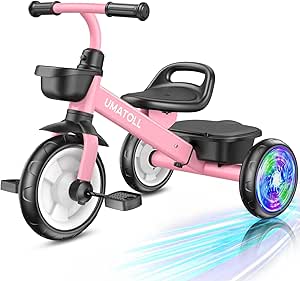 | Best for Growing Toddlers | Recommended age: 24 months–5 years | Frame material: Carbon steel | Seat: Two-position adjustable | VIEW LATEST PRICE | See Our Full Breakdown |
| SEREED Baby Balance Bike for Toddlers, 12–24 Months |  | Best for Early Balance Practice | Age range: 12–24 months | Bike type: Balance bike | Frame material: Aluminum alloy | VIEW LATEST PRICE | See Our Full Breakdown |
| Step2 Up & Down Roller Coaster Kids Ride-On Toy |  | Best for Active Shared Play | Recommended age: 2–5 years | Maximum weight: 50 lb | Track length: 9 ft | VIEW LATEST PRICE | See Our Full Breakdown |
| Little Tikes Push and Ride Racer |  | Best for Walker-to-Ride-On Versatility | Brand: Little Tikes | Dimensions: 22 × 10 × 17 in | Maximum weight capacity: 50 lb | VIEW LATEST PRICE | See Our Full Breakdown |
| VEVOR Ride On Push Car for Toddlers, Ages 19+ Months, with Music Steering Wheel, Horn & Under Seat Storage |  | Best for First-Time Riders | Recommended age: 19+ months (listed for ages 1–3) | Vehicle type: Foot-to-floor push car | Material: Impact-resistant PP plastic | VIEW LATEST PRICE | See Our Full Breakdown |
| CAT Front Loader Push Car for Kids |  | Best for Construction Pretend Play | Brand: CAT | Vehicle type: Front loader push car | Front bucket: Functional | VIEW LATEST PRICE | See Our Full Breakdown |
| Little Tikes Tractor & Cart Foot-to-Floor Ride-On |  | Best for Hauling Toys Outdoors | Brand: Little Tikes | Type: Foot-to-floor ride-on tractor | Age range: 1–5 years | VIEW LATEST PRICE | See Our Full Breakdown |
| Little Tikes Fairy Cozy Coupe |  | Best for Parent-Assisted Rides | Brand: Little Tikes | Made in: USA | Weight limit: 50 lb | VIEW LATEST PRICE | See Our Full Breakdown |
| Best Ride On Cars CAT Excavator Push Car – Licensed Caterpillar Ride-On Digger Toy for Toddlers |  | Best for Rotating Excavator Play | Brand: Best Ride On Cars | Character: CAT | Item type: Ride-on | VIEW LATEST PRICE | See Our Full Breakdown |
More Details on Our Top Picks
VTech Get Growing Tractor and Mower Ride-On Toy
Three play modes give this tractor more ways to hold a toddler’s attention than the John Deere Sit ‘N Scoot Activity Tractor, which is focused on foot-to-floor riding. Children can push the mower, ride the tractor, or remove the interactive driver for play on the go. Sounds, phrases, a radio, and pretend destinations add prompts for imaginative play, while the walk-behind mode gives early walkers a reason to move. That flexibility is the main draw, though families seeking a straightforward first ride-on may find the extra features less useful than the Radio Flyer Creativity Car’s hands-on activities. It supports children from 12 to 36 months, with a 42-pound maximum. The two AA batteries are another tradeoff: demo batteries are included, but new ones are recommended for regular play.
Pros:- Changes between walk-behind mower, ride-on tractor, and removable interactive driver
- Sound and pretend-play features give toddlers prompts for imaginative play
- Walk-behind mode supports movement as a child begins walking
Cons:- Requires two AA batteries, and demo batteries are intended for initial use
- 42-pound maximum may limit how long some children can use it
Best for: Families with toddlers who are starting to walk and would enjoy switching between push play, riding, and interactive pretend play.
Not ideal for: Buyers seeking a simple, battery-free ride-on or a higher weight limit; this toy requires batteries and supports up to 42 pounds.
- Age range:12–36 months
- Maximum weight:42 pounds
- Play modes:Walk-behind mower, ride-on tractor, removable interactive driver
- Battery requirement:2 AA batteries
- Included batteries:Demo batteries included; new batteries recommended for regular use
- Interactive features:Sounds, phrases, radio, and weather discovery
Our verdict“Choose this for a toddler who will benefit from several kinds of play in one toy; pick the John Deere Sit ‘N Scoot for simpler foot-powered riding.”
Gamfeiny Baby Balance Bike with Colorful Lighting Wheels for 10-36 Month Olds
For a toddler ready to practice steering and balance, the Gamfeiny Baby Balance Bike keeps the ride simple: no pedals, four wheels, and a lightweight 4.6-pound frame. Its battery-free light-up rear wheels add visual interest without adding a battery routine. Compared with the Radio Flyer Creativity Car, it offers fewer activities and no push-walker mode, but its bike-like layout gives riding and coordination more of the focus. Widened closed wheels and a 135-degree steering limit are intended to help keep movement controlled. The age range runs from 10 to 36 months, so it may be outgrown sooner than the John Deere Sit ‘N Scoot, which has a 60-pound limit. There are no brakes, and this design suits supervised early riding rather than stopping independently.
Pros:- Lightweight 4.6-pound frame is easier for adults to carry
- Battery-free rear-wheel lights add visual play without batteries
- Closed wheels and a 135-degree steering limit support controlled movement
- Tool-free assembly takes about three minutes
Cons:- The 10–36 month age range may mean a relatively short period of use
- No brakes, so toddlers cannot stop independently
- Offers fewer play modes and activities than the Radio Flyer Creativity Car
Best for: Caregivers of younger toddlers who want a lightweight, no-pedal ride-on for practicing steering and balance under supervision.
Not ideal for: Families wanting a toy with walker support, varied activity play, or a ride-on that can serve a larger child for longer.
- Age range:10–36 months
- Frame material:Carbon steel
- Handles:EVA
- Seat:PU
- Weight:4.6 pounds
- Wheels:4 silent wheels; no pedals
- Steering limit:135 degrees
- Assembly:Tool-free; approximately 3 minutes
Our verdict“Pick this for a younger toddler practicing balance and steering; choose the Radio Flyer Creativity Car for walker support and more varied play.”
Radio Flyer Creativity Car, 3-in-1 Toddler Walker & Ride-On Toy
The Radio Flyer Creativity Car is the strongest fit here for a toddler who is still learning to walk: its anti-tip push-walker mode adds support before the child is ready to scoot independently. Once riding becomes appealing, it works as a foot-powered ride-on, while 17 sensory activities offer another reason to return to it. That makes it more play-focused than the John Deere Sit ‘N Scoot Activity Tractor, which centers on riding, and less character-driven than the VTech tractor’s sounds and pretend destinations. A flip-open seat provides a place for toys, though its 42-pound capacity may be outgrown sooner than the John Deere’s 60-pound limit. Riding depends on scooting, so it will not suit families looking for pedals or powered movement.
Pros:- Three modes support a move from pushing to riding and sensory play
- Anti-tip design and stable base support beginner walkers
- 17 interactive activities encourage hands-on exploration
- Flip-open seat provides under-seat toy storage
Cons:- 42-pound weight capacity may be outgrown sooner than the John Deere tractor’s 60-pound limit
- Ride-on mode relies on scooting rather than pedals or power
Best for: Families with a new or unsteady walker who want one toy for supported walking, scooting, and hands-on activity play.
Not ideal for: Caregivers seeking a longer-lasting ride-on for a larger toddler, or a model with pedals or motorized movement.
- Recommended age:1–3 years
- Weight capacity:42 pounds
- Modes:Push walker, ride-on, sensory play
- Interactive activities:17
- Storage:Under-seat flip-open storage
- Safety feature:Anti-tip design with stable base
Our verdict“Choose this for a beginning walker who will use the support and activity features; the John Deere Sit ‘N Scoot is a better match for a more ride-focused pick.”
John Deere Sit ‘N Scoot Activity Tractor Ride-On Toy for Kids 18 Months and Up, Green
The John Deere Sit ‘N Scoot suits families who want an uncomplicated, foot-powered first ride-on with a familiar tractor look. Its wide wheelbase is designed to make maneuvering feel stable, while the lightweight build helps toddlers move it indoors or outside. Compared with the VTech Get Growing Tractor and Mower, it skips the sounds, pretend destinations, and transforming play modes in favor of straightforward scooting. Its 60-pound weight limit also exceeds the VTech and Radio Flyer Creativity Car limits, which may give it a longer useful window for some children. The tradeoff is a narrower play experience: there are no pedals or motor, and the supplied details describe plastic construction without a durability rating for rough use. It is a riding choice, not a multi-activity center.
Pros:- Wide wheelbase is designed for stable foot-to-floor riding
- 60-pound weight limit is higher than the VTech and Radio Flyer options
- Lightweight design helps toddlers maneuver it
- Quick assembly gets it ready for play in minutes
Cons:- Kid-powered only, with no pedals or motor
- Offers fewer interactive play features than the VTech tractor or Radio Flyer car
- Plastic construction may not withstand rough use
Best for: Families wanting a light, simple tractor-themed ride-on for a toddler aged 18 months or older, especially for use across indoor and outdoor spaces.
Not ideal for: Buyers who want interactive sounds, walker support, several play modes, or a toy specified for rough handling.
- Recommended age:18 months and up
- Weight limit:60 pounds
- Drive:Foot-to-floor; kid-powered
- Wheelbase:Wide design for stability
- Use:Indoor and outdoor maneuvering
- Assembly:Easy assembly; ready in minutes
- Brand:TOMY
- Sub-brand:John Deere
Our verdict“Pick this for a simple tractor ride-on with a higher stated weight limit; choose the VTech model for interactive play and more modes.”
Step2 Whisper Ride II Kids Push Car, Blue
Unlike the self-propelled John Deere Sit ‘N Scoot Activity Tractor, the Step2 Whisper Ride II is built around an adult pushing the car. Its fold-under handle and extra-wide rear grip give caregivers practical ways to guide and carry it, while whisper-quiet wheels suit outings where a noisy ride would be unwelcome. A seat belt, steering wheel, horn, cup holders, and under-hood storage give the child things to use along the way. That makes it more outing-focused than the Radio Flyer Creativity Car, whose push-walker mode is aimed at early walking and whose ride-on depends on scooting. The Step2 has a 50-pound capacity, between those two options’ stated limits. Its larger footprint and required adult assembly call for planning around storage and setup.
Pros:- Fold-under handle and wide rear grip support adult steering and handling
- Whisper-quiet wheels suit walks where wheel noise matters
- Seat belt and steering wheel add ride features for the child
- Cup holders and under-hood storage provide places for small items
Cons:- Adult assembly is required
- At 45.5 inches long, it needs more storage room than compact scoot toys
- Adult push handle means the child is not powering the ride
Best for: Caregivers who want a push car for guided walks, with room for a toddler and small outing essentials.
Not ideal for: Families seeking a compact, child-powered ride-on, or anyone who cannot accommodate adult assembly and a 45.5-inch-long vehicle.
- Recommended age:18 months and up
- Maximum weight capacity:50 pounds
- Assembled dimensions:34 in H × 19 in W × 45.5 in D
- Material:Double-walled plastic
- Color:Blue
- Handle:Fold-under adult push handle
- Included features:Adjustable seat belt, steering wheel, horn, two cup holders, under-hood storage
- Assembly:Adult assembly required
Our verdict“Choose this for adult-guided outings with a toddler; the John Deere Sit ‘N Scoot is a better fit when the child should power the ride independently.”
VEVOR Ride On Push Car for Toddlers 19+ Months, Red
The VEVOR Ride On Push Car suits toddlers who are ready to sit and steer while an adult provides the movement. Its music steering wheel and horn add hands-on play, while the under-seat compartment gives little riders a place for small essentials. Compared with the Little Tikes Push and Ride Racer, this model adds music and storage; the Little Tikes instead doubles as a push walker. The four-wheel base, wide backrest, and anti-backward support bar address stability, and its stated 48.5-pound capacity is a useful fit detail for a push car. The tradeoff is that it depends on an adult to push and is recommended for ages 1–3, so it offers less independent riding and a shorter age window than the Umatoll tricycle.
Pros:- Musical steering wheel and horn give toddlers interactive features to operate
- Under-seat storage holds small items during play
- Four-wheel design, wide backrest, and anti-backward support bar support a stable seated ride
- Stated weight capacity is 48.5 pounds
Cons:- Requires an adult to provide movement; it is not motorized
- Recommended age range is limited to 19 months through 3 years
Best for: Caregivers seeking a music-equipped push car with storage for a toddler aged 19 months to 3 years
Not ideal for: Families looking for a child-powered ride that supports longer-term independent riding, since an adult must push and the recommended age range is limited
- Recommended age:19+ months (1–3 years)
- Material:Impact-resistant polypropylene (PP)
- Weight capacity:48.5 lb / 22 kg
- Wheel design:Four-wheel
- Steering wheel:Music and horn
- Storage:Under-seat compartment
- Safety features:Wide backrest and anti-backward support bar
- Color:Red
Our verdict“Choose this for an adult-pushed ride with music and storage; choose the Little Tikes Push and Ride Racer if a push-walker function matters more.”
Umatoll Tricycle for Toddlers Ages 2–5
The Umatoll Tricycle is the longer-use pick here for families whose toddler is ready to pedal: its two-position adjustable seat and 2–5 age recommendation give it more room to grow than the VEVOR push car, which is recommended for ages 1–3 and needs an adult to move it. A wide wheelbase and extended rear wheels are intended to help keep the tricycle steady, while the removable front and rear baskets give riders a reason to bring toys along. The light-up rear wheels need no batteries, adding a visual detail without another power source. Compared with the SEREED balance bike, this has baskets and a stated age range extending to five, but the product details do not specify weight capacity, brakes, or dimensions. That leaves fit and handling questions for buyers to check before choosing.
Pros:- Two-position adjustable seat can accommodate a growing rider
- Wide wheelbase and extended rear wheels are designed to support stability
- Removable front and rear baskets carry toys
- Rear wheels light up as they turn without batteries
Cons:- Product details do not state a weight capacity or dimensions
- Brake specifications are not provided, leaving an important handling detail unclear
Best for: Families seeking a toddler tricycle with an adjustable seat and removable baskets for children aged 2–5
Not ideal for: Buyers who need clearly stated weight limits, dimensions, or braking details before deciding, since those specifications are not provided
- Recommended age:24 months–5 years
- Frame material:Carbon steel
- Seat:Two-position adjustable
- Baskets:Removable front and rear
- Rear wheel feature:Lights up while rolling; no batteries needed
- Manufacturer part number:UT301
- Included components:Basket
Our verdict“Pick the Umatoll for an adjustable, basket-equipped tricycle with a broad stated age range, provided its unspecified fit and braking details meet your needs.”
SEREED Baby Balance Bike for Toddlers, 12–24 Months
The SEREED Baby Balance Bike targets an earlier stage than the Umatoll tricycle: it is pedal-free and recommended for 12–24 months, letting young toddlers practice steering and balance with their feet on the ground. Its 3.5-pound weight makes it easier for an adult to carry than the larger Step2 coaster setup, while enclosed, widened wheels and a 135-degree turning limit are designed to support steadier movement. Non-slip wheels are listed for indoor and outdoor use. The tradeoff is a narrow age window, and there is no brake, so it will not suit families who want a stopping mechanism or a ride-on that grows into later toddler years. Unlike the Umatoll, this is a balance-practice bike rather than a tricycle with baskets.
Pros:- Pedal-free setup lets toddlers propel themselves with their feet
- Lightweight 3.5-pound frame is easy for an adult to carry
- Widened enclosed wheels and a 135-degree turning limit are designed to support stability
- Non-slip wheels are listed for indoor and outdoor riding
Cons:- No brake is specified
- Recommended age range ends at 24 months
Best for: Caregivers of 12–24-month-olds seeking a lightweight, pedal-free bike for supervised balance and steering practice
Not ideal for: Families seeking a ride-on for older toddlers or a bike with brakes, since this model has a limited age range and no brake
- Age range:12–24 months
- Bike type:Balance bike
- Frame material:Aluminum alloy
- Wheel size:6.7 in
- Weight:3.5 lb
- Maximum weight recommendation:55 lb
- Minimum user height:18 in
- Brake:None
- Turning limit:135°
Our verdict“Choose the SEREED for lightweight balance practice in the first two years, while the Umatoll is the better fit for families seeking a tricycle with a longer stated age range.”
Step2 Up & Down Roller Coaster Kids Ride-On Toy
The Step2 Up & Down Roller Coaster makes the most sense for households with room for a fixed play area: its 9-foot track turns a ride-on car into a repeated climb-and-ride activity for ages 2–5. Recessed retainer wells hold the car at the top, giving a young child a place to position it before riding down. That active setup differs from the VEVOR Ride On Push Car, which is compact, seated play guided by an adult; Step2 invites more independent movement but occupies far more floor space. The plastic track disassembles for storage and is rated for indoor or outdoor use, yet its 110-inch width still makes storage a real constraint. Expansion is limited to a specific Step2 track pack sold separately, so it is less flexible than a standalone ride-on.
Pros:- Nine-foot track supports repeated active riding
- Can be used indoors or outdoors
- Track disassembles for storage and is described as easy to assemble
- Double-walled plastic construction is designed for durable play
Cons:- Requires substantial floor space, with dimensions of 110 inches wide
- Compatible expansion track is sold separately and limited to a specified Step2 pack
Best for: Families with children aged 2–5 who have a dedicated indoor or outdoor area for active track play
Not ideal for: Apartment households or anyone without room for a track over 9 feet long, or buyers wanting a compact ride-on for everyday floor play
- Recommended age:2–5 years
- Maximum weight:50 lb
- Track length:9 ft
- Dimensions:12.75 in H × 110 in W × 27 in D
- Material:Double-walled durable plastic
- Use:Indoor or outdoor
- Expansion compatibility:Step2 Farther and Faster Coaster Track Expansion: Second Edition; sold separately
Our verdict“Choose Step2 for active coaster play if you can dedicate space to its track; for a compact push-along ride, the VEVOR is a better fit.”
Little Tikes Push and Ride Racer
The Little Tikes Push and Ride Racer earns its place for toddlers who may benefit from one toy serving two stages: it works as a push walker and foot-to-floor ride-on. Its low seat makes mounting and dismounting simpler, while the high back, sturdy handles, and child-sized push bar offer support during early movement. Compared with the VEVOR push car, this one adds the walker function, while VEVOR brings a musical steering wheel, horn, and under-seat storage. The racer has a stated 50-pound capacity and is listed for indoor or outdoor use, but the age field says only “Baby,” which gives less precise guidance than the SEREED’s 12–24-month range. Assembly is required, and the provided details do not specify material or wheel features.
Pros:- Combines push-walker use with foot-to-floor riding
- Low seat makes getting on and off easier
- High back and sturdy handles support a young rider
- Listed for indoor and outdoor use with a 50-pound capacity
Cons:- Assembly is required
- Age range is listed only as “Baby,” with no more specific guidance
- Material and wheel specifications are not provided
Best for: Caregivers seeking a simple toy that can support early pushing and later foot-to-floor riding
Not ideal for: Buyers who need a precise age recommendation or want built-in music and storage, since the age is listed only as “Baby” and those features are not specified
- Brand:Little Tikes
- Dimensions:22 × 10 × 17 in
- Maximum weight capacity:50 lb
- Age range:Baby
- Included components:Screws
- Assembly:Required
- Model number:4861
- Use:Indoor or outdoor
Our verdict“Choose this for walker-to-ride-on versatility; pick the VEVOR if music and under-seat storage matter more.”
VEVOR Ride On Push Car for Toddlers, Ages 19+ Months, with Music Steering Wheel, Horn & Under Seat Storage
I’d pick the VEVOR Ride On Push Car for a toddler ready to practice moving under their own power, with an adult-pushed option when little legs tire. Its four-wheel base, wide backrest, and anti-backward support bar suit early rides better than a balance bike, which asks children to steer and balance on two wheels. Music and a horn add simple interactive play, while the under-seat compartment gives a child a place for a small toy or bottle.
The tradeoff is that this is a basic foot-to-floor car: it has no motor, and its storage won’t fit larger items. Compared with the CAT Front Loader Push Car, it gives up construction-themed bucket play in favor of a clearly stated 22 kg capacity and anti-backward support. I’d skip it if you want a ride-on that moves without pushing.
Pros:- Four-wheel design and anti-backward support bar suit early riding practice
- Stated capacity of 48.5 lb (22 kg)
- Music steering wheel and horn add interactive play
- Under-seat storage holds small essentials
Cons:- No motor; the child must propel it or an adult must push
- Under-seat compartment may not fit larger toys or belongings
Best for: Families with a toddler aged 19 months or older who want a stable first foot-to-floor car with simple sounds and space for a small toy.
Not ideal for: Caregivers seeking powered movement or children who need room to carry larger toys; this car requires foot power or an adult push, and its storage is compact.
- Recommended age:19+ months (listed for ages 1–3)
- Vehicle type:Foot-to-floor push car
- Material:Impact-resistant PP plastic
- Weight capacity:48.5 lb / 22 kg
- Wheels:Four-wheel design
- Steering wheel:Music-playing steering wheel with horn
- Storage:Under-seat compartment
- Support features:Wide backrest and anti-backward support bar
Our verdict“Choose this for a toddler’s first stable foot-to-floor car if simple sounds and small-item storage matter more than a powered ride or bucket play.”
CAT Front Loader Push Car for Kids
The CAT Front Loader Push Car earns its place through play that goes beyond steering and honking: the functional front bucket lets toddlers scoop and move small toys as part of a construction game. That gives it a more specific pretend-play focus than the VEVOR Ride On Push Car, whose appeal centers on a stable four-wheel ride and a stated weight capacity. Under-seat storage can keep extra play pieces close, and the steering wheel adds music and horn sounds.
The available details don’t state an age range, weight limit, or material, so I can’t compare its fit or capacity as confidently as I can for the Little Tikes Tractor & Cart. The bucket also makes sense mainly for children drawn to digging games. Choose this CAT model for a bucket-focused play routine; skip it if you want a cart for carrying belongings or need clearly specified capacity information.
Pros:- Functional front bucket supports hands-on construction pretend play
- Under-seat storage keeps small toys nearby
- Music and horn sounds add steering-wheel interaction
- Supportive backrest is included
Cons:- Product details provide no age range or weight limit
- Bucket-centered play may be less appealing to toddlers who prefer carrying toys in a cart
Best for: Families whose toddlers enjoy scooping toys and acting out construction jobs, and who want a ride-on with a functional bucket.
Not ideal for: Buyers who need a stated weight limit or age range before choosing, or children more interested in hauling belongings than bucket play.
- Brand:CAT
- Vehicle type:Front loader push car
- Front bucket:Functional
- Storage:Under-seat storage
- Steering wheel:Music and horn sounds
- Seat support:Supportive backrest
Our verdict“Pick this CAT push car for a toddler who loves pretend digging, but choose the Little Tikes Tractor & Cart if carrying cargo is the bigger draw.”
Little Tikes Tractor & Cart Foot-to-Floor Ride-On
For a toddler who wants to take toys along on every ride, I’d choose the Little Tikes Tractor & Cart. Its attachable cart carries belongings separately from the seat, making it a more useful hauler than the small under-seat compartments on the VEVOR Ride On Push Car and CAT Front Loader Push Car. Durable tires and a spacious seat point toward longer outdoor play, while the working steering wheel and horn add familiar tractor-style pretend driving.
That extra cargo capacity comes with a setup step: an adult must assemble the tractor and attach the cart. Its listed age range extends from 1 to 5 years, but the foot-to-floor design still depends on a child’s ability to propel it. Compared with the Little Tikes Fairy Cozy Coupe, it favors open-ended hauling over parent-push features and built-in interactive details. Choose it for cargo play; skip it if a built-in push handle is a priority.
Pros:- Attachable cart carries belongings beyond what under-seat compartments can hold
- Durable tires are described for outdoor play
- Spacious seat is designed to accommodate growing children
- Working steering wheel and horn support tractor pretend play
Cons:- One-time adult assembly is required
- Foot-to-floor propulsion may not suit children who need an adult push option
Best for: Families with a toddler who likes outdoor foot-powered rides and wants to bring toys or belongings along in a separate cart.
Not ideal for: Caregivers looking for a push handle for adult-led rides or a ready-to-play toy without adult assembly.
- Brand:Little Tikes
- Type:Foot-to-floor ride-on tractor
- Age range:1–5 years
- Cart:Attachable cart
- Steering wheel:Working steering wheel
- Sound feature:Horn
- Tires:Durable tires designed for outdoor play
- Assembly:One-time adult assembly required
Our verdict“Choose this tractor if hauling toys outdoors matters more than a parent push handle or a simple assembly-free setup.”
Little Tikes Fairy Cozy Coupe
The Little Tikes Fairy Cozy Coupe stands out for families who want to help a young child ride before they can comfortably use a foot-to-floor toy on their own. Its parent push handle and removable floorboard let the setup adapt as the child grows, a combination the VEVOR Ride On Push Car doesn’t offer. For self-directed pretend play, the working horn, clicking ignition, opening gas cap, and rear cup holders give children several small details to explore.
Those features make it more interactive than the Little Tikes Tractor & Cart, which puts its emphasis on hauling toys outdoors. The Cozy Coupe requires adult assembly, and its 50 lb weight limit gives a clear ceiling that may narrow its useful lifespan. Cup holders are built in, but no cup is included. I’d choose it for assisted rides and car-themed details, not for carrying a larger load.
Pros:- Parent push handle supports adult-assisted rides
- Removable floorboard adapts the setup as a child grows
- Horn, ignition switch, and opening gas cap invite pretend play
- 360-degree spinning front wheels support maneuvering
Cons:- Adult assembly is required
- 50 lb weight limit may shorten its usable span for some children
- Rear cup holders are included, but a cup is not
Best for: Caregivers who want a car-style ride-on that supports adult pushing as well as independent play as a child grows.
Not ideal for: Families seeking a separate cargo cart, an assembly-free option, or a ride-on for a child above its 50 lb weight limit.
- Brand:Little Tikes
- Made in:USA
- Weight limit:50 lb
- Push feature:Parent push handle
- Floorboard:Removable
- Interactive details:Working horn, clicking ignition switch, and opening gas cap
- Front wheels:Spin 360 degrees
- Other features:Rear cup holders and rugged tires
- Assembly:Required
Our verdict“Choose the Fairy Cozy Coupe for parent-assisted rides and interactive car details, provided the 50 lb limit fits your child’s expected use.”
Best Ride On Cars CAT Excavator Push Car – Licensed Caterpillar Ride-On Digger Toy for Toddlers
This CAT Excavator Push Car is the construction pick for a toddler who wants to do more than scoop: its functional bucket and rotating design make excavator-style pretend play its main draw. Like the CAT Front Loader Push Car, it has an under-seat compartment and music and horn sounds on the steering wheel. The rotating feature gives it a distinct play angle, while the Little Tikes Tractor & Cart is a better match for carrying toys from place to place.
The supplied product details don’t list an age range, weight limit, or material, so families can’t use those specs to judge fit as easily as they can with the VEVOR Ride On Push Car. The backrest may also provide limited support for taller toddlers. I’d pick this model for a child especially drawn to excavators and rotating play; skip it if seat fit details or cargo carrying matter more than the CAT theme.
Pros:- Functional bucket gives toddlers an interactive construction-play feature
- Rotating design adds a distinct play element compared with a standard push car
- Under-seat storage keeps small toys close
- Music and horn sounds add steering-wheel interaction
Cons:- Product details don’t state an age range or weight limit
- Backrest may provide limited support for taller toddlers
Best for: Families with a toddler who is especially interested in excavators and wants bucket play with a rotating feature.
Not ideal for: Buyers who need a stated age range, weight limit, or material, or taller toddlers who may need more backrest support.
- Brand:Best Ride On Cars
- Character:CAT
- Item type:Ride-on
- Model number:CATEX_Push_F2F
- Front bucket:Functional
- Design feature:Rotating design
- Storage:Under-seat storage
- Steering wheel:Music and horn sounds
- Backrest:Sturdy backrest
Our verdict“Choose this CAT excavator for rotating bucket play, but compare fit carefully because the supplied details omit age and capacity information.”

How We Picked
I compared these 15 ride-on toys for toddler-specific fit: how children move or are moved, the stated age range, the design’s apparent stability, and whether the format suits early walkers or more confident riders. I also weighed practical details that shape everyday use, including steering and caregiver control, storage, footprint, and whether features support useful play or mainly add complexity. Product names and descriptions establish the features discussed here; I do not treat them as evidence of independent safety testing.
The order gives priority to versatility and ease of matching to a toddler’s stage. That puts the Radio Flyer Creativity Car first for its combined walker and ride-on roles, followed by simple balance and push options that fit distinct needs. More specialized tractors, themed vehicles, and the roller coaster rank lower because they depend more on a child’s interests, available space, or a narrower play style. Value here means practical usefulness and adaptability, not price.
Factors to Consider When Choosing Ride-on Toys For Toddlers
Choosing a ride-on starts with how your toddler will use it day to day. I would match the toy to the child’s current movement skills, the surfaces available, and the adult’s role in play before weighing themes or extra features.
Match the toy to your toddler’s current skills
Age ranges are a useful first filter, but they cannot show whether a child can sit securely, reach the floor, or steer with control. A new walker may benefit from a format that supports more than one way to play, while a confident toddler may want to push off and direct the ride independently. Check the product’s stated age and any size guidance against your child’s ability to climb on and off. A toy that is too advanced can frustrate; one they quickly outgrow may see little use. If siblings will share it, choose for the least experienced rider and supervise accordingly.
Decide who should control the ride
Push cars give a caregiver more say over direction and pace, which can help on outings or when a toddler is not ready to steer. Self-propelled scooters and balance bikes give children more control, but they need space and supervision suited to that independence. A steering wheel does not automatically mean a child can manage turns safely. Think about whether you want a toy for shared walks, indoor play, or independent movement in a clear area. A common mismatch is choosing based on a child’s enthusiasm for driving while overlooking how much adult steering the toy requires.
Check the space and surface before choosing
Measure the intended play area and the route to where the toy will be stored. A wide vehicle or a ride-on track can be awkward in a small home even if its play features are appealing. Smooth, open flooring is generally easier for small wheels than thick rugs, uneven paving, or crowded rooms. Outdoor use also calls for a clear path away from stairs, traffic, and other hazards. Consider where the toy can be ridden and parked, rather than assuming it will work equally well indoors and outside.
Separate useful features from extra stimulation
Storage, a push handle, or a second play mode can solve a real household need. Music, lights, horns, and elaborate themes may hold a child’s attention, but they can add noise, parts, and bulk without improving fit or control. Ask which feature your toddler will use repeatedly and which simply looks appealing in a listing. More features can also mean more surfaces and mechanisms to keep clean. When in doubt, a simple toy that fits the child and the home can be used more often than a feature-heavy one that is hard to manage.
Plan for supervision, care, and safe use
Read the manufacturer’s age, weight, assembly, and use instructions before the first ride. Look for a stable setup and a riding position your child can manage, then keep play on an appropriate clear surface under adult supervision. Ride-on toys are not substitutes for helmets or other protective gear when the product and setting call for them. Check wheels, fasteners, and moving parts periodically, especially after outdoor use or assembly. A toy that is easy to wipe down and store may be a better everyday choice than one that is harder to maintain.
Frequently Asked Questions
Should I choose a balance bike or a push car for my toddler?
Choose based on whether your toddler is ready to propel and steer independently or needs an adult to guide the ride. A balance bike such as the SEREED or Gamfeiny puts more responsibility on the child and needs a suitable open area. A push car such as the Step2 Whisper Ride II gives the caregiver more control and can work better for shared outings. Neither format is automatically better for every age in its labeled range. Consider your child’s coordination and the places you expect to use it.
Can a ride-on toy help a child who is just learning to walk?
Some designs combine walker and ride-on play, which can make them more adaptable for a child gaining confidence on their feet. The Radio Flyer Creativity Car is the clearest match in this roundup for that two-stage idea. A ride-on should not be treated as a walking aid or used without supervision, and a child needs to be able to interact with it safely. Check the manufacturer’s directions and watch how your toddler handles the toy on a clear, stable surface. If they cannot control it comfortably, wait and reassess as their skills develop.
How much room do toddler ride-on toys need?
The space needed depends on the toy’s width, turning room, and whether it has a track or cart. A compact scoot toy can still need a clear path for turning and stopping, while the Step2 Up & Down Roller Coaster needs a dedicated footprint. Measure doorways and storage spots as well as the riding area. Leave room away from stairs, furniture edges, and other children. If space is limited, a simpler design that stores easily may get more regular use.
Are ride-on toys suitable for both indoor and outdoor play?
Some can be used in either setting, but the surface changes how easily they move and turn. Smooth floors and level paths are generally more manageable than thick carpet or uneven ground for small-wheeled toys. Check the manufacturer’s intended use and inspect the play area before riding. Outdoor rides need particular attention to boundaries, traffic, slopes, and loose debris. If you need one toy for both settings, favor a manageable footprint and a design that your child can control on the surfaces you actually have.
Do lights, music, or themed designs make a ride-on toy a better choice?
Those extras can make a toy more appealing to a child who loves a particular theme or sound, but they do not establish that it is a better fit. A tractor or construction vehicle may inspire pretend play, while lights and music can add stimulation. The tradeoff is that added features may increase bulk, noise, or cleaning needs. First check that your toddler can sit, reach, and steer or ride the toy as intended. Then decide whether the theme or extras are worth the space they occupy.
Conclusion
For most families, I would start with the Radio Flyer Creativity Car as best overall because it combines walker and ride-on play. The best value in practical use is the Little Tikes Push and Ride Racer for buyers who want a straightforward foot-to-floor option without a specialized play setup. For a premium-feeling, caregiver-guided outing toy, consider the Step2 Whisper Ride II; for beginners building independent balance, compare the SEREED and Gamfeiny bikes against your child’s size and coordination. If your toddler is drawn to farm or construction play, the John Deere tractor, Little Tikes Tractor & Cart, CAT Front Loader, or CAT Excavator offers a more specific theme. Choose the format your child can manage and the space you can comfortably give it.
Cold & flu season Picks
humidifiers
As an affiliate, we earn on qualifying purchases.