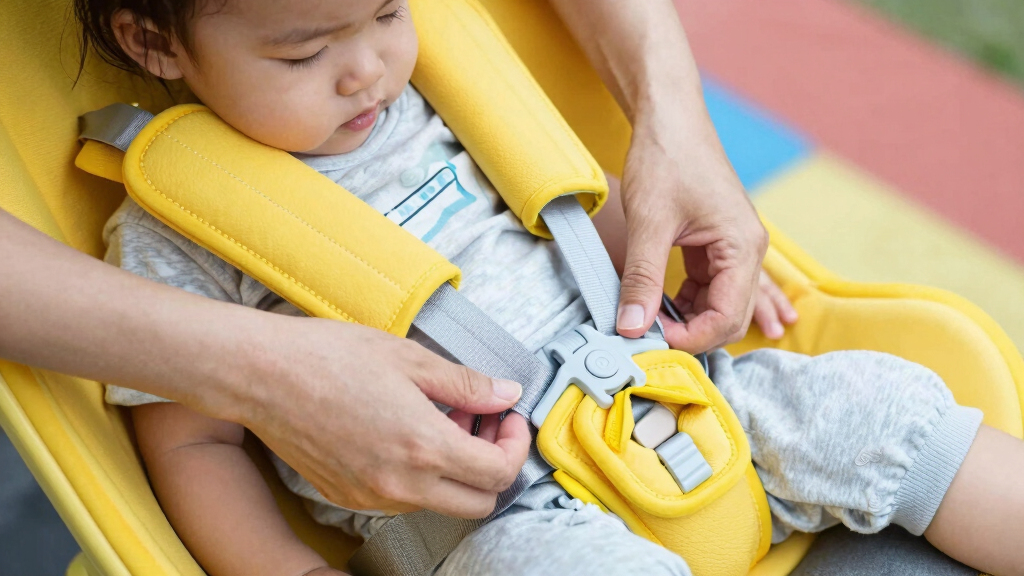

Child safety harnesses range from simple wrist links for keeping a toddler nearby to adjustable vests with handles for children who need more support. My best overall pick is the Accmor 3-in-1 Toddler Harness for its choice of harness, wrist link, or combined use; the Dr.meter 2 Pack stands out for families who want two wrist links with a key lock, while the Safety Walking Vest Harness with Reflective Design better suits older children who need a vest-style fit. The main tradeoff is between freedom of movement and closer physical control, with fit, age range, and the child’s comfort shaping which style makes sense. A wrist link may feel less restrictive, but it offers different support from a vest with a grab handle. Read on for the full comparison, buying advice, and picks by need.

Get baby and family essentials delivered free — and shop member deals
- Fast, free delivery on millions of items
- Access to Prime Big Deal Days deals on October 6–7
- Prime Video, Amazon Music and more included
Complete the kit


Key Takeaways
- Versatility distinguishes the toddler picks: the Accmor 3-in-1 offers wrist-link, harness, and combined setups, while simpler wrist links are more focused on keeping a child close.
- Older-child needs call for a different fit: several options are specifically sized for ages 6–12, including vest or adjustable harness designs that differ from toddler walking leashes.
- Visibility and control are separate benefits: reflective details can help a child stand out, while a vest handle offers a caregiver another way to guide them.
- Locking features suit particular situations: the Lehoo Castle induction lock and Dr.meter key-lock wrist links add a locking mechanism, which may be useful for some outings but adds setup and handling steps.
- There is no single style for every family: wrist links, wearable vests, multi-mode harnesses, and the butterfly design with steel wires suit different preferences for movement, fit, and supervision.
| Lehoo Castle Upgraded Anti-Lost Wrist Link Kid Harness with Induction Lock (Pink) |  | Best for Reflective Wrist-Link Visibility | Material: Cotton, PU, and solid stainless steel | Target gender: Female | Intended age: Children under 10 | VIEW LATEST PRICE | See Our Full Breakdown |
| Safety Harness Leash for Kids with Autism, Special Needs, and Older Children Ages 6-12 |  | Best for Adjustable Older-Child Fit | Recommended age: 3–12 years | Waist circumference: 22.8–35.4 inches | Material: Tightly woven webbing and metal parts | VIEW LATEST PRICE | See Our Full Breakdown |
| Toddler Leash – Baby Walking Safety Harness and Child Anti-Lost Wrist Link for Girls and Boys (Green) |  | Best for Young Toddlers | Age range: 1–5 years | Material: Polyester and nylon | Color: Green | VIEW LATEST PRICE | See Our Full Breakdown |
| Safety Walking Vest Harness with Reflective Design for Autism & ADHD Kids |  | Best for Low-Light Vest Support | Material: Padded, gentle fabric | Chest size: 24.4–34.64 inches | Shoulder straps: 15.74–29.13 inches | VIEW LATEST PRICE | See Our Full Breakdown |
| Dr.meter Toddler Leash 2 Pack Safety Anti-Lost Wrist Link with Key Lock |  | Best for Two Children or Two Reach Options | Child wrist length: 5.51–8.27 inches | Adult wrist length: 5.12–9.84 inches | Blue link extension: 8.2 feet | VIEW LATEST PRICE | See Our Full Breakdown |
| Accmor Toddler Leash Harness, Child Harness Baby Leash + Anti-Lost Wrist Link for 1-5 Years |  | Best for Flexible Toddler Outings | Age range: 1 to 5 years | Item weight: 9.9 ounces | Package dimensions: 7.6 x 6.02 x 1.77 inches | VIEW LATEST PRICE | See Our Full Breakdown |
| Walking Safety Harness for Kids 6-12 Years, Adjustable Leash Vest for Special Needs, Autism, ADHD |  | Best for Older Children | Age range: 6 to 12 years | Material: High-density polyester with soft cotton padding | Fit: Adjustable shoulder, chest, and waist straps | VIEW LATEST PRICE | See Our Full Breakdown |
| Safety Harness Leash for Special Needs Child Aged 6-12 Years Fully Adjustable, Sturdy Walking Harness with Grab Handle |  | Best for Hands-On Control | Age range: 3 to 12 years listed; title specifies 6 to 12 years | Waist circumference: 22.4 to 32.7 inches | Material: Webbing | VIEW LATEST PRICE | See Our Full Breakdown |
| Hobble De Hoo Autism Safety Harness with Leash for Kids 2–7 |  | Best Padded Vest for Younger Children | Age range: 2 to 7 years | Material: Durable fabric | Construction: Reinforced stitching | VIEW LATEST PRICE | See Our Full Breakdown |
| Accmor 3-in-1 Toddler Harness Leashes + Anti-Lost Wrist Link for Kids |  | Best Lightweight Toddler Set | Age range: 1 to 5 years | Material: Cotton, nylon, stainless steel, and PU | Item weight: 7 ounces | VIEW LATEST PRICE | See Our Full Breakdown |
| Toddler Leash & 4-in-1 Adjustable Anti-Lost Harness with Reflective Safety Strap and Wrist Link |  | Best for Flexible Outdoor Use | Material: Stainless steel wire and PU | Adjustability: Adjustable | Suitable age: Under 6 years | VIEW LATEST PRICE | See Our Full Breakdown |
| Toddler Safety Harness with Butterfly Design and Steel Wires |  | Best for a Simple, Child-Friendly Design | Material: Breathable polyester and nylon rope | Steel wire count: 49 wires | Age range: 1–5 years | VIEW LATEST PRICE | See Our Full Breakdown |
| Dr.meter 3-in-1 Toddler Harness Leash with Dinosaur Design, 8.2ft Anti-Lost Wrist Link, Child Safety Harness for Outdoor Activities |  | Best for Longer Reach and Small Essentials | Ways of use: 4 | Extended link length: 8.2 feet | Design: Dinosaur | VIEW LATEST PRICE | See Our Full Breakdown |
| child safety harnesse | Material | Age range |
|---|---|---|
| Lehoo Castle Upgraded Anti-Los | Cotton, PU, and solid stainless steel | — |
| Safety Harness Leash for Kids | Tightly woven webbing and metal parts | — |
| Toddler Leash | Polyester and nylon | 1–5 years |
| Safety Walking Vest Harness wi | Padded, gentle fabric | — |
| Dr.meter Toddler Leash 2 Pack | Steel wire coated in PU | — |
| Accmor Toddler Leash Harness | — | 1 to 5 years |
| Walking Safety Harness for Kid | High-density polyester with soft cotton padding | 6 to 12 years |
| Safety Harness Leash for Speci | Webbing | 3 to 12 years listed; title specifies 6 to 12 years |
| Hobble De Hoo Autism Safety Ha | Durable fabric | 2 to 7 years |
| Accmor 3-in-1 Toddler Harness | Cotton, nylon, stainless steel, and PU | 1 to 5 years |
| Toddler Leash & 4-in-1 Adjusta | Stainless steel wire and PU | — |
| Toddler Safety Harness with Bu | Breathable polyester and nylon rope | 1–5 years |
| Dr.meter 3-in-1 Toddler Harnes | — | — |
More Details on Our Top Picks
Lehoo Castle Upgraded Anti-Lost Wrist Link Kid Harness with Induction Lock (Pink)
The Lehoo Castle pairs a wrist link with an upgraded magnetic lock and reflective strips, making it a practical choice for families who want a child connected to an adult in busy or dimly lit places. Its spring rope allows some movement while keeping the child within reach. Compared with the Dr.meter Toddler Leash 2 Pack, this is a single wrist-link option with a magnetic lock rather than two key-lock links with specified extension lengths. That simpler setup may suit everyday outings, though the supplied details give less guidance on its reach. The soft, adjustable design is intended for children under 10, but a wrist link offers less control than the vest and grab handle on the Safety Walking Vest Harness. Strong pullers or children who need closer physical support may be better served by a vest-style harness.
Pros:- Magnetic lock adds a locking feature to the wrist-link connection
- Reflective strips improve visibility in low light
- Adjustable design and soft, breathable materials support a more comfortable fit
- Spring rope allows some movement while keeping the child connected
Cons:- Intended for children under 10, limiting its useful age range
- May not suit very active children or strong pullers
- Provided details do not specify the spring rope’s extension length
Best for: Families with children under 10 who want a reflective wrist link for everyday walks and crowded outings
Not ideal for: Caregivers of strong pullers or children who need close torso support, since this wrist-link design may offer less control than a vest harness
- Material:Cotton, PU, and solid stainless steel
- Target gender:Female
- Intended age:Children under 10
- Fit:Adjustable
- Lock:Upgraded magnetic lock
- Visibility feature:Reflective strips
- Item weight:3.84 ounces
- Package dimensions:6.38 x 5.83 x 1.61 inches
Our verdict“Choose the Lehoo Castle for a reflective, adjustable wrist link for a child under 10; choose a vest-style harness if you need a grab handle or more torso support.”
Safety Harness Leash for Kids with Autism, Special Needs, and Older Children Ages 6-12
With adjustable shoulder, chest, and waist straps, this harness is aimed at caregivers who need a fit that can accommodate a growing child or a wider range of body shapes. Its back-cross design, tether, and quick grab handle offer more ways to guide a child than the wrist links on the Lehoo Castle or Dr.meter models. The stated waist range of 22.8 to 35.4 inches gives buyers a concrete fit check, while the tightly woven webbing and metal parts are intended for repeated outings. The tradeoff is that torso harnesses need careful adjustment: a loose or poorly positioned fit can undermine comfort and control. Its age guidance also varies across the listing details, which say 3–12 in the description and 3–12 in the specs despite the title highlighting ages 6–12; buyers should prioritize the stated waist measurement and fit.
Pros:- Shoulder, chest, and waist straps allow a more tailored fit
- Quick grab handle offers an immediate way to guide the child
- Back-cross design and tether provide torso-based support
- Stated waist range helps buyers check fit before choosing
Cons:- Requires careful strap adjustment for fit and comfort
- Age guidance is less useful than the waist measurement for confirming suitability
- Puzzle-pattern design may not appeal to every child
Best for: Caregivers of children whose waist measures 22.8–35.4 inches and who want adjustable torso support with a grab handle
Not ideal for: Families seeking a simple wrist link for a young toddler, since this harness requires fitting and strap adjustment
- Recommended age:3–12 years
- Waist circumference:22.8–35.4 inches
- Material:Tightly woven webbing and metal parts
- Adjustable straps:Shoulder, chest, and waist
- Design:Back-cross
- Handle:Quick grab handle
- Pattern:Autism awareness puzzle pattern
- Connection:Tether
Our verdict“Pick this model when an older or growing child fits its stated waist range and needs an adjustable harness with a grab handle.”
Toddler Leash – Baby Walking Safety Harness and Child Anti-Lost Wrist Link for Girls and Boys (Green)
This green toddler leash is the most age-focused pick here, with an adjustable design for ages 1–5 and polyester and nylon construction. That makes it a straightforward option for families looking for a basic connection during public outings while a young child is learning to walk. The listing emphasizes preventing wandering, but supplies fewer specific control features than the Lehoo Castle, which adds a magnetic lock and reflective strips, or the Dr.meter 2 Pack, which specifies key locks and two extension lengths. That simpler feature set may be enough for supervised daytime use, but it leaves buyers with less information about locking and low-light visibility. The age range is also narrower than those of the older-child torso harnesses in this roundup. Caregivers still need to stay close and supervise; a leash does not replace active attention.
Pros:- Designed for the toddler years, with a stated age range of 1–5
- Adjustable straps help accommodate different fits
- Polyester and nylon construction is described as durable and breathable
- Simple design may suit families who do not need a torso harness
Cons:- Limited to the stated 1–5 age range
- Provided product details do not specify a lock or reflective feature
- Requires close adult supervision during use
Best for: Parents of children ages 1–5 who want an adjustable, basic leash for supervised outings in public
Not ideal for: Families who need a specified locking mechanism, reflective details, or a harness for a child older than five
- Age range:1–5 years
- Material:Polyester and nylon
- Color:Green
- Fit:Adjustable
- Use:Walking and public outings
- Product type:Toddler leash and anti-lost wrist link
Our verdict“Choose this for a young toddler and a basic supervised leash; select a model with a specified lock or reflective strips if those features matter to your outings.”
Safety Walking Vest Harness with Reflective Design for Autism & ADHD Kids
This vest stands out for combining reflective strips with torso coverage, locking buckles, and an emergency handle. For families who want a more substantial connection than a wrist link, it offers a different kind of support from the Lehoo Castle and Dr.meter options. Its adjustable chest and shoulder ranges give buyers fit measurements to check, and the back tether extends from 3.2 to 5.2 feet. The built-in storage pouch adds a small practical touch for outings. That extra coverage also brings tradeoffs: the vest may feel bulky on a very small child, and an adult must operate its locking buckles. Compared with the Safety Harness Leash for Kids with Autism, this model specifies reflective details and tether length, while the other model gives a stated waist range and back-cross strap layout.
Pros:- Reflective strips improve visibility in low-light conditions
- Emergency handle gives the caregiver a close guiding point
- Adjustable chest and shoulder straps provide stated fit ranges
- Storage pouch adds space for small outing essentials
Cons:- May be bulky for very small children
- Locking buckles require adult assistance to open
- Reflective strips may wear over time
Best for: Caregivers who want a reflective torso harness with an emergency handle for a child who fits the listed chest and shoulder ranges
Not ideal for: Families with very small children or caregivers seeking a quick-on wrist link, since the vest can feel bulky and its buckles need adult assistance
- Material:Padded, gentle fabric
- Chest size:24.4–34.64 inches
- Shoulder straps:15.74–29.13 inches
- Back tether length:3.2–5.2 feet
- Visibility feature:Reflective strips
- Fasteners:Locking buckles
- Handle:Emergency handle
- Storage:Built-in pouch
- Additional feature:Autism awareness pin
Our verdict“Choose this vest when reflective visibility, torso coverage, and an emergency handle matter more than a compact wrist-link setup.”
Dr.meter Toddler Leash 2 Pack Safety Anti-Lost Wrist Link with Key Lock
The Dr.meter 2 Pack is the most flexible wrist-link choice in this batch: it includes two links with different extension lengths, a key lock, reflective tape, and a 360-degree swivel clip. That makes it useful for caregivers who want one link for a shorter connection and another with more reach, or who need wrist links for two children. Unlike the single-link Lehoo Castle, the supplied lengths make the reach easier to compare before buying. Its steel wire coated in PU and breathable sponge padding give the link structure and a softer contact point. The tradeoff is that buyers need to measure both wrists against the listed ranges, and even the longer link may feel restrictive for a child who needs considerable room to move. It remains a wrist connection, unlike the torso support of the Safety Walking Vest Harness.
Pros:- Two links provide different extension lengths for varied outings
- Key lock helps prevent a child from removing the wristband
- Reflective tape aids visibility in low light
- Swivel clip and breathable sponge padding support flexible, more comfortable use
Cons:- Requires measuring adult and child wrists against the specified ranges
- The extension may be limiting for very active children
- Wrist-link design provides less torso support than a vest harness
Best for: Caregivers who want two wrist links with different reach lengths, or need wrist links for two children
Not ideal for: Families who need torso support or a child who needs more room to move than the listed extension lengths allow
- Child wrist length:5.51–8.27 inches
- Adult wrist length:5.12–9.84 inches
- Blue link extension:8.2 feet
- Orange link extension:4.92 feet
- Material:Steel wire coated in PU
- Padding:Breathable sponge
- Lock:Key lock
- Clip:360-degree swivel clip
- Visibility feature:Reflective tape
Our verdict“Pick the Dr.meter set when you want two lockable wrist links and defined reach options; choose a vest if you need torso support.”
Accmor Toddler Leash Harness, Child Harness Baby Leash + Anti-Lost Wrist Link for 1-5 Years
For families with a toddler who needs a close link in busy places, this Accmor set offers three ways to stay connected: a cloth harness, a nylon leash, and a wrist link. That flexibility gives it a different role from the Accmor 3-in-1 Toddler Harness Leashes, whose listed materials include a stainless-steel wrist link and whose angel-wing design is more distinctive. This model instead has a cartoon style and a listed weight of 9.9 ounces. Adjustable straps help tailor the fit, but the description gives no measurement range, so caregivers will need to check positioning and comfort themselves. The wristband may also be restrictive for some children, and the stated age range ends at five. I’d choose it for families who want multiple connection options for toddler outings, while older-child needs call for a larger harness.
Pros:- Includes both a cloth harness and an anti-lost wrist link
- Adjustable straps allow fit changes
- Multiple connection options suit different outing situations
- Bright cartoon design may appeal to young children
Cons:- The stated age range does not cover older children
- Wristband sizing may not suit every child
- Comfort depends on careful strap adjustment
Best for: Caregivers of children aged 1 to 5 who want a harness and wrist-link option for varied outings
Not ideal for: Families with children over 5 or toddlers who need a wrist link with a clearly listed sizing range
- Age range:1 to 5 years
- Item weight:9.9 ounces
- Package dimensions:7.6 x 6.02 x 1.77 inches
- Model number:AC4298
- Style:Red Boys
- Harness material:Breathable cloth
- Leash material:Nylon
- Included options:Harness, leash, and anti-lost wrist link
Our verdict“Choose this Accmor set for a young toddler if you want both a harness leash and wrist-link option and can check the fit carefully.”
Walking Safety Harness for Kids 6-12 Years, Adjustable Leash Vest for Special Needs, Autism, ADHD
Most toddler leashes in this roundup stop at age five or seven; this vest is aimed at children aged 6 to 12, giving it a distinct place for caregivers seeking a body-worn connection for an older child. Its padded polyester and cotton construction, quick-release buckles, and adjustable shoulder, chest, and waist straps are intended to balance a secure fit with easier dressing. The detachable leash lets a caregiver choose when to attach a tether. Compared with the Safety Harness Leash for Special Needs Child with Grab Handle, this model emphasizes removable-leash convenience rather than a listed grab handle. Fit still requires attention across different body types, and the product description notes it may be less effective with very active or uncooperative children. I’d shortlist it for supervised outdoor routines where an adjustable vest suits the child better than a toddler wrist link.
Pros:- Designed for the older 6-to-12 age range
- Adjustable shoulder, chest, and waist straps accommodate different fits
- Soft cotton padding and breathable polyester are intended for longer wear
- Detachable leash and quick-release buckles offer practical flexibility
Cons:- Different body types may require repeated fit adjustments
- May be less effective with very active or uncooperative children
- No grab handle is listed
Best for: Caregivers of children aged 6 to 12 who need an adjustable vest with a detachable leash for supervised outings
Not ideal for: Families looking for a toddler-sized harness, a grab handle, or a solution for a child who resists wearing a vest
- Age range:6 to 12 years
- Material:High-density polyester with soft cotton padding
- Fit:Adjustable shoulder, chest, and waist straps
- Weight:Lightweight design; exact weight not specified
- Leash:Detachable
- Hardware:Sturdy metal D-rings
- Fasteners:Quick-release buckles
Our verdict“Pick this vest for an older child who can wear an adjustable harness comfortably and benefits from a leash that can be detached.”
Safety Harness Leash for Special Needs Child Aged 6-12 Years Fully Adjustable, Sturdy Walking Harness with Grab Handle
A caregiver who wants a direct way to steady a child has a clear reason to choose this harness: it combines a leash with a grab handle on the vest. The listed waist range of 22.4 to 32.7 inches and 1.5-inch webbing provide more fit and construction detail than the Walking Safety Harness for Kids 6-12 Years, which instead specifies padded fabric and a detachable leash. The handle may help during close, supervised moments, while adjustable straps and safety buckles support a more tailored fit. That structure can also feel bulky on a small child, and the product data gives conflicting age cues: its title says 6 to 12, while the age-range spec says 3 to 12. I’d verify sizing and intended age before buying; the grab handle makes this a more control-focused choice than a simple toddler leash.
Pros:- Grab handle provides a close-control option alongside the leash
- Listed waist circumference range helps caregivers check fit
- 1.5-inch webbing and safety buckles are specified
- Adjustable straps allow fitting changes
Cons:- May feel bulky on very small children
- The title and age-range specification give different age limits
- Careful fitting is needed for the harness to sit securely
Best for: Caregivers who need a webbing harness with a grab handle and whose child fits the stated waist range
Not ideal for: Families with very small children or buyers who need an unambiguous age range before choosing
- Age range:3 to 12 years listed; title specifies 6 to 12 years
- Waist circumference:22.4 to 32.7 inches
- Material:Webbing
- Webbing width:1.5 inches
- Fit:Adjustable straps
- Fasteners:Safety buckles
- Hardware:D-rings
- Control features:Grab handle and leash
Our verdict“Consider this model when a grab handle is a priority and the waist measurement fits, after confirming the intended age range.”
Hobble De Hoo Autism Safety Harness with Leash for Kids 2–7
For a younger child who needs a vest-style harness, the Hobble De Hoo stands apart through its padded design and dual grab handles. Those handles give caregivers two places to hold the vest during close supervision, unlike the single listed grab handle on the Safety Harness Leash for Special Needs Child Aged 6-12 Years. Adjustable straps are intended to accommodate growth across its stated 2-to-7 age range, while reinforced stitching and durable fabric support regular use. This is a more substantial option than the cloth toddler harnesses, which may appeal when a padded vest is preferred but can be too much bulk for some children. Hand washing also takes more care than a wipe-clean routine, and its age range excludes older children. I’d select it for families seeking a padded vest, provided its feel suits the child.
Pros:- Padded vest design distributes contact across the body
- Dual grab handles offer two holding points
- Adjustable straps are designed to accommodate growth
- Reinforced stitching and durable fabric suit regular use
Cons:- Hand wash only adds care work
- The vest may feel bulky compared with a simple toddler harness
- Stated age range ends at seven
Best for: Caregivers of children aged 2 to 7 who prefer a padded vest with two grab handles for close supervision
Not ideal for: Families who need a low-bulk toddler harness, machine-care convenience, or a harness for children over 7
- Age range:2 to 7 years
- Material:Durable fabric
- Construction:Reinforced stitching
- Design:Padded safety vest
- Handles:Dual grab handles
- Fit:Adjustable straps
- Care:Hand wash only
- Origin:Imported
Our verdict“Choose the Hobble De Hoo if your younger child is comfortable in a padded vest and you want two grab handles for close supervision.”
Accmor 3-in-1 Toddler Harness Leashes + Anti-Lost Wrist Link for Kids
At a listed 7 ounces, this Accmor set is lighter than the 9.9-ounce Accmor Toddler Leash Harness elsewhere in the roundup, making it the more compactly specified of the two for caregivers packing a toddler outing kit. It pairs a breathable cotton harness with an adjustable fit and a wrist link made with stainless steel, nylon, and PU. The angel-wing design adds a child-focused look, while the multiple usage options offer more flexibility than a single leash format. Its stated age range is 1 to 5, so it won’t serve families seeking the older-child fit of the Walking Safety Harness for Kids 6-12 Years. The set may also feel bulky on very small children, and the listing does not give strap measurements. I’d choose it for toddler outings when low listed weight and multiple connection styles matter.
Pros:- Listed weight is 7 ounces
- Includes a cotton harness and stainless-steel wrist link
- Adjustable straps help tailor the fit
- Multiple usage options suit different outings
Cons:- Stated age range ends at five
- May be bulky for very small children
- No strap or wristband sizing range is provided
Best for: Caregivers of children aged 1 to 5 who want a lightweight-listed set with a harness and wrist-link option
Not ideal for: Families with older children, very small toddlers who need a less bulky fit, or buyers requiring strap measurements
- Age range:1 to 5 years
- Material:Cotton, nylon, stainless steel, and PU
- Item weight:7 ounces
- Package dimensions:7.91 x 7.68 x 2.28 inches
- Fit:Adjustable straps
- Harness material:Cotton
- Wrist link material:Stainless steel, nylon, and PU
- Design:Angel wing
Our verdict“Pick this Accmor set for a toddler if its lighter listed weight and multiple connection options suit your outings and the harness fits comfortably.”
Toddler Leash & 4-in-1 Adjustable Anti-Lost Harness with Reflective Safety Strap and Wrist Link
Multiple carrying options make this harness the most adaptable pick in this batch: its 4-in-1 setup can suit different outings, while the reflective strap adds visibility in dim conditions. Stainless steel wire and PU are intended to provide a sturdier connection than a simple rope link, and the rotating clasp can move with a child instead of twisting the tether. Compared with the Dr.meter dinosaur harness, this model does not list a leash length or a backpack pocket, so the appeal is more about carrying flexibility than storage or a defined reach. Soft sponge padding supports comfort, but the harness may feel bulky on very small children. Fit also depends on careful adjustment; caregivers looking for a simple setup may prefer a less feature-packed option.
Pros:- 4-in-1 design offers multiple carrying options for different outings
- Reflective strap can improve visibility in dim conditions
- Stainless steel wire and PU construction with a safety lock mechanism
- Adjustable fit and soft sponge padding
Cons:- May be bulky for very small children
- Requires careful adjustment for a secure fit
- Leash length and the exact carrying configurations are not specified
Best for: Caregivers of children under 6 who want several tether configurations and reflective details for outdoor outings.
Not ideal for: Families with very small toddlers or anyone who needs a clearly specified leash length, since bulk and reach are not detailed.
- Material:Stainless steel wire and PU
- Adjustability:Adjustable
- Suitable age:Under 6 years
- Design:4-in-1
- Visibility feature:Reflective strap
- Clasp:360° rotating clasp
- Padding:Soft sponge padding
Our verdict“Choose this for a young child if flexible carrying options and reflective details matter more than a slim fit or a specified tether length.”
Toddler Safety Harness with Butterfly Design and Steel Wires
The butterfly wing design gives this harness a playful look that may help it feel less like safety gear to a young child. Its adjustable straps and breathable polyester suit everyday walks, while the description specifies 49 steel wires in the rope. Compared with the 4-in-1 Toddler Leash & Harness, this is a more straightforward choice: it does not list reflective features or multiple carrying options, but its narrower purpose may appeal to families who want a wearable harness without extra configurations. The age range is limited to 1–5 years, and the product comes in one size, so fit may be a concern as children grow or if their build falls outside the intended range. Choose it for its simple, lighthearted design, not for versatility.
Pros:- Butterfly wing design may appeal to young children
- Adjustable straps allow fit changes within the one-size design
- Breathable polyester and nylon rope construction
- Rope is specified as containing 49 steel wires
Cons:- One size may not fit every child’s build comfortably
- Age range is limited to 1–5 years
- No reflective details or multiple carrying options are listed
Best for: Caregivers of children aged 1–5 who want an adjustable walking harness with a playful butterfly appearance.
Not ideal for: Families seeking multiple tether configurations, reflective visibility features, or a harness sized for children outside ages 1–5.
- Material:Breathable polyester and nylon rope
- Steel wire count:49 wires
- Age range:1–5 years
- Design:Angel wings butterfly
- Straps:Adjustable
- Size:One size
Our verdict“Pick this for a child aged 1–5 who may respond well to a playful butterfly design and does not need a multi-mode harness.”
Dr.meter 3-in-1 Toddler Harness Leash with Dinosaur Design, 8.2ft Anti-Lost Wrist Link, Child Safety Harness for Outdoor Activities
The 8.2-foot wrist link gives this Dr.meter harness the longest specified reach among these three options, which can give a child more room to walk while remaining tethered. Its 4-way use, reflective strips, chest buckles and secure locks cover several practical needs, and a back pocket offers space for a small item. Compared with the butterfly harness, it has more listed features and a wider set of configurations; compared with the other 4-in-1 model, it supplies a specific leash length and pocket. That reach can become awkward in crowds, where a shorter connection may be easier to manage. The plush sponge, cotton fabric and breathable mesh are described as comfort-focused, but caregivers still need to secure the harness and link properly. The dinosaur design and limited color options may not suit every child.
Pros:- Specified 8.2-foot wrist link offers extra walking reach
- Four listed ways of use support different outings
- Reflective strips, chest buckles, and secure locks add practical safety details
- Back pocket provides space for a small item
Cons:- The 8.2-foot link may be cumbersome in crowded places
- Limited color options are described
- The harness and link must be secured properly to reduce the risk of loss
Best for: Caregivers who want a longer tether, several wearing configurations, and a small pocket for outdoor outings.
Not ideal for: Families who often move through crowded spaces or want a compact, short-reach tether that’s easier to keep close.
- Ways of use:4
- Extended link length:8.2 feet
- Design:Dinosaur
- Materials:Plush sponge, cotton fabric, and breathable mesh
- Visibility feature:Reflective strips
- Harness details:Chest buckles and secure locks
- Storage:Back pocket
Our verdict“Choose this Dr.meter model when extra tether reach and a pocket matter more than easy control in dense crowds.”

How We Picked
I compared these 13 child safety harnesses by the practical questions that shape an outing: how the child wears the product, how the adult maintains contact, which ages or needs the listing targets, and whether features such as reflective details, a grab handle, or a lock change how it may be used. I gave more weight to clear, useful differences in control and fit than to decorative designs or feature counts. A product’s stated age range and intended use matter because toddler harnesses and options for older children are not interchangeable.
The ranking favors options that offer a clear use case and meaningful flexibility, followed by products with a distinct feature for a particular family or outing. The Accmor 3-in-1 earns the overall role for its multiple wearing modes; the Dr.meter two-pack is a focused wrist-link option, and vest-style choices rank for caregivers looking for a different fit or more direct guidance. I also weighed the tradeoffs: extra modes, locks, or adjustable parts can add steps, and a feature list cannot establish whether a particular child will accept the fit. Buyers should check sizing and instructions before use.
Factors to Consider When Choosing Child Safety Harnesses
Start with the situation you want to manage, then match the harness style to the child and outing. A feature that helps in a crowded station may be unnecessary for a quiet walk, and added control is only useful when the fit is comfortable and the caregiver can use it as intended.
Match the style to the kind of contact you need
A wrist link keeps a child connected at the wrist, while a vest or body harness spreads contact across a wearable design; a handle can give the adult another way to guide the child. Decide whether your main concern is keeping distance limited, helping with transitions through busy areas, or having a secure point to hold. More direct control can also feel more restrictive to a child, so think about how they respond to clothing and close guidance. Avoid choosing by the word “harness” alone, since products in this roundup use the term for notably different designs. The right style is the one the caregiver can manage and the child can comfortably wear for the planned outing.
Check age range and fit before comparing extras
Products aimed at toddlers and products listed for ages 6–12 address different body sizes and use cases. Read the manufacturer’s age and fit guidance, and check how adjustment works around the child’s body or wrist. A wide adjustment range can be helpful as a child grows, but it does not mean one model will fit every child in that span. Do not rely on age alone when a listing also provides measurements. If the instructions do not make fit clear, that uncertainty matters more than a decorative feature or extra mode.
Choose control features with the outing in mind
Locks, grab handles, and multiple wearing modes each change how the product is handled. A lock may suit a caregiver who wants a wrist connection that can be secured, while a handle may matter more when a child needs direct guidance. Multi-mode products can adapt between outings, but each setup requires the adult to understand how it works and check it before leaving. More mechanisms also mean more steps to learn and maintain. Pick the simplest arrangement that addresses your actual need, and follow the product’s instructions rather than improvising a connection.
Treat visibility as a supplement to supervision
Reflective elements may make a child easier to notice in dim conditions when light reaches them, but they do not replace active supervision or guarantee visibility. Consider the time and setting of your outings before making reflectivity a deciding factor. Bright colors and playful designs may appeal to some children, yet a design they like still needs to fit properly and be used according to its instructions. Do not assume that every product with “safety” in its name serves the same purpose. Prioritize fit and a clear caregiver-child connection, then treat visibility details as a useful extra.
Consider the child’s comfort and willingness to wear it
A harness that a child resists may be hard to use consistently, even if its features look suitable on paper. Think about whether the child accepts wrist accessories, straps, or a vest-like fit, and allow time to introduce the product in a calm setting before relying on it during a demanding outing. The butterfly design and dinosaur-themed option may appeal to children drawn to playful details, while other families may prefer a less character-focused style. Avoid forcing a choice based only on appearance or caregiver preference. A comfortable, correctly fitted product is easier to use as directed.
Weigh versatility against simplicity and upkeep
A two-pack may be useful when a family wants a spare or needs more than one wrist link, while a multi-mode harness may serve different outings with one product. Neither format is automatically the better value: extra pieces are only useful if they fit your routine and can be kept together. Before buying, check how the product is cleaned, stored, and adjusted, and whether the instructions explain each component. Simple wrist links may be quicker to understand, whereas multi-part designs can take more preparation. Choose based on the setup you will use reliably, not the largest number of included features.
Frequently Asked Questions
Should I choose a wrist link or a vest-style child harness?
Choose based on the kind of contact that fits your child and outing. A wrist link keeps the adult and child connected at the wrist, while a vest-style harness creates a different wearable fit and may include a handle for guidance. A wrist link can feel less like wearing a garment, though some children may dislike a wrist connection. A vest can provide a more structured point of contact, but fit and comfort become especially important. Check the age guidance and instructions, then consider which style your child is more likely to wear willingly.
Are harnesses listed for ages 6–12 suitable for toddlers too?
Do not assume they are: the older-child models are listed for a different age group and may have a fit or design that does not suit a toddler. Check the maker’s stated age range and any sizing directions before choosing. Toddler-focused walking harnesses and wrist links are represented separately in this roundup for that reason. If a child falls outside the listed range, ask the manufacturer for fit guidance instead of relying on an adjustment strap to solve the mismatch. A secure fit depends on the specific product and child, not age labels alone.
Does a reflective harness make evening outings safe?
Reflective details can help make a child more noticeable when light falls on them, but they do not make an outing safe by themselves. Visibility depends on the conditions, the direction of light, and what else the child is wearing. Keep active supervision and a secure, correctly fitted connection as the main priorities. For regular low-light walks, think about the child’s full visibility rather than relying on a small reflective feature. Follow the product instructions and use added visibility as one part of your routine.
Is a multi-mode harness worth choosing over a simple leash?
A multi-mode option can be useful if you expect to switch between a wrist link and a body harness for different outings. Its flexibility may reduce the need to choose one connection style for every situation. That benefit comes with added parts and a need to understand each setup before use. If your routine calls for the same simple connection every time, a wrist-link model may be easier to handle. Compare the modes you will actually use rather than treating the number of configurations as a measure of suitability.
What should I do if my child refuses to wear a safety harness?
First check whether the fit, material, or style is uncomfortable, and confirm that the product is being worn according to its instructions. Introduce it gradually in a familiar, low-pressure setting so the child can get used to the feel before a crowded outing. Some children may accept a wrist link more readily than a vest, while others may prefer a playful design. Do not assume that a child’s resistance will disappear once you reach a busy place. If they remain uncomfortable, reconsider the style and seek guidance appropriate to the child’s needs.
Conclusion
For most families comparing different ways to maintain contact, I would start with the Accmor 3-in-1 Toddler Harness, my best overall pick for its wrist-link, harness, and combined setups. The Dr.meter 2 Pack is my best value-style choice for caregivers who want two key-lock wrist links, while the Lehoo Castle Upgraded Anti-Lost Wrist Link suits those specifically seeking an induction-lock design. For beginners, a straightforward toddler wrist link such as the Toddler Leash in Green may be easier to understand than a multi-mode setup. For older children, compare the 6–12 adjustable vest options by fit and whether a handle or reflective details match your needs; for families drawn to playful designs, the butterfly or dinosaur picks offer a distinct look. In every case, check fit, age guidance, and instructions before use.
Cold & flu season Picks
humidifiers
As an affiliate, we earn on qualifying purchases.